Sterling Silver Cat Earrings: Metallurgy & Quality Guide
Discover the metallurgy, hallmarking, and structural integrity of sterling silver cat earrings. Learn to spot genuine 925 alloys and avoid casting flaws.

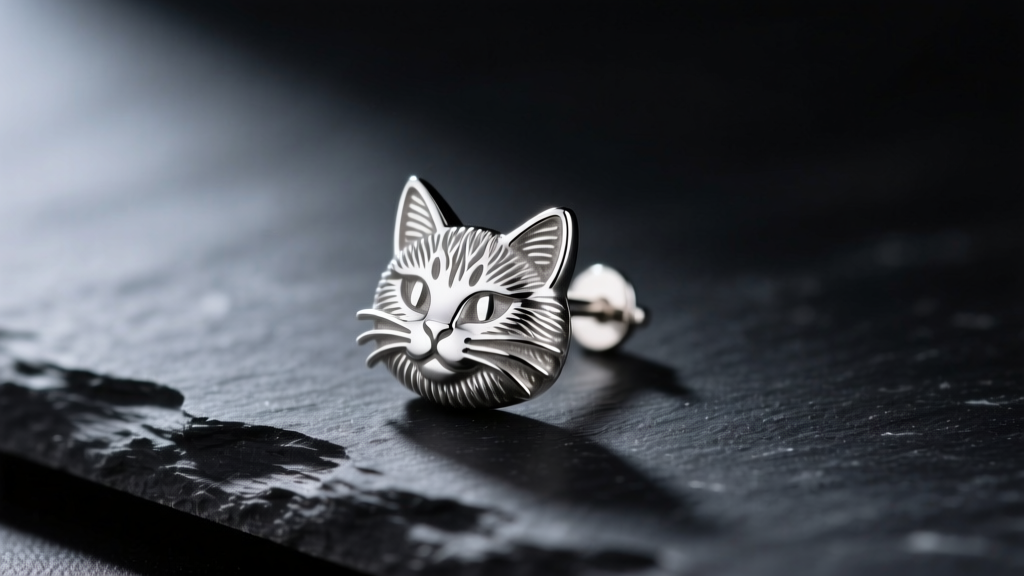
Zoomorphic jewelry, particularly feline motifs, dominates the novelty and everyday earring market. However, the search for high-quality sterling silver cat earrings often leads consumers into a minefield of deceptive marketing, substandard alloys, and structural compromises. As a jewelry metallurgist and style analyst, I evaluate these pieces not just on their aesthetic charm, but on their grain structure, casting integrity, and long-term wearability. This expert deep dive dissects the technical realities of 925 silver feline earrings, providing you with the precise metrics needed to distinguish heirloom-quality craftsmanship from mass-produced, failure-prone trinkets.
The Metallurgy of 925 Sterling Silver in Zoomorphic Jewelry
Pure silver (999 fine) possesses a Mohs hardness of just 2.5, making it entirely unsuitable for the mechanical stress of earring posts and the thin extremities of cat silhouettes. To achieve structural viability, copper is alloyed with silver to create the 925 standard (92.5% silver, 7.5% copper). According to The Silver Institute, this specific ratio optimally balances malleability for lost-wax casting with the tensile strength required for daily wear.
However, the copper content introduces a vulnerability: galvanic corrosion and sulfur-induced tarnishing. In recent years, premium manufacturers have shifted toward Argentium silver (935 or 960), which replaces a portion of the copper with germanium. This creates a transparent germanium dioxide layer on the surface, drastically slowing tarnish formation. When evaluating high-end sterling silver cat earrings, verifying an Argentium stamp (often a flying unicorn or specific maker's mark) ensures superior resistance to the oxidizing effects of cosmetics and environmental humidity.
Identifying Genuine Hallmarks vs. Deceptive Plating
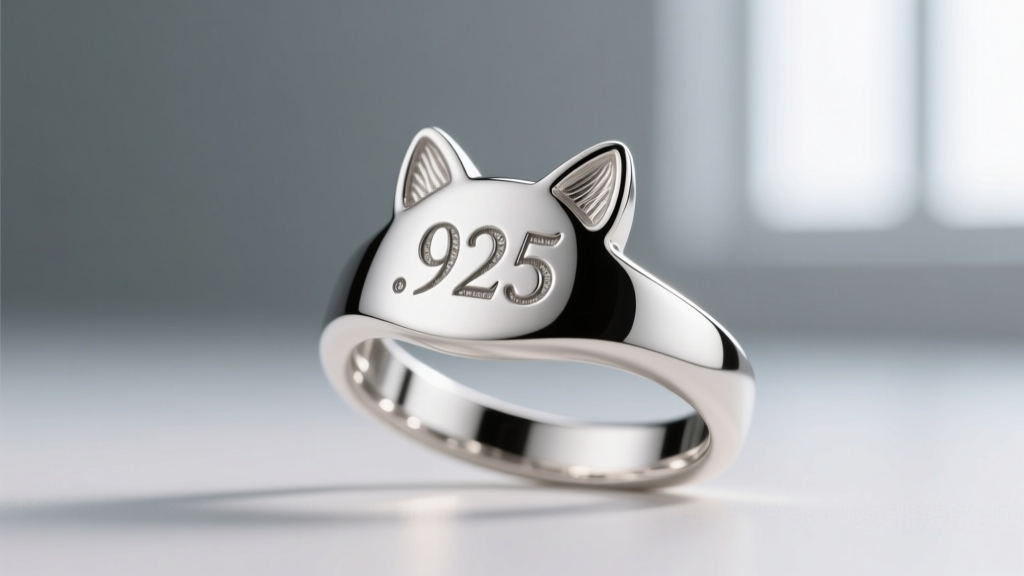
The Federal Trade Commission (FTC) strictly regulates precious metal stamping in the United States. Genuine pieces must bear a quality mark such as ".925", "925", "STER", or "Sterling", alongside a registered maker's trademark. Beware of ambiguous terminology like "Tibetan Silver," "Nickel Silver," or "Silver-Tone," which contain zero elemental silver and are often toxic copper-nickel-zinc alloys that can cause severe contact dermatitis.
The Acid Test and XRF Verification
While visual hallmark inspection is the first line of defense, sophisticated counterfeits feature laser-engraved ".925" stamps over brass or copper cores. For definitive verification, jewelers utilize X-ray Fluorescence (XRF) spectrometry, which penetrates the surface to read the exact elemental composition without damaging the piece. For consumers, a traditional silver acid test (using nitric acid on a discreet filing) will turn a creamy white on genuine 925 silver, while turning green on copper-heavy base metals.
Structural Vulnerabilities in Feline Silhouette Castings
Cat-shaped earrings present unique engineering challenges. The anatomy of a feline—characterized by sharp, protruding ears, elongated tails, and delicate whiskers—creates high-stress, thin-cast areas. During the lost-wax investment casting process, molten silver must flow into these narrow channels. If the flask temperature or burnout cycle is poorly managed, gas bubbles become trapped, resulting in microscopic porosity.
Porosity in a cat's tail or ear tip acts as a structural fault line. A minor impact, such as dropping the earring on a tile floor or catching it on a sweater, will cause a clean snap-fracture at the porous joint. The Gemological Institute of America (GIA) notes that proper casting requires precise thermal control to ensure a dense, uniform grain structure. Below is a technical breakdown of optimal specifications versus common manufacturing defects in zoomorphic earrings.
| Component | Optimal Specification | Common Failure Mode |
|---|---|---|
| Feline Tail/Ear Tips | Min. 1.2mm thickness | Snap-fracture from cast porosity |
| Earring Post | 20-gauge (0.81mm) hard-drawn | Bending or base shearing |
| Backing Plate | Min. 0.8mm solid silver | Warping under friction back pressure |
| Whisker Details | Integrated into main mass | Shearing during ultrasonic cleaning |
Post Soldering and Ear Nut Mechanics
The connection point between the earring post and the flat backing plate of a cat stud is the most frequent point of catastrophic failure. Mass-market manufacturers often use soft silver solder and a quick torch pass, which creates a weak metallurgical bond. When lateral force is applied (e.g., sleeping in the earrings), the post shears off flush with the backing plate.
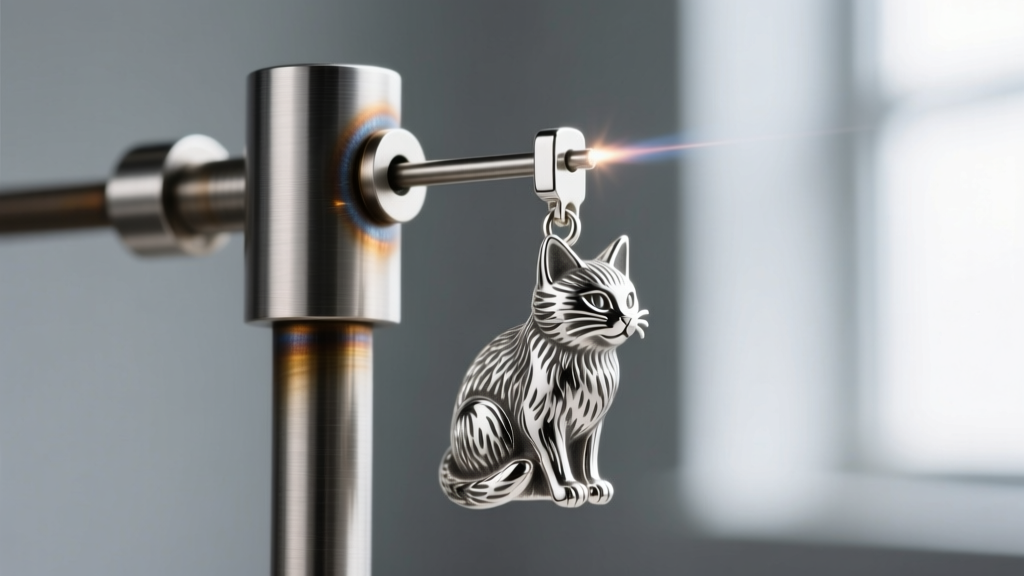
Expert bench jewelers utilize laser welding to attach 20-gauge (0.81mm) or 19-gauge (0.91mm) hard-drawn sterling posts. Laser welding creates a localized, high-heat fusion zone that penetrates the backing plate without annealing (softening) the surrounding cast silver. Furthermore, the post should feature precision-cut friction grooves or a threaded end for screw-backs. Standard "butterfly" friction nuts rely on the tension of the metal loops; if the post is under-sized (e.g., 22-gauge), the nut will slip, leading to lost earrings.
Tarnish Mitigation and Rhodium Flashing
To combat the rapid tarnishing associated with copper-alloyed silver, many sterling silver cat earrings are plated with a microscopic layer of rhodium, a platinum-group metal. This process, known as "rhodium flashing," provides a brilliant, white-metal luster and an impermeable barrier against sulfur compounds in the air.
However, not all plating is equal. A standard commercial flash is roughly 0.1 to 0.25 microns thick, which will wear away on high-friction areas (like the edges of a cat's ears) within a few months of daily wear. Premium manufacturers apply a heavy electroplated layer of 0.5 to 1.0 microns, often over a palladium or nickel barrier layer to prevent copper migration. When inspecting a piece, look for a uniform, mirror-like finish without dark pooling in the crevices, which indicates poor rinsing during the electroplating bath.
Sourcing and Pricing Benchmarks
Understanding the economics of solid silver jewelry protects you from overpaying for plated base metals or underpaying for suspiciously cheap "solid" silver. The pricing of genuine sterling silver cat earrings is dictated by the spot price of silver, the gram weight of the casting, and the labor involved in finishing and stone-setting (if applicable).
- Hollow / Electroformed Silver: $15 - $25. Extremely lightweight, prone to denting, and impossible to repair if crushed.
- Solid Cast (Lightweight, 1-2g per earring): $30 - $45. Standard mall-kiosk quality, often lacking detailed finishing or rhodium plating.
- Solid Cast (Medium Weight, 3-5g per earring, Rhodium Plated): $50 - $85. The sweet spot for durability, structural integrity, and premium finishing.
- Artisan / Argentium with Gemstone Accents: $90 - $150+. Features hand-fabricated elements, bezel-set stones, and superior alloy compositions.
When shopping for sterling silver cat earrings, always request the exact gram weight from the seller. A solid, durable pair of medium-sized cat studs should weigh no less than 2.5 grams combined. By prioritizing metallurgical transparency, precise casting thickness, and laser-welded structural integrity, you can secure a piece of zoomorphic jewelry that remains a staple in your collection for decades, rather than a disposable accessory that fails within a season.


