White Stone Earrings: The Ultimate Gemstone Buying Guide
Discover how to choose the perfect white stone earrings. Compare diamonds, moissanite, sapphires, and pearls with our expert buying guide.

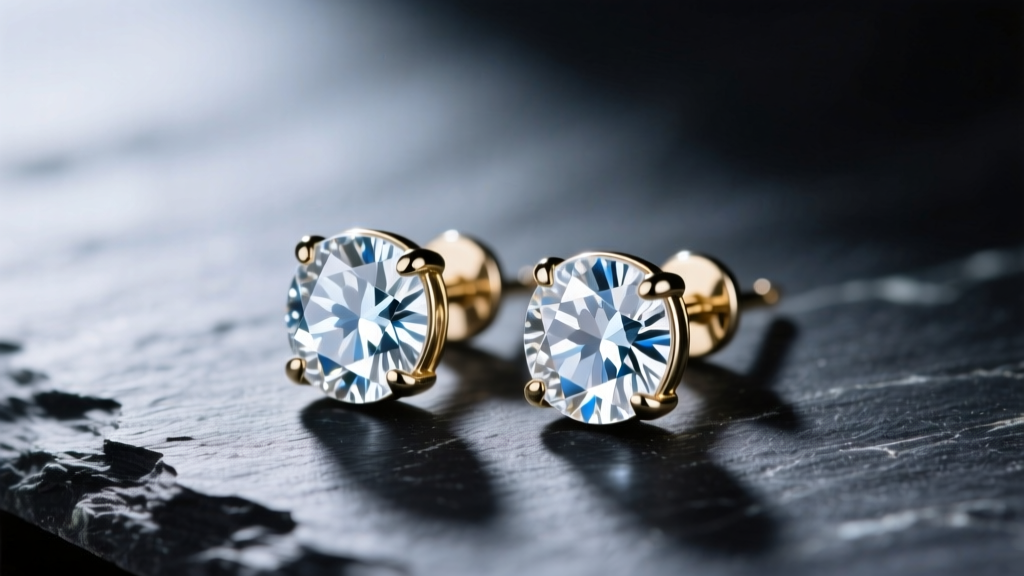
When building a curated jewelry collection, white stone earrings serve as the ultimate foundational staple. However, the term 'white stone' is a massive umbrella that covers everything from indestructible diamonds to highly porous organic pearls. Navigating this market requires more than just an eye for sparkle; it demands a deep understanding of gemological durability, optical properties, and the structural integrity of earring settings. Whether you are investing in heirloom-quality diamond studs or seeking everyday moonstone huggies, this comprehensive buying guide breaks down the exact specifications, material grades, and failure modes you need to know before making a purchase.
Decoding the Spectrum: Natural vs. Lab vs. Simulant
Not all white stones are created equal. The visual difference between a brilliant-cut diamond and a cabochon moonstone is vast, but even among faceted white gems, the optical performance varies wildly based on refractive index (RI) and dispersion. According to the Gemological Institute of America (GIA), a diamond's adamantine luster and high RI (2.417) give it a unique balance of brilliance (white light return) and fire (color dispersion). When shopping for white stone earrings, you must first decide which optical effect and origin story align with your budget and ethics.
| White Stone Type | Mohs Hardness | Refractive Index (RI) | Optical Character | Best Earring Style |
|---|---|---|---|---|
| Natural Diamond | 10 | 2.417 | High brilliance, moderate fire | Classic 4-prong studs |
| Moissanite | 9.25 | 2.65 - 2.69 | Extreme fire, high brilliance | Bezel or halo drops |
| White Sapphire | 9 | 1.76 - 1.77 | Subtle brilliance, glassy luster | Pave hoops, huggies |
| Moonstone | 6 - 6.5 | 1.52 - 1.53 | Adularescence (blue/white sheen) | Bezel-set dangles |
| White Opal | 5.5 - 6.5 | 1.37 - 1.47 | Play-of-color, vitreous luster | Protected ear cuffs |
| Akoya Pearl | 2.5 - 4.5 | 1.53 - 1.68 | Orient, deep mirror-like luster | Friction-back studs |
Durability & Daily Wear: The Mohs Scale Reality Check
The most common mistake buyers make with white stone earrings is ignoring the Mohs scale of mineral hardness. Earrings are subjected to unique stresses: they get tangled in hair, snagged on sweaters, and exposed to aerosolized cosmetics and hairspray. A stone's hardness dictates its resistance to scratching, but its toughness dictates its resistance to chipping and breaking.
For instance, while diamonds are a 10 on the Mohs scale and possess excellent toughness, white sapphires (Mohs 9) have distinct cleavage planes. If a white sapphire is set in a high-profile prong setting and struck against a hard surface, it can chip. Moonstones and opals are even more precarious. As noted in the GIA Gem Encyclopedia, moonstone has two directions of perfect cleavage, making it highly susceptible to splitting if subjected to sudden temperature changes or hard knocks. If you are buying moonstone or opal earrings, you must absolutely avoid prong settings. Opt for a full bezel or a deep channel setting that wraps the metal entirely around the stone's girdle to protect the vulnerable edges.
Metal Pairings & Hypoallergenic Requirements
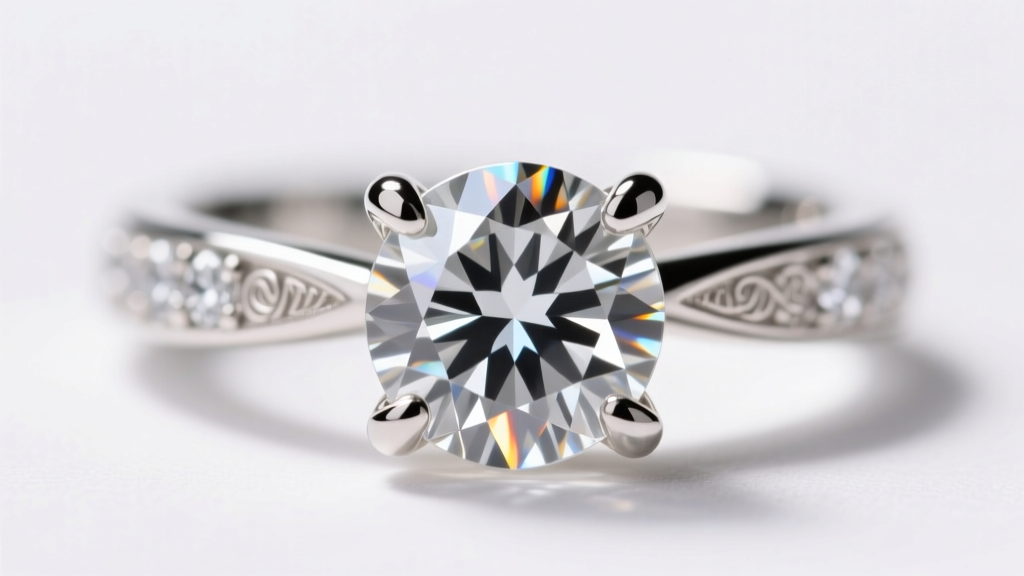
The metal holding your white stone is just as critical as the gem itself, particularly for cartilage piercings or sensitive earlobes. White gold is the traditional pairing for white stones, but it comes with a hidden maintenance cost: rhodium plating. Standard 14k or 18k white gold is alloyed with nickel or palladium to achieve a white color, but it naturally retains a faint yellowish-gray tint. To make it bright white, it is plated with rhodium. Over time, friction and skin oils wear this plating away (typically within 12 to 18 months), requiring professional re-plating. Furthermore, nickel-alloyed white gold is a primary trigger for contact dermatitis in sensitive piercings.
The Expert Alternatives: Platinum and Titanium
- Platinum (95% Pure): The ultimate choice for heirloom diamond or sapphire studs. It is naturally white, hypoallergenic, and highly malleable, meaning prongs will bend rather than snap if caught. However, it is heavy and expensive.
- ASTM F136 Implant-Grade Titanium: If you are buying white stone earrings for a fresh piercing, a cartilage placement (like a helix or conch), or suffer from severe metal allergies, titanium is non-negotiable. Ensure the jeweler specifies 'ASTM F136' or 'Ti6Al4V ELI' grade, which guarantees the alloy is free of nickel and safe for long-term bodily implantation.
Securing the Stone: Prong vs. Bezel Mechanics
The setting style dictates both the security of the stone and the amount of light that can enter the pavilion (the bottom half of the gem). For high-RI stones like diamonds and moissanite, a 4-prong or 6-prong martini setting is ideal. It maximizes light return, creating the coveted 'sparkle.' However, for softer, cabochon-cut white stones like pearls, moonstones, and opals, a bezel setting is mandatory. A bezel uses a continuous rim of metal to secure the stone, completely eliminating the risk of a prong snagging on clothing and pulling the soft gem out of its mount.
Pricing Tiers: What You Should Actually Pay
Understanding the 2026 market pricing for white stone earrings prevents overpaying for simulants or under-budgeting for naturals. Below is a realistic pricing framework for a standard pair of 6mm round stud earrings (approx. 1.50 total carat weight for faceted gems), set in 14k gold.
- Cubic Zirconia (Simulant): $20 - $60. High initial brilliance but clouds within months due to surface scratching and oil absorption.
- White Sapphire (Lab-Created): $150 - $350. Excellent durability, but lacks the fire of diamonds. Requires frequent cleaning to maintain brilliance.
- Moissanite (Lab-Created): $400 - $900. Offers superior fire and brilliance compared to sapphire. The best value-for-money option for high-impact sparkle.
- Natural Diamond (I1-I2 Clarity, J-K Color): $1,200 - $2,500. Noticeable inclusions and warm tint, but retains natural market value.
- Natural Diamond (VS Clarity, F-G Color): $3,500 - $6,000+. Eye-clean, exceptionally white, and ideal for investment-grade heirloom pieces.
Face Shape & Earring Style Matrix
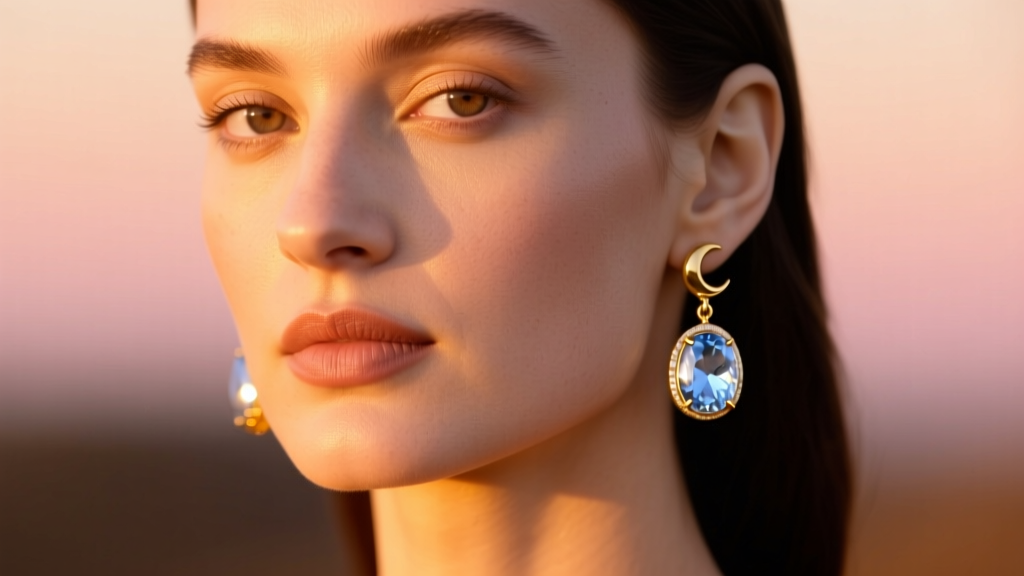
Beyond the stone itself, the silhouette of the earring must complement your facial geometry. White stones draw the eye, acting as visual anchors. Use this matrix to select the correct drop length and volume:
- Round Faces: Avoid large white stone hoops or circular studs that emphasize width. Opt for linear white sapphire drop earrings or elongated marquise-cut diamond dangles to create vertical length.
- Square Faces: Soften a strong jawline with curved silhouettes. White pearl drop earrings or oval-cut moonstone huggies add necessary softness and organic movement.
- Heart-Shaped Faces: Balance a narrower chin with bottom-heavy designs. Teardrop-shaped white opal dangles or chandelier earrings with pavé white diamond accents draw the eye downward, creating symmetry.
- Oval Faces: The most versatile shape. You can comfortably wear anything from flush white diamond ear cuffs to dramatic, shoulder-grazing crystal chandeliers.
Expert Verdict: Which White Stone is Right for You?
'If your priority is legacy, daily wearability, and unmatched optical performance, natural diamonds remain the undisputed king of white stone earrings. However, for the modern buyer seeking maximum brilliance without the natural diamond premium, lab-grown moissanite set in platinum or palladium white gold offers the best intersection of durability, fire, and value. Reserve moonstones and opals for occasional-wear dangles where their fragile beauty can be admired without the risk of daily impact.'
Ultimately, buying white stone earrings is an exercise in balancing aesthetics with gemological reality. By matching the stone's Mohs hardness to the appropriate setting, selecting hypoallergenic metals for your specific piercing needs, and choosing a silhouette that flatters your face shape, you will secure a pair of earrings that remain as captivating in ten years as they are today.


