Why Is My Earring Hole Bleeding After Years: Material & Fix Guide
Discover why your earring hole is bleeding after years of wear. Explore metal allergies, material grades, and expert fixes to heal your piercings.
Published
2. The Plating Erosion and Base Metal ExposureMany jewelry pieces marketed as 'gold' or 'rhodium-dipped' are actually brass or stainless steel cores plated with a microscopic layer of precious metal. With daily wear, friction, and exposure to acidic sebum, this plating wears awayu2014.20 per pair.
14k or 18k Solid Gold
Zero (if alloyed correctly)
High
Excellent (ensure nickel-free alloy)
$80 - $300+
316L 'Surgical' Steel
8% - 12%
Moderate
Poor (high nickel exposure risk)
$10 - $30
Sterling Silver (.925)
Zero (contains 7.5% copper)
Low (tarnishes easily)
Poor (copper reacts with sebum)
$15 - $50
Gold-Plated Brass
High (in the core metal)
Very Low
Terg the 'Cheese Cutter' EffectStandard lobe piercings are usually done at 20-gauge (0.81mm) or 18-gauge (1.02mm). If you wear heavy gold hoops or gemstone drops on a by a professional piercer to assess for migration, keloid scarring, or embedded jewelry. Do not attempt to self-treat severe swelling or pus-filled infections with over-the-counter antibiotic ointments, as these can trap bacteria inside the fistula and worsen the bleeding, 'Why is my earring hole bleeding after years?' the answer almost always lies in a microscopic material failure or a mechanical overload. Upgrade your jewelry to implant-grade titanium or solid 14k gold, respect your gauge limitations, and give your tissue the biological environment it needs to heal.

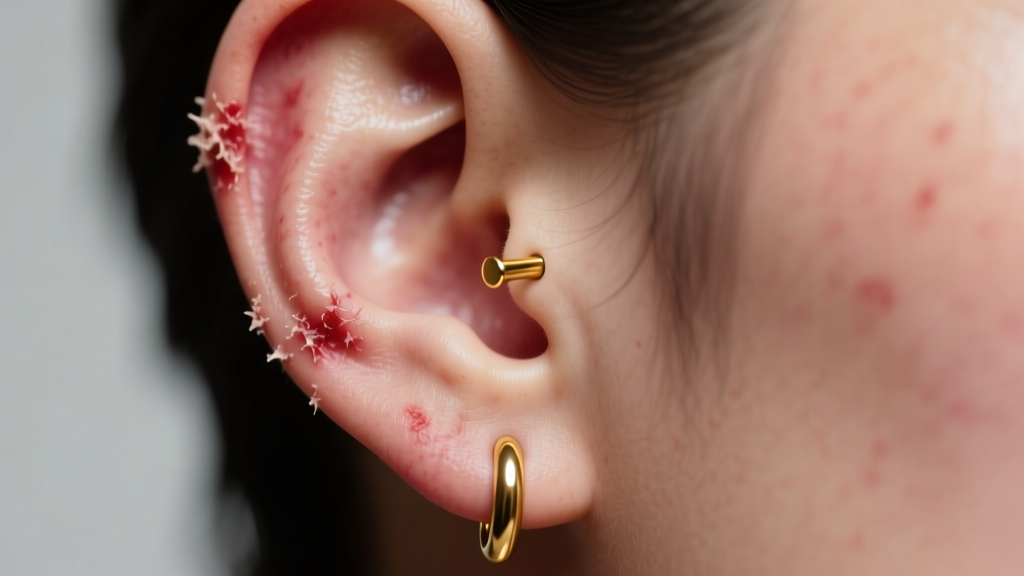 2. The Plating Erosion and Base Metal ExposureMany jewelry pieces marketed as 'gold' or 'rhodium-dipped' are actually brass or stainless steel cores plated with a microscopic layer of precious metal. With daily wear, friction, and exposure to acidic sebum, this plating wears awayu2014.20 per pair.


