The Best Metals for a Large Earring: Weight, Durability, and Comfort
Discover the best metals for a large earring. We compare weight, tensile strength, and hypoallergenic properties to prevent lobe tearing and irritation.

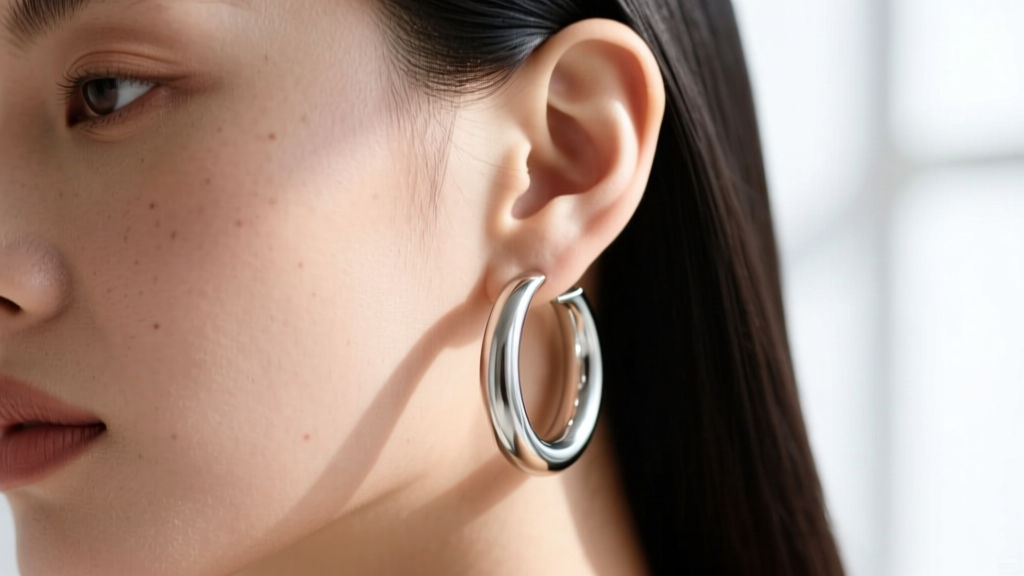
The Physics of a Large Earring: Why Material Matters
When selecting a large earring, aesthetics are only half the equation. The biomechanics of the earlobe and the metallurgical properties of the jewelry dictate whether a statement piece will be a comfortable staple or a painful liability. A large earring acts as a pendulum. With every turn of your head, the dynamic shear force multiplied by the earring's weight places immense tensile stress on the fistula (the piercing channel).
If the metal is too dense, gravity will slowly stretch the tissue, leading to permanent lobe sagging or the dreaded "cheese wire effect," where a thin, heavy wire gradually cuts through the skin. Conversely, if the metal lacks structural integrity—such as pure 24k gold or cheap cast brass—the earring will warp, bend, or snap under its own kinetic energy. Understanding the intersection of density, yield strength, and biocompatibility is essential for anyone wearing oversized hoops, heavy dangles, or statement shields.
Comprehensive Metal Weight and Strength Comparison
To make an informed decision, we must look at the raw data. The table below compares the most common metals used in large earring fabrication, focusing on density (which dictates weight) and tensile strength (which dictates durability).
| Metal / Alloy | Density (g/cm³) | Tensile Strength (MPa) | Hypoallergenic Rating | Best Use Case |
|---|---|---|---|---|
| ASTM F136 Titanium | 4.43 | 860 - 965 | Excellent | Massive hoops, heavy shields |
| 14k Gold (Yellow) | 13.0 | 400 - 550 | Good (if nickel-free) | Luxury dangles, medium-large hoops |
| 316L Surgical Steel | 8.00 | 485 - 515 | Moderate (contains nickel) | Budget-friendly large statement pieces |
| Niobium | 8.57 | 275 - 350 | Excellent | Color-anodized medium-large drops |
| Aluminum (Anodized) | 2.70 | 90 - 110 | Good (if coated) | Ultra-large, avant-garde shapes |
Deep Dive: Top Material Choices for Oversized Styles
ASTM F136 Titanium: The Lightweight Champion
For a truly large earring that spans several inches in diameter, implant-grade titanium (specifically ASTM F136 Ti-6Al-4V ELI) is the undisputed king. With a density of just 4.43 g/cm³, it is nearly 45% lighter than steel and roughly 65% lighter than 14k gold. According to the Association of Professional Piercers (APP), this specific alloy is the gold standard for initial piercings and long-term wear due to its complete lack of nickel and exceptional biocompatibility. Furthermore, its high tensile strength means a thin 18-gauge (1.02mm) titanium wire can support a massive 80mm hoop without warping or losing its circular tension.
14k and 18k Gold Alloys: The Luxury Balance
Pure 24k gold is a metallurgical nightmare for large jewelry. It has a very low yield strength and will permanently deform if a heavy gold hoop catches on a sweater. Therefore, large gold earrings must be alloyed. The Gemological Institute of America (GIA) notes that 14k gold (58.5% pure gold mixed with copper, silver, and sometimes zinc) provides the necessary structural rigidity for large dangles. However, gold's high density (approx. 13.0 g/cm³) means a large earring made of solid 14k gold will be exceptionally heavy. Jewelers must compensate for this by using hollow electroforming techniques or intricate lattice cutouts to reduce the overall mass without sacrificing the visual footprint.
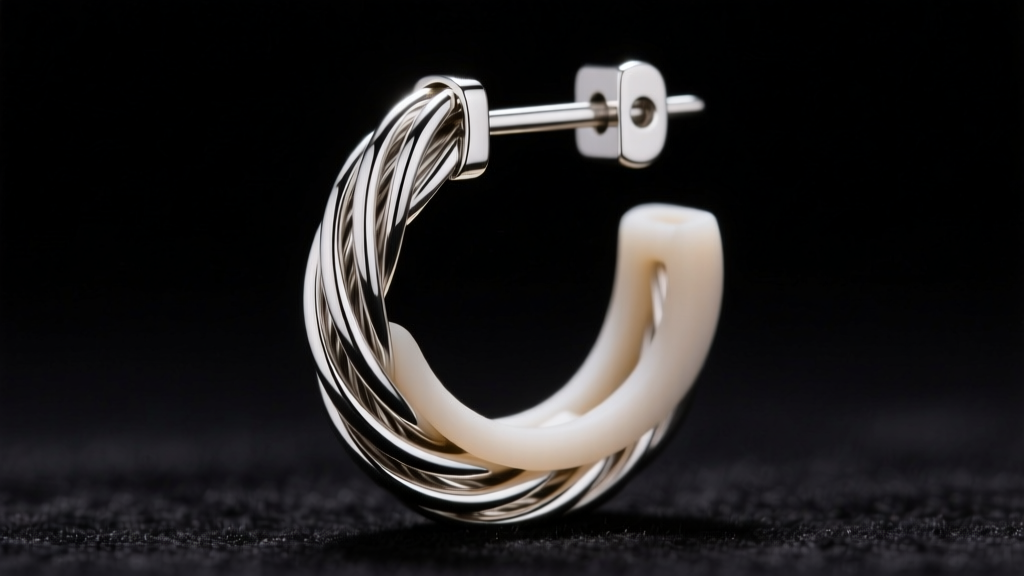
Niobium: The Hypoallergenic Alternative
Niobium is an elemental metal that is highly biocompatible and completely nickel-free, making it a favorite for those with severe contact dermatitis, a condition extensively documented by the American Academy of Dermatology (AAD). While it is an excellent material for body jewelry, its density (8.57 g/cm³) makes it noticeably heavier than titanium. A large earring crafted from solid niobium will cause lobe fatigue over a full day of wear. It is best reserved for medium-large drops or ear cuffs where the weight is distributed across the cartilage rather than hanging solely from the earlobe.
Aluminum: The Avant-Garde Option
When designing ultra-large, avant-garde, or architectural earrings that cover the entire side of the face, aluminum becomes a vital material. At just 2.70 g/cm³, it is incredibly light. However, raw aluminum oxidizes and can react with the acidic pH of human sweat, leaving a grayish residue on the skin. To be worn safely as a large earring, aluminum must be hard-anodized or sealed with a biocompatible clear coat. It lacks the tensile strength of titanium, meaning aluminum hoops must be made with thicker gauges (14g or 12g) to prevent bending.
Design Engineering: Mitigating Weight and Tension
Material selection is only the first step. The structural engineering of the earring dictates how that material's weight is transferred to your ear.
- Post vs. French Wire: A standard friction post concentrates all the dynamic weight onto a single 1mm point inside the fistula. For a large earring, a French wire (fishhook) or a lever-back mechanism is superior, as the curved wire distributes the resting weight over a broader surface area of the lobe's lower curve.
- Gauge Thickness: Never wear a heavy, large earring on a thin 22-gauge (0.64mm) or 20-gauge (0.81mm) wire. The minimum safe thickness for a large, heavy dangle is 18-gauge (1.02mm), with 16-gauge (1.29mm) being the ideal standard to prevent the wire from slicing through the tissue.
- Hollow Tubing: High-end jewelers often use hollow metal tubing rather than solid wire for large hoops. This maintains the visual thickness and structural rigidity of the hoop while reducing the total metal mass by up to 70%.
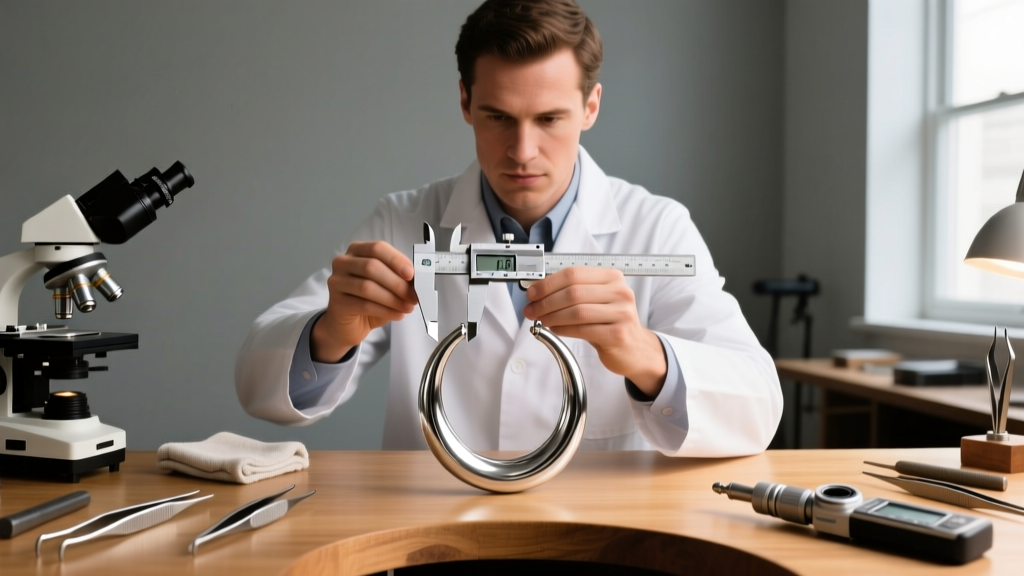
Common Failure Modes in Oversized Earrings
Large earrings are subjected to unique mechanical stresses that smaller studs simply do not experience. Understanding these failure modes will help you inspect your jewelry and avoid losing a valuable piece.
The Solder Joint Fatigue: The weakest point of any large hoop earring is the solder seam where the wire meets the catch mechanism. Repeated swinging and the tension of snapping the wire into the catch cause micro-fractures in the solder. Over time, this leads to work hardening and eventual snapping. Always inspect the solder joint of large hoops under a magnifying loupe every six months.
Another critical failure point is the clutch or backing mechanism. Standard butterfly clutches are insufficient for large earrings. The dynamic pendulum effect will slowly work a standard metal clutch loose, resulting in the earring falling out. For large, heavy pieces, always upgrade to secure silicone O-rings, screw-backs, or locking ear wires to ensure the jewelry remains anchored to the lobe.
Final Verdict: Choosing Your Metal
If your priority is wearing the largest, most dramatic hoops possible without lobe pain, ASTM F136 Titanium is your best investment. If you desire the prestige and warmth of precious metals, opt for 14k Gold, but insist on hollow electroformed designs or intricate filigree to keep the gram weight manageable. Avoid cheap brass or copper alloys entirely; the large surface area of a statement earring guarantees prolonged skin contact, making the risk of severe allergic contact dermatitis unacceptably high. By respecting the physics of jewelry design, you can wear bold, large earrings comfortably for years to come.


