Beginner Guide to Choosing and Styling White Beaded Earrings
Discover how to choose, style, and care for white beaded earrings. Our beginner guide covers materials, face shapes, and maintenance tips.

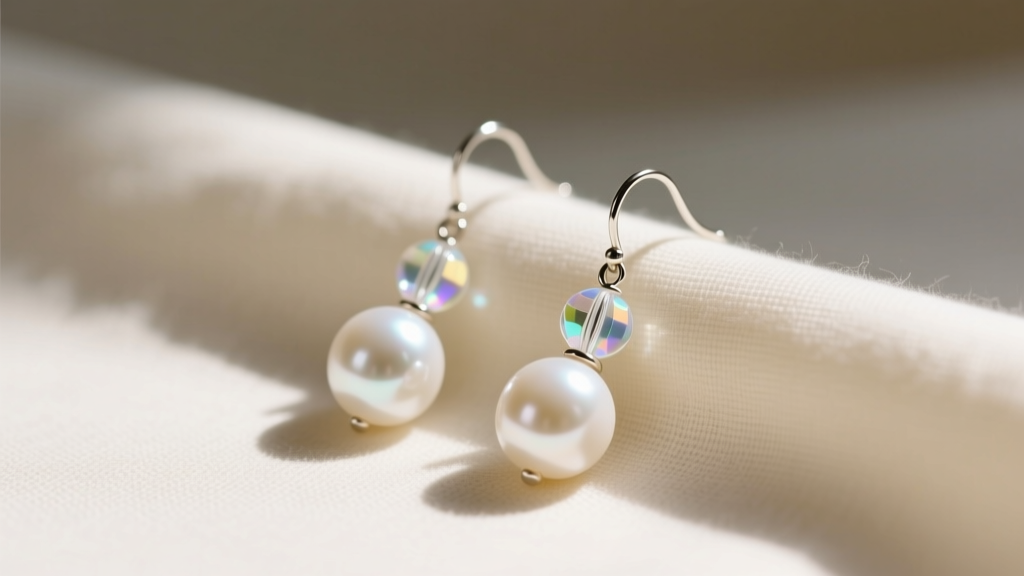
White beaded earrings are a cornerstone of versatile jewelry design. Whether you are exploring handmade artisan markets or shopping online, the sheer variety of materials, construction methods, and styles can be overwhelming for a beginner. From luminous freshwater pearls to precise glass seed beads, white beaded earrings offer a timeless aesthetic that transitions effortlessly from casual daywear to formal evening events. This comprehensive guide will walk you through the exact material grades, construction techniques, and styling frameworks you need to make informed, confident purchases.
The Anatomy of White Beaded Earrings: Material Breakdown
Not all white beads are created equal. The material dictates not only the price and weight of the earring but also its longevity and how it interacts with light. Here are the most common materials you will encounter:
1. Freshwater Pearls (Natural & Cultured)
For organic elegance, freshwater pearls are the gold standard. Unlike perfectly round, expensive saltwater Akoya pearls, freshwater pearls often feature unique, baroque shapes. When shopping, look for AAA-grade freshwater pearls, which indicate high luster, minimal blemishes, and a thick nacre layer. According to the Gemological Institute of America (GIA), luster is the most critical quality factor for pearls; a high-quality white pearl should reflect light sharply, almost like a mirror.
2. Glass Seed Beads (Miyuki & Toho)
If you are looking at intricate, woven, or heavily clustered white beaded earrings, they are likely made from glass seed beads. Japanese brands like Miyuki Delica and Toho are the industry standard. They offer incredible uniformity (crucial for flat peyote or brick stitch patterns) and a brilliant, reflective shine. Czech glass beads are another option, offering a more rustic, slightly irregular vintage look.
3. Ceramic and Porcelain
White ceramic beads provide a beautiful matte or semi-gloss finish that feels earthy and artisanal. They are heavier than acrylic but lighter than solid glass. The primary drawback is fragility; ceramic beads can chip or shatter if dropped on a hard surface.
4. Acrylic and Polymer Clay
For lightweight, budget-friendly, and oversized statement pieces, acrylic and polymer clay are popular. While highly accessible, cheap acrylic beads can develop a yellow tint over time when exposed to UV light and skin oils, and polymer clay can crack under pressure.
Construction Techniques: What Beginners Must Know
The way beads are assembled is just as important as the beads themselves. Poor construction is the leading cause of jewelry failure. Here is how to evaluate the structural integrity of white beaded earrings.
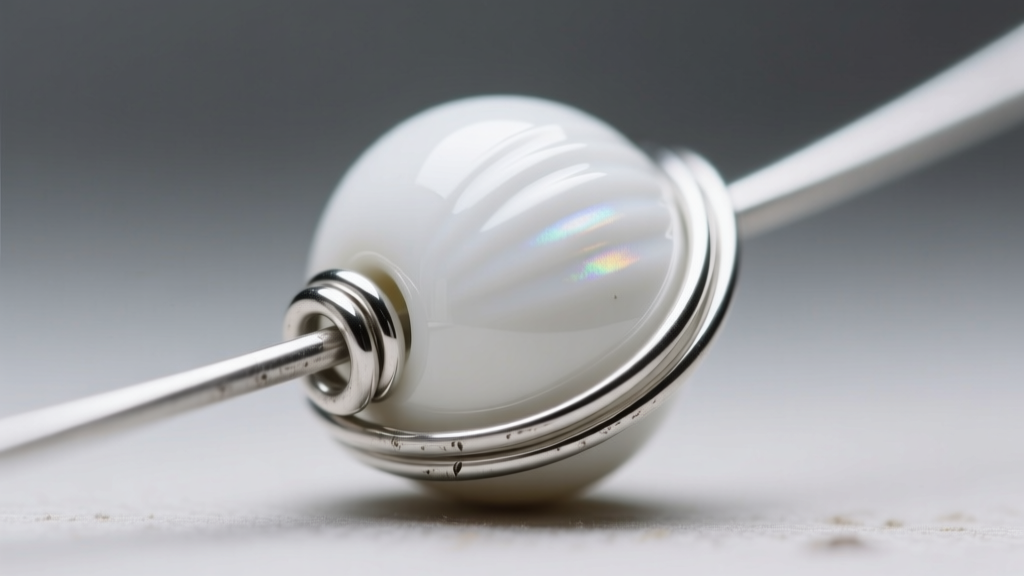
Wire Wrapping vs. Stringing vs. Gluing
- Wire Wrapping: The most secure method for individual beads. Look for wire in the 20 to 22-gauge range. 20-gauge wire is sturdy enough to hold heavy glass or ceramic beads without bending, while 22-gauge is ideal for delicate pearls. Ensure the artisan uses half-hard or dead-soft sterling silver or gold-filled wire, which holds its shape better than cheap craft wire.
- Stringing (Beading Wire): For multi-bead strands or flexible dangles, professional jewelers use coated stainless steel beading wire (like Soft Flex). A diameter of .015" to .018" is the sweet spot for earrings, offering flexibility without snapping. Always check that the wire is secured with crimp beads and a wire protector (French wire) at the clasp loop to prevent fraying.
- Gluing (The Red Flag): Avoid earrings where the earring post is simply glued to a bead cluster with cyanoacrylate (Super Glue). Over time, skin oils and humidity degrade the adhesive, causing the post to snap off. Posts should always be mechanically attached via wire wrapping or soldered to a metal backing.
How to Choose the Right Style for Your Face Shape
White beaded earrings come in countless silhouettes. To maximize their flattering effect, use this decision framework based on your facial geometry.
| Face Shape | Ideal White Beaded Style | Styles to Avoid |
|---|---|---|
| Round | Long, linear bead drops or rectangular seed bead weaves that elongate the face. | Large circular bead hoops or short, wide cluster studs. |
| Square | Curved beaded hoops, circular pearl clusters, and teardrop shapes to soften the jawline. | Boxy, geometric bead patterns or sharp angular dangles. |
| Oval | Highly versatile; geometric seed bead studs and medium-length pearl dangles work beautifully. | Extremely long, heavy dangles that over-elongate the face. |
| Heart | Chandelier earrings or teardrop beads that add visual weight to the lower half of the face. | Inverted triangle shapes or top-heavy bead clusters. |
Pricing Tiers: What Are You Actually Paying For?
Understanding the market pricing for white beaded earrings will help you spot genuine craftsmanship versus overpriced mass production.
Budget Tier ($5 - $20)
At this price point, expect mass-produced acrylic beads, lower-grade glass, and alloy metals that may cause skin irritation. The earring posts are often glued. These are fine for seasonal trends but lack longevity.
Mid-Range Artisan ($25 - $65)
This is the sweet spot for handmade beaded earrings. You will find genuine Miyuki seed beads, hand-wire-wrapped constructions using sterling silver or gold-filled wire, and unique artisan designs. The labor cost of weaving or wrapping is reflected here.
Premium & Fine Jewelry ($75 - $200+)
In this tier, the beads themselves are the investment. Expect AAA-grade freshwater pearls, rare vintage glass beads, or high-end ceramic work, paired with 14k solid gold wire wrapping and secure, mechanically fastened posts.
Care, Maintenance, and Common Failure Modes
Proper maintenance ensures your white beaded earrings retain their brilliance and structural integrity for years. Different materials require vastly different care routines.
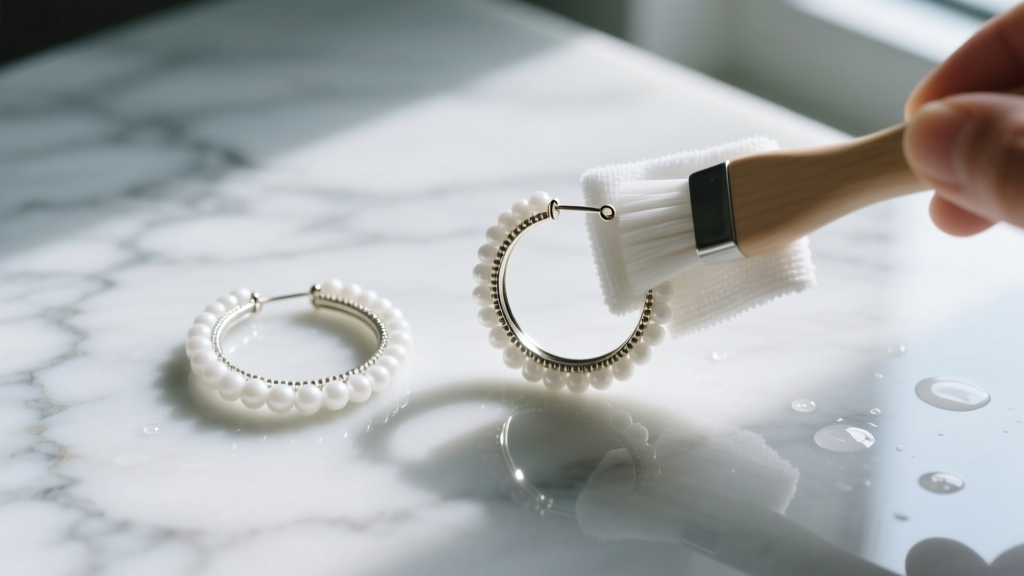
Cleaning Protocols by Material
- Freshwater Pearls: Never use ultrasonic cleaners or harsh chemicals, as they will strip the nacre. Wipe them gently with a damp, lint-free cloth after wearing to remove skin oils. As GIA recommends, pearls should always be the last thing you put on (after perfume and hairspray) and the first thing you take off.
- Glass & Ceramic: These can be washed with a mild dish soap and warm water solution. Use a soft-bristled baby toothbrush to gently dislodge dirt from the crevices between tightly woven seed beads. Dry thoroughly to prevent the beading thread or wire from rusting.
- Acrylic & Polymer: Wipe with a slightly damp cloth. Avoid alcohol-based cleaners, which can cloud the surface of acrylic and degrade polymer clay finishes.
Storage Best Practices
Store white beaded earrings in individual anti-tarnish pouches or soft cloth rolls. Tossing them into a communal jewelry box is a primary failure mode; heavy metal components can easily scratch softer beads like pearls or polymer clay, and wire-wrapped loops can snag and bend out of shape.
Expert Troubleshooting Tip: If the wire loop connecting your beaded dangle to the earring hook starts to pull open, do not simply push it back together. Use two pairs of jewelry pliers (chain-nose and flat-nose) to gently twist the wire open laterally, secure the bead, and twist it closed. This prevents the wire from weakening and snapping at the stress point.
Final Thoughts
White beaded earrings are a remarkable intersection of artistry and wearable design. By paying close attention to the specific bead materials, evaluating the gauge and type of wire used in construction, and selecting a silhouette that complements your facial structure, you can curate a collection that is both beautiful and built to last. Whether you opt for the organic warmth of freshwater pearls or the precise geometry of woven glass seed beads, understanding these foundational elements transforms you from a casual shopper into an informed collector.


