How to Buy Your First Genuine Stone Earring: A Beginner's Guide
Learn how to buy your first genuine stone earring. We cover gemstone hardness, hypoallergenic settings, and care tips for beginners.

Introduction to the World of Gemstone Jewelry
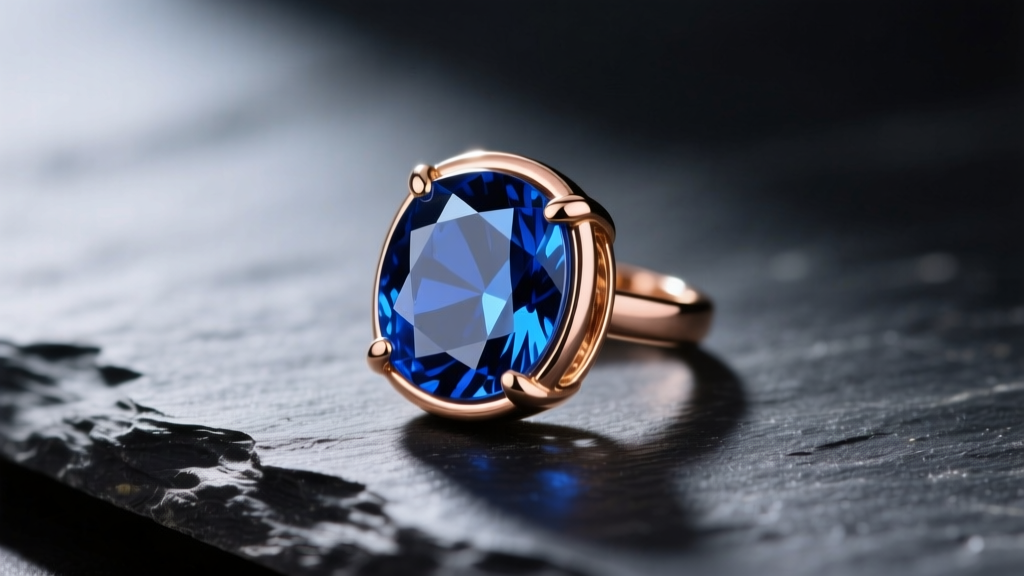
Purchasing your first genuine stone earring is an exciting milestone. Whether you are treating yourself to a birthstone stud or investing in a classic pair of sapphire drops, the transition from costume jewelry to fine gemstones requires a shift in how you evaluate quality, durability, and design. Unlike mass-produced fashion accessories, a genuine gemstone is a product of complex geological processes, meaning every stone possesses unique characteristics, vulnerabilities, and optical properties.
For beginners, the jewelry market can be overwhelming. Retailers often use confusing terminology, blending natural, lab-grown, and simulated stones under vague marketing labels. Furthermore, the anatomy of the earring itself—from the metal grade of the post to the security of the setting—plays a critical role in how long the piece will last and how comfortable it will be in your piercing. This comprehensive guide will decode the gemological and structural essentials you need to know before making your first fine jewelry purchase.
The Mohs Scale: Choosing a Stone for Daily Wear
The most critical factor in selecting a stone earring for everyday wear is its hardness, measured on the Mohs scale. Many beginners mistakenly believe that all gemstones are inherently scratch-resistant. In reality, environmental dust contains microscopic particles of quartz, which ranks at a 7 on the Mohs scale. If you wear a stone with a hardness lower than 7 daily, it will gradually accumulate micro-scratches, causing it to lose its polish and appear cloudy over time.
According to the Gemological Institute of America (GIA), understanding a gem's hardness and toughness is vital for determining its appropriate use in jewelry. Here is how popular gemstones stack up for earring wear:
| Gemstone | Mohs Hardness | Daily Wear Verdict |
|---|---|---|
| Diamond | 10 | Excellent (Virtually scratch-proof) |
| Sapphire / Ruby | 9 | Excellent (Highly durable for daily wear) |
| Topaz / Spinel | 8 | Good (Resists dust scratches well) |
| Amethyst / Citrine | 7 | Fair (Requires careful storage and cleaning) |
| Opal / Pearl | 5.5 - 6 | Poor (Strictly for occasional, gentle wear) |
If you plan to sleep, shower, and exercise in your earrings, stick to diamonds, sapphires, or rubies. If you love softer stones like opals or moonstones, treat them as 'occasion wear' and remove them before engaging in physical activities.
Decoding the Setting: Prong vs. Bezel
The setting is the metal framework that holds your stone in place. For beginners, choosing the right setting is a balance between maximizing the stone's brilliance and ensuring physical protection.
The Prong Setting
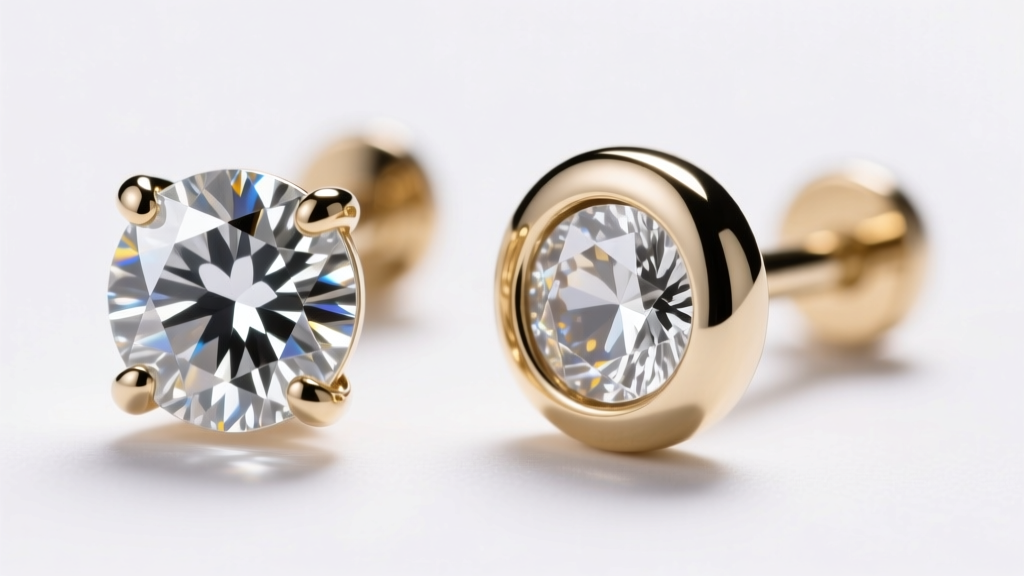
Prong settings use small metal claws (usually four or six) to grip the stone's girdle (its outer edge). This design exposes the maximum amount of the stone to light, enhancing its brilliance and fire. However, prongs are notorious for snagging on wool sweaters, lace, and hair. Over time, prongs can bend or lift, risking the loss of your gemstone. If you choose prongs, ensure they are 'low-profile' and have a V-prong on stones with sharp corners, like princess-cut diamonds, to prevent chipping.
The Bezel Setting
A bezel setting features a continuous metal rim that completely encircles the stone's girdle. While it slightly reduces light entry from the sides, it offers superior protection against impacts and completely eliminates the snagging issue. For an active beginner or someone purchasing their first 'never take it off' stone earring, a bezel setting is the most practical and secure choice.
Metal Matters: Hypoallergenic Posts and Gauge Sizes
The post is the part of the earring that passes directly through your piercing tract. If you have sensitive ears or a history of contact dermatitis, the metal grade is non-negotiable. The Blue Nile Education Center emphasizes that metal alloys dictate both the durability and the biocompatibility of fine jewelry.
- 14k or 18k Solid Gold: 14k gold contains 58.5% pure gold, while 18k contains 75%. Both are excellent for sensitive ears, provided they are alloyed with hypoallergenic metals like silver or palladium rather than nickel.
- Platinum: A dense, naturally white metal that is 95% pure. It is inherently hypoallergenic and incredibly durable, though it comes at a premium price point.
- Implant-Grade Titanium (ASTM F136): The gold standard for fresh piercings and severe metal allergies. It is lightweight, entirely nickel-free, and biocompatible.
- Gold-Plated or Vermeil: Avoid these for primary posts. The base metal is often brass or copper, which can cause severe allergic reactions once the thin gold layer wears away.
Gauge and Length Specifics: Standard lobe piercings are typically 20-gauge (0.8mm) or 18-gauge (1.0mm). Cartilage piercings are often 16-gauge (1.2mm). When buying, check the post length: 6mm is standard for lobes, but if you have thicker lobes or are buying for a cartilage piercing, you may need an 8mm post to accommodate swelling and tissue depth.
Natural vs. Lab-Grown vs. Simulated: What Are You Buying?
Understanding the origin of your stone earring is crucial for both ethical considerations and resale value.
Natural Gemstones
Mined from the earth, natural stones often contain microscopic inclusions (internal birthmarks). While flawless natural stones command astronomical prices, slightly included stones offer unique character. Always ask for a grading report from a reputable lab like GIA or AGS if purchasing high-value natural diamonds or sapphires.
Lab-Grown Gemstones
Lab-grown stones are chemically, physically, and optically identical to their natural counterparts. Created in controlled environments using CVD (Chemical Vapor Deposition) or HPHT (High Pressure High Temperature) methods, they are typically 30% to 50% less expensive than mined stones. For beginners wanting a large, flawless stone earring on a moderate budget, lab-grown is the smartest market choice in 2026.
Simulated Stones
Simulants like Cubic Zirconia (CZ) or glass merely mimic the look of a gemstone. They possess entirely different chemical compositions, refractive indexes, and hardness levels. CZ, for example, ranks at 8.5 on the Mohs scale but is prone to attracting oils and becoming cloudy quickly. Simulants are fine for fashion jewelry, but they hold zero intrinsic resale value.
Care and Maintenance Framework
Proper maintenance ensures your stone earring retains its optical brilliance. The most common beginner mistake is using ultrasonic cleaners on the wrong gemstones.
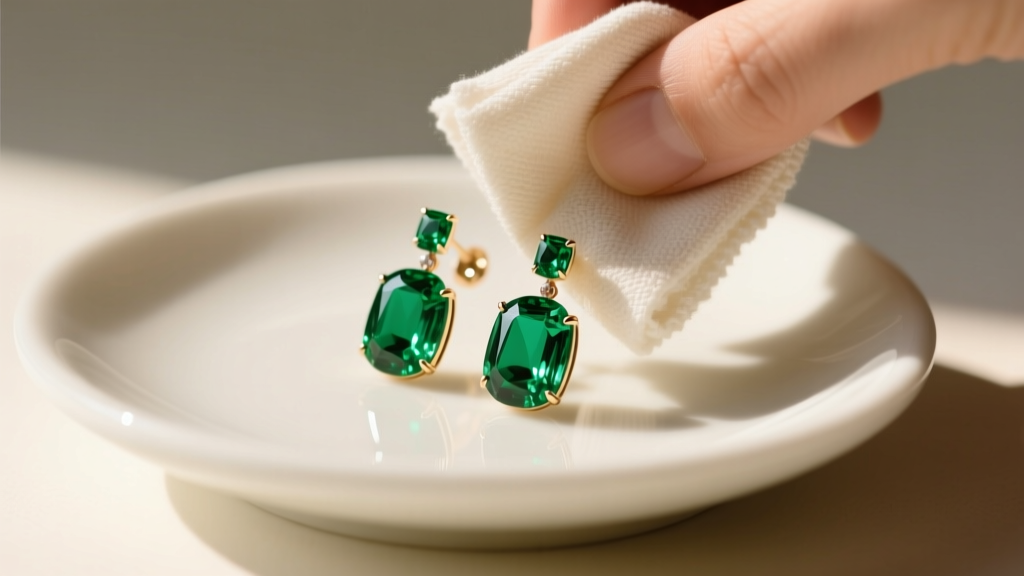
Expert Warning: Never put emeralds, opals, pearls, or heavily included stones in an ultrasonic cleaner. Emeralds are routinely fracture-filled with cedar oil to improve clarity; ultrasonic vibrations and heat will boil this oil out, leaving the stone cloudy and structurally compromised.
The Safe Cleaning Protocol:
- Mix a few drops of mild, phosphate-free dish soap into a bowl of lukewarm water.
- Soak the earrings for 10 to 15 minutes to loosen sebum and lotion buildup.
- Gently scrub the back of the stone and the setting with a clean, extra-soft baby toothbrush.
- Rinse thoroughly under lukewarm running water (ensure the drain is plugged!).
- Pat dry with a lint-free microfiber cloth.
By prioritizing Mohs hardness, selecting secure bezel or low-profile prong settings, and insisting on hypoallergenic solid metals, you will secure a stone earring that is not only breathtaking but built to withstand the rigors of daily life.


