Troubleshooting & Cleaning Your James Avery Knot Earrings
Learn how to clean deep tarnish, fix bent posts, and prevent snagging on your James Avery knot earrings with expert jewelry troubleshooting tips.

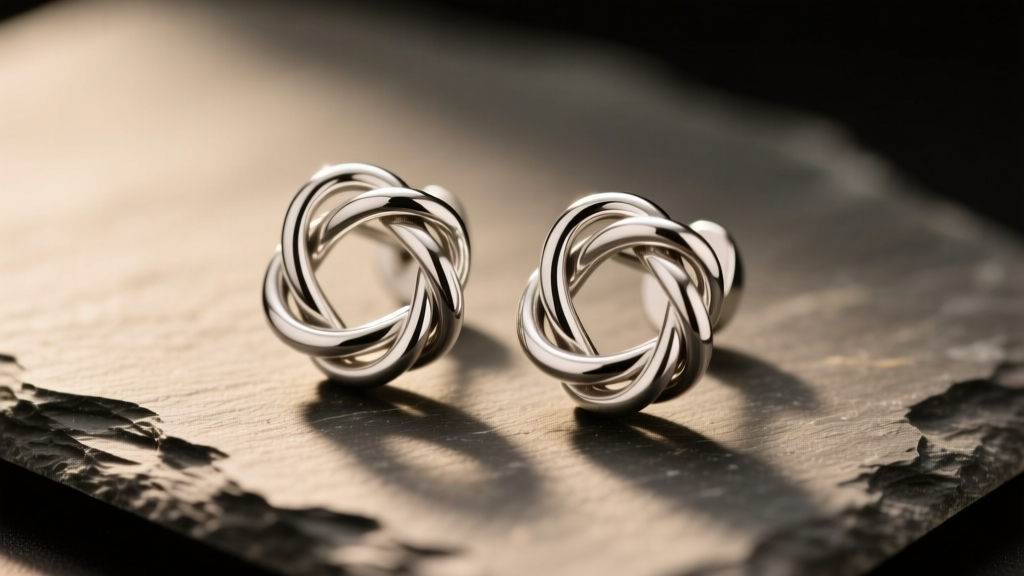
James Avery knot earrings are a staple in many jewelry collections, prized for their intricate, interlocking wire designs and meaningful symbolism. However, the very topology that makes the lover's knot and sailor's knot designs so visually appealing also creates unique maintenance headaches. The overlapping loops, tight undercuts, and top-heavy center of gravity lead to specific failure modes that standard jewelry care guides simply do not address.
If you are dealing with stubborn black tarnish in the crevices, a bent post, or an earring that constantly droops forward, this 2026 troubleshooting guide provides the exact metallurgical and mechanical solutions you need to restore your James Avery knot earrings to their original condition.
The Metallurgy and Mechanics of the Knot Design
To troubleshoot effectively, you must understand the material. Authentic James Avery knot earrings are cast in 925 sterling silver, which consists of 92.5% pure silver and 7.5% copper. Pure silver is highly resistant to tarnish, but the copper alloy is highly reactive to sulfur and moisture in the air, forming silver sulfide (the black patina you see). Because the knot design features deep, overlapping crevices, these areas trap sebum, lotions, and airborne sulfur, accelerating localized tarnishing far faster than the exposed outer surfaces.
Mechanically, the knot design is inherently top-heavy. While standard lightweight stud earrings use a 20-gauge (0.81mm) post, the added weight of a solid silver knot often requires an 18-gauge (1.02mm) post for structural integrity. Despite this, sleeping in them or catching the loops on a sweater can easily bend the post or cause the friction back to fail.
Step-by-Step Deep Cleaning for Crevices
Standard silver polishing cloths are virtually useless for the inner loops of a knot earring. The cloth cannot penetrate the undercuts, leaving the deepest parts of the design black while the outer ridges become highly polished, creating an unnatural contrast. Furthermore, avoid chemical silver dips (like Tarn-X). According to Forbes Advisor's metallurgical cleaning guide, harsh thiourea-based dips strip the silver of its natural luster, leaving a porous, matte surface that will actually tarnish much faster in the future.
The Safe Deep-Clean Protocol
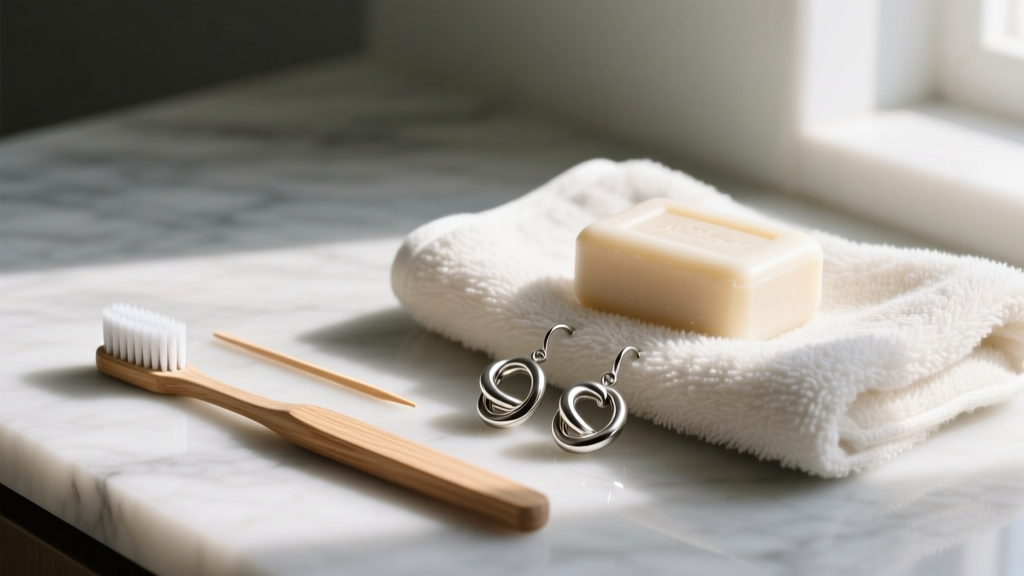
- Step 1: The Degreasing Soak. Mix three drops of mild, phosphate-free dish soap (like Dawn) into a bowl of warm distilled water. Soak the earrings for 10 minutes to break down body oils and cosmetic residue.
- Step 2: Mechanical Agitation. Using an extra-soft baby toothbrush, gently brush the knot loops in a circular motion. Do not use a standard adult toothbrush, as the stiffer bristles can inflict micro-scratches on the high-polish ridges.
- Step 3: Crevices and Undercuts. For the tight intersections where the wire loops overlap, use a wooden toothpick. Wood is softer than sterling silver and will dislodge packed debris without scratching the metal.
- Step 4: Targeted Polishing. Once completely dry, use a treated silver polishing cloth only on the high, exposed ridges of the knot. Leave a slight patina in the deep crevices; this provides visual contrast and highlights the three-dimensional nature of the design.
Troubleshooting Common Wear & Tear Issues
Beyond tarnish, the physical design of James Avery knot earrings presents specific wearing challenges. Below is a diagnostic table for the most frequent complaints and their actionable fixes.
| Issue | Root Cause | Actionable Fix |
|---|---|---|
| Earring Droops Forward | The heavy knot shifts the center of gravity past the earlobe piercing, pulling the post downward. | Switch from standard butterfly backs to heavy-duty 'bullet clutch' friction backs or silicone O-rings to provide a wider, more supportive base against the back of the lobe. |
| Snagging on Hair & Knits | The overlapping wire ends or casting seams on the knot loops catch on fine fibers. | Inspect the loops under a jeweler's loupe. Use a fine-grit (600+) sanding sponge or have a jeweler lightly buff the inner loops to remove microscopic casting burrs. |
| Black Residue on Earlobe | A mix of oxidized silver sulfide, sweat, and copper reacting with your skin's pH levels. | Clean the post and the back of the knot with rubbing alcohol weekly. Apply a microscopic layer of clear nail polish to the post and the earring's backplate to create a barrier. |
| Friction Back Slips Off | The earring post has become compressed or the notches have worn smooth from repeated insertion. | Gently squeeze the post with nylon-jaw pliers to slightly flatten it, creating new friction points for the backing to grip. |
How to Fix a Bent Sterling Silver Post
Because the knot design catches easily on clothing, bent posts are the most common structural issue. Sterling silver is highly malleable, but it is also subject to 'work hardening.' If you bend the post back and forth with your fingers, the metal's crystalline structure will lock up, become brittle, and eventually snap off at the solder joint.
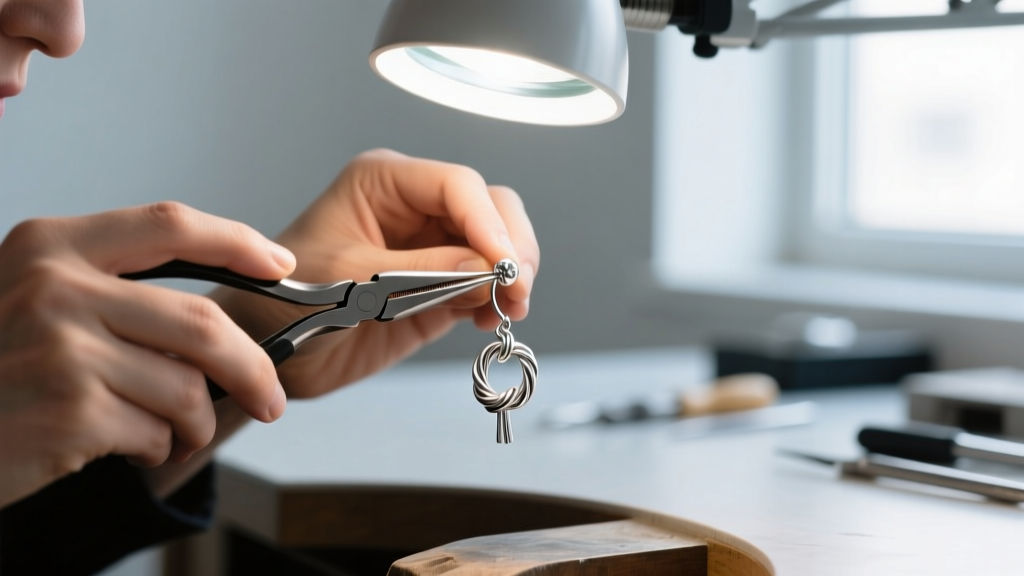
The Correct Repair Method: Secure the base of the earring (the knot itself) in a padded vise or hold it firmly with your non-dominant hand. Using nylon-jaw pliers—which grip the metal without marring it—apply slow, steady, continuous pressure to bend the 18-gauge or 20-gauge post back to a 90-degree angle. Never use rapid, jerky movements. If the post feels stiff and resistant, stop immediately; the silver has work-hardened and requires professional annealing (heating with a torch to relax the crystalline structure) before it can be safely straightened.
When to Seek Professional James Avery Restoration
While home troubleshooting can solve 90% of maintenance issues, severe damage requires professional intervention. According to James Avery's official jewelry care guidelines, the brand offers specific repair and restoration services for their sterling silver pieces.
You should send your knot earrings to an authorized James Avery repair center if:
- The post has snapped off entirely. Re-soldering a post to a hollow or intricate knot design requires a laser welder to prevent the heat from melting the delicate wire loops.
- The knot loops are severely warped. Sterling silver that has been stretched out of its original interlocking shape requires specialized mandrels and rawhide mallets to reshape without stressing the solder joints.
- Deep pitting has occurred. If the silver sulfide has been left untreated for years, it can cause permanent pitting in the metal that requires professional repolishing and rhodium flashing.
Preventative Storage and Maintenance
Troubleshooting is reactive; proper storage is proactive. The greatest enemy of your James Avery knot earrings in storage is not just air, but the wrong type of plastic. Never store sterling silver in polyvinyl chloride (PVC) plastics or standard ziplock bags made with sulfur-based manufacturing processes, as these off-gas chemicals that rapidly accelerate blackening.
Instead, store your knot earrings in a Pacific Silvercloth pouch or a jewelry box lined with anti-tarnish treated flannel. Include a small silica gel desiccant packet in the storage compartment to control ambient humidity, which acts as a catalyst for the copper-sulfur reaction. By keeping the earrings in a dry, chemically neutral environment, you will drastically reduce the frequency of deep-cleaning sessions and preserve the crisp, high-polish contrast of the knot design for decades.


