Mens Black Diamond Earrings: 2026 Budget & Value Guide
Discover the true value of mens black diamond earrings in 2026. Compare natural vs. treated stones, metal costs, and price tiers to avoid overpaying.

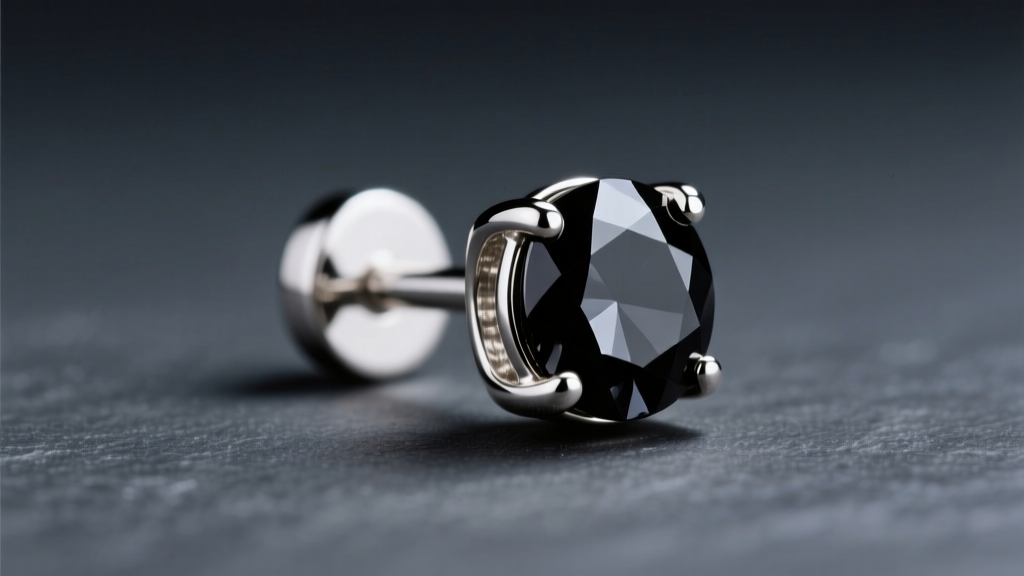
The 2026 Market for Men's Black Diamond Earrings
Navigating the market for mens black diamond earrings requires a sharp eye for gemology and a firm grasp of precious metal pricing. Unlike traditional white diamonds, where value is dictated by the 4Cs (Cut, Color, Clarity, Carat), black diamonds operate on an entirely different set of rules. In 2026, the proliferation of advanced lab-grown alternatives and sophisticated irradiation treatments has completely fractured the pricing landscape, creating massive opportunities for budget-conscious buyers—and dangerous traps for the uninformed.
Whether you are looking for a subtle 0.25-carat total weight (ctw) stud for the office or a bold 14-gauge black diamond huggie for a cartilage piercing, understanding the origin of the stone and the structural integrity of the metal setting is the only way to ensure you are getting genuine value. This guide strips away the marketing fluff to deliver a hard-nosed, data-driven assessment of what you should actually be paying for black diamond earrings this year.
Natural vs. Treated vs. Lab-Grown: What Are You Actually Buying?
The single biggest factor determining the price of black diamond earrings is the origin and treatment of the stone. According to the Gemological Institute of America (GIA), natural black diamonds (often called carbonados or heavily included opaque diamonds) derive their color from dense clouds of minute inclusions like graphite, pyrite, and hematite. Because these inclusions compromise the crystal lattice, natural black diamonds are notoriously brittle and difficult to facet without chipping the girdle.
The Three Main Categories
- Natural Black Diamonds: Rare, heavily included, and porous. They possess a raw, organic charm but are prone to chipping. Value is driven by rarity rather than brilliance.
- Irradiated/Treated Diamonds: These are natural white or grey diamonds with heavy inclusions that have been subjected to high-dose radiation or high-heat treatments to turn them uniformly black. They offer the durability of a standard diamond crystal lattice at a fraction of the cost.
- CVD Lab-Grown Black Diamonds: A massive trend in 2026. Created using Chemical Vapor Deposition (CVD) and doped with boron during the growth process, these stones are chemically identical to mined diamonds but are grown with uniform opacity and zero structural weaknesses.
From a pure budget and value perspective, treated natural diamonds and boron-doped CVD lab diamonds offer the highest return on investment. They provide the exact same Mohs hardness (10) and scratch resistance as natural stones, but cost up to 70% less per carat.

Metal Pairings and Their Impact on Total Cost
The metal housing your black diamond dictates both the longevity of the earring and the baseline price. Black diamonds are opaque, meaning they do not require the complex light-return engineering of white diamonds. This allows jewelers to use a wider variety of metals, but not all are wise investments.
The Value Hierarchy of Metals
1. 14k White Gold (The Sweet Spot): Offering the best balance of prestige, durability, and resale value. A 14k alloy (58.5% pure gold) is hard enough to securely hold a black diamond in a 4-prong or bezel setting without bending. Expect to pay a 30-40% premium over silver, but it will last a lifetime.
2. Solid Titanium (Grade 23 / 6Al-4V): The ultimate choice for sensitive ears and cartilage piercings. Titanium is incredibly lightweight, hypoallergenic, and relatively inexpensive. However, it cannot be easily resized or repaired by a standard jeweler if a prong snaps.
3. Sterling Silver with Black Rhodium: A notorious budget trap. While the initial price is low, black rhodium plating wears off within 6 to 12 months of daily wear, revealing the bright silver underneath and ruining the stealthy aesthetic. Furthermore, silver prongs are too soft to securely hold heavy black diamond stones over time.
4. Tungsten Carbide: Extremely cheap and scratch-resistant, but highly brittle. If dropped on a hard surface, a tungsten setting can shatter, destroying the earring. Avoid for fine jewelry.
Sizing, Gauges, and the "Cheese-Cutter" Effect
Black diamonds are denser and often cut deeper than white diamonds to maximize their dark face-up color. This means a 0.50ct black diamond will physically weigh more and sit heavier on the earlobe than a 0.50ct white diamond. If you purchase a heavy stone set on a thin post, you risk the "cheese-cutter effect," where the earring slowly migrates downward, stretching and tearing the earlobe piercing.
Gauge Recommendations for Men
- Standard Lobe (20g to 18g / 0.8mm to 1.0mm): Acceptable only for micro-studs (0.10ct to 0.25ct). Anything heavier requires a thicker post.
- Heavy Studs (16g / 1.2mm): The mandatory minimum for 0.50ct+ black diamond studs to prevent lobe sagging.
- Cartilage & Huggies (14g to 16g): Essential for structural integrity in the upper ear. Ensure the earring utilizes a seamless clicker or a threaded internal barbell mechanism rather than a friction push-pin, which can easily dislodge during sleep.
For high-value stones (over 0.75ctw), always insist on La Pousette (locking) backs or threaded screw-backs. Standard friction "butterfly" backs lose their tension over time and are the leading cause of lost diamond earrings.
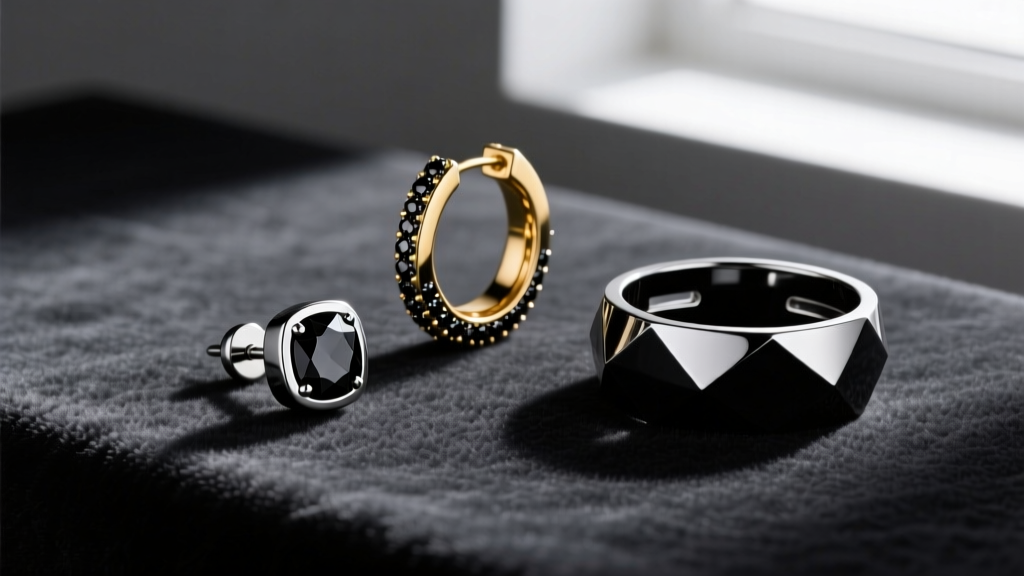
2026 Value Assessment: Price Tiers and What to Expect
To help you benchmark your purchase, we have compiled a realistic pricing matrix for men's black diamond earrings based on current 2026 market averages for a standard 0.50 ctw pair of round brilliant studs.
| Stone Type | Metal Setting | Estimated Price Range (0.50 ctw Pair) | Value Retention |
|---|---|---|---|
| Irradiated Natural | 14k White Gold | $250 - $450 | Moderate |
| CVD Lab-Grown (Boron) | 14k White Gold | $300 - $550 | Low (but high utility) |
| Natural Carbonado | 18k Yellow Gold | $800 - $1,500+ | High (Collector) |
| Irradiated Natural | Sterling Silver (Rhodium) | $80 - $150 | Very Low |
| Black Spinel / Onyx (Simulant) | Any Metal | $30 - $90 | None |
Red Flags, Simulants, and FTC Disclosures
The Federal Trade Commission (FTC) strictly mandates that jewelers must disclose any treatments applied to a gemstone that are not permanent or that significantly affect the stone's value. Unfortunately, in the online marketplace, these disclosures are frequently buried in fine print or omitted entirely.
How to Spot a Fake or Overpriced Simulant
Unscrupulous sellers often pass off black spinel, black onyx, or black cubic zirconia (CZ) as black diamonds. While these stones look similar to the untrained eye, they lack the thermal conductivity and Mohs hardness of a diamond. Over time, CZ and spinel will accumulate micro-scratches, causing the surface to look dull and cloudy, whereas a diamond will remain perfectly polished for decades.
The Thermal Conductivity Test: A standard handheld diamond tester will easily distinguish a diamond (natural, treated, or CVD) from spinel or CZ. However, be aware that some older thermal testers may fail to register carbonado (natural polycrystalline black diamond) due to its high porosity and unique heat dispersion properties. If you are buying high-end natural carbonado, always demand a certificate from a reputable lab like GIA or AGS that explicitly identifies the stone as a "natural polycrystalline diamond."
Final Verdict: Maximizing Your Budget
If your goal is to acquire a sharp, durable, and masculine accessory without paying an artificial rarity premium, CVD lab-grown black diamonds set in 14k white gold represent the undisputed value champions of 2026. You get the exact physical properties of a diamond, a perfectly uniform black hue, and a secure setting that will outlast the trends. Avoid silver-plated budget traps, ensure your post gauge matches the weight of the stone, and always verify the seller's treatment disclosure policies before checking out.


