Hoop Earrings with Turquoise Bead: 2026 Trend & Style Guide
Discover how to style hoop earrings with turquoise bead accents in 2026. Expert analysis on materials, gauge sizes, and face-shape pairings.

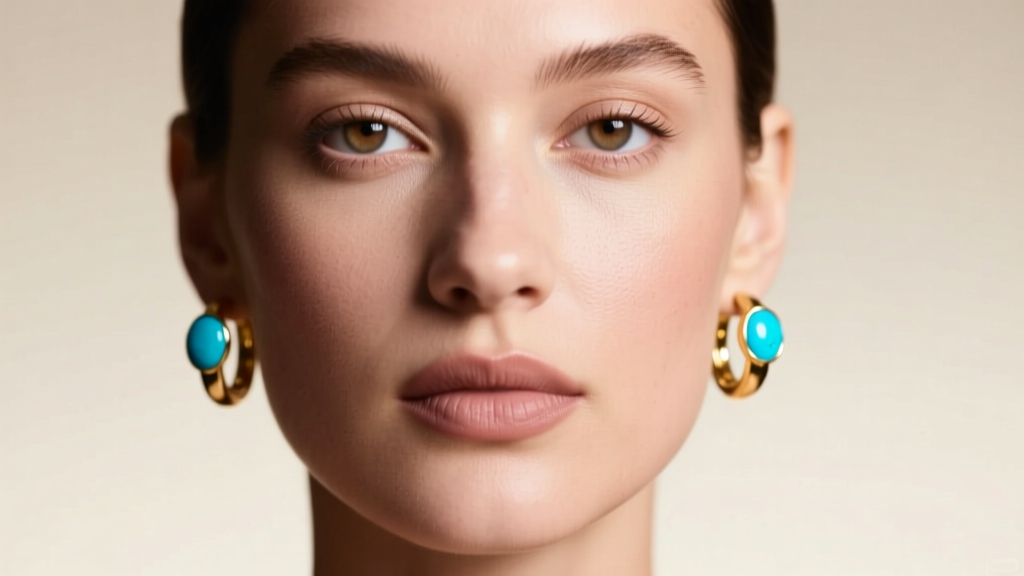
The jewelry landscape in 2026 has decisively pivoted away from hyper-minimalism, embracing what industry insiders call "desert luxe" and "elevated bohemian." At the absolute forefront of this movement is the hoop earrings with turquoise bead aesthetic. No longer relegated to fast-fashion festival accessories, these pieces have been reimagined by fine jewelers who prioritize structural integrity, gemstone authenticity, and ergonomic design. Whether you are navigating the complexities of gemstone stabilization or trying to determine the correct wire gauge to prevent lobe stretching, this comprehensive trend and style analysis will equip you with the technical knowledge required to invest wisely in this enduring silhouette.
The 2026 Shift: From Fast Fashion to Heirloom Bohemia
Over the past decade, turquoise jewelry was often mass-produced using dyed howlite and flimsy brass wire. However, the 2026 consumer demands transparency and longevity. The modern hoop earrings with turquoise bead trend is defined by a return to Southwestern heritage craftsmanship merged with contemporary, lightweight silhouettes. Designers are now utilizing ethically sourced, stabilized turquoise from historic mines like Kingman and Sleeping Beauty, setting them in recycled 14k gold and heavyweight sterling silver. This shift reflects a broader industry movement toward "slow jewelry," where buyers prefer a single, high-quality pair of beaded hoops over a dozen disposable alternatives. The visual contrast between the warm, metallic sheen of gold or silver and the opaque, sky-blue or matrix-webbed green of the turquoise creates a striking focal point that complements both casual linen wardrobes and structured evening wear.
Gemstone Authenticity: Decoding the Turquoise Market
When shopping for beaded hoops, understanding the geological and commercial realities of turquoise is critical. According to the Gemological Institute of America (GIA), natural turquoise is a porous, hydrous phosphate of copper and aluminum. Because high-grade, untreated natural turquoise is exceedingly rare and fragile, the market relies heavily on stabilization and, unfortunately, imitation.
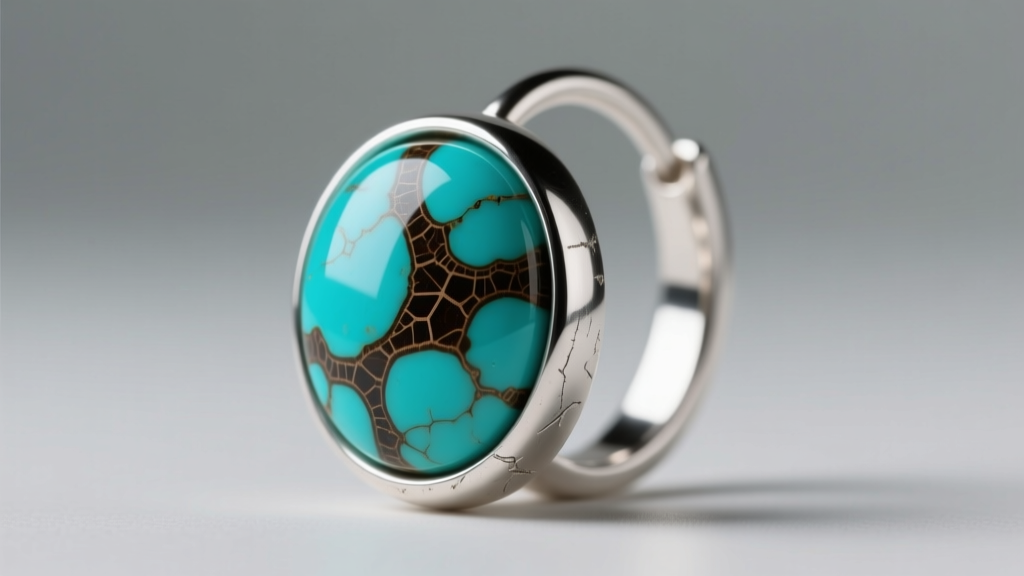
Stabilization is an accepted industry practice where softer, lower-grade turquoise is treated with a clear epoxy resin under high pressure. This hardens the stone, allowing it to be cut into precise beads that will not crack when drilled or subjected to the swinging motion of a hoop earring. However, buyers must be wary of "reconstituted" turquoise (turquoise dust mixed with glue) or dyed howlite/magnesite, which are frequently passed off as genuine in lower price brackets.
Turquoise Grade & Pricing Matrix for Hoop Earrings
| Stone Type | Origin / Mine | Matrix Presence | Mohs Hardness | Avg. Price Range (Pair) |
|---|---|---|---|---|
| Natural High-Grade | Sleeping Beauty, AZ (Closed) | None (Pure Sky Blue) | 5.5 - 6.0 | $250 - $600+ |
| Stabilized Genuine | Kingman, AZ | Brown/Black Webbing | 6.0 - 7.0 (Treated) | $85 - $180 |
| Reconstituted | Various (Manufactured) | Artificial Speckling | 4.0 - 5.0 | $35 - $65 |
| Dyed Howlite (Imitation) | N/A (Not Turquoise) | Dyed Grey Veins | 3.5 | $15 - $30 |
Note: As documented by Encyclopedia Britannica, the presence of a dark matrix (the host rock webbing) is highly prized in Kingman and Hubei stones, adding unique character to each bead. In contrast, Sleeping Beauty stones are valued for their complete lack of matrix.
Structural Integrity: Gauge Sizing and Weight Distribution
The most overlooked aspect of purchasing hoop earrings with turquoise bead accents is the physics of the wire. A standard, lightweight, unadorned hoop earring is typically crafted in 20-gauge (0.81mm) wire. However, adding a turquoise bead—which can weigh anywhere from 1.5 to 4 grams depending on its diameter—drastically alters the center of gravity.
This creates what jewelers call the "pendulum effect." As the wearer moves, the weight of the bead swings at the bottom of the hoop, concentrating kinetic force directly on the earlobe fistula (the piercing hole). Over time, a 20-gauge wire acting as a fulcrum will slowly slice through the tissue, causing irreversible lobe stretching, sagging, or even tearing.
- For Beads Under 2 Grams (4mm-6mm): An 18-gauge (1.02mm) wire is the absolute minimum requirement for structural safety and comfort.
- For Beads Over 3 Grams (8mm+): You must seek out 16-gauge (1.29mm) wire or hoops that feature a specialized "omega back" or flat-post clutch system rather than a standard continuous wire loop, to distribute the weight across a wider surface area of the earlobe.
- Cartilage Considerations: If adapting this style for a helix or forward helix piercing, standard beaded hoops are contraindicated due to the angle of the piercing. Instead, opt for a 16-gauge flat-back clicker ring with a small, 3mm turquoise cabochon charm to prevent migration and rejection.
Face Shape Geometry & Hoop Diameter Pairings
Styling hoop earrings with turquoise bead elements requires balancing the visual weight of the stone with the wearer's facial geometry. The bead acts as an anchor point that draws the eye downward, which can be used strategically to elongate or soften facial features.
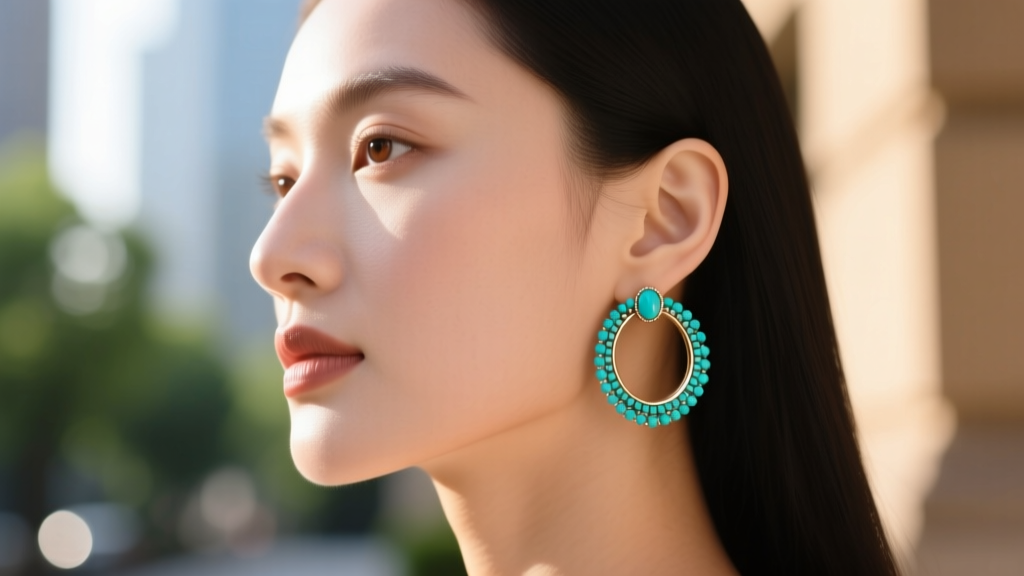
The Proportional Pairing Guide
- Round Faces: Avoid small, tight huggies (10mm-15mm) with large beads, as this emphasizes cheek width. Opt for elongated drop-hoops or medium hoops (35mm-45mm) where the turquoise bead hangs slightly below the jawline, creating a vertical line that slims the face.
- Square & Angular Faces: Soften a strong jawline with classic, perfectly circular hoops in the 25mm-30mm range. A single, round turquoise bead resting at the 6 o'clock position adds a soft, organic curve that counterbalances sharp bone structure.
- Oval Faces: The most versatile canvas. Oval faces can effortlessly carry the trendy "oversized boho" look—think 50mm+ thin wire hoops featuring a cascade of three graduated turquoise beads.
- Heart-Shaped Faces: Balance a narrower chin with hoops that feature wider silhouettes or teardrop-shaped turquoise beads that add visual volume to the lower half of the face.
Metal Alloys & Skin Sensitivities
Because the turquoise bead adds weight, the metal must possess high tensile strength while remaining hypoallergenic. In 2026, the standard for fine beaded hoops is either solid 14k gold (yellow or rose) or 925 sterling silver finished with a thick layer of rhodium or 2-micron gold vermeil. Avoid brass or nickel-silver bases at all costs; these base metals lack the rigidity to support the bead's weight without bending, and they frequently cause contact dermatitis when the heavy earring pulls the wire tightly against the sensitive skin inside the piercing.
"The marriage of a porous, organic gemstone like turquoise with a precise, engineered metal hoop requires a master's touch. The bezel setting protecting the bead must be flush and snag-free, while the wire must possess the exact temper to snap back into its original circular shape after being flexed open to pass through the ear."
— Elena Rostova, Master Bench Jeweler & Metallurgist
Maintenance & Tarnish Prevention Protocol
Turquoise is notoriously sensitive to its environment. Its porous nature means it will readily absorb oils, lotions, and cosmetics, which can alter its color over time, turning a vibrant sky-blue into a dull, muddy green. Furthermore, the silver or gold wire housing the bead is prone to oxidation.
To maintain your hoop earrings with turquoise bead accents, adhere to a strict maintenance protocol. Never use ultrasonic cleaners or chemical silver dips, as the harsh acoustic vibrations can fracture stabilized stones, and the chemicals will strip the stone of its natural moisture and ruin any epoxy stabilization. Instead, clean the metal wire with a dry, treated silver-polishing cloth, carefully avoiding the stone. To clean the turquoise bead itself, gently wipe it with a barely damp, lint-free microfiber cloth and immediately dry it. Always put your earrings on after applying hairspray, perfume, and skincare products, and store them in an airtight, anti-tarnish pouch with a silica gel packet to control ambient humidity.
By prioritizing genuine materials, respecting the biomechanics of ear piercings, and adhering to proper gemstone care, your investment in this quintessential 2026 trend will yield a timeless accessory that bridges the gap between vintage Americana and modern luxury.


