Safe Earrings for Girls Kids: The Ultimate First Piercing Guide
Discover the safest earrings for girls kids getting their first piercings. Learn about implant-grade metals, proper gauges, and expert aftercare tips.

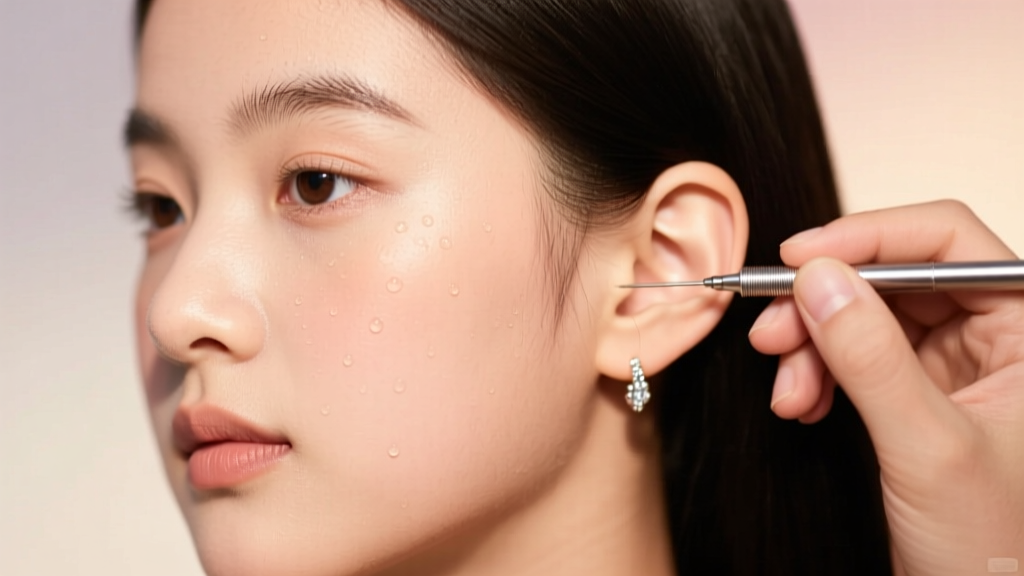
When searching for the safest earrings for girls kids, parents are often bombarded with conflicting advice, flashy marketing, and outdated traditions. Getting a child's ears pierced is a major milestone, but it is fundamentally a minor surgical procedure that requires precise attention to anatomy, metallurgy, and hygiene. The choices you make in the first ten minutes of the piercing process will dictate the next six weeks of healing. This comprehensive guide cuts through the noise, providing a science-backed framework for selecting the right jewelry, choosing the right professional, and navigating the healing process with confidence.
The Great Debate: Piercing Gun vs. Professional Needle
The most critical decision you will make is the method of piercing. Mall kiosks and retail stores predominantly use piercing guns, which are often perceived as quick and child-friendly. However, from a medical and anatomical standpoint, piercing guns are highly problematic. A piercing gun utilizes blunt force trauma to push a sharpened earring post through the tissue. This crushes the skin cells, causes significant tissue trauma, and leads to prolonged swelling and a higher risk of scar tissue formation (hypertrophic scarring).
In contrast, a professional body piercer uses a single-use, hollow, beveled needle. This needle is essentially a tiny scalpel that cleanly removes a microscopic crescent of tissue, creating a smooth, hollow channel for the jewelry to slide into. The result is significantly less trauma, less bleeding, and a much faster healing time. Furthermore, professional piercers adhere to strict sterilization protocols, utilizing autoclaves and single-use disposable setups, whereas piercing guns cannot be fully sterilized in an autoclave and often harbor microscopic blood and tissue residue from previous clients.
Material Science: What Actually Belongs in a Fresh Piercing
The fresh piercing channel is an open wound, and the body's immune system will react aggressively to foreign materials. When selecting earrings for girls kids, you must prioritize biocompatibility. Many commercial 'hypoallergenic' or 'surgical steel' earrings contain trace amounts of nickel or copper, which can trigger severe allergic contact dermatitis in healing tissue. Sterling silver is also a poor choice for fresh piercings; it contains copper, tarnishes easily when exposed to wound exudate, and can permanently stain the healing fistula (the skin tube that forms around the jewelry) gray or black—a condition known as argyria.
| Material | Standard / Grade | Nickel-Free? | Est. Price Range | Verdict for Fresh Piercings |
|---|---|---|---|---|
| Implant-Grade Titanium | ASTM F136 | Yes (100%) | $30 - $60 | The Gold Standard. Lightweight, highly biocompatible. |
| Solid Gold | 14k or 18k (Nickel-Free) | Yes | $60 - $150+ | Excellent, provided it is alloyed without nickel. |
| Niobium | Commercially Pure | Yes | $25 - $45 | Great alternative to titanium, highly inert. |
| Surgical Steel | 316L or 316LVM | No (Contains Nickel) | $10 - $25 | Avoid for fresh piercings. High allergy risk. |
| Sterling Silver | 925 Silver | Varies | $15 - $40 | Avoid. Tarnishes and can cause tissue staining. |
According to the Association of Professional Piercers (APP), the only metals recommended for initial piercings are implant-grade titanium (ASTM F136), niobium, and 14k or 18k solid gold that is specifically alloyed to be nickel-free. Titanium is exceptionally lightweight, which reduces the gravitational pull on the healing lobe, and its mirror-polished surface prevents bacteria from clinging to microscopic scratches.
Sizing It Right: Gauge, Post Length, and Backings
Beyond the metal itself, the physical dimensions of the earring dictate how smoothly the healing process will go. The standard gauge (thickness) for a lobe piercing is either 20G (0.81mm) or 18G (1.02mm). While many commercial earrings are 20G, professional piercers often prefer 18G for children because the slightly thicker post provides better stability, reducing the 'cheese-cutter effect' where a thin wire can slowly migrate through the delicate healing tissue if the child tugs on it.
Why Flat-Back Labrets Beat Butterfly Clutches
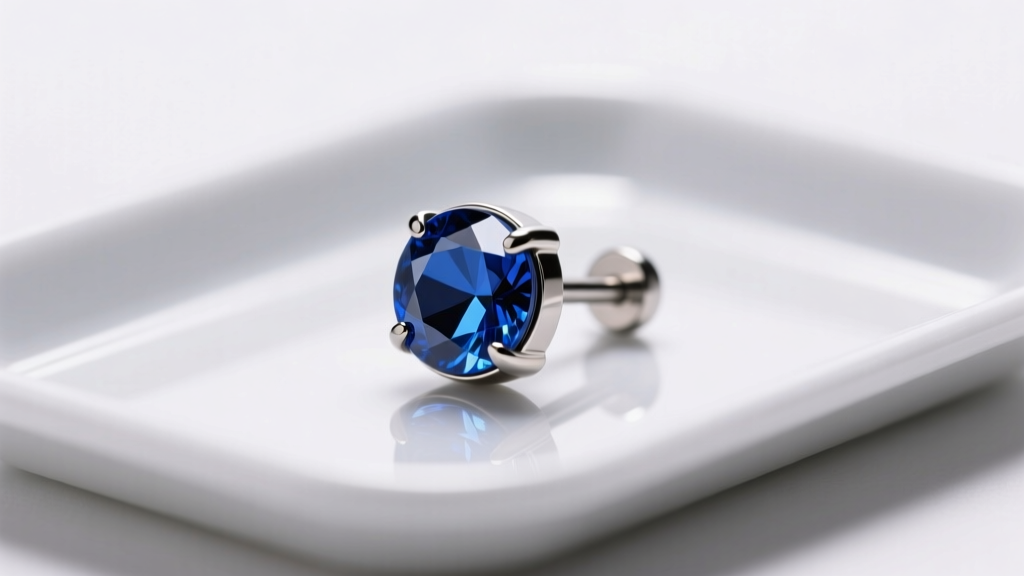
The backing of the earring is just as important as the front. Traditional butterfly clutches (the standard friction back) are notorious for causing complications in children. They feature tiny crevices that trap dead skin cells, soap residue, and bacteria. More dangerously, as a child's earlobe swells during the first week of healing, the butterfly backing can become embedded in the flesh, requiring a doctor to surgically remove it. Furthermore, the sharp prongs of a butterfly back can scratch the child's neck while sleeping.
The modern solution is the flat-back labret. This style features a flat disc that sits flush against the back of the earlobe, completely eliminating the risk of embedding and neck scratching. High-quality flat-backs use either a threadless 'push-pin' mechanism or an internally threaded screw. Both options ensure that the post itself has no sharp threads to tear the delicate healing fistula during insertion or removal.
A Parent's Troubleshooting Guide to Healing Hiccups
Even with perfect jewelry and technique, healing is rarely a perfectly straight line. It is vital for parents to distinguish between normal healing responses, irritation, and true infection. The American Academy of Pediatrics (AAP) notes that true infections in properly cleaned piercings are relatively rare; most issues are localized irritation or contact dermatitis.
- The 'Irritation Bump': A small, flesh-colored or slightly red bump near the exit hole. This is usually caused by pressure (sleeping on the ear), moisture buildup, or harsh cleaning chemicals. Action: Downsize the post length, ensure the child is sleeping on a travel neck pillow to keep pressure off the ear, and stick strictly to sterile saline.
- Allergic Contact Dermatitis: Characterized by intense itching, flaky skin, and widespread redness around the piercing. Action: The jewelry likely contains nickel. Visit a professional piercer immediately to swap the jewelry for certified ASTM F136 titanium.
- True Infection: Rare, but indicated by severe throbbing pain, excessive heat radiating from the lobe, thick yellow/green foul-smelling pus, and potentially a fever. Action: Do NOT remove the jewelry (the hole can close and trap the abscess). Consult a pediatrician immediately for a course of antibiotics.

The 6-Week Aftercare Protocol
The aftercare routine for a child's lobe piercing should be aggressively simple. The days of twisting the earring or applying harsh chemicals like rubbing alcohol, hydrogen peroxide, or tea tree oil are long gone. These substances destroy the delicate new skin cells trying to form the fistula and delay healing.
Expert Tip: Never twist or rotate the jewelry. The old advice to 'twist it so it doesn't get stuck' actually tears the fragile healing tissue and introduces surface bacteria directly into the wound channel.
Your only tool should be a sterile, 0.9% sodium chloride wound wash with absolutely no other additives or preservatives. Spray the front and back of the piercing gently twice a day. Allow the warm water of the shower to gently rinse the area at the end of bath time, and carefully pat the ear completely dry with a clean paper towel or non-woven gauze (avoid cotton balls or swabs, as the tiny fibers can wrap around the post and cause irritation). With implant-grade titanium, a flat-back design, and a gentle saline routine, your child will be ready to transition to their favorite decorative earrings in a matter of months.


