The Ultimate Material Guide for Ladies Hoop Earrings
Discover the best metals for ladies hoop earrings. Compare titanium, gold, and platinum grades for durability, weight, and sensitive skin safety.

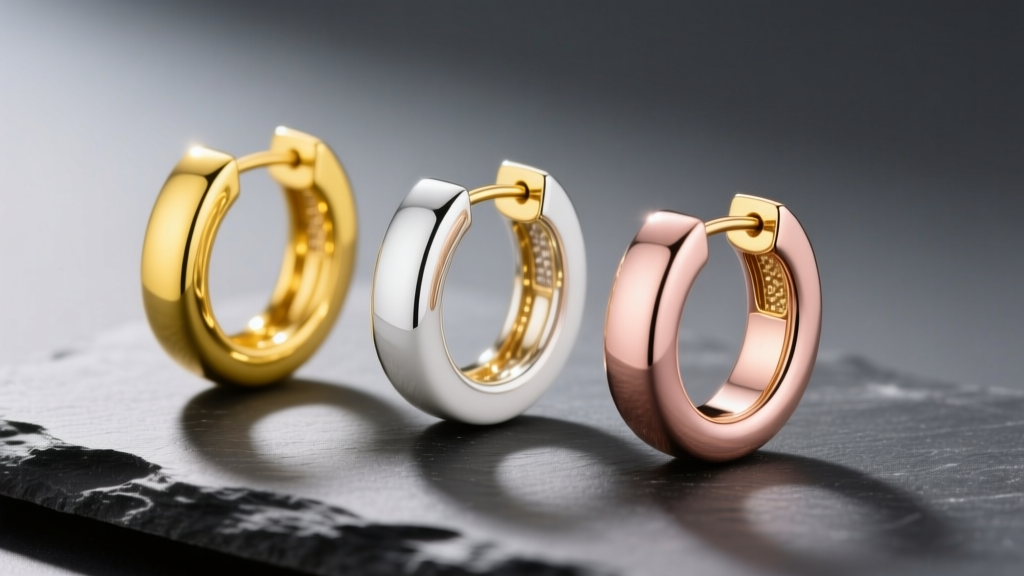
Introduction: Why Metal Choice Dictates Hoop Longevity
When investing in ladies hoop earrings, the design and diameter often steal the spotlight, but the metallurgical composition is what truly determines the piece's lifespan, comfort, and wearability. Unlike stud earrings that sit flush against the earlobe, hoops are kinetic jewelry. They swing, catch on hair, and endure constant torsional stress at the clasp and hinge mechanisms. Choosing the wrong metal for a specific hoop diameter can lead to bent wires, failed hinges, or severe contact dermatitis. This guide breaks down the exact material properties, gauge requirements, and failure modes of the most popular metals used in modern hoop earrings, helping you make an informed, dermatologist-approved choice.
The Weight Factor: Density and Comfort in Large Hoops
The specific gravity (density) of a metal directly impacts how a hoop earring wears throughout the day. A 50mm diameter hoop crafted from solid platinum will exert significantly more downward force on the earlobe piercing than the exact same design crafted from titanium. Over time, heavy hoops can cause lobe elongation or tearing, particularly if the piercing is already stretched or heals poorly.
Calculating Gauge vs. Diameter Strain
To counteract the leverage exerted by large diameters, jewelers must increase the wire thickness (gauge). However, thicker wire in dense metals quickly becomes uncomfortably heavy. Here is the expert framework for matching gauge to hoop size:
- Huggies (10mm - 15mm): 18-gauge (1.0mm) or 16-gauge (1.2mm) is ideal. The small diameter prevents bending, allowing for lighter, thinner wires.
- Standard Hoops (20mm - 35mm): 16-gauge (1.2mm) provides the perfect balance of structural integrity and lobe comfort.
- Large Statement Hoops (40mm+): 14-gauge (1.6mm) or 12-gauge (2.0mm) is mandatory to prevent the hoop from warping into an oval shape during daily wear.
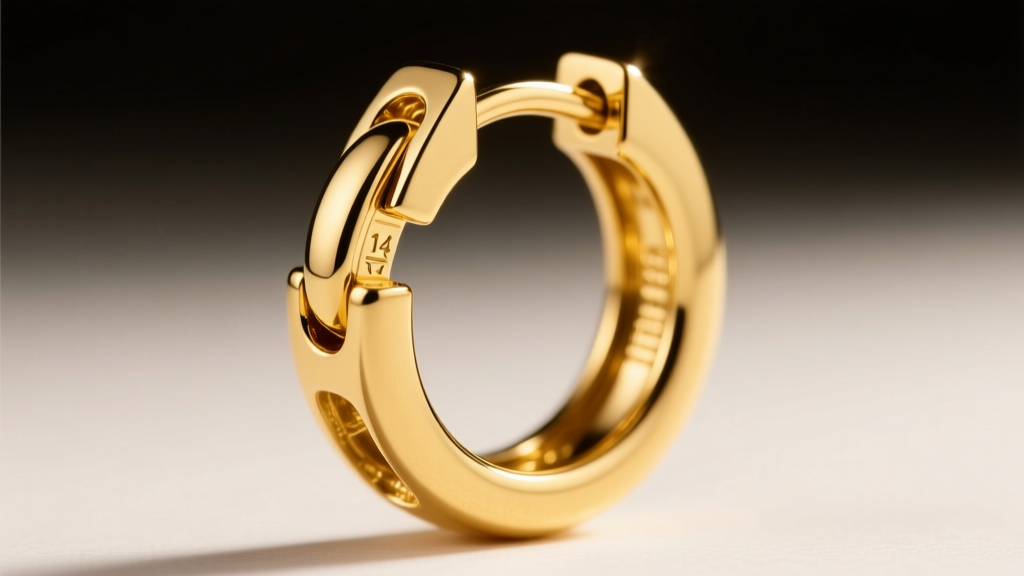
Comprehensive Metal Comparison Chart
To understand how different alloys perform under stress, we must look at their Vickers Hardness (HV) and density. Below is a comparative analysis of the primary metals used in ladies hoop earrings.
| Metal / Alloy | Vickers Hardness (HV) | Density (g/cm³) | Hypoallergenic Rating | Avg. Price per Gram | Best Hoop Application |
|---|---|---|---|---|---|
| 14k Yellow Gold | ~135 HV | 13.0 | Moderate (Contains Copper/Silver) | $45 - $60 | Everyday medium hoops, clickers |
| 18k Yellow Gold | ~115 HV | 15.5 | High (Less alloyed metal) | $65 - $85 | Small huggies, low-impact studs |
| 950 Platinum | ~110 HV (Work-hardens) | 21.4 | Excellent (Nickel-free) | $35 - $45 (High labor cost) | Heirloom pieces, diamond-set hoops |
| ASTM F136 Titanium | ~350 HV | 4.4 | Perfect (Implant-grade) | $2 - $5 | Large statement hoops, fresh piercings |
| Surgical Steel (316L) | ~220 HV | 8.0 | Poor to Moderate (Contains Nickel) | $0.50 - $2 | Budget fashion hoops (not for healing) |
Deep Dive: Precious Metals vs. Base Alloys
Solid Gold: The 14k vs. 18k Dilemma
Pure 24k gold is far too soft (approx. 25 HV) for jewelry; it would bend out of shape the first time you pulled a sweater over your head. Therefore, gold is alloyed with metals like copper, silver, and zinc. According to the Gemological Institute of America (GIA), 14k gold contains 58.3% pure gold and offers superior tensile strength compared to 18k gold (75% pure). For continuous wire hoops—where the thin wire must bend to lock into the opposite end of the tube—14k gold is vastly superior. An 18k continuous hoop will suffer from metal fatigue and eventually snap at the bending point due to its higher purity and lower hardness.
Platinum and Palladium: The Heavyweights
Platinum (usually alloyed with 5% ruthenium or cobalt to reach 950 purity) is incredibly dense. While its initial Vickers Hardness is lower than 14k gold, platinum exhibits a unique property called "work hardening." As it is scratched or bent, the metal displaces rather than wearing away, creating a patina and actually increasing its surface hardness. However, because of its extreme density (21.4 g/cm³), large platinum hoops are generally discouraged for standard earlobe piercings due to the risk of gravity-induced stretching. Palladium, a platinum group metal, offers a similar bright white luster and hypoallergenic profile but at roughly half the density, making it an excellent, albeit rare, alternative for larger precious metal hoops.
Implant-Grade Titanium (ASTM F136)
For those with hyper-sensitive skin or newly pierced lobes, commercial-grade titanium is not enough. You must look for certification of ASTM F136 (Ti-6Al-4V ELI), which is the exact standard used for surgical implants. This alloy is completely nickel-free and biocompatible. Furthermore, titanium can be anodized using electricity to create a vibrant spectrum of colors (from deep blues to purples and golds) without the use of surface platings that can chip or wear off over time.
Troubleshooting Green Skin and Contact Dermatitis
The most common failure mode in budget-friendly ladies hoop earrings is the onset of contact dermatitis or the dreaded "green ear" effect. This is rarely caused by the primary metal itself, but rather the hidden alloys and solder joints.
- The Nickel Culprit: White gold is naturally yellowish and is often rhodium-plated. Beneath the plating, many manufacturers use nickel as a whitening alloy. Once the rhodium wears off at the friction points of a hoop clasp, the nickel is exposed to sweat and skin oils, triggering an allergic reaction. The Mayo Clinic identifies nickel as the leading cause of allergic contact dermatitis worldwide.
- Copper Oxidation (Green Skin): Rose gold and lower-karat yellow gold contain high amounts of copper. When copper reacts with the acids in your sweat, it creates copper chloride, which transfers to the skin as a harmless but unsightly green residue. This is more common in humid climates or during exercise.
- Solder Joints: Even if a hoop is stamped "14k," the hinge mechanism or the seam where the wire meets the clasp is often soldered using a lower-karat, nickel-bearing solder to lower the melting point during manufacturing. Always look for laser-welded or seamless continuous hoops if you have severe metal allergies.
Expert Verdict: Matching Material to Hoop Style
There is no single "best" metal; the ideal choice depends entirely on the geometry of the hoop and your biological compatibility. For large, statement-sized hoops (40mm+), ASTM F136 Titanium is the undisputed champion, offering massive structural rigidity (350 HV) at a fraction of the weight of gold or platinum, preventing lobe fatigue. For everyday medium hoops (20mm-30mm) with intricate clicker hinges, 14k gold provides the necessary hardness to keep the hinge mechanism crisp and secure over years of opening and closing. Finally, for petite, diamond-encrusted huggies, 18k gold or 950 platinum is preferred, as the small diameter negates the risk of bending, allowing you to enjoy the richer color and higher purity of the precious metal without compromising the jewelry's structural integrity.


