How Designers Turn Earring Clip Art Into 2026 Trends
Discover how independent jewelers transform 2D earring clip art into structural, high-end bespoke jewelry trends for 2026 using CAD and laser cutting.

The Digital Blueprint: Why Earring Clip Art Matters in 2026
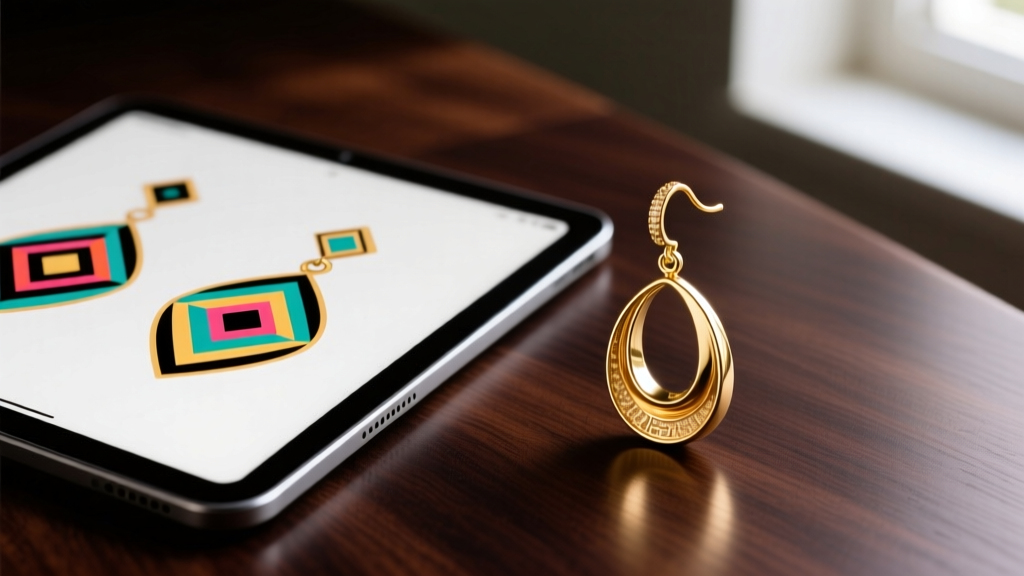
When most people hear the phrase earring clip art, they picture rudimentary, low-resolution vectors used for elementary school craft projects or digital scrapbooking. However, in the high-end bespoke jewelry sector of 2026, the term has been entirely reclaimed by independent designers and CAD (Computer-Aided Design) modelers. Today, earring clip art refers to the foundational 2D vector blueprints—often exported as SVG, DXF, or AI files—that serve as the critical first step in translating flat, conceptual silhouettes into fully realized, three-dimensional wearable art. As the jewelry industry leans heavily into rapid prototyping and AI-assisted trend forecasting, the ability to manipulate 2D vector graphics has become just as important as traditional bench skills like sawing and soldering.
According to technical resources from Ganoksin, the world's largest jewelry-making community, the modern design pipeline almost always begins with a digital footprint. Designers use vector libraries to test visual weight, negative space, and symmetry before committing to expensive precious metals. By treating earring clip art as a structural blueprint rather than mere decoration, jewelers can rapidly iterate through dozens of concepts, adjusting the geometry of a huggie hoop or the articulation points of a kinetic dangle in minutes rather than days.
From Vector to Volume: Translating 2D Silhouettes
The primary challenge in utilizing earring clip art for fine jewelry is the illusion of two-dimensional space. A flat vector graphic does not account for the Z-axis (depth), which is where structural integrity and wearer comfort are determined. A beautifully intricate, lace-like ear cuff might look stunning as a 2D vector, but if it is extruded into 3D space without proper support struts or appropriate metal thickness, it will warp under the tension of daily wear.
Gauge and Structural Integrity
Translating a 2D outline into a physical piece requires strict adherence to piercing gauges and metallurgical limits. For example, if your earring clip art features a standard French wire hook, the CAD model must account for a 20-gauge (0.81mm) or 22-gauge (0.64mm) wire to ensure it passes comfortably through a standard lobe piercing without causing trauma. If the design transitions into a cartilage helix or conch piece, the structural posts must be modeled at 18-gauge (1.02mm) or 16-gauge (1.29mm). Furthermore, when working with heavy statement dangles, the jump rings connecting the components must be modeled with a minimum wall thickness of 0.8mm in 14k gold to prevent the rings from pulling open under the kinetic weight of the earring.
Trend Analysis: Top Vector Concepts Becoming Physical Realities
By analyzing the most downloaded and modified earring clip art files across bespoke design forums this year, we can identify the dominant physical trends hitting the market. The shift toward modularity and kinetic movement is heavily reflected in the digital blueprints designers are currently manipulating.
| 2D Vector Trend (Clip Art Style) | 3D Execution Material | Gauge / Thickness | Estimated Bespoke Cost |
|---|---|---|---|
| Kinetic Articulated Dangles | 18k Yellow Gold & Titanium | 20g wire, 1.2mm plates | $850 - $1,400 |
| Modular Interlocking Ear Cuffs | 925 Sterling Silver | 14g (1.6mm) tension bands | $180 - $320 |
| Geometric Negative-Space Huggies | 14k White Gold | 16g (1.29mm) hinge posts | $450 - $700 |
| Asymmetric Botanical Drops | Oxidized Brass & Resin | 18g ear wires, 1mm sheet | $120 - $250 |
As the table illustrates, the leap from a simple 2D vector to a finished piece involves significant material and engineering considerations. The modular interlocking ear cuffs, for instance, require precise tension calculations that simply cannot be conveyed in flat earring clip art. The 14-gauge tension bands must be annealed and work-hardened to grip the cartilage securely without causing necrosis or discomfort over long wear periods.
Software and Tooling for the Modern Bench Jeweler
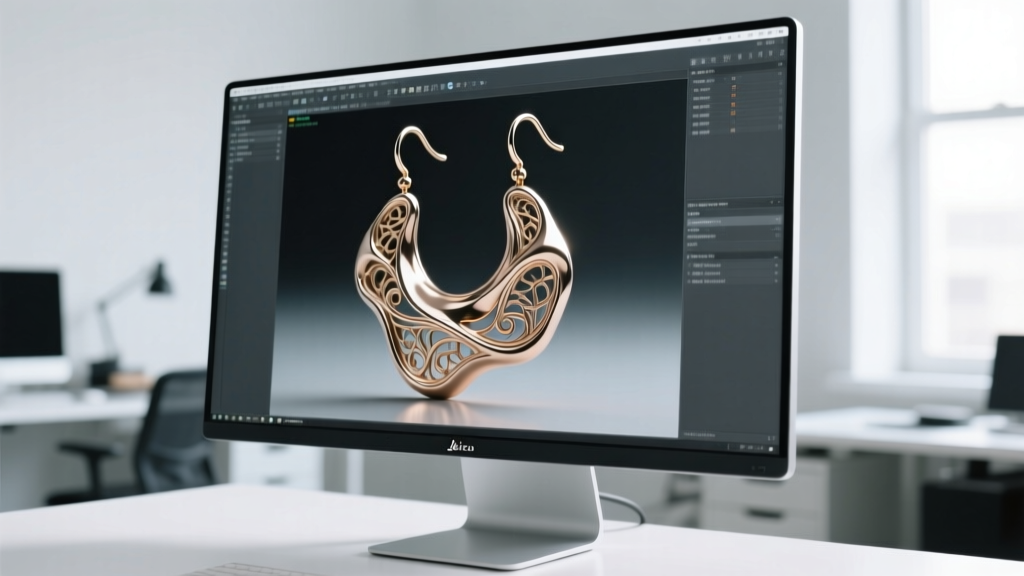
To bridge the gap between flat earring clip art and physical prototypes, designers rely on advanced CAD software and precision manufacturing tools. Programs like Rhino 3D and MatrixGold allow jewelers to import DXF vector files and extrude them into complex 3D meshes. These programs feature specialized jewelry toolkits that automatically generate prong settings, bezel walls, and sprue bases for lost-wax casting.
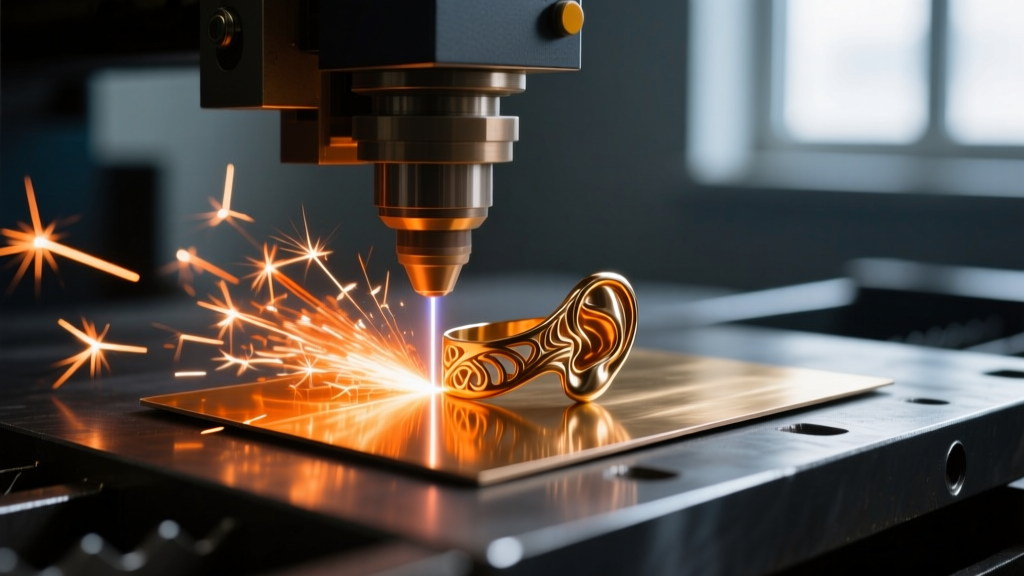
Once the 3D model is finalized, it is typically sent to a high-resolution DLP (Digital Light Processing) 3D printer using castable wax resin. The burnout cycle for these resins requires a precise kiln schedule—usually ramping up to 1350°F (732°C) over several hours—to ensure zero ash residue remains in the investment mold before the molten gold or silver is introduced via centrifugal or vacuum casting. For flatter, more geometric designs derived directly from earring clip art, jewelers are increasingly bypassing casting altogether, opting instead to use 40W to 60W fiber lasers to cut silhouettes directly from 1mm to 1.5mm precious metal sheets, followed by hand-finishing and tumbling.
Sourcing and Copyright Considerations
While the internet is flooded with free vector graphics, using unlicensed earring clip art for commercial jewelry production is a significant legal and ethical risk. The Gemological Institute of America (GIA) frequently highlights the importance of intellectual property rights in jewelry design. A flat vector drawing is protected by copyright the moment it is created. If a designer downloads a proprietary earring clip art file from a stock website and directly extrudes it into a 3D model for commercial sale without a commercial license, they are infringing on the original artist's rights.
To avoid this, professional studios either subscribe to specialized jewelry CAD libraries that grant full commercial manufacturing rights, or they use open-source vector repositories like Wikimedia Commons for historical and public domain motifs (such as Art Nouveau floral patterns or Victorian scrollwork). Another common practice is to use basic earring clip art purely as a proportional guide—importing the vector into CAD as a background reference layer and then hand-drawing entirely new, original 3D geometry over it to ensure the final piece is a unique, protectable design.
Final Thoughts on Digital-to-Physical Craftsmanship
The evolution of earring clip art from simple digital embellishments to sophisticated engineering blueprints highlights a massive shift in how jewelry is conceptualized in 2026. The most successful independent jewelers are those who possess a hybrid skill set: the digital fluency to manipulate complex vector geometry and the traditional bench expertise to understand how those geometries behave when cast in precious metals. By respecting the physical limitations of gauge sizes, metal shrinkage rates, and human anatomy, designers can take the limitless possibilities of 2D vector art and forge them into the heirloom-quality earrings of tomorrow.


