Guy Hoop Earrings: The Technical Guide to Sizing and Metals
An expert technical deep dive into guy hoop earrings, covering ASTM metal grades, gauge sizing, closure mechanics, and biomechanical fit.

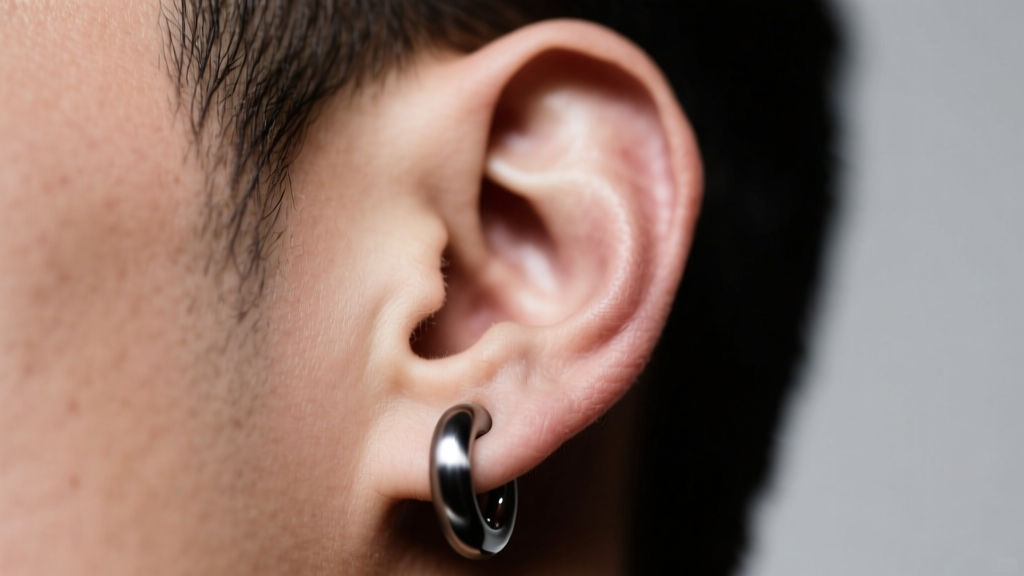
When selecting guy hoop earrings, most buyers focus purely on aesthetics, overlooking the critical biomechanical and metallurgical factors that dictate comfort, longevity, and tissue health. As a domain expert in body jewelry engineering, I approach men's hoops not just as accessories, but as precision-machined components that interact dynamically with human anatomy. Whether you are outfitting a standard lobe piercing or a complex cartilage setup, understanding the technical specifications of your jewelry is non-negotiable.
In this comprehensive guide, we will dissect the material sciences, gauge tolerances, and closure failure modes that separate premium men's hoops from substandard alternatives. As of 2026, advancements in CNC micro-machining have vastly improved hinge tolerances, but the fundamental rules of metallurgy and anatomical sizing remain absolute.
The Metallurgy of Men's Hoops: Beyond Basic Stainless Steel
The male jewelry market is saturated with 316L surgical steel. While 316L is acceptable for fully healed, non-reactive lobes, it contains up to 12% nickel. For individuals with contact dermatitis or those navigating fresh cartilage piercings, nickel leaching is a primary failure point. According to the Association of Professional Piercers (APP), implant-grade materials are the only recommended standard for long-term wear and healing tissue.
Implant-Grade Titanium (ASTM F136)
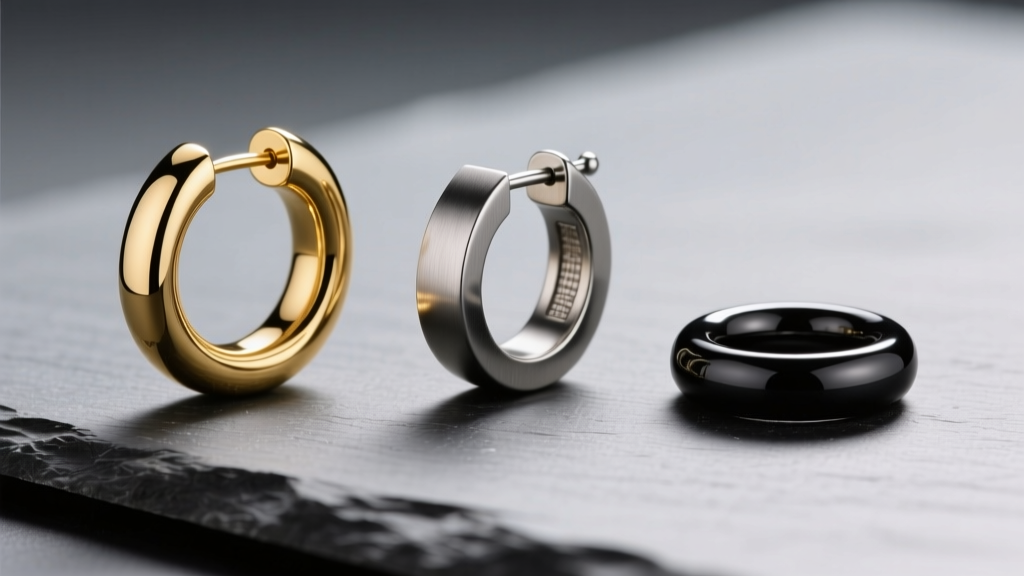
Titanium alloy Ti6Al4V ELI (ASTM F136) is the gold standard for guy hoop earrings. It is entirely nickel-free, highly resistant to saline oxidation, and boasts a strength-to-weight ratio that prevents the hoop from warping under the mechanical stress of sleeping or accidental snags. Furthermore, titanium can be anodized to produce dark, masculine hues like gunmetal or bronze without relying on toxic surface platings that eventually chip and expose base metals.
Niobium and Solid Gold Alloys
Niobium is a reactive metal that, like titanium, is nickel-free and highly biocompatible. It is denser than titanium, giving the hoop a premium, substantial weight that many men prefer. When it comes to gold, avoid 24k (pure gold) for hoops. Pure gold is too malleable; a 10mm continuous ring in 24k will permanently deform if pulled. The Gemological Institute of America (GIA) notes that 14k or 18k solid gold alloys, mixed with elements like copper or silver, provide the necessary tensile strength to maintain the hoop's circular memory.
Precision Sizing: Inner Diameter and Gauge Mechanics
Sizing guy hoop earrings requires an understanding of two distinct metrics: Wire Gauge (thickness) and Inner Diameter (ID). Many mass-market brands conflate Outer Diameter (OD) with ID, leading to improper fits that choke the piercing or hang awkwardly against the jawline.
Wire Gauge Tolerances
Men's jewelry typically demands a thicker profile to balance masculine facial structures. While 20-gauge (0.81mm) is standard for women's fine jewelry, it is generally too fragile for men's daily-wear hoops, prone to bending and causing the "cheese-cutter effect" in the piercing fistula.
| Gauge | Millimeter (mm) | Primary Application for Men | Structural Integrity |
|---|---|---|---|
| 20G | 0.81mm | Tragus, thin helix, lightweight lobes | Low (prone to warping) |
| 18G | 1.02mm | Standard lobe, conch, upper cartilage | Medium (industry standard) |
| 16G | 1.29mm | Thick lobes, daith, industrial anchors | High (excellent durability) |
| 14G | 1.63mm | Stretched lobes, heavy cartilage setups | Maximum (rigid, heavy) |
Inner Diameter (ID) and Facial Mapping
The ID dictates how the hoop interacts with the ear and jaw. For a standard male lobe, an 8mm (5/16") ID acts as a tight "huggie," sitting flush against the tissue. A 10mm (3/8") ID is the classic standard, allowing the lobe to sit inside the hoop with a 2mm clearance. Anything exceeding 12mm (1/2") will drop below the lobe, creating a pendulum effect that catches on collars and headphones.
Closure Mechanisms and Structural Failure Modes
The closure is the most vulnerable point of any hoop. Understanding the mechanical failure modes of different clasps will save you from losing expensive jewelry.
Hinge Fatigue in Clickers
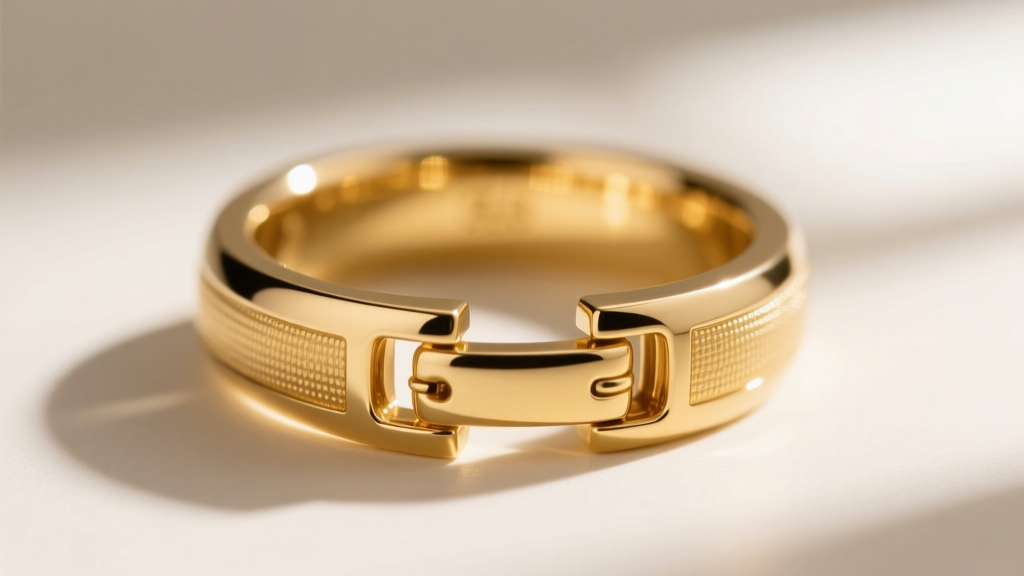
Clickers feature a hinged segment that snaps into a receiving groove. Modern 2026 CNC-machined clickers offer incredible tolerances, but the hinge pin itself is a microscopic point of failure. Repeatedly opening the ring by pulling the segments apart (rather than pushing them laterally) will shear the hinge pin over time. Always use ring opening pliers or your thumbnails to push the segments side-to-side.
Tension Loss in Continuous Rings
Continuous (or endless) rings rely on the tensile memory of the metal wire. One end is slightly tapered, and the other is a hollow tube. The failure mode here is metal fatigue; if you bend the ring too far out of its circular plane to insert it, the metal loses its "spring" memory, resulting in a gap that will eventually snag on clothing and tear out of the ear.
Captive Bead Rings (CBR)
CBRs use the tensile strength of the ring itself to hold a small bead in place. For 16G and 14G guy hoop earrings, the tension required to hold the bead is immense. Without specialized CBR opening pliers, attempting to pry these open with bare hands usually results in the bead launching across the room and the ring warping into an oval.
Expert Troubleshooting: If your clicker hoop feels loose and the clasp no longer 'clicks' audibly, do not discard it. Use a pair of nylon-jaw pliers to gently squeeze the receiving tube inward by a fraction of a millimeter. This restores the friction fit without damaging the metal's surface finish.
Cartilage vs. Lobe: Biomechanical Considerations
The anatomy of the ear dictates the geometry of the hoop. Lobe tissue is soft, vascular, and highly pliable. It can accommodate a slightly imperfect hoop shape or a heavier gauge without issue. Cartilage, however, is rigid and avascular.
- Helix and Conch: Swelling in cartilage can be severe. A hoop placed in a fresh helix piercing will create localized pressure points, leading to hypertrophic scarring (piercing bumps). Hoops should only be introduced to cartilage after the 6-to-12-month healing window.
- Daith and Tragus: These piercings require precise ID mapping. A daith hoop must follow the exact curvature of the inner ear fold. If the ID is too large, the hoop will press against the anti-helix ridge, causing chronic irritation and potential cartilage deformation.
Maintenance and Oxidation Prevention
Men's grooming products—specifically pomades, beard oils, and sulfate-heavy shampoos—create a biofilm on jewelry that accelerates oxidation and dulls the finish. Tungsten carbide and titanium are virtually impervious to these chemicals, but solid gold and niobium require maintenance.
To restore the luster of 14k or 18k gold hoops, avoid commercial jewelry dips, which often contain harsh thiourea compounds that can micro-pit the alloy. Instead, use a mild, phosphate-free dish soap and a soft-bristled toothbrush to mechanically disrupt the sebum buildup. For anodized titanium, never use ultrasonic cleaners; the high-frequency cavitation can strip the anodized oxide layer, returning the metal to its raw silver state.
By prioritizing implant-grade metallurgy, respecting gauge tolerances, and understanding the mechanical limits of your chosen closure, you elevate your jewelry from a mere accessory to a precision-engineered component of your personal style.


