The Ultimate Guide to Buying Gold Sunburst Earrings
Discover what to look for when buying gold sunburst earrings. Learn about gold karats, vintage hallmarks, weight distribution, and post gauges.

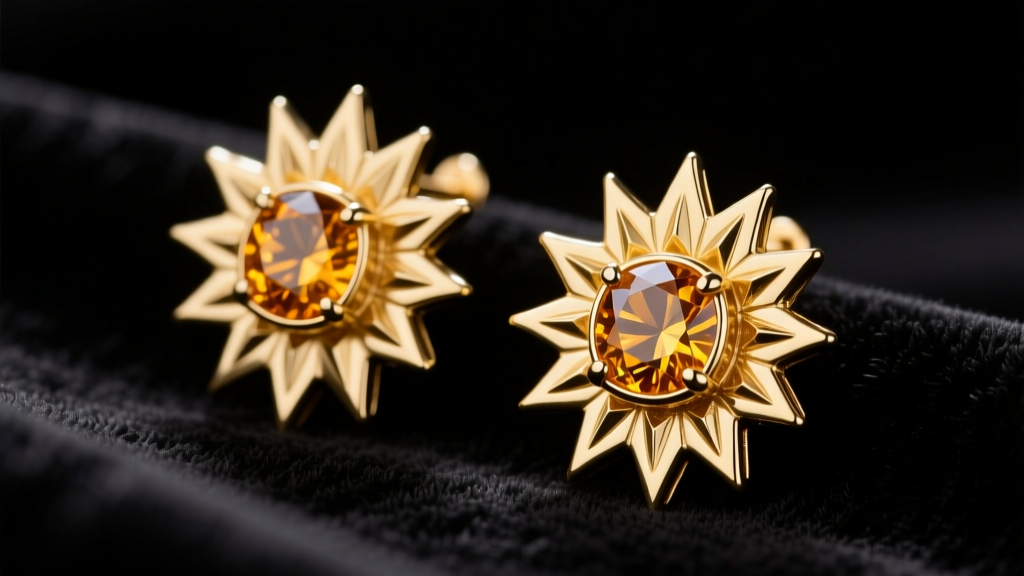
Gold sunburst earrings—often interchangeably referred to as starburst earrings—are a masterclass in kinetic jewelry design. Characterized by radiating rays that extend outward from a central focal point, these pieces capture and reflect light from every angle. Whether you are hunting for an authentic mid-century vintage piece or a modern architectural interpretation, buying gold sunburst earrings requires a keen eye for metallurgy, structural integrity, and historical hallmarks. In 2026, the demand for bold, maximalist vintage revival jewelry continues to surge, making it more important than ever to distinguish between high-quality heirlooms and flimsy mass-produced replicas.
The Anatomy of a Sunburst Design
Before evaluating materials, it is essential to understand the structural components of a sunburst earring. The design typically consists of three main elements:
- The Corona (Rays): The radiating spokes that give the earring its name. These can be tapered, fluted, twisted, or finished with milgrain detailing.
- The Centerpiece: The anchor of the design, which may be a bezel-set gemstone, a textured gold dome, or a piece of fired enamel.
- The Gallery and Basket: The underlying framework that supports the rays and connects the face of the earring to the post or clip mechanism.
Because the visual weight of the earring is distributed outward, the gallery must be robust enough to prevent the rays from bending or warping over time. When inspecting gold sunburst earrings, always view them from the side profile to ensure the rays sit on a single, even plane and are securely soldered to the central basket.
Gold Purity: Choosing the Right Karat for Radiating Rays
The purity of the gold fundamentally dictates both the color of the piece and its structural durability. According to the Gemological Institute of America (GIA), pure 24k gold is far too malleable for intricate sunburst designs; the thin rays would bend under their own weight or warp when handled. Therefore, alloying is strictly necessary.
| Gold Karat | Purity Stamp | Durability for Sunburst Rays | Color Profile | Ideal Use Case |
|---|---|---|---|---|
| 10k Gold | 417 | Extremely High (Stiff) | Pale, slightly washed-out yellow | Budget-friendly, everyday small studs |
| 14k Gold | 585 | High (Excellent for thin rays) | Classic warm yellow or rich rose | Best for daily wear and modern reproductions |
| 18k Gold | 750 | Moderate (Requires thicker rays) | Deep, saturated buttery yellow | High-end vintage pieces and luxury fine jewelry |
| 22k Gold | 916 | Low (Too soft for long spokes) | Intense, almost orange-yellow | Rare, usually limited to short, chunky starbursts |
For most buyers, 14k gold offers the optimal balance of rich color and tensile strength, ensuring the delicate points of the sunburst do not snag or snap. However, if you are collecting European vintage jewelry from the 1940s and 1950s, you will predominantly encounter 18k gold, which requires slightly thicker, more substantial ray construction.
The Retro Era: Historical Context and Hollow Construction
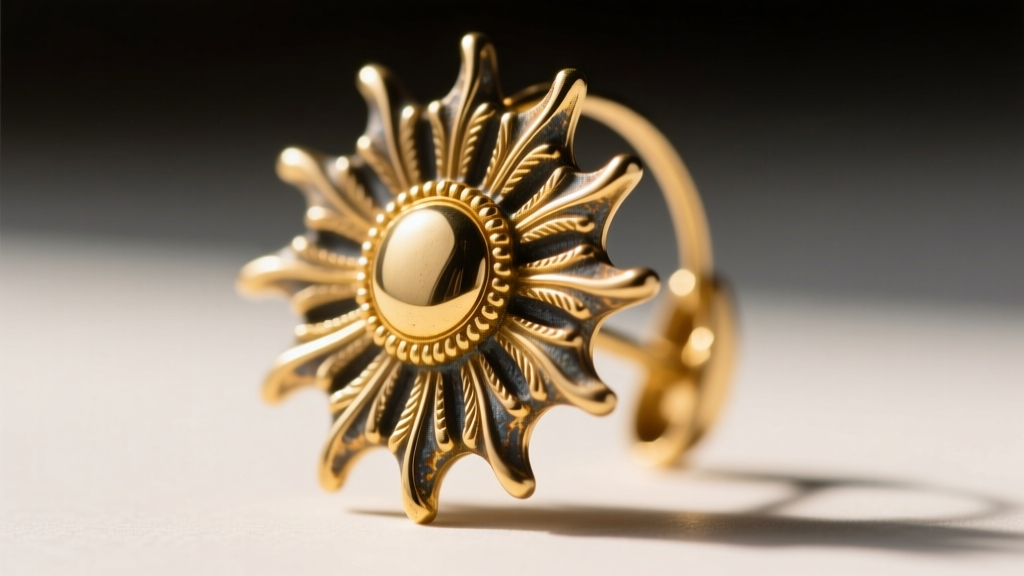
To be an informed buyer, you must understand the 'Retro' jewelry period (roughly 1935 to 1950). According to the Lang Antique Jewelry University, platinum was reserved for the military effort during World War II, forcing jewelers to work almost exclusively with gold. Because gold was heavily rationed and expensive, artisans developed innovative techniques to create massive, bold sunburst and starburst designs using minimal metal.
They achieved this through electroforming and hollow construction. By fusing thin sheets of gold into domed, three-dimensional rays, jewelers created earrings that looked incredibly substantial but were surprisingly lightweight. When buying vintage Retro gold sunburst earrings, this hollow construction is a hallmark of authenticity. However, it also presents a vulnerability: hollow rays are prone to denting if dropped or crushed in a jewelry box. Always run your fingers gently over the surface of vintage pieces to check for micro-dents or unevenness that indicates structural compromise.
Weight Distribution and Lobe Support
Sunburst earrings are inherently top-heavy or outward-heavy. Even if the total gram weight is low, the wide diameter (often ranging from 15mm to 35mm) creates a lever effect that can pull on the earlobe. When evaluating a pair, consider the following support mechanisms:
Post Gauges and Backing Mechanisms
Standard earring posts are typically 20-gauge (0.81mm thick). For a gold sunburst earring with a diameter exceeding 20mm, a 20-gauge post is insufficient and will eventually bend, causing the earring to droop. Look for pieces featuring an 18-gauge (1.02mm) or 16-gauge (1.29mm) post. Furthermore, standard friction backs (butterfly clutches) often fail to support the wide face of a sunburst. Opt for:
- Screw-backs: Provide a secure, flush fit that prevents the earring from rotating or sliding down the post.
- Jumbo Silicone Discs: If buying modern pieces with standard posts, invest in 10mm silicone support discs to distribute the weight across a wider area of the earlobe.
- Omega Clips: For vintage clip-on sunbursts, ensure the omega wire is tight and the hinge has not been overstretched.
Face Shape and Styling Proportions
The geometric nature of gold sunburst earrings makes them a powerful tool for balancing facial proportions. Because the design draws the eye outward, the scale of the sunburst must be matched to the wearer's features:
- Round Faces: Avoid perfectly symmetrical, wide circular starburst studs, which will exaggerate facial width. Instead, look for elongated sunburst drops or dangles where the rays point vertically to create a lengthening illusion.
- Square and Angular Faces: Soft, curved starburst studs with rounded ray tips and a central cabochon gemstone help soften strong jawlines and angular cheekbones.
- Oval Faces: Can carry off any proportion, from delicate 10mm huggie-style sunbursts to dramatic 40mm statement clips.
Centerpiece Gemstones and Enamel Work
The center of a gold sunburst earring is its anchor. When gemstones are used, they are typically bezel-set to maintain the smooth, continuous lines of the radiating rays. Citrine, amber, and smoky quartz were highly popular in the mid-century due to their warm, golden hues that complemented yellow gold alloys. When buying vintage pieces with these stones, check for 'foil-backing'—a thin layer of metallic foil placed behind the gemstone to enhance its color. If the earring has been exposed to water, the foil may have oxidized or turned black, significantly diminishing the stone's brilliance.
Alternatively, many Art Deco and Retro sunburst earrings feature guilloché enamel at the center. Enamel is essentially glass fused to metal. Inspect the enamel under a loupe or macro lens; hairline cracks or crazing are common in antique pieces and should be factored into the price negotiation, as professional enamel restoration is highly specialized and expensive.
Final Pre-Purchase Checklist
Before finalizing your acquisition of gold sunburst earrings, run through this expert checklist to ensure you are getting a piece of lasting quality:
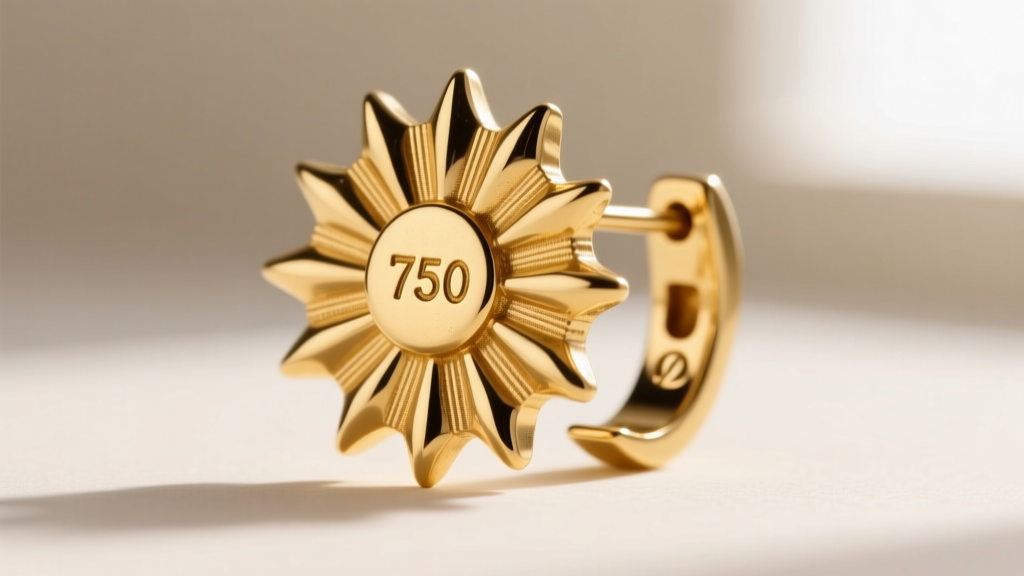
- Verify the Hallmark: Look for 585 (14k) or 750 (18k) stamped on the post or the reverse of the clip mechanism. Use a loupe to ensure the stamp is crisp, not blurred (which can indicate a modern cast reproduction of a vintage mold).
- Check Ray Alignment: Lay the earring flat on a glass surface. All rays should sit flush against the glass without wobbling.
- Test the Tension: If it is a clip-on or has an omega back, open and close the mechanism 3-4 times. It should snap shut with a firm, audible click and exhibit no lateral wiggling.
- Inspect the Solder Joints: Where the rays meet the central gallery, the solder should be smooth and flush. Lumpy, discolored solder indicates a later, amateur repair.
- Evaluate the Post Thickness: Use calipers if possible, or visually compare the post to a standard sewing needle. If it looks dangerously thin for the size of the sunburst, factor in the cost of having a jeweler laser-weld a heavier 18-gauge post.
Gold sunburst earrings are more than just accessories; they are wearable sculptures that reflect light, history, and master craftsmanship. By prioritizing structural integrity, understanding historical gold rationing techniques, and demanding proper lobe support, you can confidently invest in a pair that will radiate brilliance for decades to come.


