The Ultimate Earrings Chart for Cleaning and Material Care
Use our expert earrings chart to master cleaning protocols for titanium, gold, and silver. Learn material-specific care and maintenance.

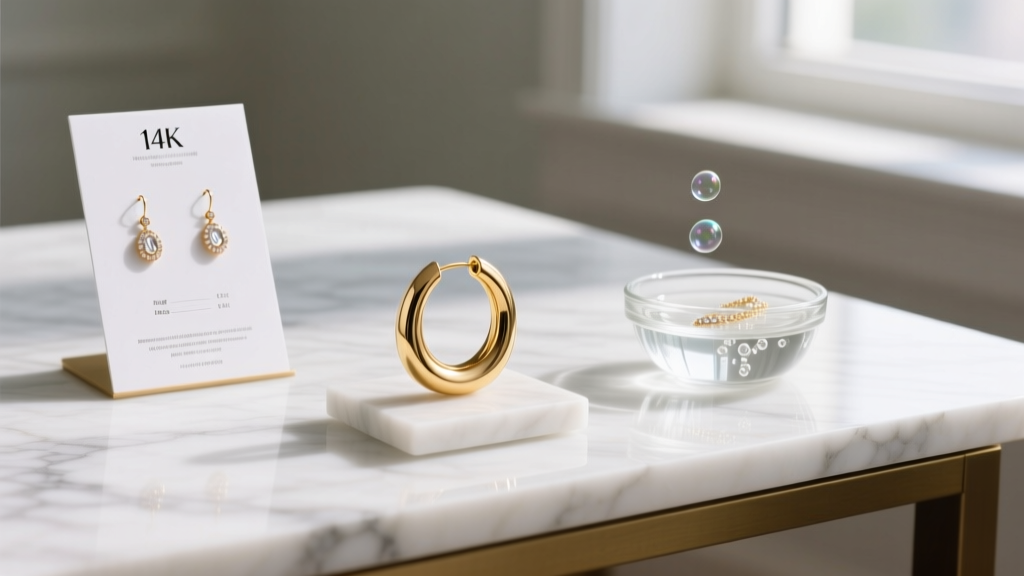
Proper earring maintenance is rarely a one-size-fits-all endeavor. What safely restores the brilliance of a platinum stud can permanently cloud a porous opal or strip the protective oxide layer off commercial titanium. As jewelry materials and piercing technologies have evolved, so too has the need for a reliable, science-backed earrings chart to guide daily care, deep cleaning, and long-term storage.
In this comprehensive guide, we break down the exact chemical and mechanical properties of popular earring materials. By consulting the earrings chart and protocols below, you will prevent tarnish, avoid contact dermatitis, and extend the lifespan of both your lobe and cartilage jewelry.
Why a Material-Specific Earrings Chart is Essential for Longevity
The most common failure mode in earring maintenance is the misuse of harsh chemical dips and ultrasonic cavitation. Many commercial jewelry cleaners contain ammonia or thiourea, which are highly effective at stripping silver sulfide (tarnish) but are catastrophic for organic gems, plated metals, and anodized titanium. Furthermore, the gauge and threading type of your earrings dictate how you should physically handle them during cleaning to avoid cross-threading or stretching the piercing fistula.
A structured earrings chart removes the guesswork, aligning your cleaning methods with the specific metallurgical grade and gemological hardness of your pieces.
The Master Earrings Chart: Metals, Grades, and Cleaning Protocols
Not all metals are created equal. The Association of Professional Piercers (APP) strictly recommends specific implant-grade metals for long-term wear, particularly in unhealed or sensitive cartilage piercings. Below is our master earrings chart detailing material grades and their corresponding care requirements.
| Material | Grade / Standard | Tarnish Risk | Recommended Cleaning Method | Strictly Avoid |
|---|---|---|---|---|
| Titanium | ASTM F136 (Implant Grade) | None | Warm water, mild dish soap, soft brush | Chlorine bleach, anodizing-stripping acids |
| Yellow/White Gold | 14k or 18k (Alloyed) | Low | Mild soap soak, microfiber polishing | Abrasive pastes, hard-bristle brushes |
| Surgical Steel | 316L or 316LVM | Moderate | Soap and water, occasional metal polish | Prolonged saltwater soaking (causes pitting) |
| Sterling Silver | 925 (Copper alloyed) | High | Anti-tarnish cloth, specialized silver dip | Wearing in pools/hot tubs (chlorine turns it black) |
| Platinum | 950 (95% Pure) | None (Patina) | Ultrasonic safe, steam safe, soap soak | Nothing; highly chemically inert |
For a deeper understanding of why implant-grade titanium (ASTM F136) is the gold standard for sensitive ears, refer to the Association of Professional Piercers' official materials guide. The strict nickel-release limits in F136 titanium mean you rarely need aggressive cleaning to remove surface contaminants that cause allergic reactions.
Gemstone Hardness and Ultrasonic Compatibility
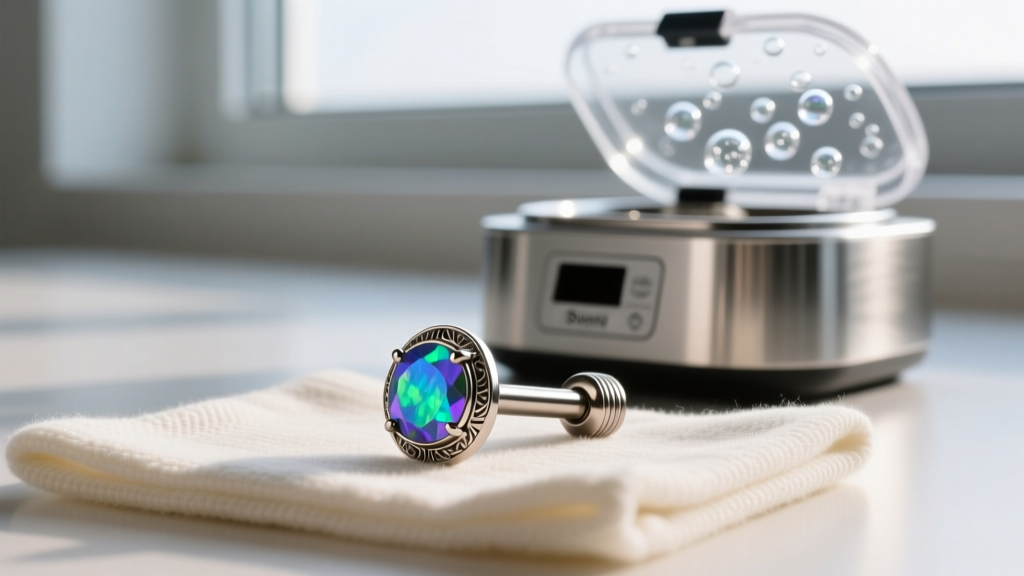
When your earrings feature gemstones, the metal is only half the equation. The Mohs Hardness Scale and the gem's internal crystalline structure dictate whether it can survive an ultrasonic cleaner. Ultrasonic machines use high-frequency sound waves to create microscopic cavitation bubbles that implode, blasting dirt from crevices. While incredible for diamonds, this shockwave can shatter fragile stones.
Ultrasonic and Steam Safe (Mohs 8.5 - 10)
- Diamonds (10): Extremely hard, but can still chip if struck against other diamonds in the cleaning basket.
- Sapphires & Rubies (9): Corundum is highly durable and safe for ultrasonic cleaning unless heavily fractured or treated with glass-filling.
Hand-Wash Only (Mohs 2.5 - 8)
- Emeralds (7.5 - 8): Despite a decent Mohs rating, almost all emeralds are oil-treated and naturally heavily included. Ultrasonic waves will fracture the stone and strip the cedar oil, leaving it cloudy and white.
- Opals (5.5 - 6.5): Opals contain up to 20% water. Heat from steamers or harsh chemicals will cause 'crazing' (internal cracking).
- Pearls (2.5 - 4.5): Organic and porous. Acids and ultrasonic waves will dissolve the nacre layer entirely.
For a complete breakdown of gemstone durability and cleaning risks, the Gemological Institute of America (GIA) provides an excellent reference on how hardness differs from toughness.
Step-by-Step Maintenance for Cartilage vs. Lobe Earrings
The anatomy of the piercing and the mechanics of the jewelry heavily influence your maintenance routine. Lobe earrings generally utilize friction backs or standard butterfly clutches, while cartilage earrings rely on complex threading or threadless tension systems.
Lobe Earrings (Standard 20g - 18g)
Standard lobe earrings accumulate sebum, dead skin cells, and hair product residue primarily on the earring post and the butterfly clutch. Failure Mode: Pushing a dirty post back through the fistula introduces bacteria, leading to localized contact dermatitis or foul odors (often referred to as 'ear cheese').
Protocol: Once a week, soak the earrings in a bowl of warm water and a few drops of Dawn dish soap. Use a dedicated, extra-soft baby toothbrush to gently scrub the post and the crevices of the clutch. Rinse thoroughly and dry completely with a lint-free cloth before reinserting.
Cartilage & Threadless Ends (16g - 14g)
Cartilage jewelry, such as flat-back labrets or clicker hoops, features precision engineering. Internally threaded jewelry has the screw mechanism on the decorative end, while the post is smooth. Threadless jewelry relies on a slight bend in the pin to create tension against the inside of the hollow post.
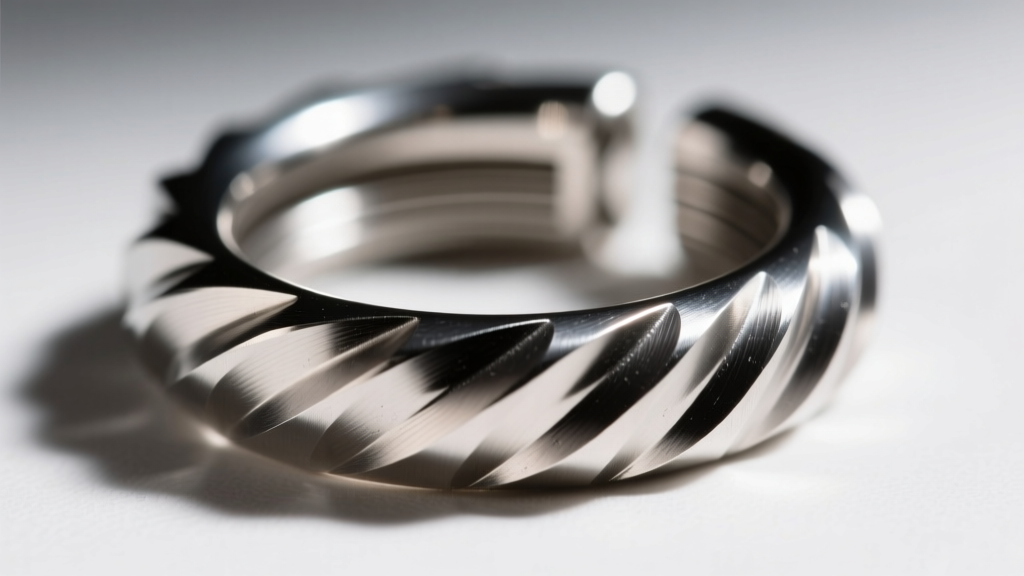
Failure Mode: Forcing a cross-threaded internally threaded end can strip the microscopic machined grooves, ruining a $60+ piece of jewelry. Similarly, pulling threadless pins out without a proper twisting motion can warp the metal, destroying the tension fit.
Protocol: When cleaning clicker hoops, never use alcohol-based solutions on the hinge or the O-ring (if present), as alcohol degrades the rubber seals over time, leading to a loose click and accidental loss. Clean with mild soapy water, and use a wooden toothpick—not a metal pin—to gently dislodge debris from the hinge seam.
Storage and Tarnish Prevention Framework
How you store your earrings is just as critical as how you clean them. Sterling silver (925) contains 7.5% copper, which reacts with hydrogen sulfide in the ambient air to form silver sulfide (tarnish). Humidity accelerates this chemical reaction exponentially.
"Storing reactive metals like sterling silver in open-air jewelry boxes, especially in high-humidity environments like bathrooms, guarantees rapid oxidation. Individual airtight storage is non-negotiable for long-term preservation."
— Jewel Style Radar Metallurgy Testing Team
The Ideal Storage Setup:
- Individual Polybags: Store each pair of silver or copper-alloyed earrings in its own small, airtight ziplock bag.
- Anti-Tarnish Strips: Place a 3M anti-tarnish strip inside your main jewelry box or safe. These strips absorb airborne sulfides and typically last 6 to 12 months.
- Silica Gel Packets: Moisture is the catalyst for tarnish. Keep a few silica gel packets in your jewelry drawers to maintain a low-humidity microclimate.
- Separation: Never store diamond earrings loose in a box with gold or silver pieces. Diamonds will easily scratch softer metals and even other gems during transit.
Expert Troubleshooting: When Earrings Dull or Irritate
Even with a perfect earrings chart and meticulous care, issues can arise. Here is how to troubleshoot the two most common earring problems:
- Problem: The earring post feels rough or 'gritty' when inserting.
Solution: This is usually caused by microscopic buildup of hard water minerals or sebum. Soak the post in a 50/50 mix of distilled white vinegar and water for 10 minutes to dissolve the calcium deposits, then wash with soap and water. Do not use sandpaper or metal files, as this removes the protective polishing layer. - Problem: The piercing becomes itchy and red only when wearing specific 'hypoallergenic' steel earrings.
Solution: The term 'hypoallergenic' is largely unregulated marketing. If you are reacting to 316L surgical steel, you are likely experiencing nickel leaching. The surface oxide layer of the steel may have been compromised by harsh cleaners or sweat. Switch immediately to ASTM F136 titanium or 14k+ nickel-free gold, and allow the fistula to heal for 2-4 weeks.
By treating your earring collection with the same respect and scientific precision as a high-end watch or luxury vehicle, you ensure that every piece remains safe, brilliant, and comfortable for decades of daily wear.


