How to Style and Clean Silver Teardrop Earrings UK
Master the art of wearing silver teardrop earrings. UK style guide covering face shapes, 925 sterling care, and tarnish removal.


Silver teardrop earrings are a cornerstone of British jewellery boxes, bridging the gap between daytime elegance and evening sophistication. However, as we navigate the 2026 jewellery landscape, the shift towards sustainable, solid metals over plated alternatives means that understanding how to properly select, style, and maintain solid silver is more critical than ever. When shopping for silver teardrop earrings UK buyers must navigate specific hallmarking laws, damp climate challenges, and varying earlobe anatomies. This comprehensive, step-by-step guide will walk you through the exact specifications, styling frameworks, and chemical cleaning methods required to keep your teardrops pristine and perfectly proportioned.
Step 1: Selecting the Right Silver Grade and Gauge
Not all silver is created equal, and the structural integrity of a teardrop earring relies heavily on its alloy composition. Pure silver (999 fine silver) is exceptionally soft. While it resists tarnish better than alloys, it is entirely unsuitable for the thin wire hooks or structural frames of teardrop earrings, as it will bend under the weight of the drop.
For this reason, 925 Sterling Silver is the mandatory standard. Composed of 92.5% pure silver and 7.5% alloy (usually copper or zinc), it provides the necessary tensile strength to support a hanging teardrop without warping. According to the Silver Institute, the addition of copper increases hardness but introduces a vulnerability: copper oxidises when exposed to moisture and sulfur, leading to tarnish.
Wire Gauge Specifications
The wire gauge of the earring hook dictates comfort and piercing health. Standard UK lobe piercings are typically performed at 18-gauge (1.0mm) or 20-gauge (0.8mm).
- 20-Gauge (0.8mm): Ideal for lightweight, delicate teardrops. Glides easily through healed piercings without causing friction.
- 18-Gauge (1.0mm): Best for heavier, statement teardrop drops. Provides structural rigidity to prevent the hook from bending open if the earring catches on a scarf or hair.
- 16-Gauge (1.2mm) or thicker: Avoid for standard lobe piercings unless intentionally stretching, as forcing thick wire through a standard hole will cause micro-tears and scar tissue buildup.
Step 2: Matching Teardrop Proportions to Face Shapes
The elongated silhouette of a teardrop is a powerful tool for balancing facial proportions. However, the specific dimensions of the drop—whether it is long and narrow, or short and wide—must be matched to your bone structure.

Proportion Framework
| Face Shape | Recommended Teardrop Style | Dimensions to Target | Styles to Avoid |
|---|---|---|---|
| Round | Long, narrow, linear teardrops | 40mm - 60mm length; under 10mm width | Short, wide, or chunky circular drops |
| Square | Rounded, bulbous teardrops with soft curves | 25mm - 40mm length; 15mm+ width | Harsh geometric angles or very short studs |
| Heart | Medium, balanced teardrops (wider at the bottom) | 30mm - 45mm length; proportional width | Top-heavy designs or inverted triangles |
| Oval | Versatile; almost any teardrop proportion works | Any, based on personal preference | Extremely long drops that exceed jawline by 3 inches |
Step 3: Managing Tarnish in the UK Climate
The UK's notoriously damp and humid climate, particularly during the autumn and winter months, creates an accelerated environment for silver sulfide formation (tarnish). High humidity acts as a catalyst, allowing airborne sulfur compounds to react with the copper alloy in your 925 sterling silver.
To mitigate this, never store your silver teardrop earrings in the bathroom. The fluctuating temperatures and high moisture levels from showers will rapidly degrade the polish. Instead, store them in an airtight ziplock bag with a dedicated anti-tarnish silica strip or a simple piece of white chalk, which absorbs ambient moisture.
The Electrochemical Cleaning Method (Step-by-Step)
When your teardrops inevitably develop a yellowish or blackish tarnish layer, avoid abrasive silver polishes. These pastes remove microscopic layers of silver and can scratch high-shine finishes. Instead, use an electrochemical reversal method that converts silver sulfide back into pure silver without removing any metal.
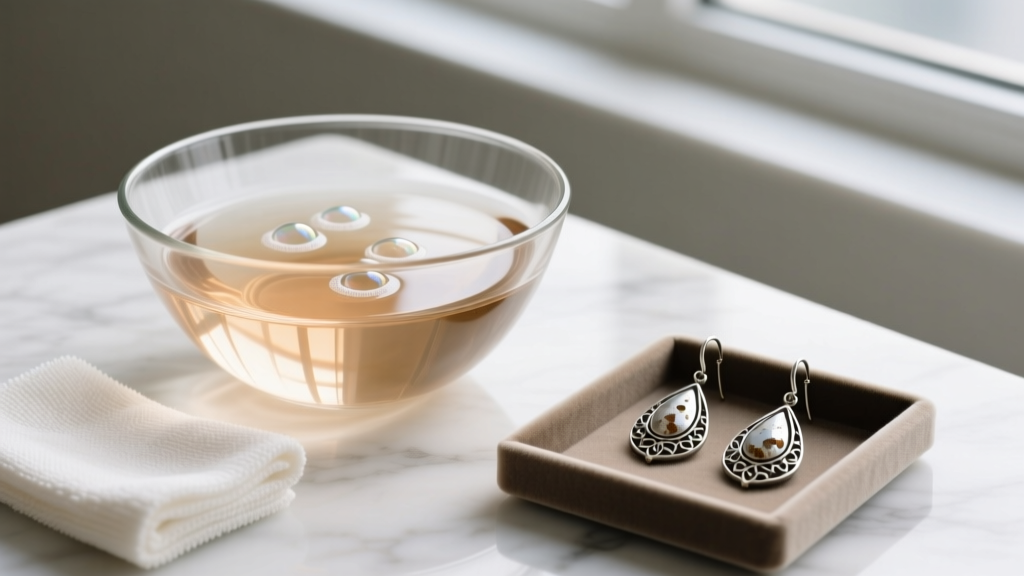
- Prepare the Vessel: Line a glass or ceramic bowl with aluminium foil, shiny side facing up. (Never use metal bowls, as they will interfere with the ionic transfer).
- Add the Catalysts: Add 1 tablespoon of baking soda (sodium bicarbonate) and 1 teaspoon of sea salt to the bowl.
- Activate with Heat: Pour boiling water into the bowl and stir gently until the powders dissolve. You will notice a slight sulfur (rotten egg) smell—this is the sulfur leaving the silver and binding to the aluminium.
- Submerge: Using wooden or plastic tongs, submerge your silver teardrop earrings completely in the solution. Ensure the silver is physically touching the aluminium foil.
- Wait and Rinse: Leave for 2 to 5 minutes depending on tarnish severity. Remove, rinse thoroughly under cool distilled water, and buff dry with a microfibre cloth.
Step 4: Supporting Heavy Drops and Preventing Lobe Tearing
A common failure point with teardrop earrings is the downward drag on the earlobe, which can lead to stretched piercings or the earring resting awkwardly against the neck. A standard solid silver teardrop can weigh anywhere from 4 to 12 grams per earring. Standard 'butterfly' friction backs are insufficient for drops exceeding 6 grams, as the narrow surface area concentrates the weight, causing the earring to droop forward.
The Solution: Upgrade your earring backs to distribute the load. Use jumbo silicone friction backs (which offer a wider surface area against the back of the lobe) or invest in specialised earlobe support patches (such as LobeWonder). These adhesive patches feature a reinforced plastic disc that sits between the lobe and the earring back, completely neutralising the downward pull and keeping the teardrop hanging perfectly vertical.
Step 5: Verifying UK Hallmarks for Authenticity
When investing in solid silver, verifying authenticity is non-negotiable. Under the UK Hallmarking Act 1973, it is illegal to describe a product as silver if it is not of the correct fineness. Furthermore, any silver item weighing more than 7.78 grams must carry a full, legally mandated hallmark struck by one of the UK's four Assay Offices (London, Birmingham, Sheffield, or Edinburgh).
Because many silver teardrop earrings weigh less than 7.78 grams, they are exempt from compulsory hallmarking and may only feature a simple '925' stamp. However, reputable British jewellers will often voluntarily hallmark lighter pieces to guarantee provenance. When examining your earrings, look for the three compulsory marks:
- The Sponsor's Mark: The unique initials of the maker or company.
- The Fineness Mark: The number '925' enclosed in an oval shield.
- The Assay Office Mark: For example, a leopard's head for London, or an anchor for Birmingham.
"A genuine hallmark is your absolute guarantee of precious metal content. Relying solely on a '925' stamp on imported goods can be risky, as it is easily forged. Always buy from established UK retailers who adhere to Assay Office regulations."
By understanding the metallurgy, mastering the electrochemical cleaning process, and respecting the structural needs of your earlobes, your silver teardrop earrings will remain a flawless, enduring staple in your wardrobe for decades to come.


