Dry Creek Turquoise Earrings: 2026 Buyer's Guide & Authenticity Tips
Discover how to authenticate, price, and choose the perfect Dry Creek turquoise earrings in our expert 2026 buying guide and care manual.

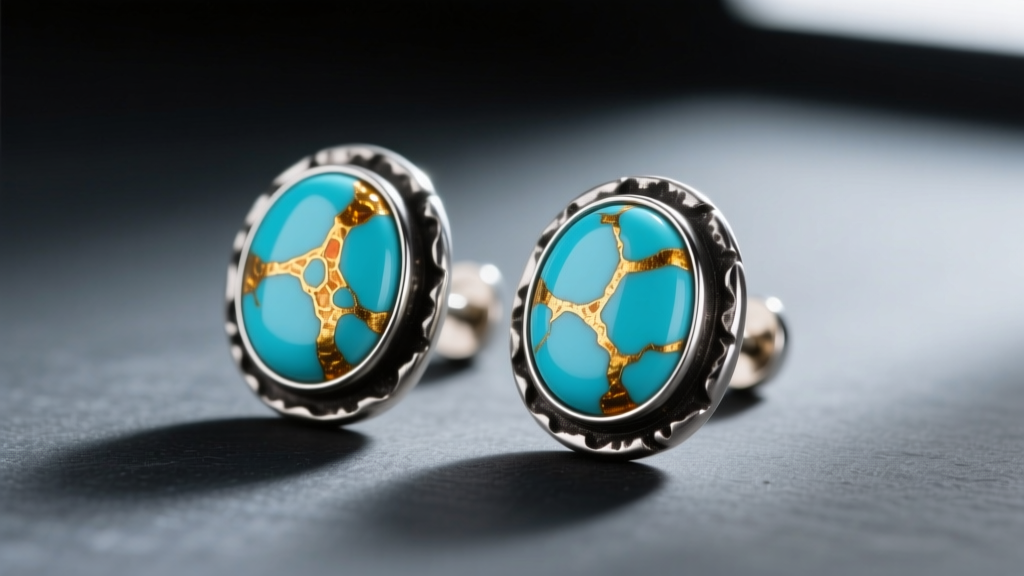
The Allure of Dry Creek Turquoise: Why It Commands Premium Prices
Dry Creek turquoise is widely considered one of the rarest and most highly coveted gemstones in the American Southwest. Mined exclusively in the Cortez Hills of Nevada, on sacred Shoshone land, this specific turquoise is celebrated for its ethereal pale blue to creamy white coloration, beautifully contrasted by a striking golden-brown to copper matrix. Unlike the deep, saturated blues of Sleeping Beauty or the vibrant greens of Carico Lake, Dry Creek offers a delicate, pastel elegance that has made it a centerpiece for high-end artisan jewelry.
However, its extreme rarity and soft, chalky nature in its raw state mean that genuine Dry Creek turquoise earrings are not just a fashion statement; they are an investment. Because the mine yields only a small fraction of gem-grade material each year, the market is heavily saturated with imitations. As a buyer in 2026, understanding the geological and lapidary nuances of this stone is critical before making a purchase. According to the Gemological Institute of America (GIA), turquoise is a porous, opaque gemstone that requires specific care and expert cutting, making the buying process highly technical.
Authenticity vs. Imitation: How to Spot Fake Dry Creek
The most significant hurdle when buying Dry Creek turquoise earrings is distinguishing the genuine article from dyed simulants. Because natural Dry Creek is so pale, unscrupulous dealers often pass off dyed howlite or magnesite as the real thing. Here is an expert framework for authentication:
1. Analyze the Matrix Penetration
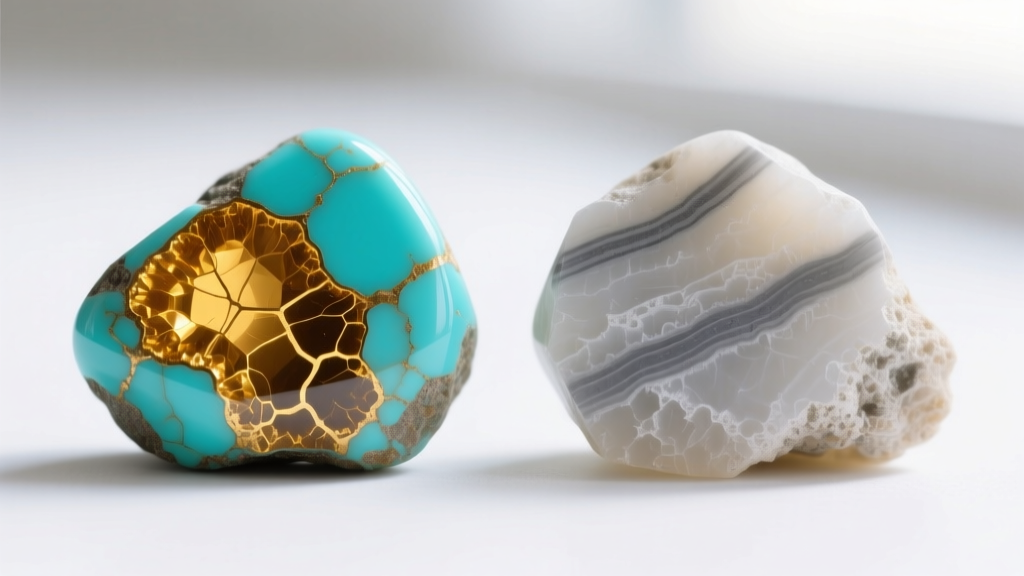
Genuine Dry Creek features a matrix (the host rock webbing) that is typically golden, brown, or copper-toned. Crucially, this matrix penetrates deeply into the stone. If you examine the edge of the cabochon under a 10x jeweler's loupe, the matrix should look like a three-dimensional web suspended within the stone. In contrast, dyed howlite features a grey or black matrix that is often superficial—meaning the dye only penetrates the surface cracks, leaving the interior of the veins white or unnaturally uniform.
2. Understand Stabilization vs. Dyeing
Because raw Dry Creek is often too soft (Mohs 3 to 4) to be cut into durable earring cabochons, it is almost always stabilized. Stabilization is an accepted industry practice where a clear epoxy or resin is vacuum-impregnated into the stone to harden it to a Mohs 5 or 6 and enhance its natural color. However, dyeing is a deceptive practice. The GIA's Turquoise Quality Factors guide notes that while stabilization is standard, any addition of artificial color must be disclosed. Genuine stabilized Dry Creek will still exhibit natural color variations and a slightly waxy luster, whereas dyed magnesite will look flat, overly uniform, and may show concentrated dye pooling in the matrix cracks.
Evaluating the Metalwork: Sterling Silver, Gold, and Gauge Standards
Turquoise is a relatively soft and brittle gemstone. The metalwork and hardware of your earrings must be engineered not just for aesthetics, but for structural protection and weight distribution.
Bezel Settings: A Non-Negotiable for Turquoise
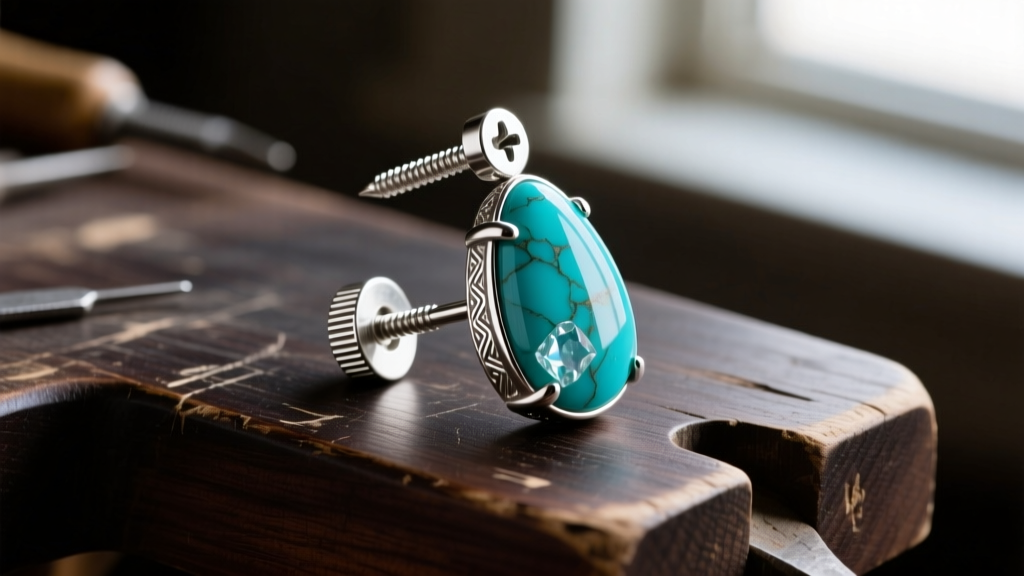
Never purchase Dry Creek turquoise earrings with prong settings. Prongs leave the edges of the cabochon exposed, and a single drop onto a hard surface will chip the stone. A full or partial bezel setting—where a rim of metal completely encircles the stone's edge—is mandatory for longevity. Oxidized 925 sterling silver is the traditional and most complementary choice, as the darkened silver accents the golden-brown matrix beautifully. For gold, 14k or 18k yellow gold provides a warm contrast, though it commands a significant premium.
Post Gauges and Clutch Security
Turquoise is denser and heavier than many other gemstones. Standard flimsy earring posts will bend under the weight of a medium-to-large turquoise drop, causing the earring to droop and eventually snap. When evaluating studs and drops, check the post gauge:
- 22-Gauge (0.64mm): Acceptable only for very small, lightweight studs (under 5mm).
- 20-Gauge (0.81mm): The industry standard for most turquoise studs and medium drops. It provides adequate rigidity for daily wear.
- 18-Gauge (1.02mm): Required for heavy, oversized statement drops or large dangle earrings to prevent the post from bending and damaging the earlobe piercing.
Furthermore, avoid standard friction-back clutches for heavy drops. Opt for screw-back clutches or La Pousette (butterfly) locking clutches, which mechanically lock onto the post's groove, preventing the heavy stone from pulling off and getting lost.
2026 Pricing Guide: What You Should Actually Pay
Pricing for genuine Dry Creek turquoise earrings varies wildly based on the stone's color saturation, matrix contrast, and overall carat weight. Below is a realistic pricing framework for the current market, assuming 925 sterling silver settings and proper stabilization.
| Earring Style | Stone Dimensions | Matrix Quality | Estimated Price Range (USD) |
|---|---|---|---|
| Small Bezel Studs | 4mm - 6mm | Minimal to Moderate | $90 - $160 |
| Medium Drop Earrings | 10mm - 15mm | High Contrast Web | $280 - $450 |
| Large Statement Dangles | 20mm - 30mm | Premium Golden Web | $650 - $1,200+ |
| Ear Cuffs / Climbers | Multiple 3mm stones | Matched Pale Blue | $180 - $300 |
Note: If you see 'Dry Creek' earrings selling for $30 to $50, they are almost certainly dyed howlite. Genuine rough material costs lapidaries a premium, making finished, set jewelry at those price points economically impossible.
Care and Maintenance: Preventing Color Shift and Damage
Even when professionally stabilized, turquoise remains a porous and chemically sensitive gemstone. The American Gem Society warns that exposure to everyday chemicals can permanently alter the stone's appearance.
Critical Warning: Never clean your turquoise earrings in an ultrasonic cleaner or use commercial jewelry dips. The high-frequency vibrations can fracture the stone along its natural matrix lines, and the harsh chemicals will strip the stabilization resin, leaving the stone dull and chalky.
Daily Wear Protocol: Always put your earrings on after applying hairspray, perfumes, and lotions. Over time, the absorption of skin oils and cosmetics can cause pale Dry Creek turquoise to shift toward a muddy green. To clean them, simply wipe the stones gently with a soft, dry, lint-free microfiber cloth after wearing. Store them in a dark, dry jewelry box away from direct, prolonged sunlight, which can dehydrate the stone and cause micro-cracking.
Final Verdict: Building an Heirloom Collection
Dry Creek turquoise earrings are more than just accessories; they are wearable pieces of American geological history. By demanding full bezel settings, verifying the post gauge, and scrutinizing the matrix for deep, natural penetration rather than superficial dye, you can confidently navigate the market. When sourced from reputable artisans who disclose their stabilization methods, a high-quality pair of Dry Creek drops will not only elevate your personal style but will endure as a vibrant, lasting heirloom for decades to come.


