Coro Jewelry Earrings: Material Properties & Care Guide
Explore the metallurgy, rhinestone foils, and base metal properties of vintage Coro jewelry earrings. Learn how to identify, compare, and preserve them.

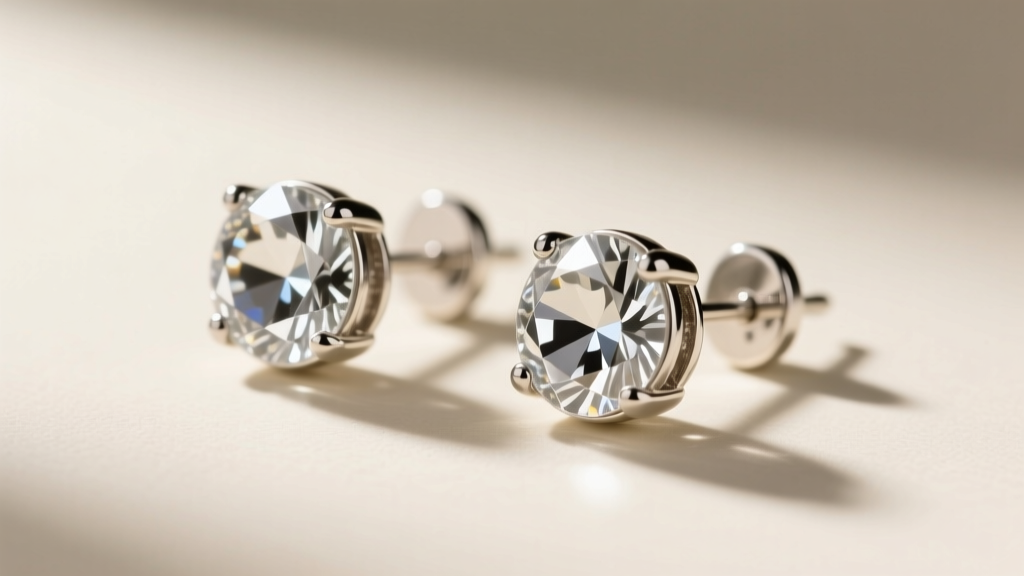
For vintage jewelry collectors and styling enthusiasts, Coro jewelry earrings represent a masterclass in 20th-century costume design. Founded by Emanuel Cohn and Carl Rosenberg in the early 1900s, Coro became the largest costume jewelry manufacturer in the world by the 1930s. However, evaluating Coro earrings from a purely aesthetic standpoint misses half the story. To truly understand, wear, and preserve these pieces, one must analyze the material science behind them. From the volatile chemistry of 1930s pot metal to the precise vapor deposition of mid-century Aurora Borealis rhinestones, the materials used in Coro earrings dictate their longevity, wearability, and value.
This guide deconstructs the metallurgical and non-metal properties of vintage Coro earrings, providing a scientific framework for collectors, resellers, and stylists to assess condition, authenticate eras, and implement proper preservation protocols.
The Metallurgy of Coro: Base Metals vs. Sterling Eras
The base metal composition of Coro earrings shifted dramatically based on global economics and wartime rationing. Understanding these shifts is critical for identifying the era of a piece and predicting its structural failure modes.
The Pot Metal Era (1920s–Early 1940s)
Before and during the early years of the Great Depression, Coro heavily utilized "pot metal"—a colloquial term for cheap, easily cast alloys primarily composed of zinc, lead, tin, and antimony. In metallurgy, these are often classified as Zamak alloys. While pot metal allowed for intricate, heavy castings that mimicked fine jewelry, it is highly susceptible to intergranular corrosion. If the zinc alloy contained trace impurities like lead or cadmium, exposure to ambient humidity triggers a slow, irreversible galvanic reaction. This manifests as bubbling beneath the rhodium plating, structural warping, and eventual fracturing of the earring posts or clip mechanisms.
The Sterling Silver Shift (1943–Late 1940s)
During World War II, base metals were strictly rationed for the military effort. To maintain production, Coro pivoted to sterling silver (92.5% silver, 7.5% copper). According to historical archives at Lang Antiques University, these pieces were typically hallmarked "Coro Sterling" or "CoroCraft Sterling." From a material perspective, sterling silver Coro earrings are vastly superior in structural integrity. They do not suffer from the catastrophic crumbling of pot metal, though the copper content in the sterling alloy makes them prone to surface oxidation (tarnish) if the protective rhodium flash plating wears away.
Material Comparison Chart: Coro Eras & Modern Equivalents
When styling or repairing vintage Coro jewelry earrings, it is helpful to compare their historical materials against modern earring standards. The table below outlines the physical properties and failure risks across different manufacturing eras.
| Material / Era | Primary Composition | Weight / Density | Allergy Risk | Primary Failure Mode |
|---|---|---|---|---|
| 1930s Pot Metal | Zinc, Lead, Tin, Antimony | Heavy / High Density | High (Lead/Nickel traces) | Intergranular corrosion, plating loss |
| 1940s Coro Sterling | 92.5% Silver, 7.5% Copper | Medium / Standard | Low (unless copper exposed) | Rhodium wear, copper oxidation |
| 1950s Gold-Plated | Brass or Copper base, Gold flash | Medium / Standard | Moderate (Brass contains zinc/copper) | Galvanic pitting, brass dezincification |
| Modern Surgical Steel | 316L Stainless Steel (Molybdenum) | Medium / Standard | Very Low | Surface scratching |
| Modern Implant Titanium | Grade 23 Ti-6Al-4V ELI | Light / Low Density | None (Hypoallergenic) | Bending under extreme torque |
Rhinestones, Foils, and Enamel: The Non-Metal Components
The visual impact of Coro jewelry earrings relies heavily on non-metal materials, specifically glass rhinestones, metallic foils, and vitreous or cold enamels. The chemical stability of these components varies wildly.
Foil-Backed Glass and Moisture Damage
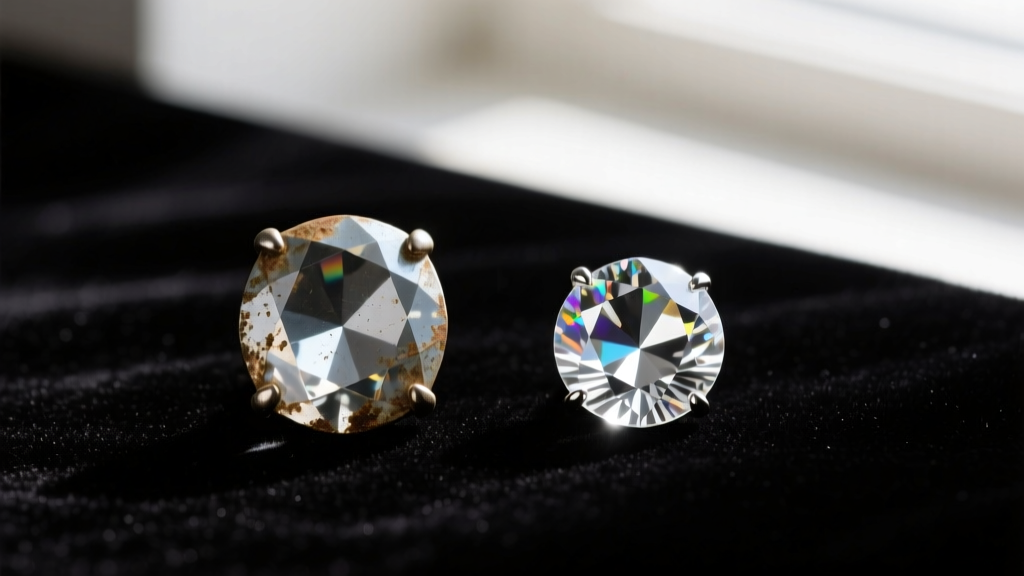
Coro utilized chaton-cut glass stones backed by delicate metallic foils (often silver or gold-toned) to increase light refraction. The critical vulnerability here is moisture ingress. If the prong settings loosen over decades of wear, humidity breaches the stone's pavilion. This causes the metallic foil to oxidize and turn black, effectively "killing" the stone's sparkle. Unlike modern Swarovski or Preciosa crystals, which are often unfoiled or feature chemically bonded vapor coatings, vintage foil-backed stones cannot be cleaned with liquid solutions without risking immediate destruction.
The Aurora Borealis (AB) Revolution
In the mid-1950s, following a collaboration with Christian Dior and Swarovski, Coro began incorporating Aurora Borealis (AB) stones into their earrings. The AB effect is achieved through vapor deposition of titanium dioxide onto the glass surface. This thin-film interference coating is remarkably stable compared to foil, but it is highly susceptible to abrasion. Friction from improper storage can permanently strip the iridescent layer, leaving a dull, grayish stone beneath.
Earring Backs and Post Mechanics in Vintage Coro
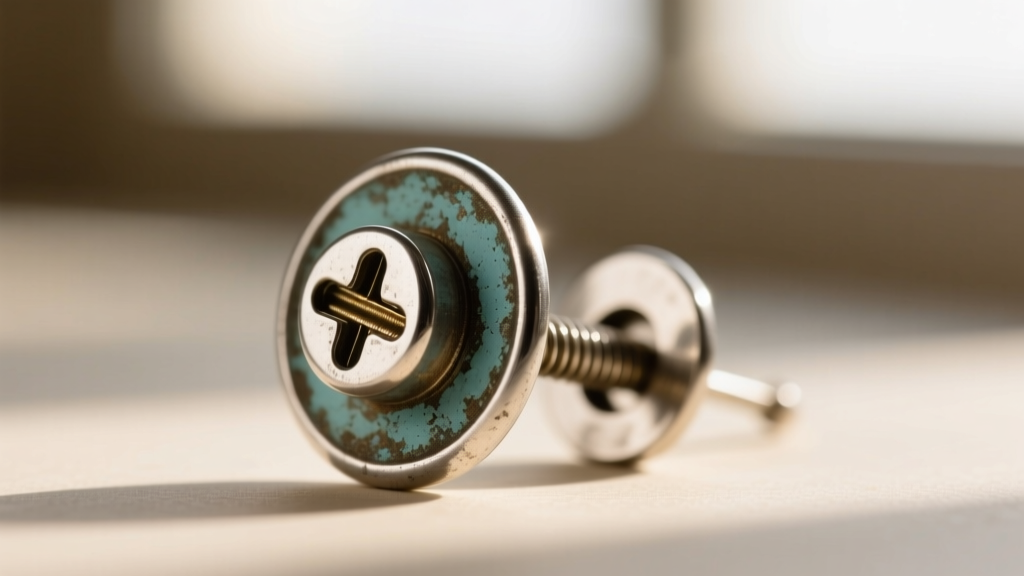
The mechanical findings on vintage Coro earrings present unique material challenges. Early Coro earrings were predominantly clip-ons or screw-backs, designed for non-pierced ears. The tension springs in 1930s and 1940s clip-ons were made from carbon steel or low-grade brass. Over time, the repeated mechanical stress of opening and closing the clip causes metal fatigue, leading to a loss of clamping tension. Furthermore, the rubber or silicone comfort pads originally glued to the paddle backs have usually dry-rotted, requiring careful removal with a solvent like acetone (applied with a micro-swab to avoid touching the metal plating).
For pierced ears, many modern collectors opt to have vintage clip-ons converted to post earrings by a jeweler. This involves soldering a modern sterling silver or titanium post to the back. It is crucial to note that these conversions are typically done using 18-gauge (1.0mm) or 20-gauge (0.81mm) posts. If you are purchasing a converted Coro earring, always verify the gauge size, as wearing an 18-gauge post in a tight 20-gauge piercing can cause micro-tears in the earlobe tissue.
Preservation and Wearability: A Collector’s Framework
Preserving the material integrity of Coro jewelry earrings requires a departure from modern jewelry cleaning habits. According to guidelines from Collectors Weekly, the cardinal rule of vintage costume jewelry is to avoid ultrasonic cleaners and harsh chemical dips at all costs.
- Surface Cleaning: Use a dry, ultra-soft microfiber cloth or a clean, dry makeup brush to dislodge dust from prong settings. Never use a toothbrush, as the bristles can catch on weakened prongs and bend them outward.
- Plating Protection: For sterling or base-metal pieces with intact rhodium or gold plating, apply a micro-crystalline wax (such as Renaissance Wax) using a cotton swab. This creates an inert, moisture-blocking barrier that halts oxidation without altering the optical properties of the metal.
- Storage Environment: Store Coro earrings in acid-free tissue paper inside polyethylene zip-lock bags with a 20-gram silica gel desiccant packet. Avoid PVC-based plastics, which off-gas hydrogen chloride and will rapidly corrode base metals and cloud glass stones.
- Enamel Care: Coro’s "Jelly Belly" enamel pieces (often made from carved Lucite or poured resin) are sensitive to UV degradation and extreme heat. Store them away from direct sunlight to prevent the polymer chains from breaking down and yellowing.
When to Re-Plate
If a Coro earring exhibits severe brass bleed or copper oxidation, re-plating is an option, but it must be done by a specialist in vintage costume jewelry. Standard electroplating facilities often use acidic prep-solutions that will dissolve the adhesive holding the rhinestones in place or strip the delicate AB vapor coatings. Always request that the stones be masked or temporarily removed before any electrochemical re-plating process begins.
By understanding the specific material properties, alloy compositions, and mechanical vulnerabilities of Coro jewelry earrings, collectors can make informed purchasing decisions and ensure these mid-century masterpieces survive for future generations to study and wear.


