How to Safely Clean and Care for Chrysocolla Earrings
Learn how to safely clean, authenticate, and store chrysocolla earrings. Discover step-by-step care tips for this soft, copper-bearing gemstone.

The Mineralogy of Chrysocolla: Why It Demands Special Care
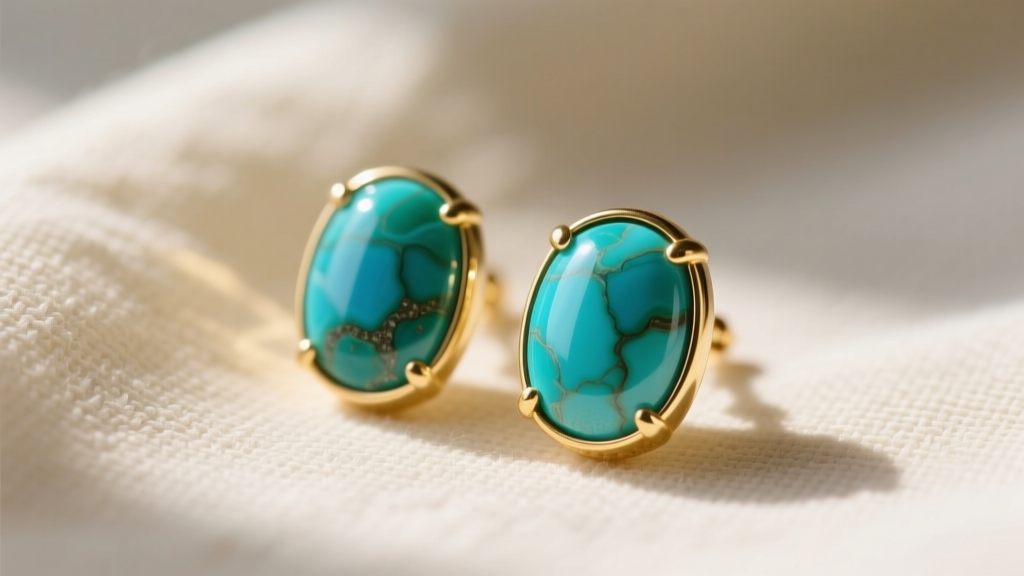
Chrysocolla is a breathtaking hydrous copper phyllosilicate, prized for its vivid cyan, blue, and green hues. However, its stunning appearance belies a critical vulnerability: pure chrysocolla is exceptionally soft, rating between 2.5 and 3.5 on the Mohs hardness scale. To put that in perspective, it is softer than a copper penny and can be easily scratched by a fingernail or dust particles containing quartz. According to the Gemological Institute of America (GIA), this low hardness and high porosity mean that standard jewelry cleaning methods will rapidly degrade the stone.
Before you attempt to clean your chrysocolla earrings, you must identify whether you own pure chrysocolla or "gem silica" (chrysocolla that has been naturally silicified with quartz). Gem silica rates a 7 on the Mohs scale and is much more durable. The step-by-step guide below focuses primarily on pure, unstabilized chrysocolla, which requires the most meticulous handling.
Step-by-Step Guide: How to Clean Chrysocolla Earrings
Because chrysocolla is highly porous and chemically sensitive to acids and alkalis, water immersion and chemical baths are strictly prohibited. Follow these steps to safely remove skin oils, cosmetics, and environmental dust.
Step 1: The Dry Dusting Method
Dust often contains microscopic quartz particles (Mohs 7) that will act like sandpaper on your chrysocolla. Never wipe a dusty stone directly. Instead, use a clean, soft-bristled makeup brush (like a goat-hair powder brush) to gently flick dust away from the bezel setting and the stone's surface. Always brush in one direction, moving from the center of the cabochon outward toward the metal edge.
Step 2: The Damp Wipe (For Surface Oils)
If the stone has accumulated skin oils or lotion, dry brushing will not suffice. Dampen a corner of a lint-free microfiber cloth with distilled water. Distilled water is crucial; tap water contains chlorine and dissolved minerals that can leave microscopic deposits in the stone's pores. Gently dab the surface of the chrysocolla—do not rub in circles. Immediately follow up with the dry side of the microfiber cloth to absorb any lingering moisture.
Step 3: Polishing the Metal Hardware
Chrysocolla is often paired with copper, sterling silver, or gold. If your earrings feature copper or silver settings, they will tarnish over time. Apply a tiny drop of silver or copper polish to a cotton swab, carefully tracing the metal bezel without touching the stone. Even a millimeter of overlap can cause the chemicals in the polish to pit the chrysocolla's surface.
The Chrysocolla Danger Zone: Cleaning Methods to Avoid
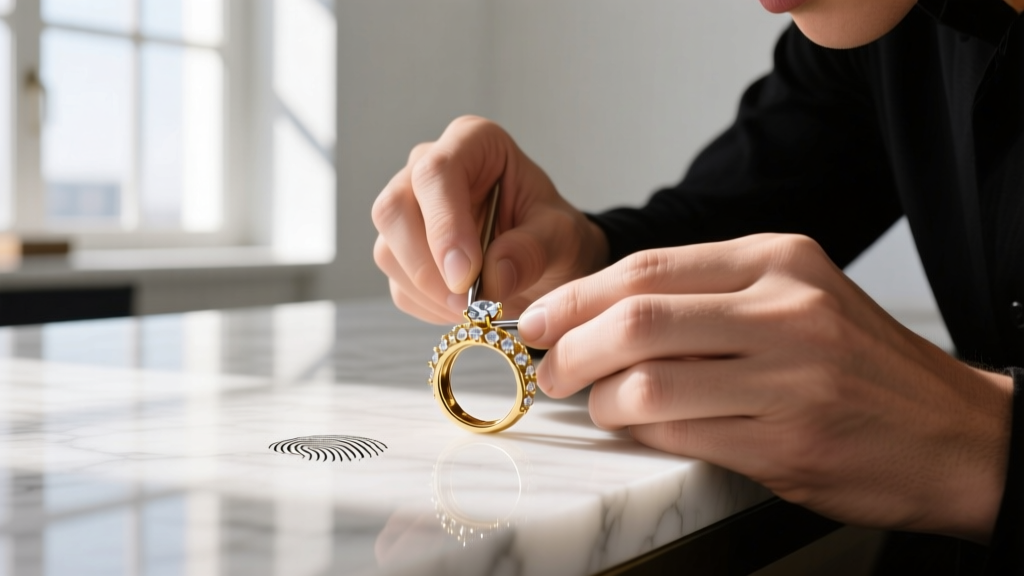
The most common way jewelers and collectors ruin chrysocolla earrings is by treating them like diamonds or sapphires. The table below outlines why conventional cleaning methods are catastrophic for this copper-bearing mineral.
| Cleaning Method | Safety Rating | Chemical / Physical Reaction |
|---|---|---|
| Ultrasonic Cleaners | ❌ Never Use | High-frequency cavitation bubbles implode against the stone, causing immediate micro-fractures and shattering. |
| Steam Cleaners | ❌ Never Use | Sudden thermal shock cracks the porous matrix; heat can also dehydrate the stone, altering its color. |
| Ammonia-Based Solutions | ❌ Never Use | Ammonia reacts with the copper in chrysocolla to form a tetraamminecopper complex, dissolving the surface and turning it a muddy black. |
| Vinegar / Lemon Juice | ❌ Never Use | Acids rapidly dissolve the copper phyllosilicate structure, leaving permanent, chalky white pits. |
| Mild Dish Soap & Water | ⚠️ Extreme Caution | Only safe for heavily stabilized stones or gem silica. Prolonged water exposure softens pure chrysocolla. |
How to Verify Authentic Chrysocolla Earrings
Because natural chrysocolla is relatively rare in large, clean cabochons, the market is flooded with imitations. Dyed howlite, dyed magnesite, and reconstituted turquoise are frequently sold as chrysocolla. Here is how you can authenticate your earrings at home.
The Acetone Test
Dip a cotton swab in pure acetone (nail polish remover) and rub it discreetly on the back or bottom edge of the stone where it meets the metal setting. If the swab picks up blue or green dye, you have a dyed howlite or magnesite imitation. Natural chrysocolla's color is intrinsic to its copper content and will not bleed.
The Visual Luster Check
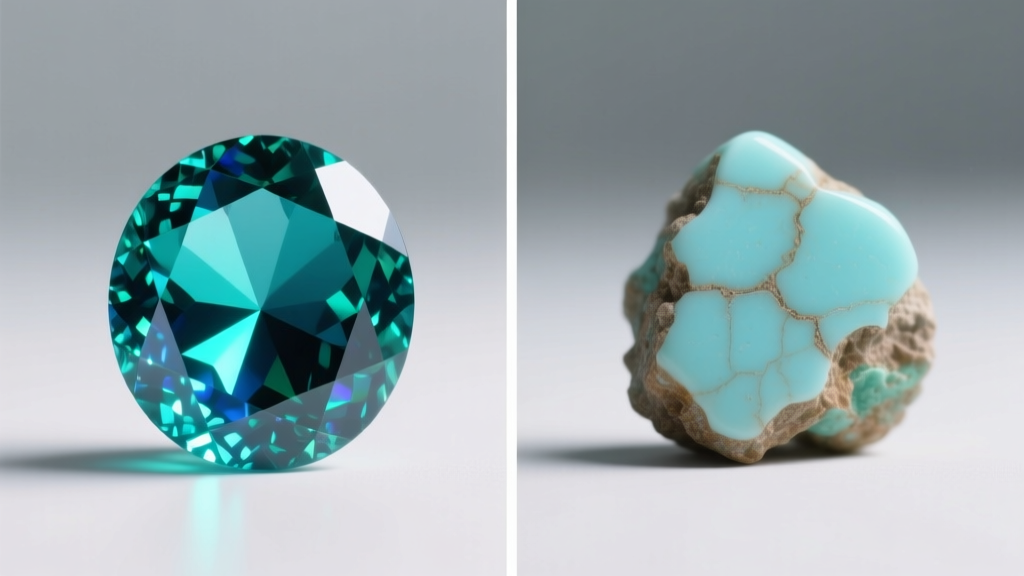
According to mineralogical data from Mindat.org, pure chrysocolla has an earthy to dull luster, whereas chrysocolla mixed with quartz (gem silica) has a distinct vitreous (glassy) luster. If your earrings have a waxy, matte finish but feel unusually hard, they may be dyed magnesite. If they are highly glassy but soft, they are likely coated with a synthetic resin.
Optimal Settings and Hardware for Soft Stones
If you are having chrysocolla earrings custom-made or evaluating a pair for purchase, the hardware and setting style are just as important as the stone's care.
- Bezel Settings are Mandatory: Prong settings leave the edges of the cabochon exposed. Given chrysocolla's Mohs 2.5 rating, a single bump against a tabletop will chip the edge. A full, flush bezel setting protects the stone's perimeter.
- Post Gauge Thickness: Because chrysocolla cabochons are often cut thick to prevent breakage during the lapidary process, the earrings can be heavy. Ensure the ear posts are at least 18-gauge (1.0mm) or 16-gauge (1.2mm) to prevent the metal from bending under the weight of the stone. Standard 20-gauge (0.8mm) posts are often too flimsy for heavy, oversized chrysocolla drops.
- Hypoallergenic Backings: While the stone contains copper, the post should be implant-grade titanium (ASTM F136) or solid 14k/18k gold to prevent ear lobe irritation, especially since heavy earrings cause more friction against the piercing.
Storing Your Copper-Bearing Jewelry
Proper storage is the final pillar of chrysocolla care. Because the stone is intrinsically linked to copper oxidation, environmental factors play a massive role in its longevity. Store your chrysocolla earrings in a sealed, anti-tarnish ziplock bag with a 3M anti-tarnish strip. This prevents atmospheric sulfur from tarnishing the metal settings, which would otherwise require you to polish the metal and risk accidental chemical exposure to the stone. Keep the bag in a dark, climate-controlled drawer; prolonged exposure to direct UV sunlight can dehydrate the stone's microscopic water inclusions, leading to a dull, chalky appearance over time.


