What to Do When Your Earring Is Infected: Expert Healing Guide
Discover clinical steps to take when your earring is infected. Learn about implant-grade titanium, gauge swelling, and evidence-based aftercare protocols.

The Clinical Reality of Piercing Complications
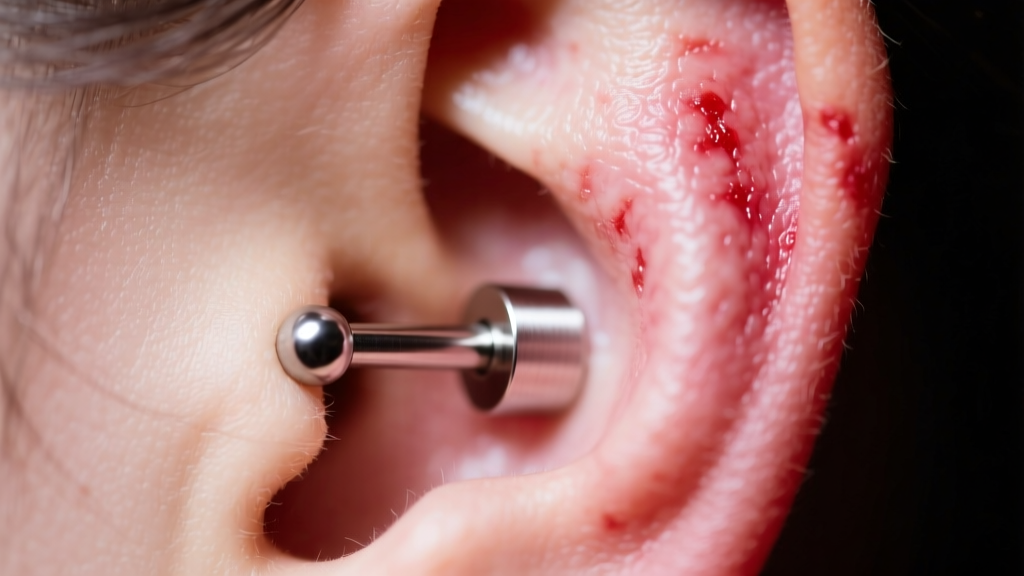
When you suspect your earring is infected, the immediate instinct is often to remove the jewelry and aggressively clean the area with harsh chemicals. From a clinical and professional piercing perspective, this is precisely the wrong approach. True bacterial infections in ear piercings are statistically rare compared to mechanical irritation, allergic contact dermatitis, and localized trauma responses. According to the Association of Professional Piercers (APP), the vast majority of complications labeled as 'infections' by the general public are actually severe irritation bumps or allergic reactions to substandard metallurgy.
Understanding the precise etiology of your piercing complication is the first step toward effective intervention. This deep dive explores the metallurgical, anatomical, and clinical factors that dictate whether a piercing will heal seamlessly or degrade into a chronic wound, providing you with an evidence-based framework for troubleshooting ear piercing complications.
Infection vs. Irritation: The Clinical Distinction
Before applying any treatment, you must accurately differentiate between a true bacterial infection and localized irritation. Misdiagnosing irritation as an infection often leads to the overuse of topical antibiotics, which can further disrupt the skin's microbiome and delay healing. The Mayo Clinic notes that while localized redness and swelling are common in both scenarios, systemic symptoms and specific types of exudate are the true differentiators.
| Clinical Indicator | Irritation / Contact Dermatitis | True Bacterial Infection |
|---|---|---|
| Exudate (Discharge) | Clear, white, or pale yellow lymph fluid; crusts easily. | Thick, opaque yellow/green pus; often foul-smelling. |
| Erythema (Redness) | Localized strictly to the immediate piercing channel. | Spreading redness radiating outward from the site. |
| Temperature | Slightly warm due to increased blood flow for healing. | Noticeably hot to the touch; localized hyperthermia. |
| Systemic Symptoms | None. | Fever, chills, nausea, or swollen lymph nodes. |
| Pain Profile | Tender to the touch; aches when pressure is applied. | Throbbing, constant, and disproportionate to touch. |
If your symptoms align with the irritation column, the culprit is likely mechanical friction, improper jewelry geometry, or a nickel allergy. If you exhibit signs from the infection column, particularly spreading erythema or systemic symptoms, you require immediate medical evaluation.
The Metallurgy of Infection: Why Your Jewelry Might Be the Culprit
If your earring is infected, or rather, perpetually irritated and weeping, the material sitting inside your fistula is the primary suspect. The jewelry industry frequently uses the term 'surgical steel,' which is a largely unregulated marketing buzzword. Most commercial 'surgical steel' is 316L stainless steel, an alloy that contains up to 10% nickel. While the nickel is bound within the alloy, the corrosive environment of a healing wound (which is essentially a saltwater bath) can cause nickel ions to leach into the tissue.
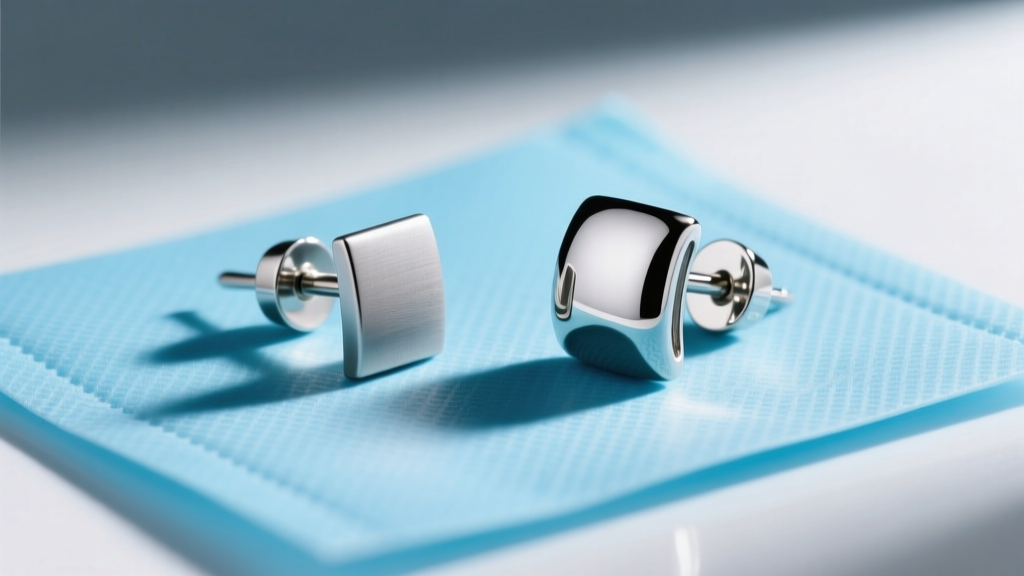
This leaching triggers allergic contact dermatitis, resulting in weeping, swelling, and the formation of hypertrophic scarring. To eliminate this variable, clinical guidelines mandate the use of ASTM F136 Implant-Grade Titanium. This specific alloy (Ti6Al4V ELI) contains zero nickel and is the global standard for orthopedic implants. Furthermore, the surface finish of the jewelry is critical. A mirror-polished finish (surface roughness Ra < 0.2 µm) prevents microscopic bacteria and dead skin cells from adhering to the jewelry post, drastically reducing the bioburden in the piercing channel.
'The transition from 316L steel to ASTM F136 titanium is the single most effective intervention for chronic piercing complications. You cannot heal a wound while simultaneously introducing an allergen into the tissue matrix.' — Clinical Piercing Standards, 2025.
Gauge Sizing, Swelling, and the 'Cheese Cutter' Effect
Another technical failure mode that mimics infection is the 'cheese cutter' effect, caused by improper gauge sizing and post length. When a piercing is subjected to trauma, the tissue swells. If the jewelry is too thin (e.g., a 20-gauge or 22-gauge wire commonly found in mall kiosks), the tension of the swelling tissue will cause the thin wire to slice through the skin, creating an open, weeping wound that is highly susceptible to secondary bacterial infection.
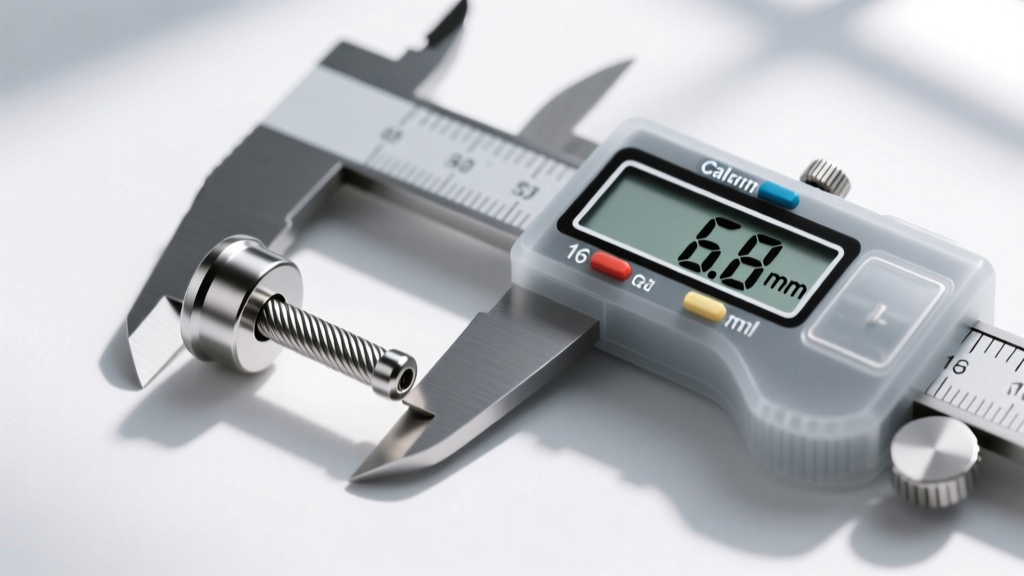
For standard earlobes, a minimum of 18-gauge (1.0mm) or 16-gauge (1.2mm) is recommended to provide adequate structural support. For cartilage piercings (helix, conch, tragus), 16-gauge (1.2mm) or 14-gauge (1.6mm) is the clinical standard. Equally important is the post length. A fresh cartilage piercing requires an initial post length of 5/16' (8mm) to 3/8' (10mm) to accommodate the edema. If a piercer uses a standard 1/4' (6mm) flat-back labret on a fresh helix, the swelling will engulf the jewelry disc, leading to necrosis, embedded jewelry, and severe infection.
Evidence-Based Intervention Protocol
If you have determined that your earring is infected or severely irritated, follow this strict, evidence-based protocol to stabilize the tissue environment:
- Do Not Remove the Jewelry: If a true bacterial infection is present, removing the jewelry allows the surface holes to close, trapping the abscess inside the tissue. This can lead to a severe cyst or require surgical lancing. The jewelry acts as a drain.
- Sterile Saline Wound Wash: Use only a sterile, canned 0.9% sodium chloride solution with no additives. Spray the front and back of the piercing twice daily. Avoid contact lens saline, which contains buffering agents and preservatives that are toxic to open wounds.
- Warm Compresses: For localized swelling and to encourage lymphatic drainage, apply a sterile gauze pad soaked in warm (not hot) saline for 5 minutes. This increases local blood circulation, delivering white blood cells to the area.
- Eliminate Mechanical Trauma: Sleep on a travel neck pillow to keep pressure off the affected ear. Avoid over-cleaning, twisting the jewelry, or applying tea tree oil, aspirin pastes, or rubbing alcohol, all of which cause chemical burns and cellular death in the delicate fistula.
When to Escalate to Medical Professionals
While professional piercers are experts in jewelry geometry, metallurgy, and aftercare, they are not licensed medical doctors. According to research published in the National Institutes of Health (NIH), cartilage piercings carry a specific risk for perichondritis—an infection of the connective tissue surrounding the cartilage, most commonly caused by Pseudomonas aeruginosa or Staphylococcus aureus.
Because cartilage lacks its own direct blood supply (it is avascular), systemic antibiotics have a difficult time reaching the infection site. If you experience intense throbbing pain in a cartilage piercing, a cauliflower-like deformation of the ear, spreading redness down the neck, or a fever, bypass the piercing studio and proceed immediately to an urgent care clinic or emergency room. Medical professionals will typically prescribe a course of oral fluoroquinolones (such as Ciprofloxacin) to penetrate the avascular cartilage tissue and halt the infection before permanent structural damage occurs.
By understanding the clinical distinctions between irritation and infection, upgrading to implant-grade titanium, and respecting the anatomical requirements of gauge and swelling, you can effectively troubleshoot complications and ensure your ear piercings heal to their full aesthetic potential.