Earring Back Stuck Inside Earlobe: Removal Costs & Value Fixes
Is an earring back stuck inside earlobe? Compare DIY removal risks, medical extraction costs, and the long-term value of upgrading to secure backs.

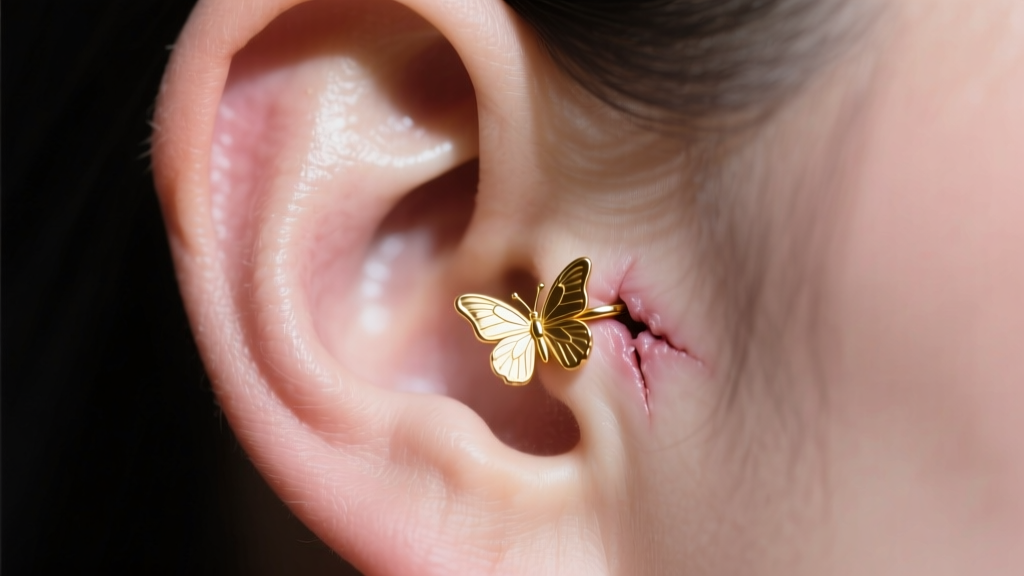
Waking up to find an earring back stuck inside earlobe tissue is a stressful, painful, and surprisingly common jewelry emergency. Often referred to by medical professionals as an "embedded foreign body," this issue occurs when the earring post and its backing are entirely engulfed by swollen ear tissue. While the immediate concern is physical discomfort and the risk of infection, there is also a significant financial dimension to this problem. From emergency room extraction fees to the hidden costs of replacing lost fine jewelry, the budget impact of a buried earring back can be severe.
In this comprehensive 2026 value assessment, we break down the true financial costs of embedded earring backs, analyze the metallurgical failures of cheap friction backs, and provide a cost-benefit framework for upgrading to high-security earring closures. Whether you are dealing with a $20 fashion stud or a $5,000 diamond solitaire, understanding the economics of earring security is essential for protecting both your health and your jewelry investment.
The True Financial Cost of an Embedded Earring Back
When an earring back becomes trapped beneath the skin of the earlobe, the tissue encapsulates the metal or silicone component. The cost to resolve this issue varies wildly depending on the route you choose. As of 2026, healthcare pricing for minor dermatological procedures has shifted, making it crucial to understand your options before panicking and heading to the nearest hospital.
Medical Extraction Costs: ER vs. Urgent Care
If the earlobe is highly inflamed, infected, or if the earring post is completely invisible beneath the skin, medical intervention is required. Hospitals typically bill this under CPT codes 10120 (simple incision and removal of foreign body) or 10121 (complex).
- Emergency Room (ER): Without insurance, an ER visit for a minor earlobe incision and extraction can range from $450 to $1,200, factoring in the facility fee, physician fee, and local anesthesia (lidocaine injection).
- Urgent Care Clinics: A more budget-friendly medical option. Cash-pay rates for foreign body removal in 2026 average between $150 and $300. However, not all urgent care physicians are comfortable performing minor surgical extractions on delicate ear cartilage or lobes.
- Dermatologist Office: If you can secure a same-day appointment, a dermatologist can perform a sterile extraction. Expect to pay $200 to $400 out-of-pocket for a minor procedural visit.
The Professional Piercer Alternative
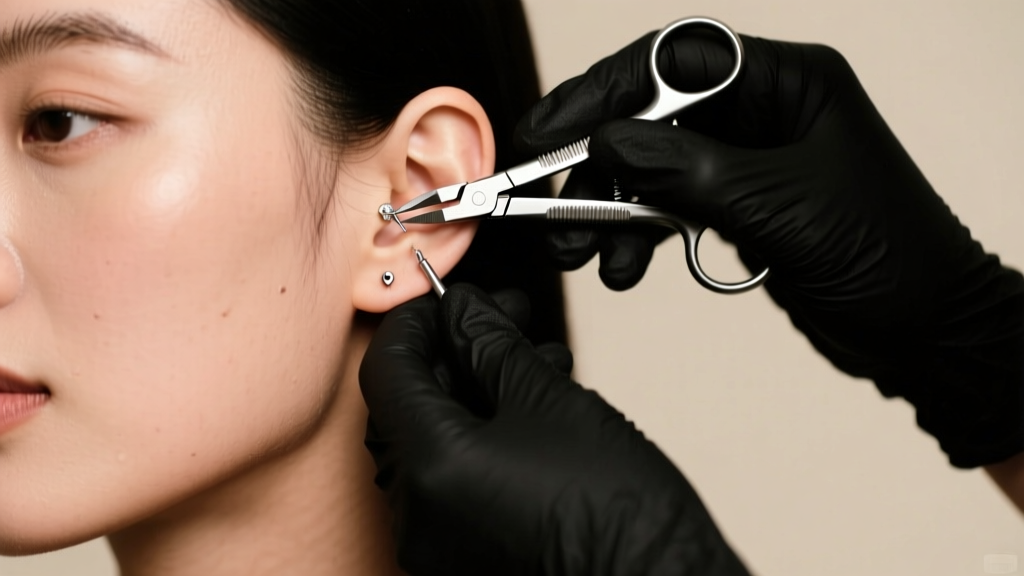
For non-infected, recently embedded backs where the post is still slightly palpable, an Association of Professional Piercers (APP) certified studio is often the most cost-effective and tissue-sparing option. Professional piercers possess specialized tools like sterile taper pins, dermal elevators, and hemostats. Most reputable studios charge a "bench fee" or minor procedure fee ranging from $30 to $75 to safely back out an embedded earring, saving you hundreds of dollars in medical bills while minimizing scar tissue formation.
Why Cheap Friction Backs Fail: A Material & Design Breakdown
To assess the value of upgrading your jewelry, we must first understand why standard butterfly friction backs fail. The mechanics of a friction back rely entirely on the tension of two small metal loops gripping the earring post.
The Gauge Mismatch and Tension Loss
Most commercial fashion earrings utilize 20-gauge (0.81mm) or 22-gauge (0.64mm) posts. These ultra-thin posts are highly susceptible to bending. When a 20-gauge post bends even slightly, it alters the friction point on the butterfly back, causing it to loosen over time. Furthermore, the metal alloys used in cheap backs (often brass plated in gold or silver) suffer from "tension fatigue." After 50 to 100 cycles of being pushed on and pulled off, the 45-degree angle of the tension loops flattens out, reducing the gripping force to near zero.
The Allergy-Swelling Trap
According to the American Academy of Dermatology, nickel allergy is one of the most common causes of contact dermatitis. Many inexpensive friction backs contain high levels of nickel. When the skin reacts, it triggers localized edema (swelling). As the earlobe swells, it pushes forward against the butterfly back. If the back is pushed too tightly against the lobe to prevent the earring from falling out, the swelling tissue will simply grow over and encapsulate the back, resulting in the dreaded stuck earring back scenario.
Budget-Friendly Safe Removal Techniques
If you suspect your earring back is slipping into the tissue, immediate action can prevent a costly medical bill. Disclaimer: If the area is hot to the touch, leaking pus, or you have a fever, bypass DIY methods and seek medical care immediately to prevent systemic infection or perichondritis.
- The Ice and Lubricate Method (Cost: $0): Apply a wrapped ice cube to the earlobe for 5 minutes to reduce vascular swelling. Next, apply a sterile lubricant (such as pure jojoba oil or a water-based surgical lubricant) to the post. Using clean fingers, gently push the front of the earring stud forward while attempting to pinch and slide the back outward.
- The Sterile Tweezer Extraction (Cost: $15): If the back is partially visible but too small to grip with fingers, use a pair of high-quality, slanted stainless steel tweezers sterilized with 70% isopropyl alcohol. Grip the outer edge of the butterfly back and gently wiggle it parallel to the post to break the tissue seal.
- The Taper Pin Push (Cost: $20-$40 at a piercer): If the post is entirely buried, a professional piercer will use a sterile steel taper. They press the taper against the front of the earlobe where the stud is buried, gently pushing the post backward out of the tissue channel without cutting the skin.
"Never attempt to dig out an embedded earring back with a sewing needle or unsterilized household tools. This introduces staphylococcus bacteria deep into the dermal layer, turning a simple $50 piercer extraction into a $1,000 course of oral antibiotics and potential keloid scarring." — Professional Piercing Best Practices Guidelines
Value Assessment: Upgrading to Secure Earring Backs
From a purely financial perspective, spending $50 to upgrade your earring backs is one of the highest ROI investments you can make in your jewelry box. Losing a 1-carat diamond stud because a $2 friction back failed is a catastrophic financial loss. Below is a 2026 market comparison of earring back upgrades, evaluating their security, material longevity, and cost-effectiveness.
| Back Type | Material Grade | Avg. Price (per pair) | Security Level | Best Use Case |
|---|---|---|---|---|
| Standard Butterfly | Brass/Plated or 14k Gold | $2 - $15 | Low (Prone to tension loss) | Cheap fashion jewelry, temporary wear |
| Silicone O-Rings | Medical-Grade Silicone | $5 (for 50+ pack) | Medium (Degrades in UV/oils) | Active wear, sports, budget security |
| Screw Backs | 14k/18k Gold, Platinum | $30 - $80 | High (Requires threaded post) | Heirloom pieces, sleeping, high-value diamonds |
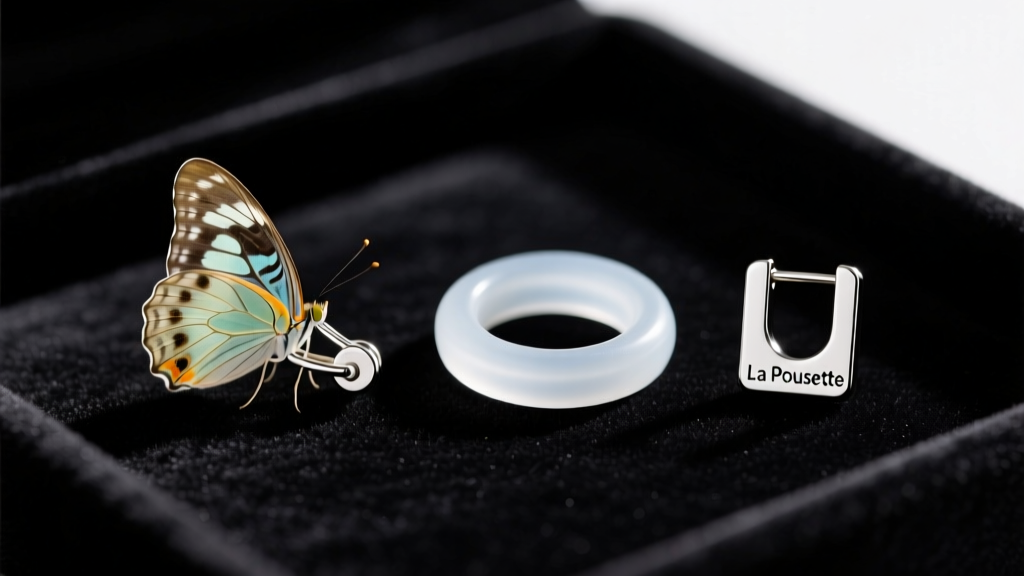
| La Pousette (Push-Pull) | 18k Gold, Platinum | $45 - $120 | Maximum (Mechanical lock) | High-carat solitaires, daily wear fine jewelry |
| Locking Friction (e.g., LOX) | Surgical Steel/Titanium | $20 - $35 | High (Secondary locking tab) | Mid-range jewelry, active lifestyles |
Analyzing the La Pousette Value Proposition
The La Pousette back, originally patented in the 1980s but widely adopted by fine jewelers today, operates like a mechanical syringe. It features two tiny tabs that, when squeezed, allow the back to slide on and off. When released, internal springs lock a ridge inside the back against a groove on the earring post. While a pair of 18k gold La Pousette backs might cost $85, they completely eliminate the risk of the back sliding off or being pushed too tightly against the lobe, effectively preventing the "stuck inside earlobe" issue caused by friction-back over-insertion.
Preventative Care: Maximizing the Lifespan of Your Closures
Even the most expensive screw-backs and locking mechanisms require maintenance to retain their value. Sebum (skin oils), dead skin cells, and hair products create a calcified buildup on earring posts and inside the backing mechanisms. This buildup not only harbors bacteria—leading to the swelling that traps earring backs—but also strips the threading on screw-backs and jams the springs in La Pousette backs.
The 5-Minute Monthly Maintenance Routine
To protect your investment and prevent tissue encapsulation, implement this low-cost maintenance routine:
- Ultrasonic Cleaning: Drop your earring backs into a small ultrasonic jewelry cleaner (a basic model costs around $35) filled with warm water and a drop of mild dish soap for 3 minutes. This vibrates microscopic debris out of the tension loops and threading.
- Tension Checks: Once a month, test your friction backs. If a butterfly back slides onto a 20-gauge post with zero resistance, the tension loops have failed. Discard it immediately and replace it. A replacement 14k gold friction back costs roughly $12—a small price to pay to avoid losing your earring.
- The "One-Millimeter" Rule: When putting on friction or locking backs, never push them flush against the skin. Always leave a 1mm to 2mm gap between the back of the earlobe and the earring back. This allows for natural nocturnal swelling and lymphatic drainage, ensuring the back never becomes trapped inside the tissue.
Conclusion: Security is the Ultimate Value
Dealing with an earring back stuck inside the earlobe is a jarring reminder that the cheapest component of your jewelry setup often carries the highest hidden liabilities. While a $2 brass butterfly back seems like a bargain, the potential for tension failure, allergic swelling, and subsequent $500 medical extraction bills completely destroys its perceived value. By assessing your jewelry collection and strategically upgrading high-value pieces to mechanical locking backs or premium threaded screw-backs, you safeguard your financial investment and your physical well-being. In the world of fine jewelry, true value isn't just about the carat weight of the stone; it is about the engineering of the clasp that keeps it securely in place.


