Turquoise Cross Earrings: The 2026 Trend & Style Guide
Discover how turquoise cross earrings are dominating 2026 fashion. Explore material grades, styling frameworks, and trend forecasts for this iconic motif.

The 2026 Resurgence: Heritage Maximalism Meets Ecclesiastical Motifs
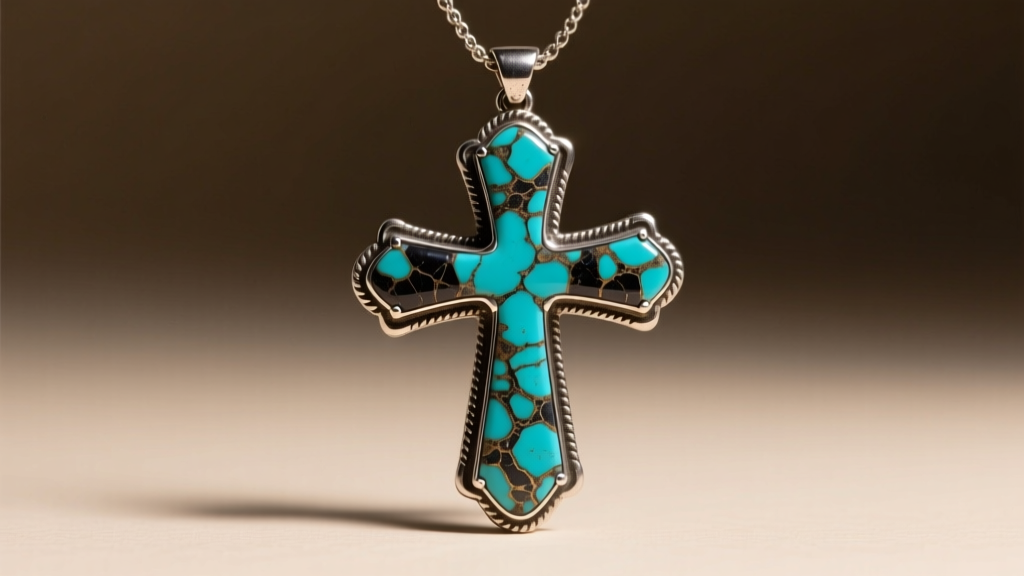
In the ever-evolving landscape of jewelry trends, 2026 has firmly established the year of 'heritage maximalism.' Moving away from the ultra-minimalist 'quiet luxury' that dominated the early 2020s, collectors and fashion enthusiasts are gravitating toward pieces with deep historical resonance, bold color stories, and symbolic weight. At the absolute epicenter of this movement are turquoise cross earrings. This specific intersection of Southwestern gemology and ecclesiastical symbolism is bridging multiple aesthetics—from neo-bohemian and indie-sleaze revivals to high-fashion gothic.
According to trend forecasts analyzed by the Silver Institute, consumer demand for sterling silver paired with opaque, vibrant gemstones has surged by 34% year-over-year, driven largely by a desire for artisanal, story-driven accessories. The cross, historically a symbol of faith and protection, takes on a deeply personal, talismanic quality when rendered in turquoise—a stone revered for centuries across Indigenous American, Persian, and Egyptian cultures for its protective and healing properties.
Material Authenticity: Decoding Turquoise Grades
When investing in turquoise cross earrings, understanding material authenticity is non-negotiable. The market is currently saturated with imitations, making gemological literacy essential for the modern buyer. The Gemological Institute of America (GIA) notes that natural, untreated turquoise is increasingly rare, making up less than 10% of the material on the commercial market.
| Grade / Type | Treatment Process | Mohs Hardness | Estimated Price Range (Per Pair) |
|---|---|---|---|
| Natural (Sleeping Beauty / Kingman) | None (Untreated) | 5.0 - 6.0 | $180 - $600+ |
| Stabilized (Zachery Process) | Clear polymer / chemical hardening | 5.5 - 6.5 | $60 - $150 |
| Dyed Howlite / Magnesite | Chemical dye injection | 3.5 - 4.0 | $15 - $45 |
| Reconstituted | Turquoise dust mixed with resin | 4.0 - 5.0 | $25 - $60 |
The Zachery Stabilization Method vs. Dye
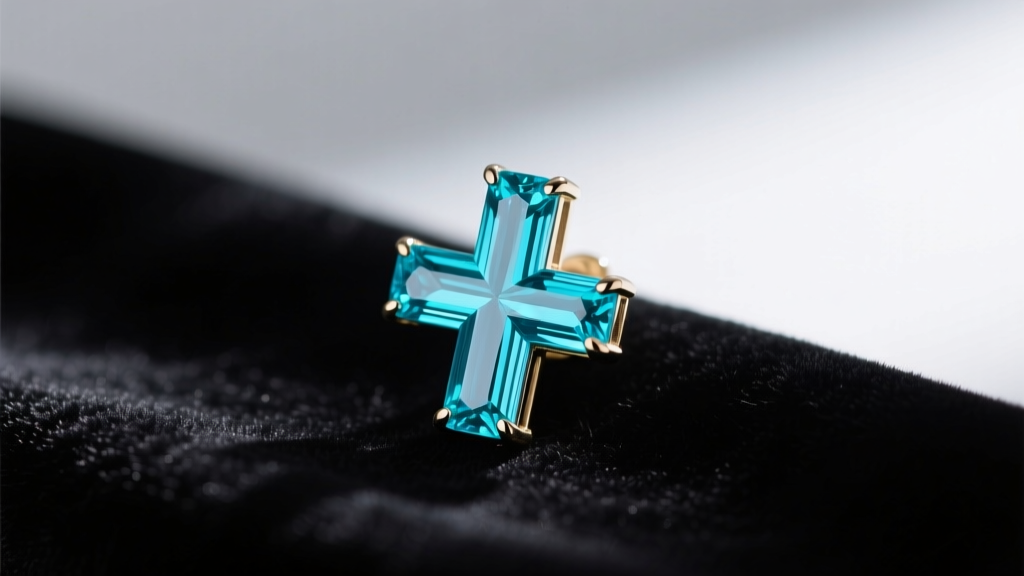
Do not immediately dismiss stabilized turquoise. The Zachery process, a highly respected stabilization method, enhances the stone's durability without altering its natural color or adding artificial dyes. It replaces the water content in the porous stone with a proprietary hardening agent, preventing the turquoise from absorbing skin oils and turning green over time. Conversely, dyed howlite—a common imitation—can be identified under a jeweler's loupe by looking for dye concentrations in the stone's natural fissures, which appear as dark, web-like veins that look unnaturally uniform.
Hardware Specifications: Engineering for Weight and Comfort
A critical failure point in statement turquoise cross earrings is the hardware. Turquoise is a dense material, and a solid, 1.5-inch elongated cross drop can easily weigh between 8 and 14 grams per earring. Standard 20-gauge posts with traditional butterfly friction backs are entirely insufficient for this weight, leading to drooping, lobe fatigue, and eventual loss of the earring.
- Post Gauge: Opt for 18-gauge (1.0mm) or 16-gauge (1.2mm) posts for structural integrity. Thicker posts distribute the weight more evenly across the piercing fistula.
- Backing Systems: For heavy studs, jumbo silicone disc backs (10mm diameter) or screw-back mechanisms are mandatory to keep the cross facing forward rather than tilting downward.
- Dangle Mechanics: If the cross is a dangle, ensure the jump ring connecting the cross to the ear wire is soldered shut. An unsoldered jump ring will easily pull apart under the pendulum stress of a heavy turquoise slab.
- Leverback Wires: For drops exceeding 2 inches, French leverback wires provide superior security compared to standard fishhook wires, locking into place behind the lobe.
'The architecture of an earring is just as vital as its aesthetic. A heavy turquoise cross demands a counterbalance; otherwise, you are engineering a beautiful piece of jewelry that is physically painful to wear for more than an hour.'
— Master Jeweler & Bench Technician, 2026 Guild Symposium
Face Shape & Placement Framework
Styling turquoise cross earrings requires an understanding of geometric contrast and facial proportions. The cross is inherently angular, which can either harmonize with or disrupt your natural features depending on the silhouette you choose.
Styling by Face Shape
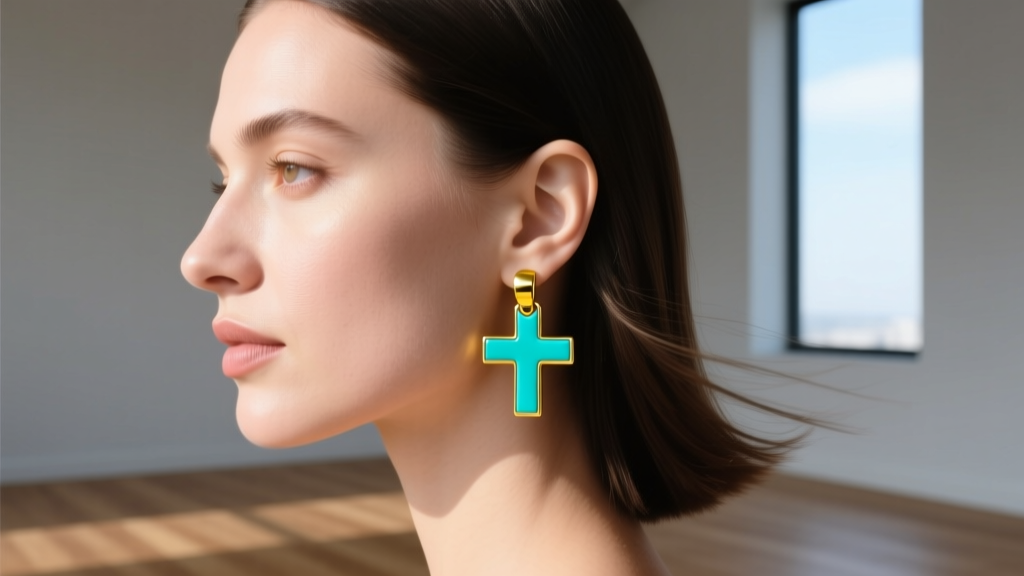
- Round Faces: Elongated, narrow crosses (such as a Latin cross silhouette) are ideal. Aim for a drop length of at least 1.5 to 2 inches to create verticality and draw the eye downward, visually lengthening the jawline and neck.
- Square Faces: Avoid harsh, blocky crosses with sharp 90-degree corners. Instead, seek out crosses with softened, rounded edges, or opt for turquoise cross huggies that hug the lobe without adding aggressive angles to the lower half of the face.
- Heart-Shaped Faces: Bottom-heavy designs or wide, stout crosses (like a Greek cross or Celtic cross) help add visual width to a narrower chin. Studs or short drops that terminate above the jawline work beautifully.
- Oval Faces: The universal canvas. Oval faces can carry off extreme proportions, from oversized, shoulder-grazing turquoise cross chandeliers to minimalist, tiny bezel-set studs.
Cartilage vs. Lobe Placements
While the lobe is the traditional home for the cross motif, 2026 has seen a massive spike in cartilage placements. However, weight restrictions apply. A heavy turquoise drop will migrate or reject a fresh helix piercing. For cartilage (helix, flat, or tragus), utilize 16-gauge or 14-gauge flat-back labret posts with threaded ends. You can purchase specialized turquoise cross charm tops that screw directly into the labret post, providing the aesthetic of a cross earring without the pendulum weight that damages delicate cartilage tissue.
The Verdict: Building a Curated Collection
Turquoise cross earrings are not merely a fleeting seasonal fad; they are a cornerstone of heritage jewelry that offers immense versatility. When building your collection, prioritize material transparency. Demand that retailers disclose whether their stones are natural, stabilized, or imitation. Pairing a high-quality, stabilized Kingman turquoise cross with oxidized 925 sterling silver offers the perfect blend of durability, historical aesthetic, and accessible pricing. Whether you are styling them with a vintage leather jacket for an indie-sleaze revival look or pairing a delicate 14k gold and turquoise cross stud with a silk blouse for the office, this motif remains a powerful, protective, and profoundly stylish choice for the modern jewelry wardrobe.


