Celebrity Men With Earrings: The 2026 Beginner Style Guide
Discover how to emulate celebrity men with earrings in 2026. A beginner's guide to gauges, materials, and curated ear styling for men.

The Renaissance of Male Ear Adornment
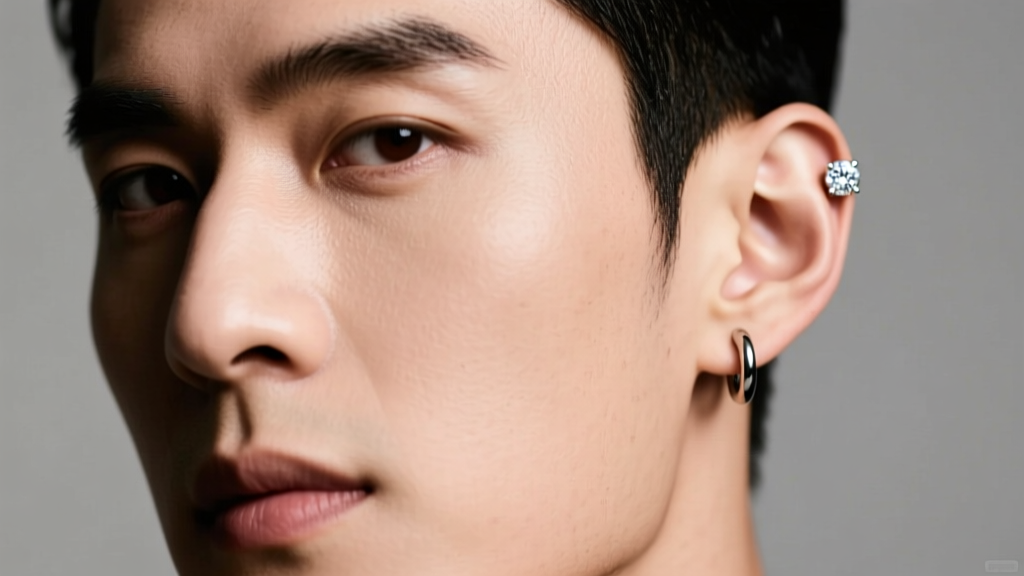
The landscape of men's jewelry has undergone a massive cultural shift. When analyzing the style evolution of celebrity men with earrings, it becomes clear that we have moved far past the solitary, dangling diamond stud of the early 2000s. In 2026, the 'curated ear' is a staple of male red-carpet fashion, streetwear aesthetics, and everyday minimalist style. Actors, musicians, and athletes are now sporting intricate combinations of lobe studs, cartilage hoops, and tension cuffs.
For beginners looking to emulate these high-profile aesthetics, the sheer volume of terminology—gauges, threading types, and metallurgical grades—can be overwhelming. This guide breaks down the exact specifications, materials, and styling frameworks used by top-tier male celebrities, translating high-fashion concepts into an actionable, beginner-friendly blueprint for your first earring purchase or piercing appointment.
Decoding the Looks: What Celebrity Men Are Actually Wearing
To build a versatile collection, you need to understand the three foundational categories dominating men's ear styling this year.
The Classic Bezel Stud (The A-List Staple)
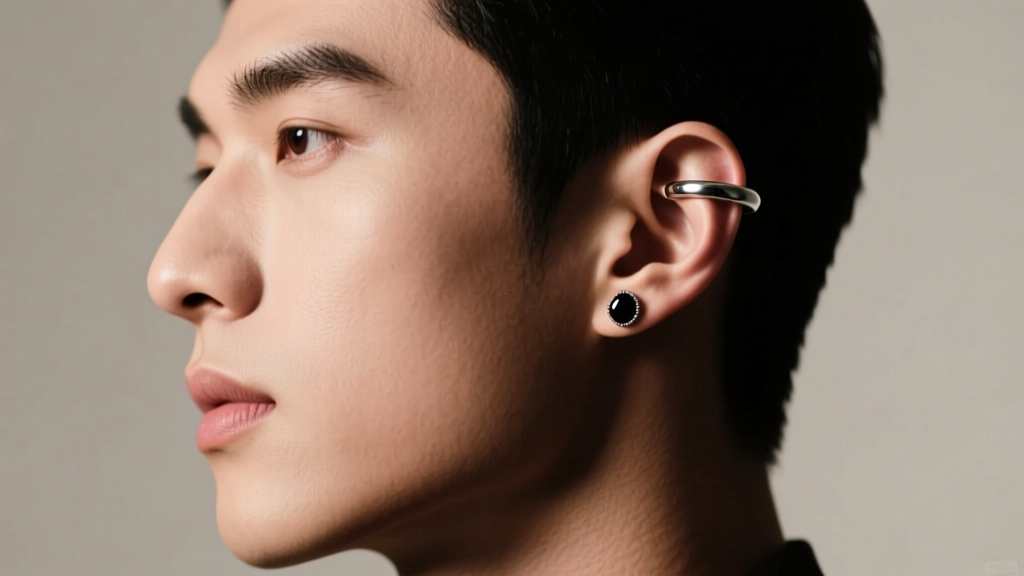
While prong-set diamonds catch the light, they also catch on clothing and hair. The modern celebrity standard is the bezel-set stud, where a thin rim of metal completely encircles the gemstone. For men, the sweet spot for diameter is between 3mm and 5mm. Anything larger risks looking costume-heavy, while anything smaller loses visual impact. Black onyx, matte lapis, and salt-and-pepper diamonds are currently outperforming traditional clear diamonds in men's editorial spreads.
The Huggie & Small Hoop (The Streetwear Vibe)
Huggies are thick, small-diameter hoops that 'hug' the earlobe. The ideal inner diameter for a male lobe is 10mm to 12mm. Look for 'clicker' closures—a hinged mechanism that snaps securely into place, eliminating the fiddly clasps of traditional wire hoops. Clickers provide a seamless, continuous circle that looks incredibly sharp and modern.
Cartilage & Ear Cuffs (The High-Fashion Edge)
For those not ready to commit to a needle, ear cuffs offer the illusion of a helix or forward helix piercing. These rely on tension to grip the outer cartilage ridge. However, if you are opting for actual cartilage piercings, the flat and the helix are the most common placements for men, usually adorned with 16-gauge threadless studs or minimalist titanium seams.
The Beginner's Blueprint: Gauge, Material, and Threading
The biggest mistake beginners make is buying jewelry based solely on aesthetics while ignoring the biomechanics of the piercing. According to the Association of Professional Piercers, the metallurgical grade and structural design of your jewelry dictate your healing success and long-term comfort.
Understanding Gauge Sizes
- 20G (0.8mm) & 18G (1.0mm): The standard for traditional earlobe piercings. Most fashion jewelry and starter studs fall into this range.
- 16G (1.2mm): The universal standard for cartilage (helix, flat, tragus) and increasingly common for modern lobe piercings done by professional studios. It offers superior stability and prevents the 'cheese-cutter effect' where thin wires migrate through the tissue.
The Threading Debate: Why It Matters
Never buy externally threaded jewelry (where the screw is on the post that passes through your skin). The sharp threads will micro-tear your fistula every time you insert it. Instead, invest in internally threaded jewelry (the screw is on the gem/end) or threadless push-pin jewelry, which uses a slight bend in the pin to create tension-based hold. Threadless jewelry is the gold standard for high-end celebrity piercers due to its security and ease of use.
Material Grades & Healing Properties
| Material | Grade/Specification | Best For | Price Range |
|---|---|---|---|
| Implant-Grade Titanium | ASTM F136 | Fresh piercings, sensitive skin, nickel allergies | $40 - $120 |
| Solid Gold | 14k or 18k (Nickel-Free Alloy) | Healed lobes, luxury everyday wear | $150 - $600+ |
| Niobium | Highly Pure (Reactive) | Cartilage hoops, anodized colors | $30 - $80 |
| Surgical Steel | 316L (Contains Nickel) | Healed ears only (Avoid for fresh piercings) | $20 - $50 |
Face Shape & Placement Matrix
Just as sunglasses must complement your bone structure, so must earrings. When styling celebrity men with earrings, editorial stylists use the following framework to balance facial proportions:
- Square/Angular Jawlines: Soften sharp features with curved jewelry. Opt for 12mm huggie hoops or circular seamless rings in the cartilage. Avoid long, geometric dangles that exaggerate angularity.
- Round Face Shapes: Create the illusion of length and structure. Vertical drop earrings or a vertical stack of two small bezel studs in the lobe draw the eye downward, elongating the face.
- Oval Faces: The most versatile canvas. You can pull off almost any style, from bold 5mm statement studs to intricate ear cuffs. Focus on proportion rather than corrective shaping.
Pro Styling Tip: The 'Rule of Odds' applies to ear curation. An asymmetrical setup—such as two piercings on the left ear and one on the right—creates a dynamic, effortlessly cool aesthetic that dominates current menswear editorials.
Building Your First Capsule Collection (Budget & Brands)
You do not need to spend thousands to achieve a high-end look. As noted in recent GQ menswear guides, the focus has shifted toward accessible luxury and modular pieces. Here is a beginner-friendly brand matrix for 2026:
- Mejuri: Excellent for 14k solid gold lobe studs and small huggies. Perfect for the minimalist aesthetic. ($80 - $250)
- Vitaly: Ideal for streetwear-inspired, architectural pieces made from recycled stainless steel. Best for fully healed piercings. ($40 - $90)
- Maria Tash: The pinnacle of threadless, high-fashion cartilage jewelry. Expensive, but the precision engineering and diamond quality are unmatched for special occasions. ($300 - $1,500+)
Common Beginner Mistakes to Avoid
Even the most expensive jewelry will look terrible if your ear health is compromised. Avoid these critical beginner errors:
- Sleeping in Huggies Too Early: Even if your lobe feels healed at six weeks, the fistula is still fragile. Sleeping on huggies can cause pressure bumps. Stick to flat-back titanium labret studs for the first 3-6 months.
- Ignoring the 'Cheese-Cutter Effect': Wearing heavy, thin-wire hoops in a standard 20G lobe piercing will cause the wire to slowly slice through your tissue over time. Always size up to 16G or 14G if you plan to wear heavier hoops.
- Using Alcohol for Aftercare: Rubbing alcohol and hydrogen peroxide destroy the delicate new cells forming in your piercing. Use only sterile 0.9% sodium chloride wound wash twice a day.
Final Thoughts on the Curated Ear
Emulating the refined, intentional looks of celebrity men with earrings is entirely achievable for beginners. By prioritizing implant-grade materials, understanding the mechanics of threadless jewelry, and selecting proportions that flatter your unique face shape, you can build a sophisticated earring wardrobe that transcends fleeting trends. Start with a single, high-quality 14k gold bezel stud or a seamless titanium huggie, and let your personal style evolve organically from there.


