Troubleshooting Gold Charm Hoop Earrings: Expert Fixes
Troubleshoot common issues with gold charm hoop earrings. Learn expert fixes for tangled charms, bent hoops, and heavy earlobes in this detailed guide.

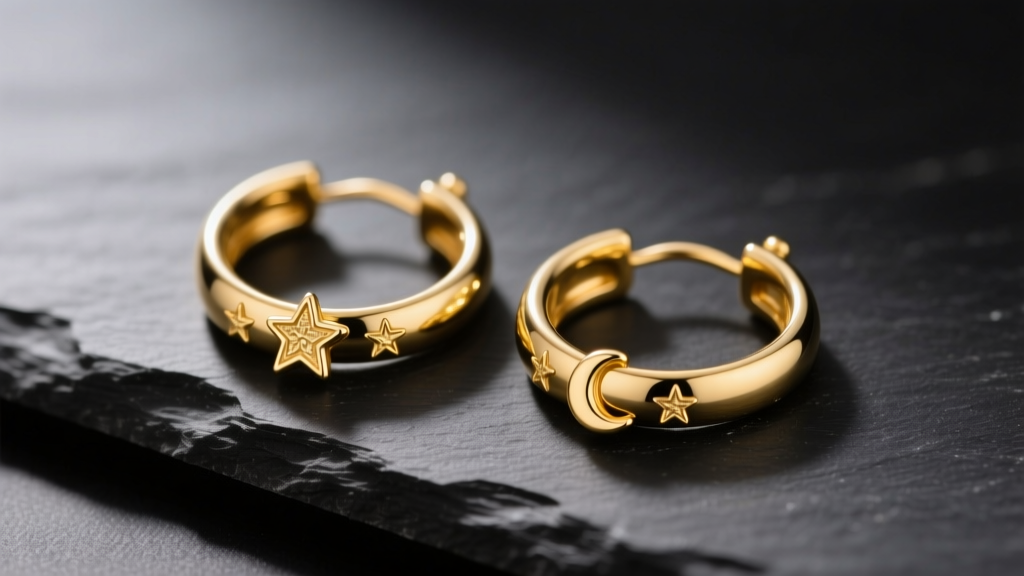
Gold charm hoop earrings have dominated jewelry trends well into 2026, offering a modular, personalized approach to everyday ear styling. However, the addition of moving charms introduces unique mechanical and metallurgical challenges that standard hoops simply do not face. From tangled clusters and warped clasps to premature plating wear and earlobe sagging, these dynamic pieces require specific troubleshooting techniques. As a domain expert in jewelry mechanics and styling, I have compiled this comprehensive problem-solving guide to help you diagnose, repair, and maintain your gold charm hoops for long-term wear.
The Anatomy of a Charm Hoop: Why They Fail
Before troubleshooting, it is essential to understand the structural vulnerabilities of charm hoops. A standard hoop relies on continuous tension or a simple hinge. When you add charms via jump rings, you introduce friction points, uneven weight distribution, and snag hazards. The continuous movement of the charms against the primary hoop wire causes micro-abrasions. Furthermore, the kinetic energy from a heavy charm swinging can slowly torque the hoop out of its circular alignment, placing immense stress on the clasp mechanism. Understanding these failure modes is the first step toward effective repair and prevention.
Troubleshooting Guide: 4 Common Charm Hoop Disasters
1. The Tangled Charm Cluster
The Problem: Charms migrate to the bottom of the hoop, stacking on top of one another, scratching each other, and creating a bulky, tangled mess that hides the individual designs.
The Fix: This occurs when the inner diameter of the charm's jump ring is significantly larger than the gauge of the hoop wire, allowing too much lateral movement. To solve this without soldering, you can use micro-silicone O-rings (often sold as earring backs or jewelry spacers). Slide a 1mm silicone O-ring onto the hoop wire between each charm to act as a friction buffer. This maintains even spacing and prevents the charms from sliding past one another. If you prefer a permanent fix, take the hoops to a jeweler to have the jump rings resized to a snugger 2mm inner diameter and laser-soldered shut, eliminating the gap where charms catch and tangle.
2. The Warped Hoop & Broken Clasp
The Problem: The hoop loses its perfect circle, and the hinged snap-back or latch-back clasp no longer clicks securely into place, posing a high risk of loss.
The Fix: According to the Gemological Institute of America (GIA), pure 24k gold is far too soft for structural jewelry, which is why alloys are used. However, if your hoops are made from 18k gold or a soft annealed 14k gold wire that is too thin (20-gauge or 0.81mm), the weight of the charms will warp the wire. When the wire warps, the male post and female groove of the clasp misalign. Do not repeatedly bend the wire back into shape; this causes work-hardening and will eventually snap the metal. Instead, gently reshape the hoop using nylon-jaw pliers to avoid marring the gold. If the clasp still fails, the groove is likely packed with debris or the post is bent. Clean the clasp groove with a wooden toothpick and isopropyl alcohol. If the post is bent, use flat-nose pliers to gently realign it. For a permanent solution, upgrade to a thicker 18-gauge (1.02mm) or 16-gauge (1.29mm) hoop, which possesses the tensile strength to support swinging charms without torquing.
3. Gold Plating Rub-Off & Tarnishing
The Problem: The gold color wears off the bottom half of the hoop, revealing a dull silver or brass undertone, while the charms remain pristine.
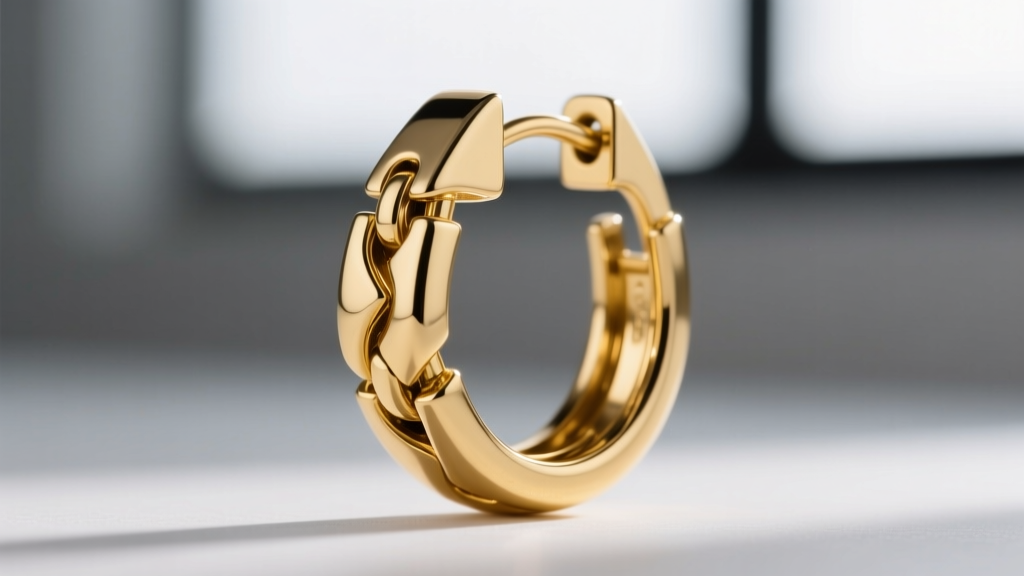
The Fix: This is a classic sign of gold vermeil or gold-plated brass experiencing kinetic friction. The charms act like tiny hammers, constantly striking the hoop wire and wearing away the microscopic layer of gold plating. Furthermore, the Federal Trade Commission (FTC) guidelines dictate strict standards for gold plating thickness, but many fashion brands fall below the 2.5-micron threshold required for heavy-wear items. There is no DIY fix for worn plating. You must either send the piece to a professional electroplater to be stripped and re-plated in 14k or 18k gold, or, ideally, replace the hardware with solid 14k gold, which will never rub off regardless of charm friction.
4. Earlobe Sagging From Heavy Charms
The Problem: The addition of three or more solid gold or gemstone charms pulls the earlobe downward, causing discomfort, stretching the piercing, and making the earring face forward awkwardly instead of hanging straight down.
The Fix: This is a physics issue related to leverage. A continuous hoop distributes weight evenly, but charms concentrate the mass at the lowest point. To counteract this, utilize clear silicone earlobe support patches (often called 'earlifts'). These adhesive pads sit behind the earlobe, around the earring post, providing a rigid backing that distributes the weight across a wider surface area of the skin. Alternatively, switch from a continuous hoop to a French wire (fishhook) style with a heavy-gauge wire and a silicone stopper on the back. The French hook allows the earring to swing freely from the piercing hole without the rigid leverage of a hoop pulling the lobe outward.

Material & Gauge Matrix: Choosing the Right Hardware
When purchasing or commissioning gold charm hoop earrings, selecting the correct metal purity and wire gauge is critical for structural integrity. Use the matrix below to guide your hardware choices based on your charm weight.
| Material Grade | Hardness & Durability | Ideal Wire Gauge for Charms | Best Use Case |
|---|---|---|---|
| 24k Solid Gold | Very Soft (Mohs 2.5-3). Bends easily. | Not Recommended | Display only; never use for charm hoops. |
| 18k Solid Gold | Moderate. Softer than 14k due to higher pure gold content. | 16-Gauge (1.29mm) | Lightweight charms; requires thicker wire to prevent warping. |
| 14k Solid Gold | High. Excellent tensile strength and scratch resistance. | 18-Gauge (1.02mm) | Everyday wear; supports medium-weight charms beautifully. |
| 14k Gold-Filled | High. Brass core provides rigidity; thick gold exterior. | 18-Gauge or 20-Gauge | Budget-friendly alternative to solid gold; highly durable. |
| Gold Vermeil | Low. Sterling silver core is soft; plating wears from friction. | 16-Gauge (Minimum) | Occasional wear only; avoid heavy, swinging metal charms. |
Pro-Tips for Clasp Maintenance and Charm Spacing
To extend the lifespan of your gold charm hoops, implement a monthly maintenance routine. First, inspect the jump rings connecting the charms. If you see even a hairline gap in the jump ring seam, the charm will eventually slip off or catch on your hair. Use two pairs of chain-nose pliers to twist the jump ring closed (never pull the ends apart laterally, as this weakens the metal). Second, lubricate the hinge of your hoop clasp once every six months with a microscopic drop of synthetic watch oil. This prevents the hinge pin from grinding and wearing out the internal housing. Finally, when stringing charms, alternate heavy metal charms with lighter acrylic or enamel pieces to balance the kinetic load on the hoop wire.
When to See a Professional Jeweler
While silicone spacers and gentle reshaping can solve many issues, certain problems require professional intervention. If your hoop develops a visible kink (a sharp fold in the metal rather than a smooth bend), the structural integrity is compromised, and it must be soldered and reinforced by a bench jeweler. Additionally, if you wish to add custom, high-value charms like genuine diamonds or sapphires, have a jeweler laser-weld the jump rings directly to the hoop. This eliminates the mechanical joint entirely, ensuring your precious stones are never lost to a failed jump ring. By understanding the mechanics of your gold charm hoop earrings, you can transform them from fragile fashion accessories into enduring, heirloom-quality pieces.


