Troubleshooting Teardrop Amethyst Earrings: A Fix Guide
Learn how to fix broken wire wraps, prevent lobe stretching, and clean your teardrop amethyst earrings with our expert troubleshooting guide.

The Most Common Failures in Teardrop Amethyst Earrings
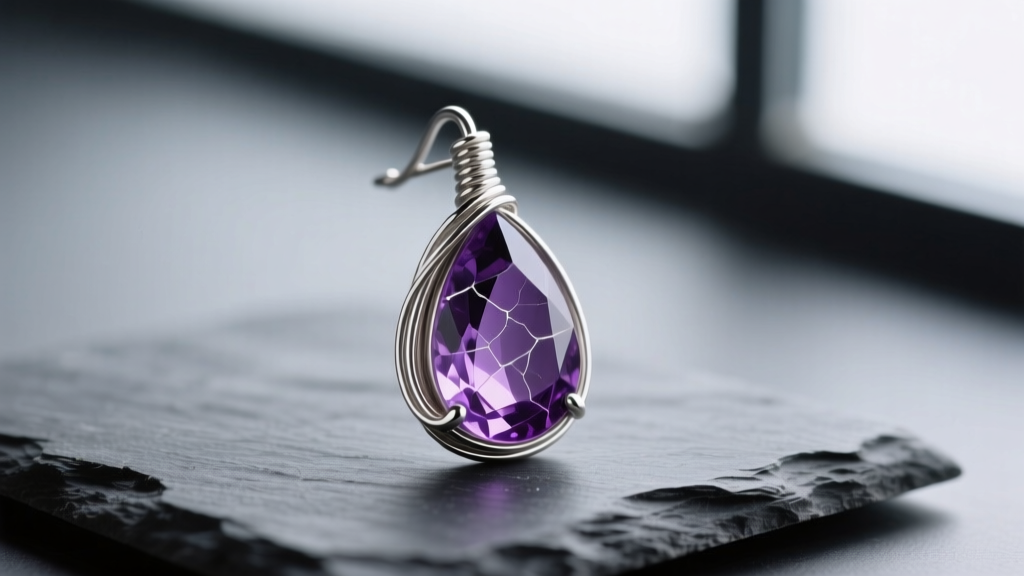
Teardrop amethyst earrings are a staple in both bohemian and fine jewelry collections, prized for their deep violet hues and elegant, elongated silhouettes. However, their unique geometry and the physical properties of the stone make them particularly susceptible to specific types of wear and tear. Unlike round cabochons that sit flush in bezel settings, teardrop briolettes and faceted drops are typically top-drilled or wire-wrapped, creating structural vulnerabilities at the bail.
According to the Gemological Institute of America (GIA), amethyst ranks at a 7 on the Mohs hardness scale. While this makes it reasonably durable for everyday wear, it is still vulnerable to scratching from airborne quartz dust and can fracture if subjected to hard impacts. When troubleshooting your teardrop amethyst earrings, the issues generally fall into three categories: structural wire fatigue, lobe strain from excessive weight, and environmental degradation of the stone's color. Below, we break down exact diagnostic steps and actionable repairs for each failure mode.
Troubleshooting Wire-Wrap and Prong Failures
The most frequent point of failure in teardrop amethyst drop earrings is the connection between the stone and the ear wire. Because teardrops are often top-drilled, jewelers rely on wire-wrapping or specialized headpins to secure them. If your stone is spinning loosely, or worse, has detached entirely, the issue usually stems from improper wire temper or gauge selection.
Diagnosing Wire Fatigue
If the wire wrapping around the neck of the teardrop has unspooled, it was likely crafted using 'dead soft' wire. Dead soft wire is highly malleable and excellent for weaving, but it lacks the tensile strength to hold a heavy stone in place long-term. To fix this, you must re-wrap the stone using 'half-hard' wire, which has been work-hardened to resist bending under the stone's kinetic movement.
| Wire Gauge | Temper | Best Application for Teardrops | Tensile Strength |
|---|---|---|---|
| 20-Gauge | Half-Hard | Main structural bail and ear wire | High (Supports 10g+ stones) |
| 22-Gauge | Half-Hard | Top-drilled hole threading | Medium (Best for stones under 8g) |
| 24-Gauge | Dead Soft | Decorative weaving and lashing | Low (Strictly ornamental) |
| 26-Gauge | Dead Soft | Micro-coiling over structural wire | Very Low |
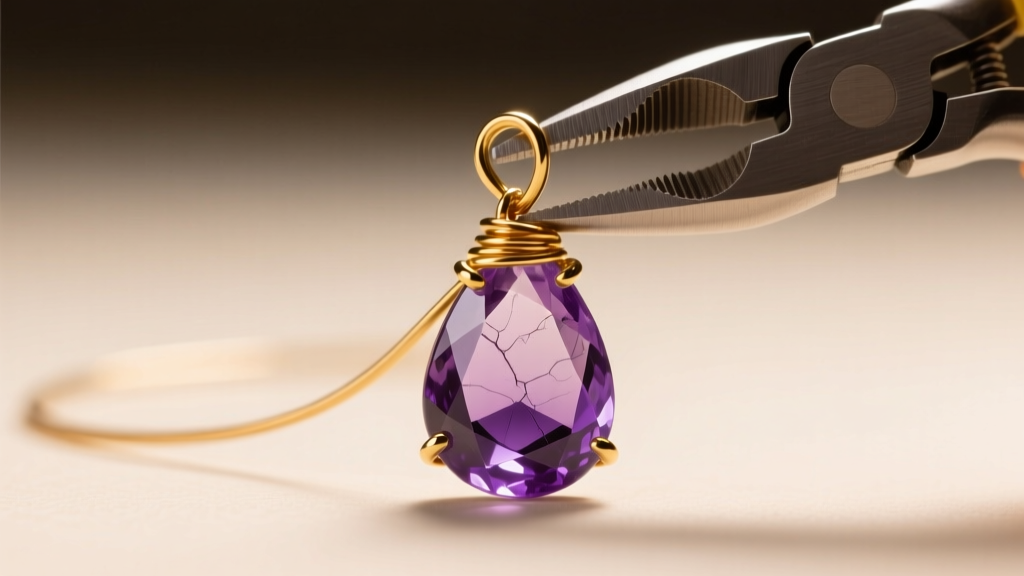
The Fix: To repair a loose bail, carefully snip the existing wire using flush cutters. Thread a 22-gauge half-hard sterling silver or gold-filled wire through the drill hole. Create a wrapped loop using nylon-jaw pliers to prevent marring the metal, ensuring you make at least three tight coils down the neck of the teardrop. Professional re-wrapping by a bench jeweler typically costs between $15 and $45, while a DIY spool of quality 22-gauge half-hard wire costs around $12.
Solving Lobe Stretching from Heavy Stone Drops
Amethyst has a specific gravity of approximately 2.65. A substantial 30mm x 15mm faceted teardrop can easily weigh 8 to 12 grams. When you add the weight of a sterling silver French wire and decorative caps, a single earring can exceed 15 grams. The average human earlobe begins to experience pain and micro-tearing at the piercing site when subjected to weights exceeding 10 grams for prolonged periods.
Weight Distribution Strategies
If your teardrop amethyst earrings are causing lobe fatigue, thinning the piercing channel, or pulling the earlobe downward, you need to redistribute the mechanical load. Do not simply switch to a thinner ear wire; a 24-gauge wire will slice through your lobe under heavy weight. Instead, stick to a sturdy 20-gauge ear wire and employ the following troubleshooting methods:
- EPDM Silicone Support Discs: Slide a 4mm outer-diameter EPDM rubber o-ring or specialized earring support disc onto the post behind the earlobe. This increases the surface area bearing the weight, preventing the wire from acting like a cheese cutter.
- Ear Cuff Counterweights: For extremely heavy statement teardrops, attach a decorative chain linking the earring to a cartilage cuff. This transfers up to 40% of the stone's weight to the upper ear cartilage.
- Hollow-Back Settings: If you are having the stones custom-set, ask the jeweler to use a hollow-backed bezel or gallery wire setting rather than a solid silver backplate, shaving off 2-3 grams of metal weight per earring.
Authenticity & Color Fading: Diagnosing Your Amethyst
One of the most distressing issues owners face is noticing their vibrant purple teardrop amethyst earrings slowly turning brown, yellow, or completely clear. This is rarely a defect in the stone itself, but rather a reaction to environmental factors or undisclosed treatments.
According to mineralogical data from Mindat.org, the purple coloration in amethyst is caused by iron impurities and natural irradiation. However, this color center is highly sensitive to heat and prolonged UV exposure.
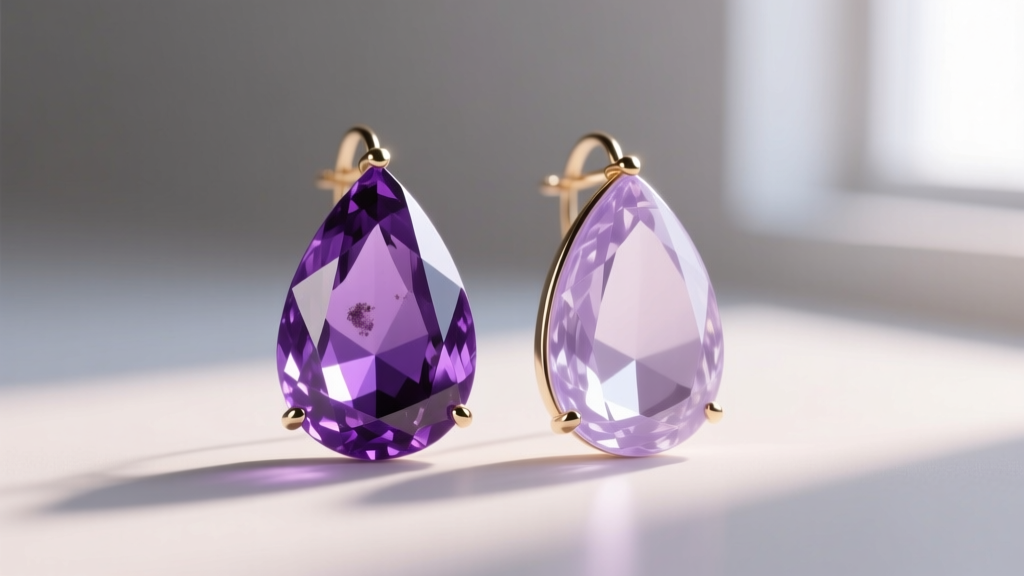
Troubleshooting Rule of Thumb: If you leave your amethyst earrings on a sunny windowsill or wear them daily in intense, direct equatorial sunlight, the UV radiation will destabilize the color centers, causing irreversible fading. Furthermore, if your 'amethyst' rapidly turned yellow after being exposed to a heat source (like a hair dryer or hot car dashboard), it was likely a heat-treated stone mimicking citrine, or a low-grade Brazilian amethyst that naturally shifts to yellow-orange at temperatures above 300°C.
To prevent fading, store your teardrop amethysts in a dark, velvet-lined jewelry box. If your stones have already faded, no chemical cleaning will restore the purple; the only remedy is professional re-polishing to remove a surface layer (if the fading is superficial) or accepting the new hue.
Step-by-Step Cleaning Without Damaging the Stone
When teardrop amethyst earrings lose their brilliance, the culprit is usually a buildup of sebum, dead skin cells, and cosmetic residues trapped in the wire wraps or the facet junctions at the stone's point. Many owners make the critical mistake of tossing them into an ultrasonic cleaner.
Warning: Never use ultrasonic cleaners on amethyst. Amethyst frequently contains liquid inclusions, microscopic fractures, and twinning planes. The high-frequency cavitation bubbles in an ultrasonic bath can easily fracture the stone from the inside out, shattering your teardrop.
The Safe Cleaning Protocol
- Prepare the Solution: Mix lukewarm distilled water with two drops of pH-neutral, ammonia-free dish soap. Avoid tap water, as dissolved minerals can leave a cloudy film on the facets.
- Soak Briefly: Submerge the earrings for exactly 3 to 5 minutes to soften the sebum. Do not exceed 10 minutes, especially if the wire wraps are oxidized, to prevent further tarnishing.
- Agitate Gently: Use a soft goat-hair makeup brush or a baby toothbrush to gently sweep the bristles into the wire coils and the drill hole at the top of the teardrop. Never use a hard-bristled brush, as accumulated dust may contain quartz particles (Mohs 7) that will scratch the amethyst surface.
- Rinse and Dry: Rinse under a gentle stream of distilled water. Pat dry with a lint-free microfiber cloth, and use a compressed air duster to blow moisture out of the tight wire wraps to prevent sterling silver oxidation.
When to Seek Professional Jeweler Intervention
While wire wrapping and cleaning can be managed at home, certain structural failures require a professional bench jeweler. If the teardrop amethyst itself has chipped at the delicate bottom point—a common occurrence if dropped on tile or stone floors—do not attempt to file it down yourself. A lapidary artist can re-cut and polish the point, potentially converting it into a slightly shorter, rounded briolette shape while preserving the stone's structural integrity.
Additionally, if the drill hole at the top of the teardrop has cracked due to wire tension, the stone is critically compromised. A jeweler can carefully extract the wire, apply a specialized cyanoacrylate lapidary adhesive to stabilize the fracture, and re-set the stone using a protective metal cap that bypasses the damaged drill channel entirely.


