Rose Gold Rose Earrings Buying Guide: What to Look For
Discover what to look for when buying rose gold rose earrings. Compare 14k vs 18k alloys, floral craftsmanship, pricing, and hypoallergenic tips.

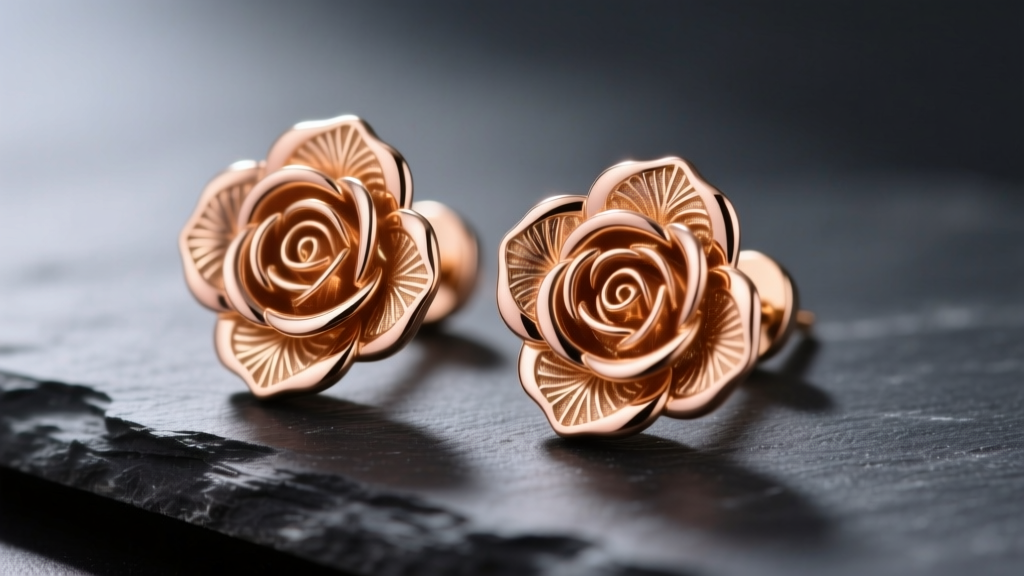
Floral motifs have remained a staple in fine jewelry for centuries, but the specific combination of botanical design and warm, copper-infused alloys has created a massive surge in demand for rose gold rose earrings. Whether you are looking for a delicate stud for everyday lobe wear or an intricate, hand-carved drop for a cartilage piercing, navigating the market requires more than just an eye for aesthetics. The metallurgical realities of rose gold, combined with the structural challenges of three-dimensional floral designs, mean that buyers must pay close attention to material grades, manufacturing techniques, and structural integrity.
This comprehensive buying guide breaks down exactly what to look for when investing in rose gold rose earrings in 2026, ensuring you select a piece that is beautiful, durable, and comfortable for long-term wear.
The Metallurgy of Rose Gold: 14k vs. 18k for Floral Designs
Unlike yellow or white gold, rose gold is not a naturally occurring metal. It is an alloy created by mixing pure gold with copper, and occasionally small amounts of silver or zinc. The copper is what gives the metal its signature pinkish-red hue, but it also drastically alters the metal's physical properties. According to the Gemological Institute of America (GIA), the karat weight of your rose gold earrings will dictate both their color and their durability.
14k Rose Gold (58.3% Pure Gold)
Because 14k rose gold contains a higher percentage of copper (often around 30-40%), it boasts a deeper, more saturated pink-red color. From a manufacturing standpoint, the high copper content makes 14k gold significantly harder and more durable. This is highly advantageous for rose motifs, as the stiff metal holds sharp petal edges and intricate milgrain detailing without bending. However, the high copper content introduces a common failure mode: contact dermatitis. Buyers with known copper or nickel sensitivities should approach 14k rose gold with caution, especially for fresh piercings.
18k Rose Gold (75% Pure Gold)
With a higher pure gold content, 18k rose gold exhibits a softer, paler peach-pink tone. It is highly hypoallergenic and considered the premium standard for fine jewelry. The trade-off is malleability; 18k gold is softer, meaning that delicate, protruding rose petals on a large statement earring are more prone to denting or warping if dropped or crushed during storage. For small studs or huggies, 18k is an excellent, safe choice for sensitive ears.
Evaluating the Rose Motif: Cast vs. Hand-Fabricated
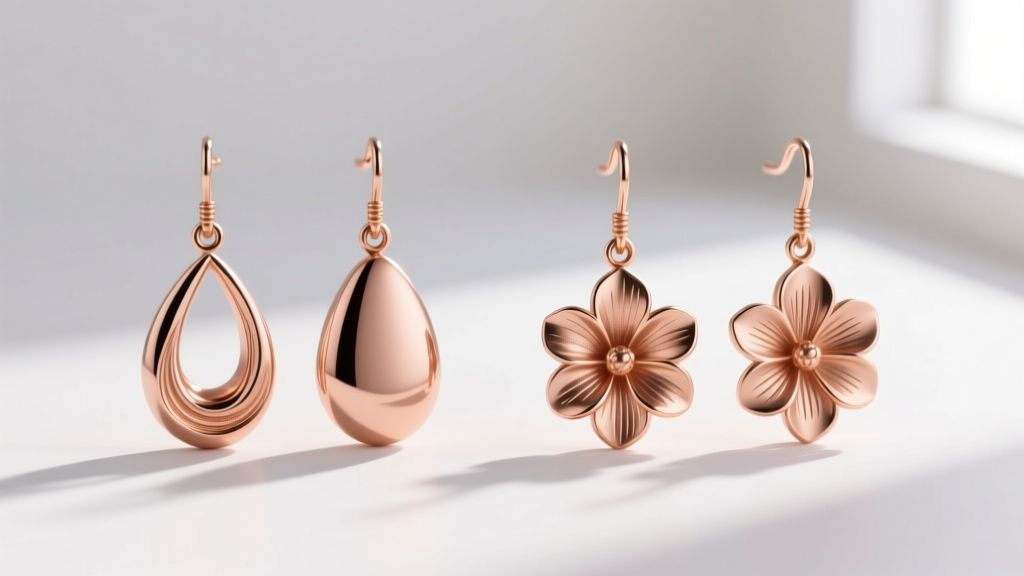
The way the floral motif is manufactured directly impacts the earring's weight, detail resolution, and price point. When examining product descriptions or inspecting pieces in-store, look for these manufacturing indicators:
- Lost-Wax Casting: The most common method for 3D rose buds and fully sculpted floral drops. Molten gold is poured into a mold created from a wax carving. While excellent for rounded, organic shapes, cast pieces can sometimes suffer from "porosity" (tiny surface pits) and may have slightly rounded, softer petal edges. Cast pieces are also heavier, which can drag on the earlobe.
- Die-Striking and Hand-Fabrication: Used primarily for flat or semi-flat rose studs and dangles. Sheet metal is stamped or hand-carved. This results in incredibly sharp petal edges, deep veining, and a significantly lighter weight. Hand-fabricated rose earrings are highly prized by collectors for their artisanal detail and superior comfort.
Pro Tip: Run your fingernail gently along the edge of the rose petals. If the edges feel thick and slightly rounded, the piece is likely cast. If the edges are razor-thin and sharply defined, it is likely die-struck or hand-carved.
Gemstone Accents in Floral Designs
Many high-end rose gold rose earrings incorporate gemstones to mimic morning dew or add contrasting color. When evaluating these accents, pay attention to the setting style. Because rose petals curve and overlap, prong settings can easily snag on clothing or hair. Look for bezel settings or flush (gypsy) settings where small pink sapphires, tsavorite garnets (for leaves), or diamonds are embedded directly into the metal. If the design features a pearl in the center of the rose, ensure the pearl is post-set with a secure epoxy and a mechanical pin, rather than simply glued into a shallow cup, which is a common failure point in mass-produced floral jewelry.
Price Tiers and Material Realities
Understanding the market pricing for rose gold rose earrings will help you identify genuine value and avoid overpriced costume jewelry masquerading as fine metal. Below is a breakdown of what to expect in the current market:
| Material Grade | Expected Price Range | Durability & Lifespan | Best Use Case |
|---|---|---|---|
| Rose Gold Vermeil (Sterling Silver Base) | $45 - $120 | 1-3 years before base metal exposure | Occasional wear, trend-testing |
| Solid 14k Rose Gold | $250 - $650 | Lifetime (highly scratch/dent resistant) | Everyday studs, active lifestyles |
| Solid 18k Rose Gold | $700 - $1,500+ | Lifetime (prone to surface scratching) | Sensitive ears, heirloom drops, bridal |
Practical Wearability: Gauge, Backings, and Snag Risks
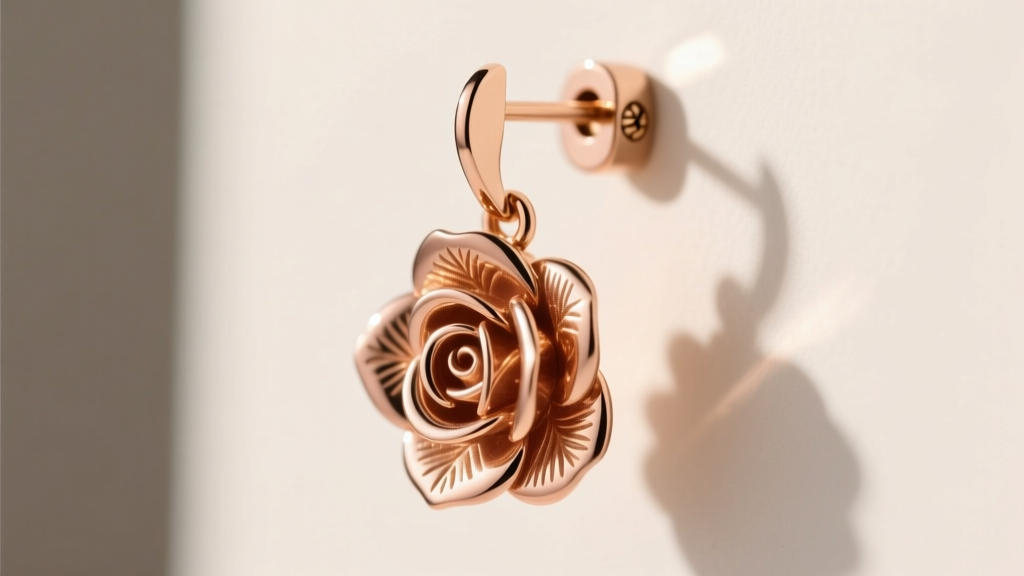
A beautiful rose earring is useless if it tears through your earlobe or constantly catches in your hair. Structural wearability is paramount when buying floral jewelry.
Post Gauge and the "Cheese-Cutter" Effect
Standard earring posts are typically 20-gauge (0.81mm thick). While this is perfectly fine for lightweight, flat rose studs, it is entirely inadequate for heavy, three-dimensional floral drops. A heavy cast rose earring on a 20g post will create a "cheese-cutter" effect, slowly migrating downward and stretching the piercing hole over time. For any rose drop earring weighing more than 4 grams, insist on an 18-gauge (1.02mm) or 16-gauge (1.29mm) post to properly distribute the weight across the lobe tissue.
Securing the Backing
Standard friction backs (butterfly backs) rely on tension, which can loosen throughout the day, especially with the added leverage of a protruding rose motif. For valuable solid gold floral earrings, upgrade to La Pousette backs (which feature a mechanical locking click) or screw-backs. Screw-backs are particularly essential for cartilage piercings, where losing a heavy floral piece is a common and costly mistake.
The Snag Factor
Rose motifs naturally feature outward-curving, overlapping petals. If the tips of these petals are sharply pointed, they will act like tiny hooks, catching on knit sweaters, silk pillowcases, and long hair. When reviewing product images, zoom in on the petal tips. High-quality jewelers will slightly "melt" or round off the very tips of the petals during the polishing stage to ensure they are smooth to the touch.
Care and Copper Oxidation Prevention
While pure gold does not tarnish, the copper alloyed into rose gold can react with environmental factors. A common complaint with lower-karat rose gold is the "green skin" effect, which occurs when copper reacts with the acids in your sweat, lotions, or perfumes. This is not a sign of fake gold, but rather a natural chemical reaction with the alloy.
To maintain the pristine finish of your rose gold rose earrings:
- Avoid Chemical Exposure: Remove your earrings before swimming in chlorinated pools or applying heavy cosmetics. Chlorine can permanently damage and discolor copper alloys.
- Proper Cleaning: Clean your earrings monthly using a few drops of mild, phosphate-free dish soap in warm water. Use a baby-soft toothbrush to gently sweep out the crevices between the rose petals, where dead skin cells and sebum tend to accumulate.
- Ultrasonic Warnings: Never put rose gold earrings with enamel accents, pearls, or fracture-filled gemstones into an ultrasonic cleaner. The high-frequency vibrations can shatter delicate floral enamel work or detach glued gemstone centers.
By prioritizing the correct karat weight for your skin sensitivity, demanding appropriate gauge thicknesses for the earring's weight, and scrutinizing the craftsmanship of the petal edges, you can confidently invest in a pair of rose gold rose earrings that will remain a staple in your jewelry collection for decades.


