The Earring on Left Ear: Asymmetry & Technical Piercing Guide
Explore the technical anatomy, material science, and asymmetrical styling frameworks for wearing an earring on left ear setups in this expert guide.

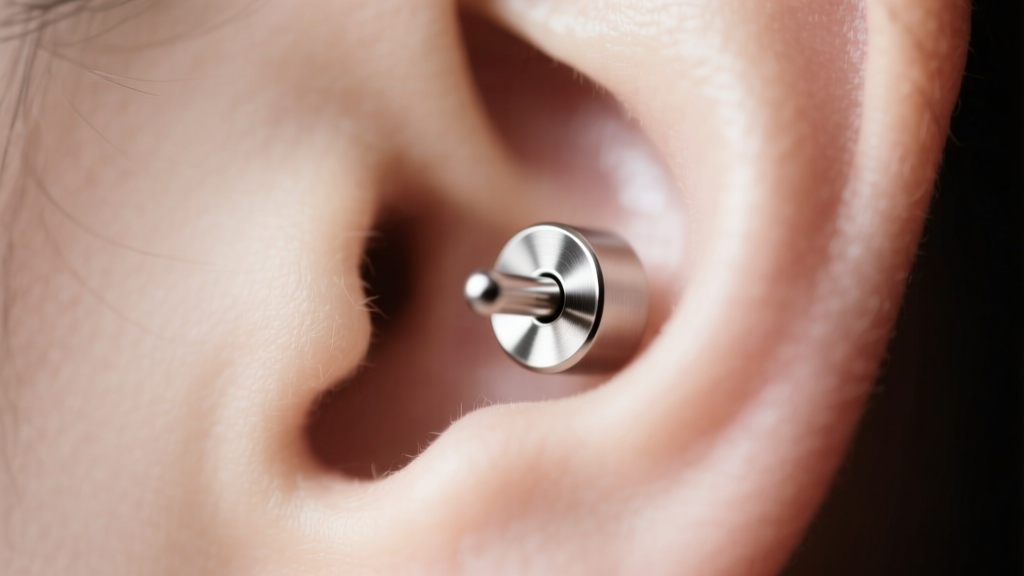
For decades, the decision to wear an earring on left ear setups was heavily burdened by cultural coding and outdated stylistic rules. Today, the single-side or left-heavy asymmetrical ear is a cornerstone of advanced body modification and curated styling. However, focusing your jewelry real estate on a single ear introduces unique biomechanical, anatomical, and metallurgical challenges that most generic style guides completely ignore. When you concentrate multiple piercings on the left ear, you must account for localized tissue stress, asymmetrical weight distribution, and the specific friction patterns introduced by modern lifestyle habits. This expert deep dive explores the technical realities of designing, healing, and maintaining a left-dominant ear stack.
The Biomechanics of Asymmetrical Sleep and Friction
The most critical technical factor in maintaining a left-heavy ear stack is understanding sleep biomechanics. According to sleep studies, a significant portion of the population favors side-sleeping, and the mechanical pressure exerted on the ear cartilage against a standard cotton pillowcase can exceed 15 mmHg. When you wear an earring on left ear configurations, especially if you are a left-side sleeper, you introduce chronic micro-trauma to the fistula (the piercing channel).
Tissue Compression and Migration Risks
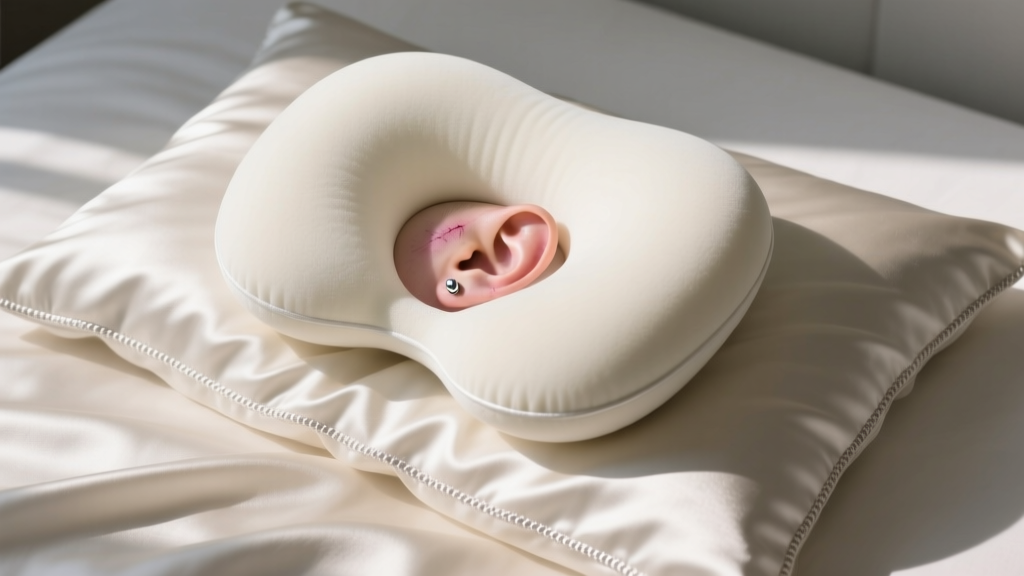
Cartilage lacks its own direct blood supply, relying on the perichondrium for nutrients and immune response. Chronic compression from sleeping on a fresh or even healed left-side stack can lead to localized ischemia (restricted blood flow). Over time, this pressure forces the jewelry to shift, triggering the body's foreign object response. The result is migration—the slow, irreversible movement of the jewelry toward the surface of the skin, ultimately leading to rejection. To mitigate this, professionals recommend utilizing a U-shaped travel pillow to suspend the left ear in the center void, eliminating direct compression entirely during the 6-to-12-month maturation phase.
Metallurgical Standards for Left-Side Stacking
When curating a multi-piece stack on a single ear, the cumulative weight and the chemical interaction between the jewelry and the skin's microbiome become paramount. The Association of Professional Piercers (APP) strictly outlines which materials are viable for long-term wear, particularly in high-friction zones like the left ear helix and conch.
| Material Grade | Nickel Release | Vickers Hardness | Best Application |
|---|---|---|---|
| ASTM F136 Titanium (Ti6Al4V ELI) | 0% | 334 HV | Initial piercings, heavy stacks, sensitive fistulas |
| Niobium (Unalloyed) | 0% | 130 HV | Hoops, huggies, cartilage rings (highly malleable) |
| 14k/18k Solid Gold (Palladium Alloy) | 0% | 120-150 HV | Healed lobe and cartilage stacks (avoid white gold) |
| ASTM F138 Stainless Steel (316L) | 8-14% | 150 HV | Healed lobes only (avoid for cartilage/sensitive skin) |
Expert Note: Avoid white gold for your left ear stack. White gold is typically alloyed with nickel to achieve its silver color, which can cause contact dermatitis when trapped against the skin on a single, heavily stacked ear. Always opt for yellow or rose gold alloyed with palladium or copper.
Designing the Left-Heavy Asymmetrical Layout
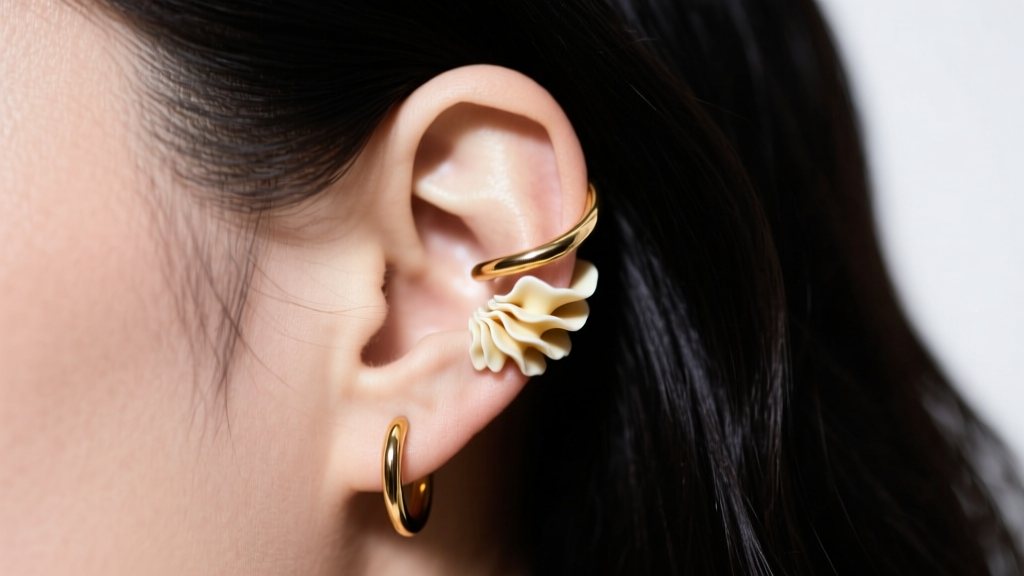
Building a curated ear on just the left side requires a deep understanding of auricular anatomy and geometric spacing. A common failure mode in asymmetrical styling is overcrowding, which compromises the structural integrity of the cartilage and restricts swelling room.
The 90-Degree Rule and Tissue Planes
Every piercing on your left ear must be executed at a precise 90-degree angle relative to the specific tissue plane. If a helix piercing is angled too far forward or backward to accommodate a specific decorative gem, the jewelry will sit under constant tension. This tension acts like a cheesecutter on the tissue, slowly slicing through the cartilage. When planning your left ear layout, your piercer must map the natural ridges of your antihelix and scapha, ensuring that labret posts or barbells sit perfectly flush without torquing the surrounding skin.
Weight Distribution and Gauge Selection
Gravity affects a heavy left-side stack continuously. If you are utilizing large-gauge hoops or heavy gemstone clusters in the lobe, the cumulative weight can stretch the fistula over time.
Technical Framework for Gauge Selection:
- Standard Lobes: 18G (1.0mm) or 16G (1.2mm) to prevent the 'cheese-cutter effect' from heavy dangling earrings.
- Upper Lobe / Flat: 16G (1.2mm) to provide a wider surface area that distributes the weight of decorative ends.
- Helix / Conch: 14G (1.6mm) is highly recommended for single-ear stacks to maximize stability and reduce migration risk under sleep pressure.
Troubleshooting: The Smartphone Friction Factor
One of the most overlooked technical hazards of wearing an earring on left ear setups is modern smartphone usage. If you habitually hold your phone to your left ear, you are introducing three distinct vectors of irritation to your piercings:
- Thermal Heat: Smartphone batteries generate localized heat during calls, which increases blood flow and exacerbates swelling in healing cartilage.
- Bacterial Transfer: Screens harbor high concentrations of Staphylococcus aureus and Propionibacterium acnes. Pressing the device against a left-side conch or tragus piercing directly inoculates the fistula with pathogens.
- Acoustic Vibration & Friction: The micro-vibrations from the phone's speaker, combined with the physical friction of sliding the device away from the ear, can tear the delicate epithelial lining of a healing piercing.
To preserve the integrity of a left-heavy stack, switch to speakerphone, use wireless earbuds (ensuring they do not physically press against the tragus or conch jewelry), or rigorously sanitize your device screen with 70% isopropyl alcohol before use.
Fistula Maturation and Long-Term Maintenance
The healing timeline for a multi-piercing left ear stack is not linear. According to dermatological research published via the National Center for Biotechnology Information (NCBI), cartilage piercings undergo a prolonged maturation phase that can last up to 18 months. During this time, the collagen fibers in the fistula are reorganizing and gaining tensile strength.
The Saline Protocol
For a concentrated left-ear stack, over-cleaning is just as destructive as under-cleaning. The use of harsh chemicals like tea tree oil, hydrogen peroxide, or alcohol will destroy the newly formed fibroblasts. The only clinically approved aftercare is sterile 0.9% sodium chloride wound wash. Apply it via a sterile non-woven gauze pad rather than cotton balls, which can leave microscopic fibers tangled in the jewelry threads of your left-side labret studs, leading to embedded infections.
Managing Hypertrophic Scarring
If you notice a localized, raised bump near the exit hole of a left-side piercing, it is likely a hypertrophic scar or an irritation bump caused by mechanical friction (sleeping or phone use), not a true keloid. The technical solution is to downsize the jewelry post. Often, a 5/16" (8mm) post used for initial swelling becomes too long once the tissue settles, allowing the jewelry to move, catch, and irritate the angle of the hole. Visit your piercer to swap to a snug-fitting post (often 3/16" or 1/4") to immobilize the jewelry and allow the bump to flatten naturally.
Conclusion: Mastering the Asymmetrical Canvas
Committing to an earring on left ear configurations is a masterclass in anatomical styling. It requires moving beyond simple aesthetic preferences and embracing the biomechanical realities of tissue compression, metallurgical safety, and geometric precision. By selecting ASTM-compliant implant-grade materials, respecting the 90-degree piercing rule, and actively mitigating environmental friction from sleep and technology, you can cultivate a resilient, breathtaking asymmetrical stack that stands the test of time. Treat your left ear not just as a canvas, but as a complex biological system that rewards technical precision with lifelong wearability.


