White Pearl Earrings Gold: 2026 Value & Budget Guide
Discover how to evaluate white pearl earrings gold settings in 2026. Compare Akoya vs. freshwater, gold karats, and find the best budget value.

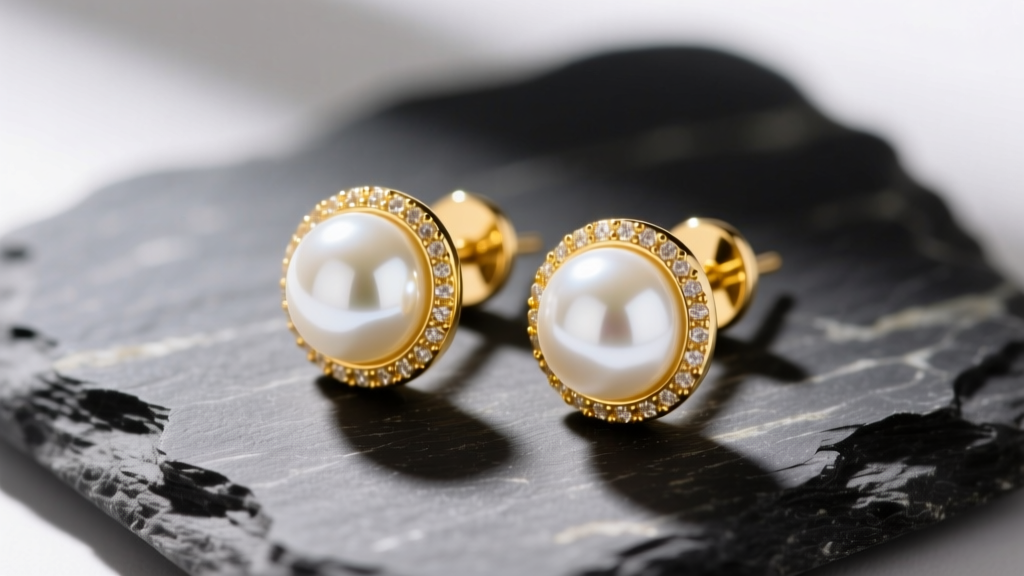
Few jewelry staples command the timeless reverence of white pearl earrings gold settings. However, as we navigate the 2026 jewelry market, the intersection of rising precious metal costs and evolving pearl cultivation techniques has completely reshaped the value landscape. For budget-conscious buyers and serious collectors alike, understanding the true cost breakdown is no longer optional—it is essential. Whether you are seeking a classic pair of studs for daily wear or an heirloom-quality drop earring for evening events, assessing the real value requires looking past the retail markup and examining the material grades, nacre thickness, and structural integrity of the gold components.
This comprehensive value assessment breaks down exactly what you should expect to pay, what compromises are acceptable, and how to identify the ultimate 'sweet spot' when shopping for white pearl earrings gold designs this year.
The True Cost Breakdown: Gold Settings vs. Pearl Quality
When evaluating any fine jewelry piece, the retail price is a composite of raw material costs, labor, brand overhead, and certification fees. In the case of pearl earrings, the pearl itself usually dictates the lion's share of the price variance, but the gold setting determines the longevity and baseline value retention of the piece.
Solid Gold vs. Vermeil: Where Your Money Actually Goes
In 2026, the spot price of gold continues to influence jewelry pricing heavily. A standard 14k gold butterfly-back stud setting weighs approximately 0.6 to 0.9 grams. At current market rates, the raw gold value of the setting alone is relatively modest, meaning you are primarily paying for the manufacturing precision and the pearl. However, the type of gold used drastically alters the budget tier:
- 14k Solid Gold: The undisputed king of value for daily-wear earrings. Composed of 58.5% pure gold, 14k offers the ideal balance of rich color and tensile strength. Earring posts made from 18k gold are notoriously prone to bending due to the higher purity and softer alloy, making 14k the superior functional choice for budget and durability.
- Gold Vermeil: A step up from standard plating, vermeil requires a sterling silver base coated in gold. According to the Federal Trade Commission guidelines, vermeil must have a gold layer of at least 2.5 microns. For 2026 buyers, seek out brands offering 3-micron to 4-micron vermeil to ensure the gold layer survives years of friction from earring backs and skin oils without exposing the silver beneath.
- Gold-Plated Brass: Avoid this entirely if you are assessing long-term value. Brass bases react with skin acidity, leading to rapid tarnishing and potential allergic contact dermatitis. It holds zero resale or intrinsic value.
Pearl Grading Matrix: Akoya, Freshwater, and South Sea
The phrase 'white pearl' encompasses vastly different biological origins and price brackets. The Gemological Institute of America (GIA) evaluates pearls based on seven value factors: Size, Shape, Color, Luster, Surface Quality, Nacre Quality, and Matching. For white pearl earrings, luster and nacre thickness are the most critical indicators of value.
| Pearl Type | Typical Size | Luster & Nacre Profile | 2026 Avg Budget Price | Best Value Use-Case |
|---|---|---|---|---|
| AAA Freshwater | 6mm - 8mm | Soft luster, 100% solid nacre | $80 - $180 | Everyday wear, entry-level budgets |
| Edison Freshwater | 9mm - 12mm | Metallic high luster, bead-nucleated | $200 - $450 | Statement pieces, Akoya alternatives |
| AA+ Akoya | 7mm - 8.5mm | Mirror-like luster, 0.4mm+ nacre | $350 - $700 | Classic bridal, professional wear |
| Hanadama Akoya | 8mm - 9mm | Extreme luster, 0.6mm+ nacre, certified | $800 - $1,500+ | Heirloom gifts, investment grade |
| White South Sea | 10mm - 14mm | Satin luster, exceptionally thick nacre | $1,200 - $4,000+ | High-end luxury, black-tie events |
The 'Value Sweet Spot' Framework for Buyers
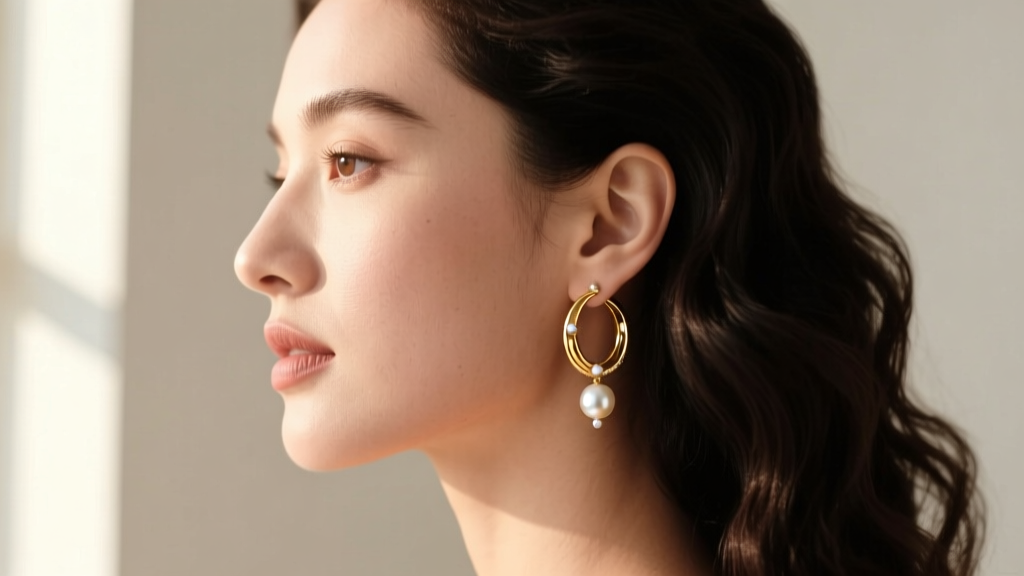
If your goal is to maximize visual impact and material quality without crossing into luxury markup territory, the 2026 'Value Sweet Spot' lies in pairing Edison Freshwater pearls with 14k solid gold settings.
Historically, saltwater Akoya pearls held a monopoly on perfectly round, high-luster white pearls. However, advancements in Chinese freshwater pearl farming have produced the Edison pearl—a bead-nucleated freshwater pearl that rivals Akoya in roundness and often exceeds it in size and orient (the iridescent play of color). By choosing a 9mm AAA-grade Edison pearl set in a solid 14k gold bezel or prong setting, you achieve the visual weight and mirror-luster of a $1,200 Akoya pair for roughly $300 to $400. This allows you to allocate your budget toward heavier gold settings (such as secure screw-backs or huggie hoops) rather than paying the saltwater cultivation premium.
Red Flags: Overpaying for Mislabeled Jewelry
When assessing budget options online, the terminology used in product descriptions can be intentionally deceptive. Protect your investment by watching for these specific red flags:
- 'Shell Pearls' or 'Simulated Pearls': These are not real pearls. They are glass or plastic beads coated with a synthetic pearl essence (often derived from fish scales). They have no intrinsic value and will eventually peel.
- 'Gold-Toned' or 'Gold-Colored': This is a legal loophole used to describe base metals like zinc alloy or stainless steel that have been flash-plated. They will trigger metal sensitivities in pierced lobes.
- Missing Nacre Disclosures: For Akoya pearls, nacre thickness is paramount. A high-luster Akoya pearl with nacre thinner than 0.25mm is prone to 'blinking' (showing the shell bead nucleus through the nacre) and peeling over time. Reputable vendors will provide X-ray or optical coherence tomography (OCT) nacre data upon request for high-ticket items.
Maintenance Costs and Long-Term Value Retention
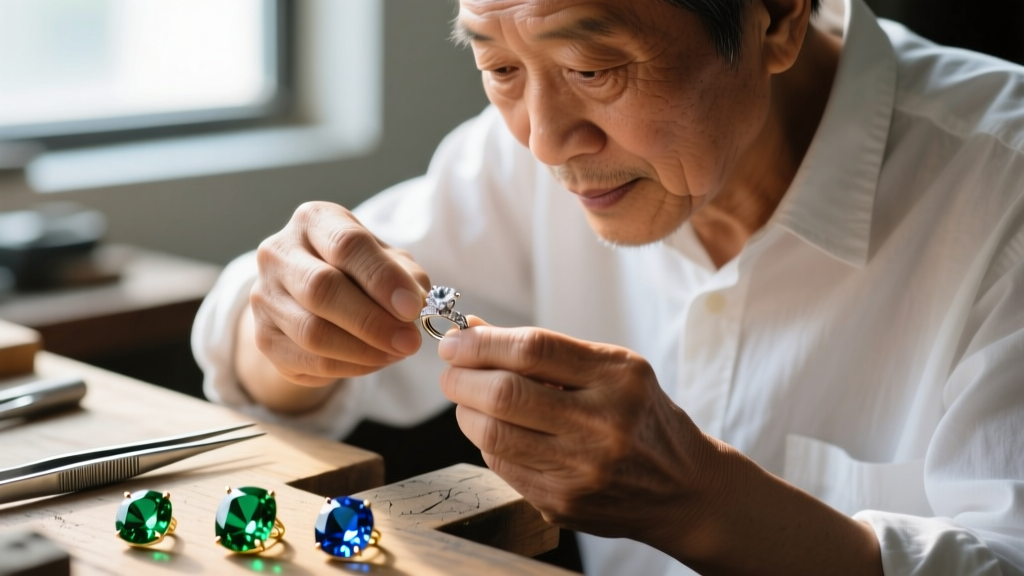
True value assessment must factor in the total cost of ownership. White pearls are organic gemstones with a Mohs hardness of just 2.5 to 3.0, making them highly susceptible to scratching and chemical degradation. Furthermore, the gold settings require periodic maintenance.
Budgeting for Upkeep
Expect to spend approximately $30 to $50 every few years to have a professional jeweler tighten the prongs or re-tension the friction posts on your gold settings. For pearls, avoid ultrasonic cleaners entirely; the high-frequency vibrations can shatter the nacre layers or dissolve the epoxy used to secure the pearl to the gold post. Instead, use a damp, lint-free microfiber cloth after every wear to remove sebum and cosmetic residue, which can eat into the pearl's calcium carbonate structure and permanently dull the luster.
Ultimately, investing in white pearl earrings gold settings is an exercise in balancing immediate budget constraints with long-term material integrity. By prioritizing solid 14k gold hardware and understanding the modern capabilities of Edison and Akoya cultivars, you can secure a pair of earrings that offer exceptional beauty, structural resilience, and genuine financial value in 2026 and beyond.


