The Best Way to Clean Diamond Earrings for Maximum Sparkle
Discover the best way to clean diamond earrings at home. Learn expert-approved soaking, brushing, and drying techniques for studs, hoops, and drops.

Why Diamonds Lose Their Sparkle: The Science of Grease
Diamonds are renowned for their unparalleled brilliance, but even the highest-quality stones can look dull and cloudy over time. To understand the best way to clean diamond earrings, you first need to understand the chemical nature of the gemstone. Diamonds are oleophilic (oil-attracting) and hydrophobic (water-repelling). This means they naturally attract and hold onto grease, skin oils, lotions, and hairspray, while repelling water.
When a film of oil builds up on the surface of your diamond studs or drops, it alters the stone's refractive index. Instead of light entering the crown, bouncing off the pavilion facets, and returning to your eye as fire and scintillation, the grease causes light to leak out the sides or become scattered. According to the Gemological Institute of America (GIA), regular exposure to everyday cosmetics and natural skin oils is the primary culprit behind a diamond's loss of brilliance. Fortunately, restoring that factory-fresh sparkle requires only a few household items and the right technique.
The Best Way to Clean Diamond Earrings: Step-by-Step
While there are many commercial jewelry cleaners on the market, gemologists widely agree that a simple, mild degreasing solution is the safest and most effective method for routine maintenance. Follow this precise protocol to safely clean your diamond earrings without damaging the precious metal settings.
Step 1: The Degreasing Soak
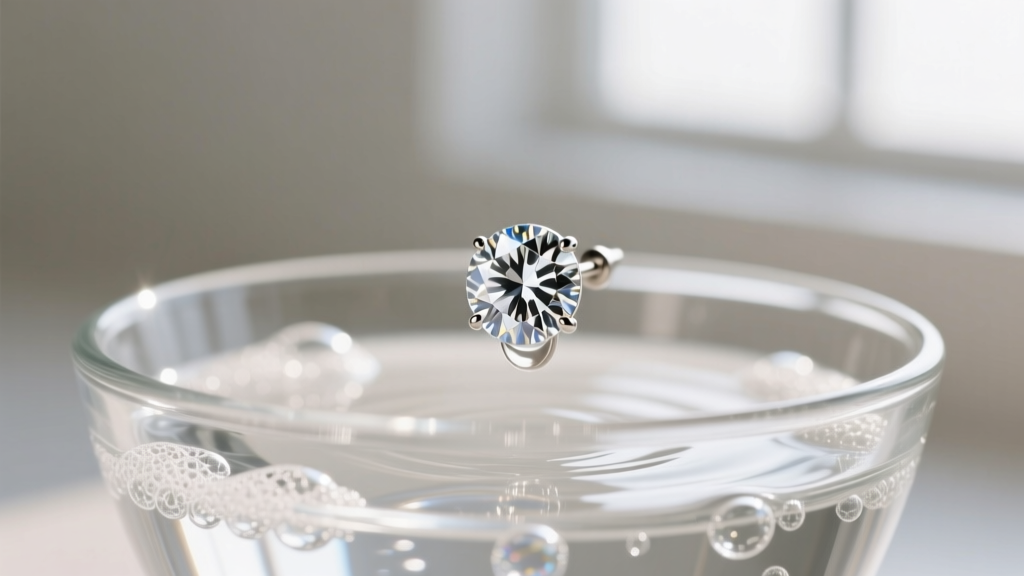
Before you begin, always plug your sink drain or work over a small, soft-lined bowl. Losing an earring down the drain is a surprisingly common and entirely preventable tragedy. In a small glass bowl, mix one part mild, ammonia-free dish soap (such as original blue Dawn) with six parts lukewarm water. Avoid hot water, as extreme temperature shifts can theoretically stress heavily included diamonds or weaken certain adhesive settings in older jewelry.
Submerge your diamond earrings in the solution and let them soak for 20 to 40 minutes. This dwell time is critical; it allows the surfactants in the dish soap to break the molecular bonds of the oils and lift them away from the diamond's facets and the metal prongs.
Step 2: The Precision Brush
After soaking, the dirt will be loosened, but mechanical action is required to remove it entirely. Use a brand-new, ultra-soft baby toothbrush or a dedicated jewelry brush with 0.1mm bristles. Never use a standard adult toothbrush, as the stiff nylon bristles can leave micro-scratches on softer gold alloys (like 14k or 18k yellow gold).
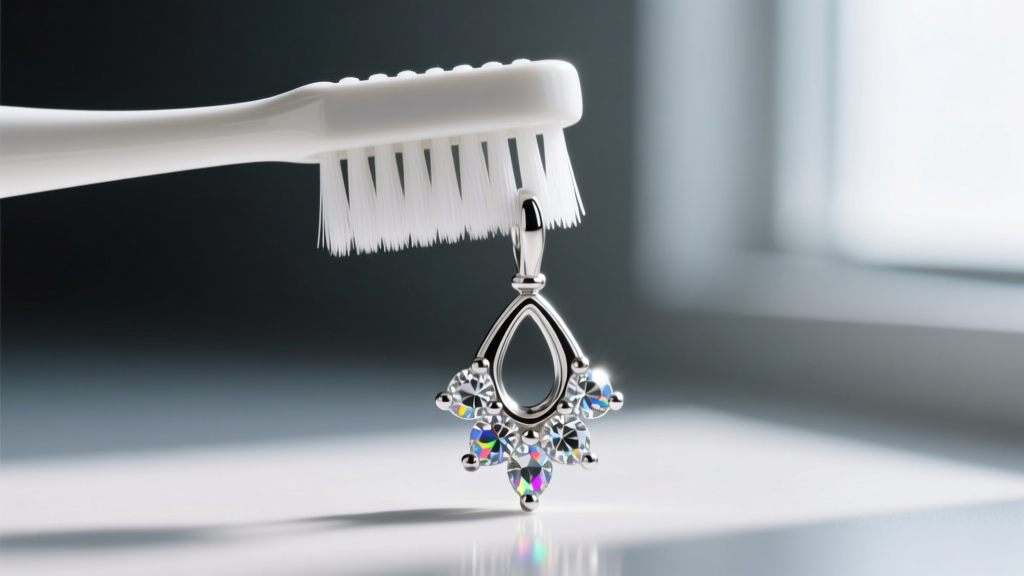
Gently brush the crown (top) of the diamond, but pay special attention to the pavilion (the underside of the stone). The pavilion is where the vast majority of oil, dead skin cells, and soap scum accumulate, directly blocking light return. Use light, circular motions, and gently sweep the bristles along the gallery wire and where the prongs meet the stone.
Step 3: The Lint-Free Rinse and Dry
Rinse the earrings thoroughly under a gentle stream of lukewarm water. If you live in an area with hard water, use distilled water for the final rinse to prevent calcium and magnesium deposits from drying on the stone as microscopic white spots. Finally, dry the earrings using a lint-free microfiber cloth or a specialized jewelry polishing cloth. Avoid paper towels and tissues; they are made from wood pulp and can leave behind microscopic fibers that snag on prongs, and they can even cause light abrasions on high-polish platinum or gold.
Cleaning Solutions: What to Use and What to Avoid
The internet is full of DIY jewelry cleaning hacks, but many of them can cause irreversible damage to your earrings. The Jewelers of America strongly advises against using harsh chemicals or abrasive pastes. Below is a breakdown of common household cleaning agents and their safety profile for diamond earrings.
| Cleaning Agent | Safety Rating | Impact on Diamonds & Metals |
|---|---|---|
| Mild Dish Soap | Highly Safe | Excellent degreaser; safe for all metals and diamond treatments. |
| Ammonia Solution | Conditionally Safe | Great for diamonds and platinum, but can degrade porous gem accents and strip rhodium plating from white gold over time. |
| Baking Soda Paste | Avoid | Mildly abrasive. Will cause a matte, scratched finish on polished gold and platinum settings. |
| Toothpaste | Avoid | Highly abrasive (contains silica). Will severely scratch metal and dull the polish of the diamond's girdle. |
| Chlorine Bleach | Never Use | Destroys gold alloys. Chlorine causes stress corrosion cracking in prongs, leading to stone loss. |
Special Considerations for Settings and Metals
The architecture of your earring dictates how you should approach the cleaning process. A bezel-set diamond hoop requires a different touch than a delicate four-prong diamond stud.
Prong vs. Bezel Settings
For prong settings, the primary concern is snagging. If your microfiber cloth catches on a prong, do not pull. Instead, gently back the cloth out and use a wooden toothpick to dislodge the fiber. Never use a metal pin or needle to pick dirt out from under a prong; metal-on-metal contact will scratch the setting and potentially bend the prong away from the diamond's girdle.
For bezel settings, the metal rim protects the girdle but creates a tiny shelf where lotion accumulates. A cotton swab dipped in your soapy solution is the best tool for tracing the inside edge of a bezel to lift out trapped debris.
White Gold vs. Platinum vs. Yellow Gold
If your diamond earrings are set in white gold, remember that the bright white color comes from a microscopic layer of rhodium plating. Frequent exposure to harsh chemicals, alcohols, or ultrasonic vibrations can wear this plating away prematurely, revealing the slightly yellowish alloy beneath. Platinum, on the other hand, is naturally white and much more durable, tolerating stronger cleaning solutions and ultrasonic machines without losing its color, though it will develop a natural patina over time.
When to Use Ultrasonic Cleaners (And When to Avoid Them)
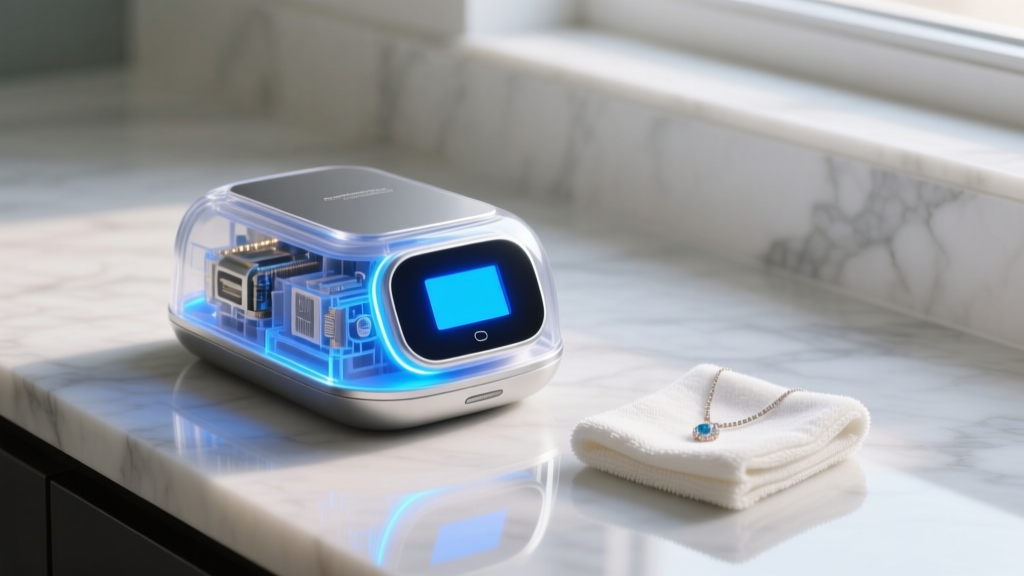
Ultrasonic cleaners use high-frequency sound waves (typically around 40 kHz) to create microscopic cavitation bubbles in a liquid solution. When these bubbles collapse against the surface of the jewelry, they generate intense localized pressure that blasts away dirt. While they are incredibly effective, they are not universally safe.
Safe for: Solid platinum and solid 14k/18k gold settings featuring untreated, high-clarity diamonds.
Dangerous for:
- Fracture-Filled Diamonds: Diamonds that have undergone clarity enhancement (such as the Yehuda process) contain a glass-like resin in their natural fissures. Ultrasonic vibrations and the heat generated can shatter the stone or cause the filling to cloud and melt out.
- Tension Settings: The high-frequency vibrations can slightly alter the metal's tension, potentially causing the diamond to pop out.
- Low Clarity Stones (I1-I3): Heavy inclusions create structural weak points. The cavitation shockwaves can cause heavily included diamonds to fracture along their natural cleavage planes.
Professional Maintenance Schedule
Even with the best at-home care, diamond earrings require professional attention. You should take your earrings to a certified jeweler every 6 to 12 months. A jeweler will use a 10x magnification loupe to inspect the prongs for wear, thinning, or lifting—issues that are invisible to the naked eye but are the leading cause of lost diamonds. They will also professionally steam clean the stones, which provides a level of brilliance that soaking alone cannot achieve, ensuring your earrings remain secure and blindingly bright for decades to come.
Expert Tip: Always put your diamond earrings on after applying makeup, hairspray, and perfume, and take them off before showering or swimming. Minimizing exposure to chemicals and cosmetics is the easiest way to reduce the frequency of deep cleanings required.