Betsey Johnson Flower Earrings: Material & Authentication Guide
An expert technical breakdown of Betsey Johnson flower earrings, covering base metals, cold enamel care, post gauges, and vintage authentication tips.

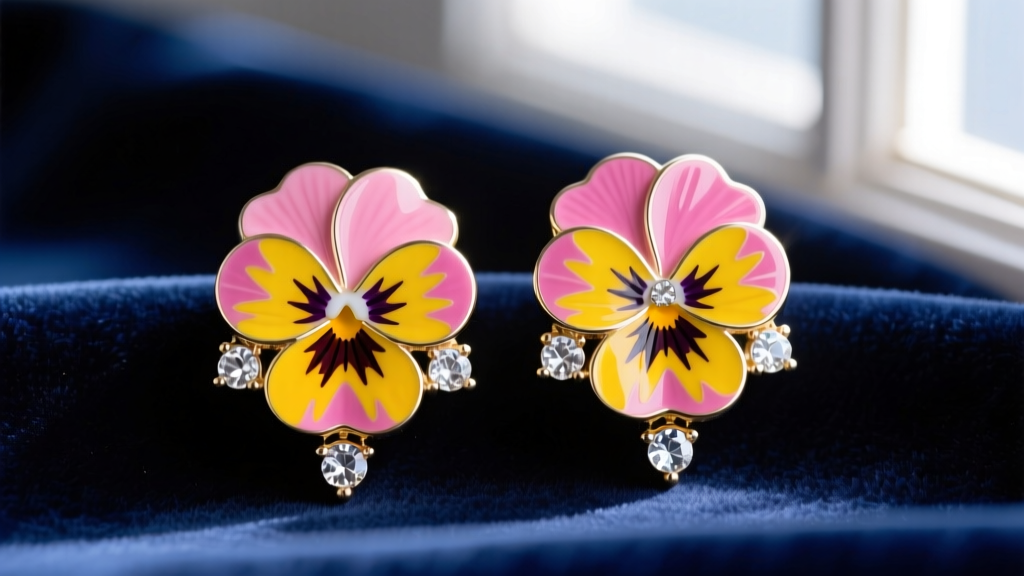
The Anatomy of Betsey Johnson Flower Earrings
Betsey Johnson’s floral motifs—particularly her iconic pansies, daisies, and oversized roses—have been a staple of American fashion jewelry since the 1990s. However, beneath the whimsical aesthetic lies a specific metallurgical and chemical construction that collectors and daily wearers must understand. As of 2026, the vintage resale market for these pieces has surged, making it critical to distinguish between authentic archival pieces and modern mass-market reproductions.
Base Metals and Plating Techniques
Authentic Betsey Johnson flower earrings are primarily crafted from Zamak (a zinc alloy containing aluminum, magnesium, and copper) or cast brass. These base metals are chosen for their ability to capture intricate floral molds without the cost of precious metals. According to the Jewelers of America, fashion jewelry of this tier typically utilizes an electroplated finish. Silver-tone pieces are usually plated with a copper strike followed by rhodium or silver, while gold-tone pieces use a brass or bronze underlayer. Crucially, genuine pieces are sealed with an electrophoretic e-coating (a clear resin layer) to prevent the zinc alloy from oxidizing and to protect the wearer from nickel exposure.
Cold Enamel vs. Vitreous Enamel
The vibrant, opaque petals of Betsey Johnson flower earrings are not created with kiln-fired vitreous enamel (glass fused to metal). Instead, they utilize cold enamel, which is an epoxy-based resin. While cold enamel allows for a wider spectrum of neon and pastel pigments, it is highly susceptible to thermal shock and chemical degradation. Ultrasonic jewelry cleaners will cause micro-fractures in the epoxy, leading to clouding and eventual peeling. For a deeper dive into the chemical differences between jewelry enamels, the Victoria & Albert Museum's costume jewelry archive offers excellent historical context on 20th-century resin applications.
Post Gauges, Weight Distribution, and Lobe Health
One of the most common technical complaints regarding Betsey Johnson floral dangles is earlobe fatigue. The brand’s commitment to using heavy glass crystals and solid zinc-alloy casts results in significant torque on the piercing fistula. Understanding the post gauge and weight distribution is essential for maintaining earlobe health.
| Earring Style | Average Weight (per pair) | Post Gauge | Recommended Backing |
|---|---|---|---|
| Small Flower Studs | 4 - 8 grams | 22G (0.64mm) | Standard friction clutch |
| Medium Pansy Drops | 12 - 18 grams | 20G (0.81mm) | Jumbo silicone disc |
| Large Floral Chandeliers | 25 - 35 grams | 18G (1.02mm) | Earlobe support patches |
If you are wearing the heavier chandelier styles, standard metal butterfly clutches will dig into the neck and cause the earring to droop forward. We strongly recommend using medical-grade silicone o-rings or adhesive earlobe support patches (such as Lobe Wonder) to distribute the 30+ gram weight across a wider surface area of the dermis, preventing permanent stretching of the piercing tract.
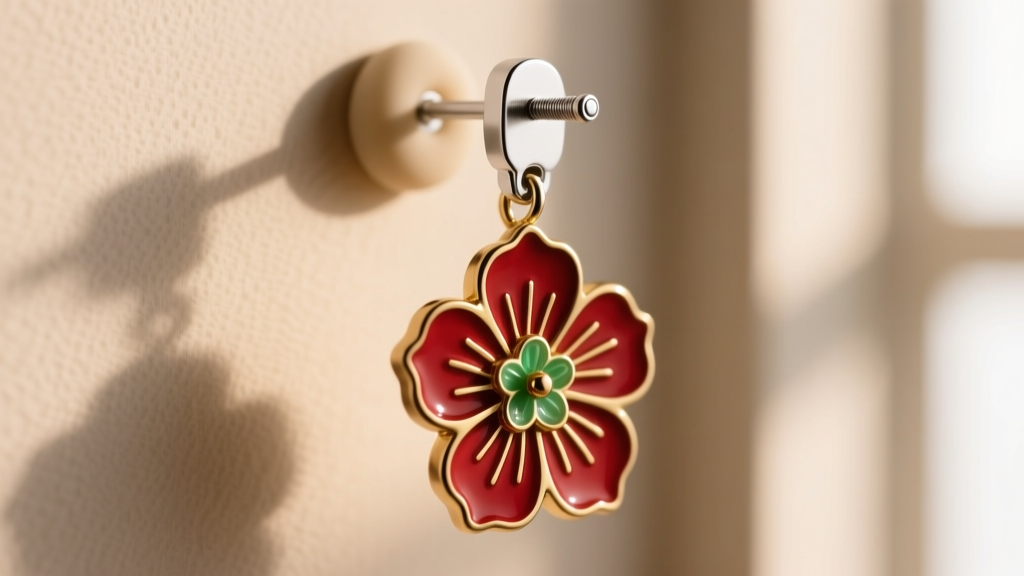
Authentication Matrix: Vintage vs. Modern Reproductions
With the brand's licensing changes over the last decade, the manufacturing origins and quality control of Betsey Johnson flower earrings have shifted. Here is a technical framework for authenticating vintage pieces (circa 1995–2010) versus modern iterations.
The Heart Hallmark and Copyright Stamps
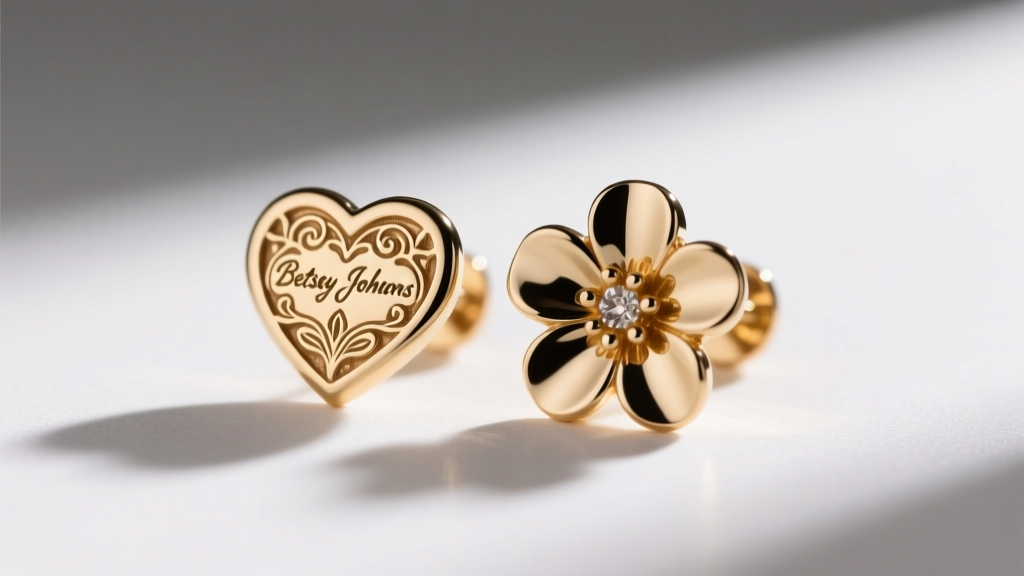
The most definitive marker of authenticity is the brand's signature heart logo. On vintage stud earrings, the words "Betsey Johnson" are often stamped directly into the metal backing of the flower, accompanied by a copyright symbol (©). On dangle styles, look for a small, engraved metal heart charm attached to the hook or the bottom of the floral drop. Modern reproductions often lack the crispness of the vintage engraving, or they rely on easily removable foil stickers rather than laser engraving or metal stamping.
Glass Stone Density and Prong Settings
Vintage Betsey Johnson pieces predominantly feature leaded glass crystals that possess a high refractive index and substantial physical weight. The prongs securing these stones are hand-set or tightly machine-crimped. In contrast, post-2015 mass-market replicas frequently substitute glass with injection-molded acrylic or resin cabochons, which feel noticeably hollow and are often secured with visible, messy dabs of cyanoacrylate (superglue) rather than proper jewelry adhesives like Gem-Tac.
Care, Maintenance, and Enamel Restoration
Preserving the structural integrity of cold enamel and plated zinc requires a strict, non-abrasive cleaning protocol. Never use alcohol-based solutions, ammonia, or commercial silver dips, as these solvents will dissolve the epoxy resin and strip the e-coating, exposing the base metal to rapid tarnishing.
- Routine Cleaning: Use a lint-free microfiber cloth slightly dampened with distilled water and a drop of pH-neutral dish soap.
- Stone Tightening: If a glass rhinestone becomes loose, apply a microscopic drop of E6000 or Gem-Tac using a toothpick. Avoid superglue, which releases fumes that will permanently cloud the glass facets.
- Storage: Store floral dangles flat in a tarnish-resistant flannel pouch. Hanging heavy dangles on wire racks can bend the 20-gauge or 18-gauge posts over time due to the constant gravitational pull on the metal.
"The genius of Betsey Johnson's floral jewelry lies in its unapologetic maximalism, but true appreciation requires understanding the delicate balance between heavy industrial alloys and fragile epoxy enamels."
By understanding the specific material grades, gauge thicknesses, and hallmark evolution of Betsey Johnson flower earrings, collectors can confidently navigate the secondary market and preserve these wearable sculptures for decades to come.


