Big Hoop Pearl Earrings: The 2026 Trend & Style Guide
Discover how big hoop pearl earrings are dominating 2026 trends. Explore styling tips, pearl grading, metal pairings, and face-shape guides.

The 2026 Maximalist Shift: Why Volume Matters
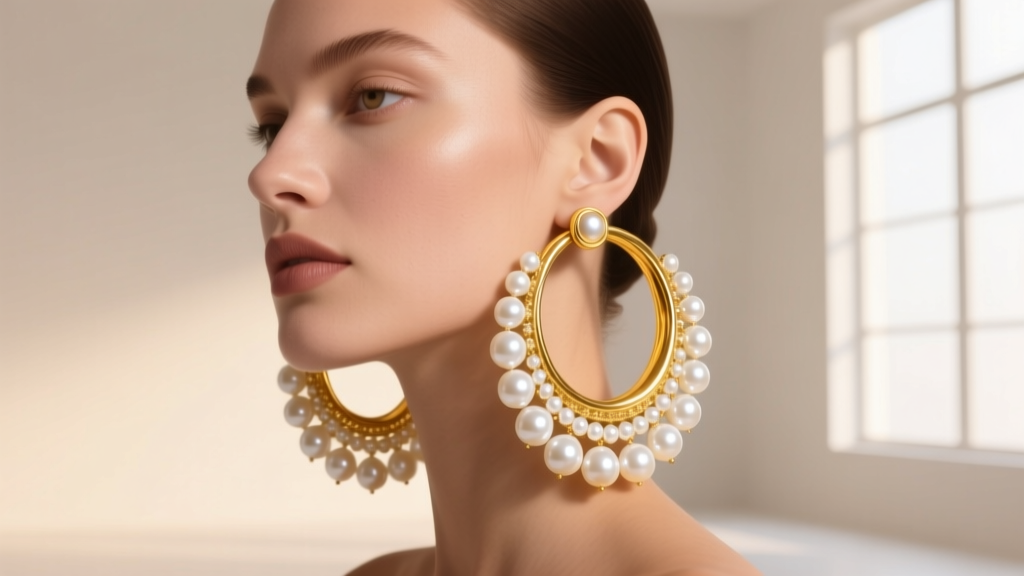
The jewelry landscape of 2026 has decisively pivoted from the understated micro-huggies and minimalist studs of the early 2020s to unapologetic volume. At the epicenter of this maximalist renaissance are big hoop pearl earrings. No longer relegated to vintage costume jewelry boxes, oversized pearl hoops have been re-engineered by contemporary fine jewelers to serve as the ultimate statement piece. They bridge the gap between organic elegance and architectural boldness, offering a striking contrast between the rigid geometry of a metal hoop and the soft, luminous irregularity of pearls.
According to runway analyses and luxury retail forecasts, consumers are actively seeking 'hero pieces'—single, high-impact items that anchor an entire outfit. Big hoop pearl earrings, typically ranging from 50mm to 80mm in diameter, fulfill this demand perfectly. They frame the face, draw attention to the jawline, and provide a canvas for intricate pearl clustering or spaced-out gemstone rivets.
Structural Anatomy & Gauge Specifications
Designing a large-scale hoop earring that does not droop, pinch, or tear the earlobe requires precise structural engineering. When investing in big hoop pearl earrings, the metal framework is just as critical as the pearls themselves.
Wire vs. Tubing Frameworks
For hoops exceeding 50mm in diameter, standard round wire often lacks the torsional rigidity required to support the weight of multiple pearls. High-end 2026 designs utilize hollow tubing (typically 1.5mm to 2.5mm in thickness) or D-shaped wire. Tubing provides a broader surface area for pearl mounting and significantly reduces the overall weight of the metal framework, preventing the earring from pulling the piercing downward.
Gauge and Closure Mechanics
The wire that passes through the earlobe (the post or hook) must be robust. While standard earrings use 20-gauge or 18-gauge wire, premium big hoops utilize 16-gauge (1.2mm) or even 14-gauge (1.6mm) posts to distribute weight across a wider area of the lobe tissue. Closure mechanisms have also evolved:
- Omega Backs: The gold standard for heavy hoops. The hinged, curved back clips securely onto a sturdy post, distributing the weight across the back of the earlobe rather than relying solely on the piercing hole.
- Leverbacks: Excellent for security, featuring a hinged wire that snaps into a catch. Ideal for hoops in the 50mm-60mm range.
- French Wire with Silicone Stopppers: Common in artisanal or baroque pearl designs. The addition of high-friction silicone discs is mandatory in 2026 to prevent the heavy hoop from sliding off.
Pearl Varietals & Nacre Grading
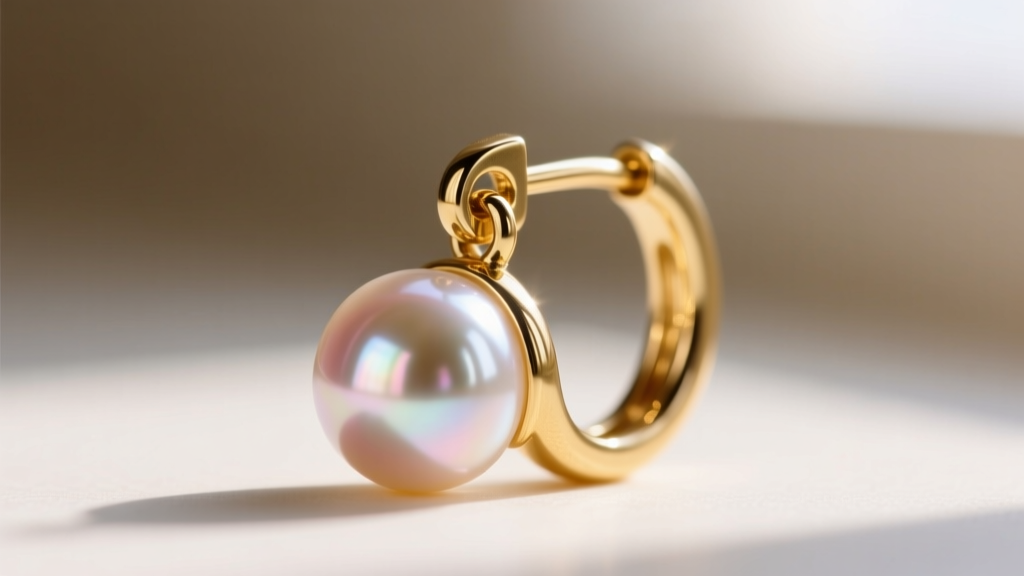
The visual impact of big hoop pearl earrings is dictated by the type of pearl used. The Gemological Institute of America (GIA) emphasizes that nacre thickness and luster are the primary drivers of a pearl's value and longevity. Here is how the three dominant pearl types perform on large hoop frameworks:
1. Akoya Pearls (The Classic Mirror)
Akoya pearls are prized for their perfectly spherical shapes and mirror-like luster. On a large hoop, jewelers typically use 6mm to 8mm Akoya pearls spaced evenly around the bottom half of the hoop. Because Akoya nacre is relatively thin (often 0.5mm to 0.8mm), they must be protected from heavy impacts. They offer a refined, high-contrast look against yellow gold.
2. South Sea Pearls (The Luxury Standard)
Ranging from 9mm to 15mm, white and golden South Sea pearls possess a thick nacre (2mm to 4mm+) and a soft, satiny luster. Due to their immense weight, they are rarely used to completely encircle a big hoop. Instead, 2026 trends favor a 'station' design, where three to five large South Sea pearls are anchored along the bottom curve of a 70mm platinum or 18k gold hoop.
3. Freshwater Baroque (The Organic Edge)
For a more avant-garde, bohemian aesthetic, designers are clustering irregular, baroque freshwater pearls. These pearls are incredibly durable due to their solid nacre composition. Their asymmetrical shapes catch the light unpredictably, making them a favorite for textured, matte-finished sterling silver or oxidized gold hoops.
Proportion & Face Shape Matrix
Because big hoop pearl earrings command significant visual real estate, matching the hoop diameter and pearl placement to your face shape is crucial for achieving a balanced aesthetic. The American Gem Society notes that scale and proportion are the most common pitfalls in statement jewelry styling.
| Face Shape | Ideal Hoop Diameter | Pearl Placement Strategy | Recommended Metal Tone |
|---|---|---|---|
| Round | 60mm - 80mm (Elongated/Oval) | Pearls concentrated at the bottom drop to create vertical length. | White Gold or Platinum |
| Square/Angular | 50mm - 65mm (Perfect Circle) | Pearls encircling the entire hoop to soften sharp jawlines. | 18k Yellow Gold or Rose Gold |
| Heart | 55mm - 70mm (Teardrop) | Graduated pearls (smaller at top, larger at bottom) to balance a narrow chin. | Mixed Metals or Champagne Gold |
| Oval | Any (50mm - 80mm) | Highly versatile; asymmetrical or clustered baroque pearls work beautifully. | Any Tone |
Styling the Statement: Day-to-Night Transitions
The versatility of big hoop pearl earrings lies in their ability to adapt to different sartorial environments. In 2026, the 'high-low' styling approach dominates.
"The modern pearl hoop is not just for galas. Pair a 60mm oxidized silver hoop with baroque pearls against a crisp white t-shirt and structured denim for a masterclass in effortless tension." — 2026 Editorial Jewelry Forecast
For the Boardroom: Opt for a 50mm hoop in polished 14k gold featuring small (5mm), uniformly spaced Akoya pearls. Keep hair tied back in a sleek chignon to allow the earrings to frame the face without competing with loose strands.
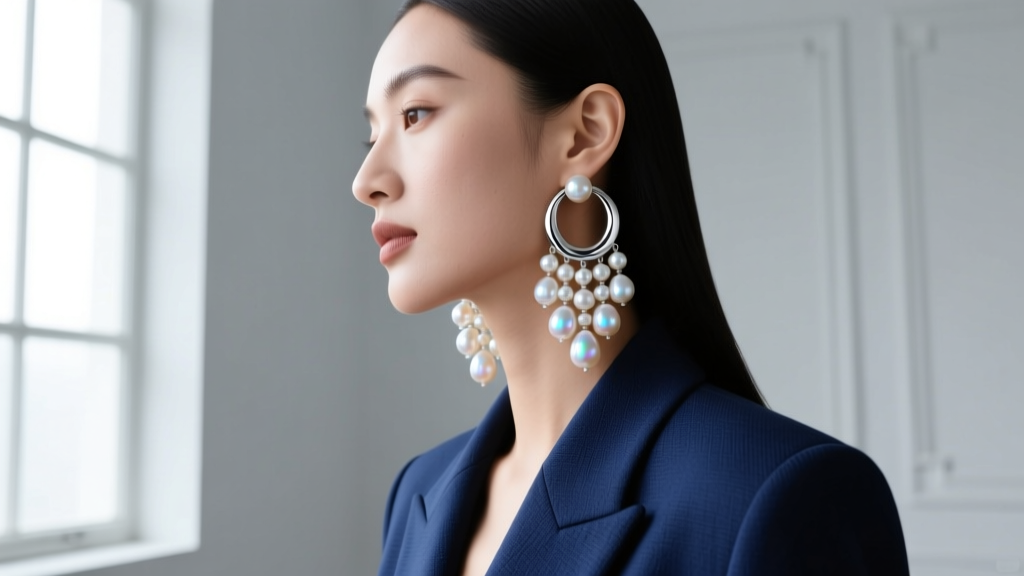
For Evening Wear: Transition to a 75mm hoop with a brushed or hammered metal finish, adorned with cascading South Sea pearls. These pair exceptionally well with off-the-shoulder necklines or deep V-necks, drawing the eye vertically down the neckline.
Investment Tiers & Pricing
Understanding the pricing architecture of big hoop pearl earrings helps buyers identify true value versus inflated brand markups. Prices fluctuate based on metal weight, pearl origin, and nacre quality.
- Entry-Level / Fashion Fine ($150 - $400): Sterling silver or 10k/14k gold-plated brass frameworks featuring AAA-grade freshwater pearls. Excellent for trend-focused buyers.
- Mid-Tier / Bridge Fine ($600 - $1,800): Solid 14k or 18k gold tubing with high-luster Akoya pearls (6-8mm) or premium baroque freshwater clusters. Features secure Omega or leverback closures.
- Investment / High Jewelry ($3,500 - $10,000+): Platinum or 18k gold heavy-gauge frameworks featuring gem-grade South Sea or Tahitian pearls with exceptional nacre thickness and diamond accent pavé.
Lobe Health & Weight Management
Wearing big hoop pearl earrings for extended periods requires proactive lobe care. A 70mm gold hoop adorned with eight 8mm pearls can easily weigh between 12 and 18 grams per ear. Over time, this concentrated weight can cause lobe stretching, micro-tears, or 'earlobe droop'.
Actionable Care Tips:
- Use Support Patches: Adhesive silicone earring support patches (like the popular brand BlingWraps) adhere to the back of the earlobe, distributing the post's pressure across a wider surface area.
- The 'Two-Hour' Rule: For hoops exceeding 15 grams, limit continuous wear to events or dinners. Switch to lightweight studs during the workday to allow the collagen in the earlobe to recover.
- Cleaning the Post: Because heavier earrings cause more friction in the piercing channel, clean the 16G or 14G post with isopropyl alcohol before every wear to prevent bacterial buildup and irritation.
By understanding the structural nuances, pearl grading, and styling mechanics, you can confidently navigate the 2026 trend of big hoop pearl earrings, transforming a bold accessory into a timeless pillar of your personal style.


