How to Style and Adjust Clip On Cross Earrings Comfortably
Learn how to style, adjust, and wear clip on cross earrings comfortably all day. Expert tips on tension, padding, and balancing heavy drops.

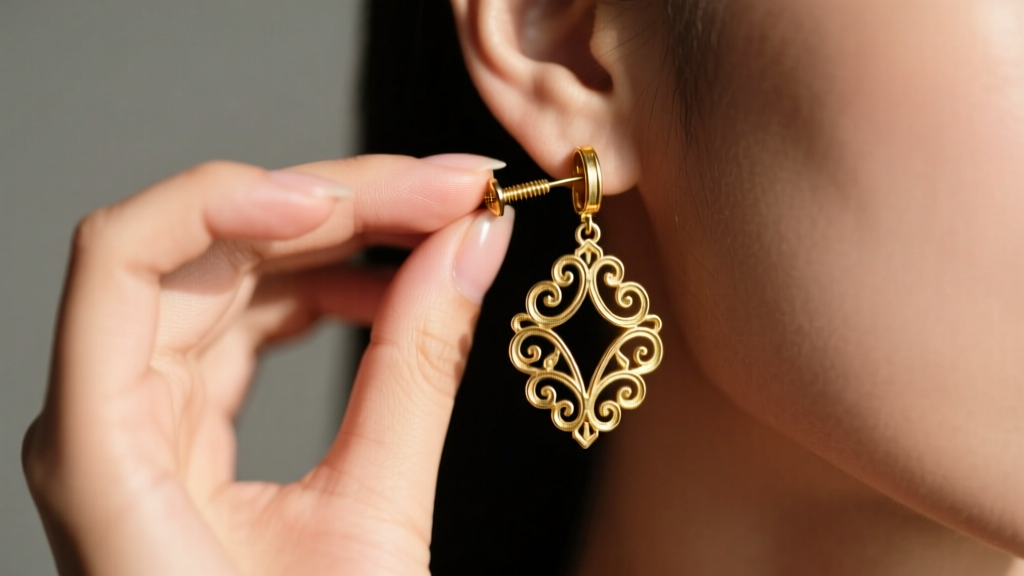
The Renaissance of Non-Pierced Jewelry
In 2026, the stigma surrounding non-pierced jewelry has completely vanished, replaced by a celebration of versatile, damage-free adornment. For those who prefer to keep their lobes unpierced, or for individuals managing stretched earlobes and metal sensitivities, clip on cross earrings offer a powerful blend of spiritual symbolism and gothic or minimalist fashion. However, the vertical architecture of a cross introduces unique biomechanical challenges. Unlike a simple stud or a lightweight hoop, a cross earring acts as a lever. If the tension is too tight, it restricts blood flow and causes ischemia; if it is too loose, the earring slips off. This comprehensive guide will walk you through the exact physics, adjustment techniques, and styling frameworks required to wear clip on cross earrings comfortably for hours on end.
The Physics of the Cross Silhouette
To master the wearability of clip on cross earrings, you must first understand their center of gravity. Cross designs generally fall into two categories: the Latin cross (where the vertical beam is longer than the horizontal beam) and the Greek cross (where all four arms are of equal length).
- Latin Crosses: These are inherently bottom-heavy. When attached to a standard clip-on mechanism, the extra weight at the bottom pulls the top of the earring away from the earlobe, creating a "pendulum flip" that exposes the back of the mechanism and causes the earring to hang at an awkward angle.
- Greek Crosses: These are perfectly balanced. The center of mass sits directly over the hinge of the clip, making them significantly easier to wear for long periods without requiring heavy counterbalancing.
Understanding which silhouette you are wearing dictates the type of clip mechanism you should seek out and how you must adjust it for a secure, pain-free fit.
Step-by-Step Tension Adjustment Guide
Most discomfort stems from factory-set tension that is far too tight. Adjusting your earrings is a delicate process that requires the right tools and a methodical approach.
Adjusting Vintage Screw-Back Mechanisms
Screw-backs are common in vintage and high-end reproduction clip on cross earrings. They feature a threaded post with a padded disc that tightens against the back of the earlobe.
- Sanitize: Wipe the earring and your earlobe with 70% isopropyl alcohol to remove oils that cause slippage.
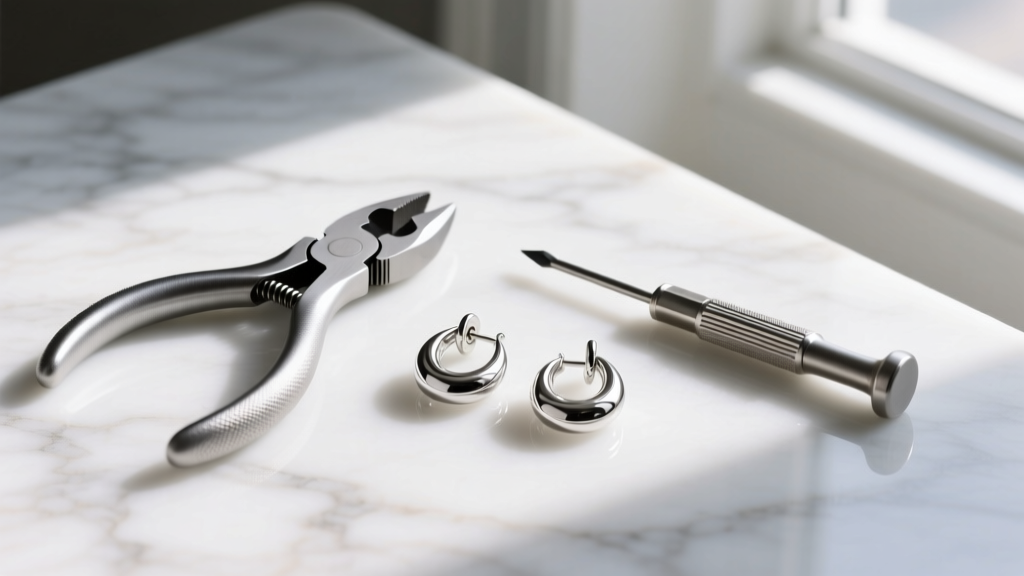
- Tool Selection: Use a 1.2mm flathead micro-jeweler's screwdriver. Never use standard household screwdrivers, as they will strip the delicate brass or steel threads.
- The 15-Degree Rule: Loosen the screw by turning it counter-clockwise exactly 15 degrees (about 1/24th of a full rotation). Clip it onto your ear. If it pinches, loosen another 15 degrees.
- Secure the Threads: Once the perfect tension is found, apply a microscopic dot of clear, removable thread-locker (like Loctite 2205) to the screw threads to prevent it from vibrating loose throughout the day.
Adjusting Modern Omega (Paddle) Clips
Omega clips feature a hinged paddle that snaps shut, held in place by a curved, springy wire (the omega wire) hidden inside the housing.
- Protect the Metal: Use nylon-jaw jewelry pliers. Metal pliers will permanently scratch the gold or rhodium plating.
- Locate the Wire: Open the paddle fully to expose the omega wire loop.
- Micro-Bending: Gently squeeze the loop inward by no more than 1 millimeter. This reduces the clamping force. Test the fit. If it is still too tight, squeeze another millimeter. Warning: Bending the wire outward to increase tension often results in metal fatigue and snapping.
Solving the Pendulum Flip Effect
If you are wearing a heavy Latin cross earring, the bottom weight will inevitably pull the top of the clip away from your ear. This is the most common complaint among wearers of drop-style clip on cross earrings. Here are three expert solutions to counteract the pendulum effect:
1. The Silicone Wedge Technique
Purchase 2mm medical-grade silicone U-pads (often sold as earring comfort cushions). By placing a thick pad on the back of the earlobe, you effectively push the bottom of the lobe forward, aligning it with the top of the lobe. This creates a flatter surface for the clip to grip, neutralizing the leverage of the heavy cross drop.
2. Counterweight Beading
For highly ornate, heavy metal crosses, consider consulting a jeweler to add a small, dense counterweight (such as a 3mm tungsten or lead-free glass bead) to the very top arm of the cross, just above the hinge. This shifts the center of gravity upward, keeping the earring flush against the ear.
3. The Grip-Enhancement Coating
Apply a microscopic layer of liquid silicone skin protectant (like the kind used by athletes to prevent blisters) to the front paddle of the clip. This increases the coefficient of friction between the metal and your skin, requiring less clamping pressure to hold a heavy drop in place.
Padding Materials and Skin Contact
The material resting against your skin is just as critical as the tension of the clip. Continuous pressure on the same millimeter of tissue can cause contact dermatitis or pressure necrosis.
"When managing vintage or heavy statement pieces, the goal is to distribute pressure over a wider surface area rather than increasing the clamping force. A wider, softer pad will always outperform a tighter, harder clip." — Master Jeweler's Bench Manual
Moleskin vs. Silicone: While adhesive moleskin is a popular DIY hack, it absorbs sweat and degrades within hours. For all-day wear, invest in reusable, snap-on silicone pads. Look for pads with a durometer rating of around 30A (very soft). If you have a known nickel allergy, ensure the base metal of the earring is coated with a hypoallergenic barrier, or stick strictly to surgical steel and titanium clip-on bases.
Mechanism Comparison Chart
| Mechanism Type | Best Cross Style | Adjustment Method | Avg. Price Range |
|---|---|---|---|
| Screw-Back | Heavy Vintage Latin | 1.2mm Flathead Screwdriver | $45 - $150+ |
| Omega (Paddle) Clip | Modern Minimalist Greek | Nylon-Jaw Pliers (1mm bends) | $30 - $90 |
| Spring-Clip (Hinge) | Lightweight Wire Crosses | Non-adjustable (use pads) | $15 - $40 |
| Invisible Clip (Resin) | Acrylic/Resin Drops | Heat-molding to ear shape | $20 - $60 |
Styling for Face Shapes and Aesthetics
Clip on cross earrings are incredibly versatile, but their proportions should be matched to your facial geometry to create a harmonious look.
Round and Square Face Shapes
Opt for elongated Latin crosses with sharp, angular edges. The vertical drop helps to visually lengthen the face and draw the eye downward, softening strong jawlines or wide cheekbones. Avoid wide, equal-arm Greek crosses, as they can add unwanted horizontal volume.
Oval and Long Face Shapes
Choose wider, shorter crosses, or ornate equal-arm designs. Celtic crosses or crosses with intricate horizontal filigree work beautifully to add width and balance the natural length of the face. Keep the drop length under 1.5 inches to prevent the face from looking overly drawn out.
Aesthetic Pairings
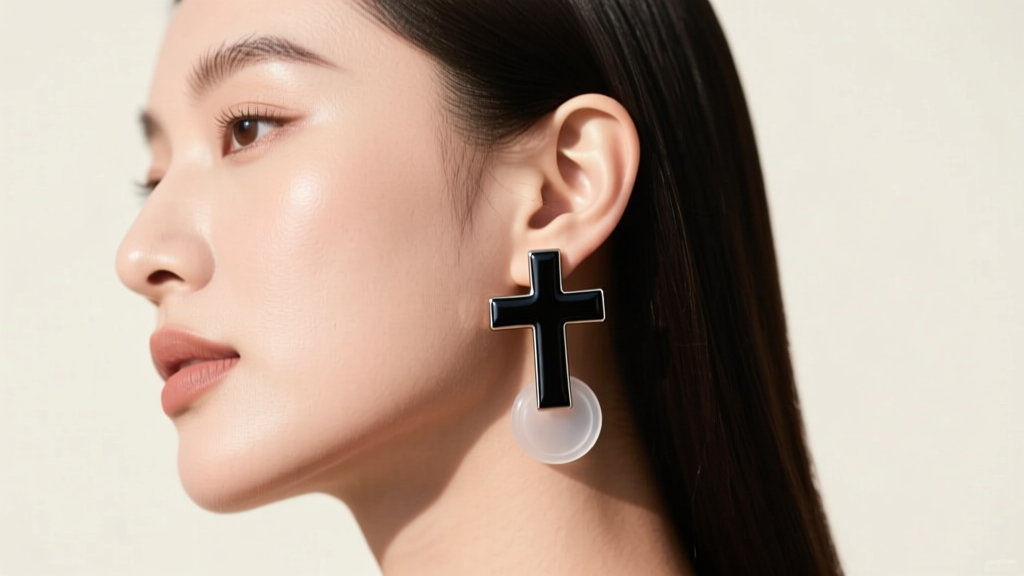
- Gothic/Alternative: Look for oxidized sterling silver, black rhodium plating, or black enamel inlays. Pair with leather or dark velvet textures.
- Quiet Luxury/Minimalist: Seek out 14k gold-filled or solid 18k gold omega-clip crosses with a brushed or matte finish. The lack of high polish makes the piece look more modern and understated.
- Vintage/Antique: Art Deco-inspired crosses featuring marcasite or seed pearls are stunning, but ensure you check the integrity of the screw-back threads before purchasing antique pieces.
Long-Term Maintenance and Storage
The longevity of your clip on cross earrings depends entirely on how you treat the tension mechanisms. According to the experts at Lang Antiques, vintage mechanisms are particularly susceptible to spring fatigue and hinge corrosion if stored improperly.
Cleaning Protocol: Never submerge clip-on earrings in ultrasonic cleaners or liquid jewelry dips. The liquids will seep into the hinge housing, wash away the essential lubricants, and cause the internal steel springs to rust. Instead, use a soft-bristled baby toothbrush dipped in a mild solution of warm water and Dawn dish soap to gently scrub the front of the cross. For the back mechanism, use a dry, lint-free microfiber cloth and a wooden toothpick to dislodge skin cells and makeup residue from the hinge crevices. For deeper polishing of the metal elements, follow the safe practices outlined by Forbes Advisor, ensuring you keep all polishing compounds away from the moving parts.
Storage: Always store your earrings with the clips in the open position. Leaving them clamped shut for weeks on end will cause the metal to "remember" the stressed shape, leading to a permanent loss of tension and a loose-fitting earring. Store them in individual anti-tarnish ziplock bags with a small silica gel packet to control humidity and protect the internal springs.


