1940s Earrings Revival: 2026 Vintage Trend Analysis
Explore the 2026 revival of 1940s earrings. Discover styling tips, material guides for Bakelite and pot metal, and how to convert vintage clips.

The 1940s Earrings Renaissance: Why Wartime Glamour is Back
The 2026 trend cycle has decisively moved past the hyper-minimalism of the 2010s and the chaotic layering of the Y2K revival, landing firmly in the structured, romantic glamour of the 1940s. As modern consumers increasingly prioritize sustainability and archival fashion, 1940s earrings have emerged as the ultimate statement of sartorial intent. But this isn't merely about wearing old jewelry; it is about understanding the historical constraints that birthed these designs and adapting them for the modern ear.
During World War II, the rationing of precious metals and gemstones forced jewelry houses to innovate. Base metals were diverted for the war effort, leading to a surge in alternative materials like Bakelite, Lucite, and carved wood. Meanwhile, the desire for escapism and morale-boosting glamour resulted in bold, oversized silhouettes. Today, collectors and style archivists are hunting down these specific wartime artifacts, driving up the market value of signed pieces by houses like Trifari, Coro, and Miriam Haskell.
Defining the Decade: Key Silhouettes and Motifs
To authentically integrate 1940s earrings into a contemporary wardrobe, one must understand the distinct silhouettes that defined the era. The jewelry of this decade was heavily influenced by the utilitarian yet feminine silhouettes of wartime fashion, featuring strong shoulders and cinched waists. Earrings needed to balance these proportions, leading to two dominant styles.
Fur Clips and Dress Clips
Originally designed to be worn in pairs on the lapels of suits or to hold together heavy fur stoles, dress clips (often called fur clips) became a staple of 1940s ear styling. Unlike standard earrings, these featured a double-pronged clip mechanism with a heavy spring. In 2026, stylists are increasingly wearing these not on the ears, but as asymmetric accents on structured blazers, or carefully converting them into heavy-duty ear cuffs for the upper cartilage.
Rhinestone Floral and Ribbon Designs
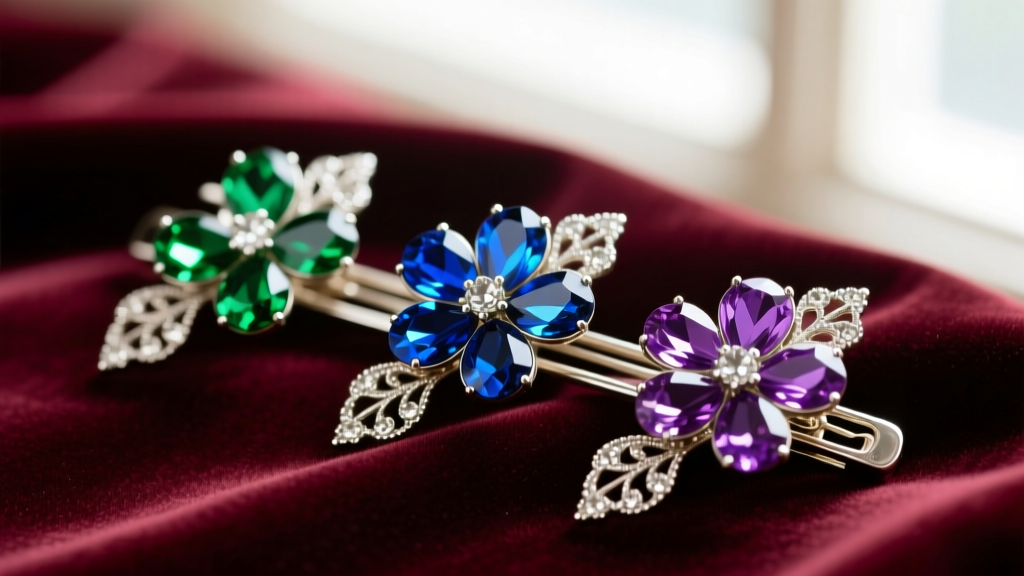
With natural pearls and high-carat gemstones scarce, jewelry makers turned to foiled glass rhinestones and sterling silver. Ribbon motifs, symbolizing ties to loved ones overseas, and cascading floral sprays were incredibly popular. These designs were often set in rhodium-plated sterling silver to mimic the look of white gold and platinum, providing a brilliant, tarnish-resistant finish that many surviving pieces still retain today.
Material Deep-Dive: Bakelite, Pot Metal, and Rhodium
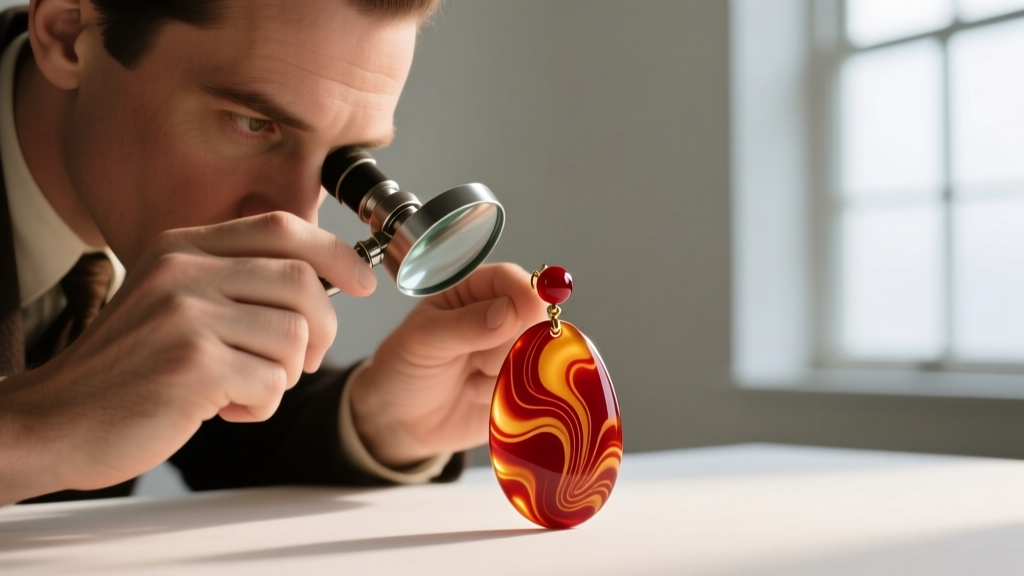
Authenticating and caring for 1940s earrings requires a granular understanding of wartime metallurgy and early plastics. According to the Vintage Jewelry University, the material constraints of the era created unique failure modes that modern collectors must navigate.
| Material | 1940s Application | Common Failure Modes | 2026 Care & Maintenance |
|---|---|---|---|
| Bakelite | Carved bangles, heavy stud earrings, geometric clips. | Crazing (micro-cracks), warping from heat, loss of polish. | Clean only with mild soap and water. Never use ultrasonic cleaners. Polish with Simichrome to test authenticity and restore shine. |
| Pot Metal | Base for rhinestone settings, cast floral motifs. | Intergranular corrosion, casting bubbles, snapping under pressure. | Keep away from moisture. Do not attempt to bend or resize prongs; the zinc alloy is highly brittle and will snap. |
| Rhodium Plating | Topcoat over sterling silver or brass to prevent tarnish. | Wear-through on high-friction areas, exposing base metal. | Store in anti-tarnish cloth. Re-plating is possible but expensive; many collectors prefer the honest wear of original plating. |
| Lucite | Transparent or embedded floral earrings, lightweight drops. | Scratching, yellowing from UV exposure, chemical clouding. | Buff out light scratches with a micro-mesh pad. Avoid all alcohol-based cleaners, which will cause irreversible clouding. |
The Mechanics of Vintage: Clip-Ons vs. Modern Piercings
The most significant hurdle to wearing 1940s earrings today is the mechanism. The modern standard of the 20-gauge or 18-gauge post through a pierced lobe was not ubiquitous in the 1940s. Piercing was often associated with specific subcultures or immigrant communities, so mainstream jewelry was overwhelmingly designed for unpierced ears.
Converting Paddle-Backs and Screw-Backs
Most 1940s earrings utilize either a screw-back (which tightens against the lobe via a threaded post) or a paddle-back clip (a wide, flat metal paddle that clamps onto the earlobe). Both can cause significant discomfort on modern ears, which are unaccustomed to the distributed pressure and heavy weight of wartime base metals.
If you are working with a jeweler to convert 1940s earrings for modern pierced lobes, the standard protocol involves carefully sawing off the clip mechanism and laser-welding a modern post. However, because 1940s earrings are notoriously heavy (often exceeding 15 grams per earring), a standard 20-gauge post will cause the lobe to droop and eventually tear. Experts recommend converting heavy vintage clips to 16-gauge or 14-gauge titanium or surgical steel posts, paired with heavy-duty silicone ear lifters or supportive backing discs to distribute the weight across the back of the lobe.
Sourcing and Authentication: Real Vintage vs. Reproductions
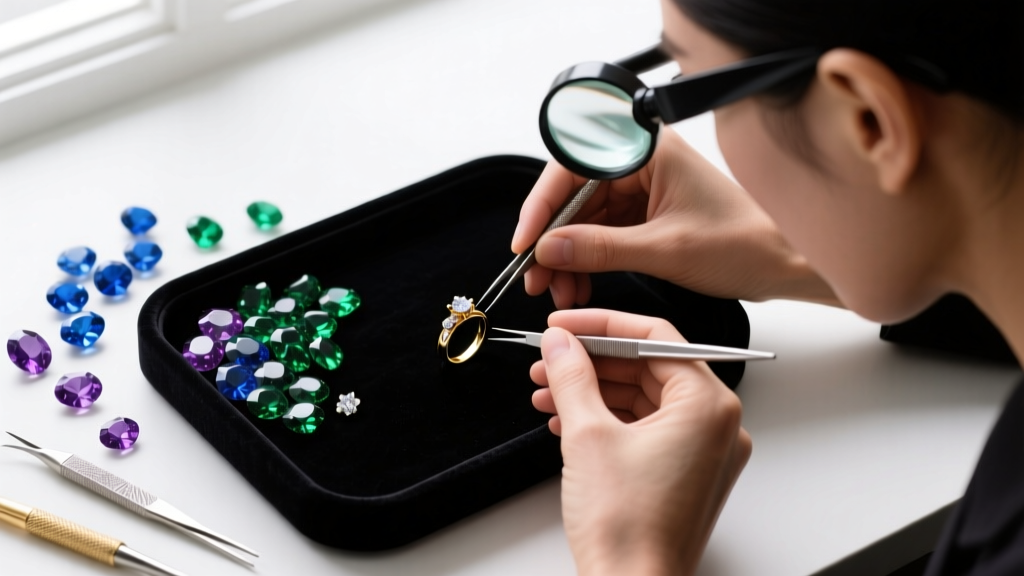
As the demand for 1940s earrings surges in 2026, the market has been flooded with high-quality reproductions. Distinguishing between an authentic WWII-era piece and a modern replica requires looking beyond the design and examining the manufacturing techniques. The Victoria and Albert Museum's jewelry archives note that wartime manufacturing shortcuts are often the best indicators of authenticity.
- Examine the Rhinestone Foiling: Authentic 1940s rhinestones were typically foil-backed using silver or gold leaf. Over 80 years, this foil often degrades, turning grey or black. Modern reproductions use machine-applied, mirror-perfect foiling or solid-color glass that lacks the depth and slight imperfections of wartime stones.
- Check the Clasp Mechanics: Original screw-backs have distinct, slightly uneven threading cut by hand or early lathes. Modern cast screw-backs look uniform and lack the sharp, precise bite of vintage hardware.
- Look for Casting Seams: Because precious metals were restricted, many 1940s pieces were cast in pot metal. Look for faint casting seams along the edges of floral or ribbon motifs. High-end modern reproductions are often cast in brass and heavily polished, erasing these historical manufacturing marks.
2026 Pricing Guide for Signed 1940s Earrings
While unsigned pieces can be found in estate sales for $20 to $50, signed pieces by premier couturiers command a premium. Here is the current market baseline for authenticated, excellent-condition clips and earrings:
- Trifari (Crown Mark): $85 - $250 (Highly sought after for their patented invisible setting techniques).
- Coro / Corocraft: $60 - $180 (Known for intricate sterling silver floral sprays and Duette double-clip mechanisms).
- Miriam Haskell: $300 - $800+ (Famous for complex, hand-wired Russian gold-plated filigree and faux seed pearl work).
Styling 1940s Earrings for the Modern Ear
Integrating heavy, ornate 1940s earrings into a 2026 wardrobe requires a careful balance of proportions. Because these pieces were designed to complement the structured, padded-shoulder silhouettes of the era, they can easily overwhelm modern, softer tailoring if not styled intentionally.
"The secret to wearing archival 1940s jewelry today is contrast. Pair a heavy, rhodium-plated floral clip with a stark, minimalist silk slip dress or an oversized, unstructured blazer. Let the historical weight of the earring be the sole focal point of the ensemble." — Archival Fashion Stylist, Vogue Runway
For those with round or heart-shaped faces, avoid the wide, circular button clips popular in the mid-40s, as they will widen the face. Instead, seek out the cascading ribbon or teardrop floral drops that elongate the jawline. Conversely, square and oblong face shapes can beautifully carry the wide, geometric Bakelite studs and bold, horizontal dress clips that frame the cheekbones.
Ultimately, the resurgence of 1940s earrings is a testament to the enduring power of resilient design. Born from restriction and rationing, these pieces represent a masterclass in making do with alternative materials without sacrificing an ounce of glamour. Whether you are carefully converting a pair of Trifari dress clips for a modern lobe or wearing a carved Bakelite stud as a nod to wartime ingenuity, you are participating in a rich, historical dialogue that continues to shape the cutting edge of 2026 style.


