A Beginner’s Guide to Collecting Vintage Enamel Earrings
Learn how to identify, buy, and care for vintage enamel earrings. Discover pricing, enamel types, and expert tips for sensitive ears in this guide.

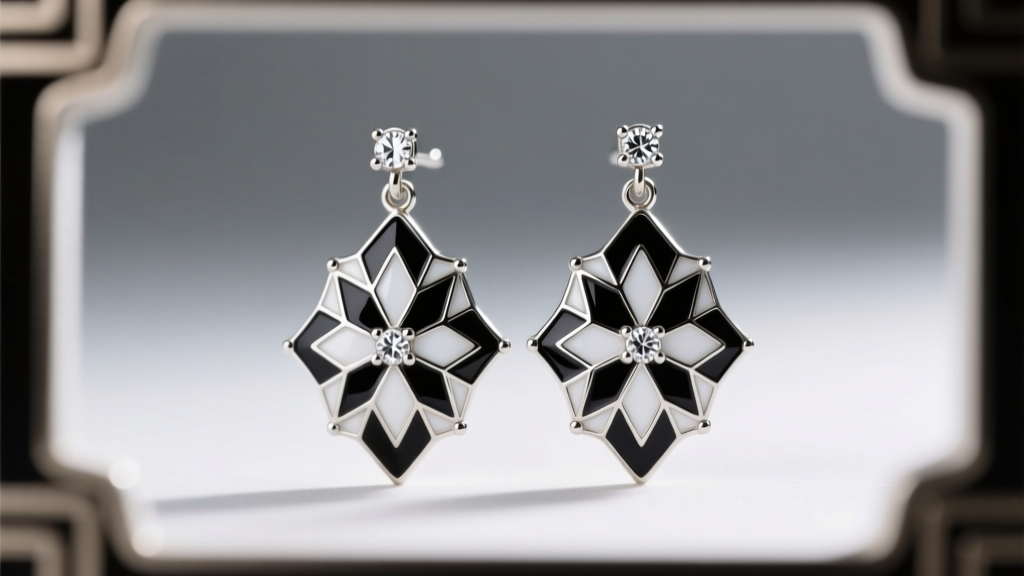
What Defines True Vintage Enamel?
For new collectors, the world of estate jewelry can be overwhelming, but few categories offer the vibrant artistry and historical intrigue of vintage enamel earrings. Unlike modern costume jewelry that relies on cold enamel (a type of dyed epoxy resin), true vintage pieces feature vitreous enamel. This is a glass-like substance created by fusing finely ground silica powder to a metal base at extreme temperatures, typically between 1,380°F and 1,560°F (750°C to 850°C). The result is a brilliant, scratch-resistant, and luminous finish that outlasts synthetic alternatives by decades.
When shopping for vintage enamel earrings, you are generally looking at pieces crafted between the 1890s and the 1970s. The Victorian, Art Nouveau, and Art Deco eras were particularly prolific for enamel work. According to the Victoria and Albert Museum, the mastery of enamel during these periods was heavily tied to the revival of Renaissance and medieval metalworking techniques. Understanding the difference between fused glass and painted resin is your first step in avoiding overpriced reproductions.
The Three Master Enamel Techniques
To accurately value and authenticate vintage enamel earrings, you must be able to identify the specific technique the artisan employed. Each method requires a different level of skill and yields a distinct visual signature.
1. Guilloché: The Translucent Illusion
Highly popular during the Art Deco period (1920s-1930s), guilloché involves engraving a precise, repetitive geometric pattern into a silver or gold base using a rose-engine lathe. Translucent enamel is then fired over the engraved metal. The light passes through the glass and reflects off the carved ridges beneath, creating a mesmerizing, three-dimensional moiré effect. Guilloché earrings are highly prized for their optical depth, but the translucent nature of the enamel means any flaw or dirt trapped beneath the surface during firing is permanently visible.
2. Champlevé: The Carved Troughs
Champlevé is an older, more robust technique where troughs or cells are carved, etched, or stamped directly into the thick metal base. Opaque or translucent enamel is packed into these depressions and fired. Once cooled, the surface is polished flat, leaving the metal dividers visible between blocks of vibrant color. This technique was heavily favored in the Art Nouveau era for its ability to mimic the organic, flowing lines of nature, making it a staple in floral and botanical earring designs.
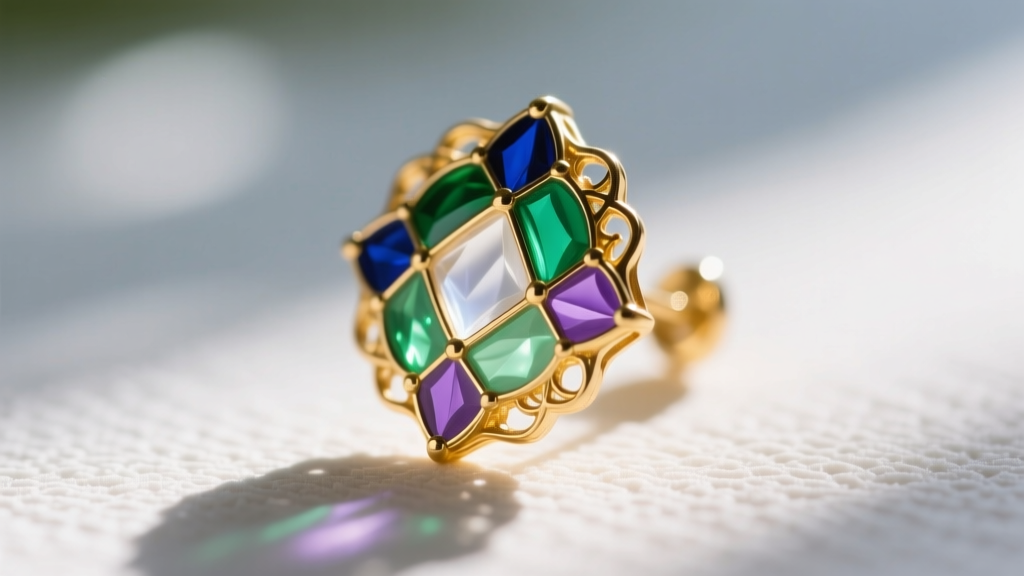
3. Plique-à-jour: The Stained Glass Masterpiece
Considered the most difficult and fragile of all enamel techniques, plique-à-jour translates to "letting in daylight." The enamel is applied into a metal framework (cloisons) that has no backing plate, much like a stained-glass window. The enamel must be held in place by surface tension during firing. Because it lacks a metal backing, plique-à-jour vintage enamel earrings are incredibly delicate and exceptionally rare. The Lang Antiques University notes that surviving plique-à-jour pieces from the Art Nouveau era command massive premiums due to their inherent fragility and the sheer skill required to execute them.
Navigating Vintage Posts, Gauges, and Metal Allergies
One of the most common pitfalls for beginners buying vintage earrings is overlooking the earring post and backing mechanism. Modern standard lobe piercings are typically done at 20-gauge (0.81mm) or 18-gauge (1.02mm). However, many vintage earrings from the 1920s through the 1950s feature thick screw-back posts or early friction posts that measure 16-gauge (1.29mm) or even 14-gauge (1.63mm).
Forcing a thick 14-gauge vintage post into a modern 20-gauge piercing can cause micro-tears, blowouts, and severe irritation. If you find a pair of vintage enamel earrings you love but the posts are too thick, take them to a professional bench jeweler. For roughly $40 to $60, a jeweler can carefully snip the original post and laser-weld a modern, hypoallergenic 20-gauge titanium post in its place without damaging the surrounding enamel through heat transfer.
The Nickel Threat in Vintage White Gold
Another critical consideration is metal composition. If you have sensitive ears, beware of vintage white gold. Prior to the widespread adoption of palladium as an alloying agent in the late 20th century, white gold was frequently alloyed with high percentages of nickel to achieve a bright, silvery color. Wearing nickel-heavy vintage white gold earrings can trigger severe contact dermatitis. If you suspect a piece contains nickel, you can apply a thin layer of clear nail polish to the post as a temporary barrier, or opt for pieces crafted in yellow gold, platinum, or sterling silver.
Pricing Guide and Authentication Markers
Pricing for vintage enamel earrings varies wildly based on the technique, the base metal, and the condition of the glass. Below is a structured framework to help you evaluate market value and spot authentic period pieces.
| Enamel Technique | Peak Era | Average Price Range | Key Authentication Marker |
|---|---|---|---|
| Guilloché | Art Deco (1920s) | $150 - $600 | Visible geometric lathe lines under magnification; usually set in sterling silver. |
| Champlevé | Art Nouveau (1890s-1910s) | $300 - $900 | Thick metal dividers; organic, asymmetrical motifs; often paired with seed pearls. |
| Plique-à-jour | Art Nouveau / Revival | $1,200 - $5,000+ | No metal backing; light passes entirely through; extreme fragility at the edges. |
| Cold Enamel (Resin) | 1970s - Modern | $20 - $80 | Warm to the touch; lacks glass-like luster; often shows yellowing or bubbling. |
When authenticating, always use a 10x jeweler's loupe to inspect the surface. Authentic vintage vitreous enamel will feel completely smooth and cold to the touch, resembling glass. If you see tiny air bubbles trapped near the surface or a slightly rubbery texture, you are likely looking at a modern resin reproduction.
Expert Care: Preventing Crazing and Damage
Enamel is essentially glass fused to metal. This means it is highly susceptible to thermal shock and physical impact. The most common failure mode in vintage enamel earrings is "crazing"—a network of microscopic cracks that form within the glass. Crazing is almost always caused by sudden temperature changes or improper cleaning methods.
Never use an ultrasonic cleaner on vintage enamel jewelry. According to the Gemological Institute of America (GIA), the high-frequency vibrations and localized heat generated by ultrasonic waves can easily shatter the glass or cause it to separate from the metal base (delamination). Steam cleaners are equally destructive due to the sudden thermal shock.
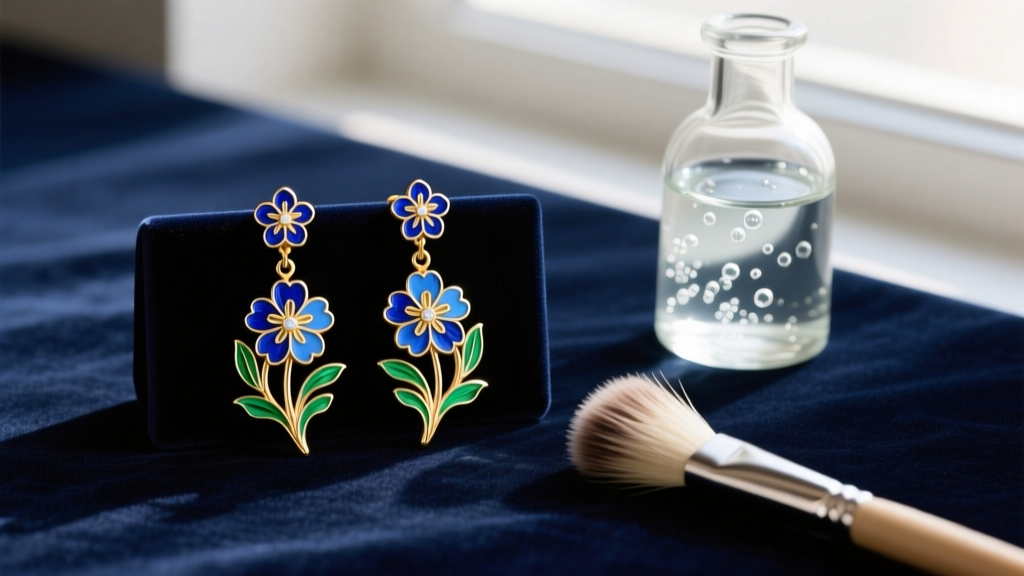
To clean your vintage enamel earrings safely, use a solution of lukewarm water and a few drops of mild, phosphate-free dish soap. Gently agitate the water and use a soft baby toothbrush or a horsehair detailing brush to lightly sweep away dirt from the metal settings. Never scrub the enamel directly. Rinse under a gentle stream of tepid water and pat dry immediately with a microfiber cloth.
Archivist's Storage Tip: Never store vintage enamel earrings loosely in a shared jewelry box where they can knock against harder gemstones like diamonds or sapphires. While enamel is scratch-resistant, a sharp impact from a diamond's culet can easily chip the glass edge. Store each pair individually in a soft, acid-free flannel pouch or a velvet-lined compartment to prevent both physical impact and sudden temperature fluctuations.
Collecting vintage enamel earrings is a rewarding pursuit that connects you directly to the master artisans of the past. By understanding the distinct techniques, respecting the historical gauge sizes, and adhering to strict, gentle care protocols, you can preserve these wearable works of art for generations to come.


