2026 Laser Cut Earrings: Budget & Value Assessment
Discover the true value of laser cut earrings in 2026. We analyze materials, edge finishing, hardware, and pricing tiers to help you buy smart.

The True Cost of Laser Cut Earrings in 2026
The jewelry market has been entirely transformed by precision laser cutting technology. What once required hours of meticulous hand-sawing and filing by a bench jeweler can now be executed in seconds by a fiber or CO2 laser. While this democratization of manufacturing has flooded the market with affordable, intricately designed laser cut earrings, it has also created a massive disparity in actual value. In 2026, consumers are faced with a confusing landscape: a pair of geometric dangles might cost $6 on a fast-fashion app, while a nearly identical silhouette from an independent maker costs $65, and a fine jewelry version commands $180.
As a senior evaluator for Jewel Style Radar, I have spent the last decade analyzing the intersection of jewelry manufacturing and consumer pricing. The secret to assessing the true value of laser cut earrings lies far beyond the aesthetic design. It requires a deep dive into material grades, edge finishing protocols, structural gauge thickness, and the metallurgical quality of the hardware. This comprehensive guide will equip you with the exact frameworks needed to separate genuine budget wins from overpriced junk.
Material Breakdown: What You Are Actually Paying For
The base material dictates not only the price but the longevity and biocompatibility of the earring. Laser cutting is compatible with a vast array of materials, but they are not created equal.
Base Metals vs. Precious Plating
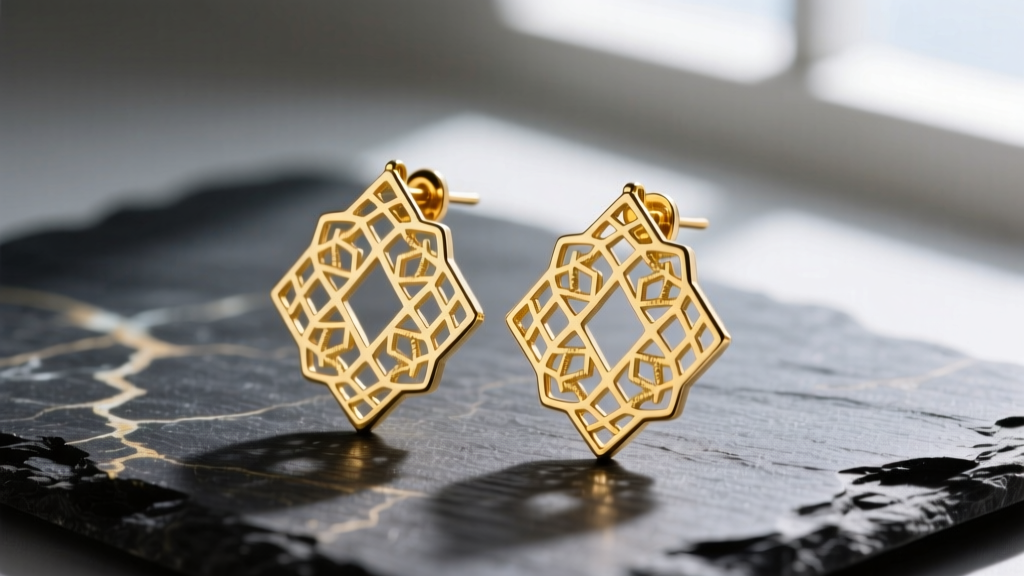
When evaluating metal laser cut earrings, you will primarily encounter 316L surgical stainless steel, brass, and sterling silver. 316L steel is the undisputed champion of the budget tier. It is highly resistant to tarnish, incredibly durable, and generally hypoallergenic. Brass, on the other hand, is a cheaper base metal that requires plating to prevent oxidation and skin discoloration.
This is where value assessment becomes critical. Many ultra-budget brands utilize "flash plating" on brass—a process that deposits a microscopic layer of gold (often less than 0.1 microns thick). This plating will wear off within weeks of daily use, exposing the brass underneath and causing green skin stains. True value in the mid-tier market requires gold vermeil. According to the Federal Trade Commission (FTC) Jewelry Guides, vermeil must consist of a sterling silver base plated with a minimum of 2.5 microns of 10k or higher gold. If a brand cannot verify their plating thickness and base metal, it is not a value purchase, regardless of how low the price is.
Acrylic and Polymers: The Budget Tier
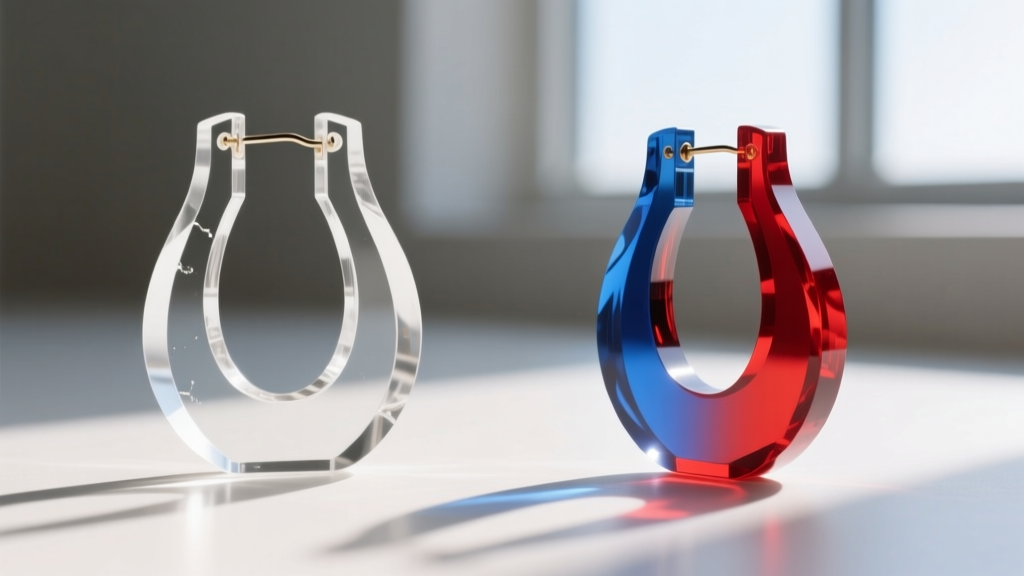
For non-metal options, CO2 lasers are used to cut acrylic sheets. However, all acrylic is not the same. High-value makers use cell cast acrylic, which has a higher molecular weight, resulting in clean, glass-like edges when cut. Ultra-budget manufacturers use extruded acrylic, which melts and burrs under the laser's heat, leaving sticky, rough edges that attract dirt and snag hair.
The Hidden Value Drivers: Edge Finishing and Hardware
The most glaring tell of a cheap laser cut earring is the edge. When a high-powered laser vaporizes metal, it leaves behind a Heat Affected Zone (HAZ) and microscopic burrs. Inexpensive manufacturers ship the earrings directly from the cutting bed, resulting in sharp edges that act like tiny knives against your hair and skin.
High-value brands invest in post-processing. The industry standard for quality is rotary tumbling. Earrings are placed in a barrel with steel shot and a burnishing compound for several hours. This process peens the edges smooth, work-hardens the metal for added durability, and creates a uniform, satin-matte finish. When assessing value, run your fingernail along the perimeter of the earring; if it catches or feels sharp, the manufacturer skipped the tumbling phase.
Hardware: The Post and Ear Wire
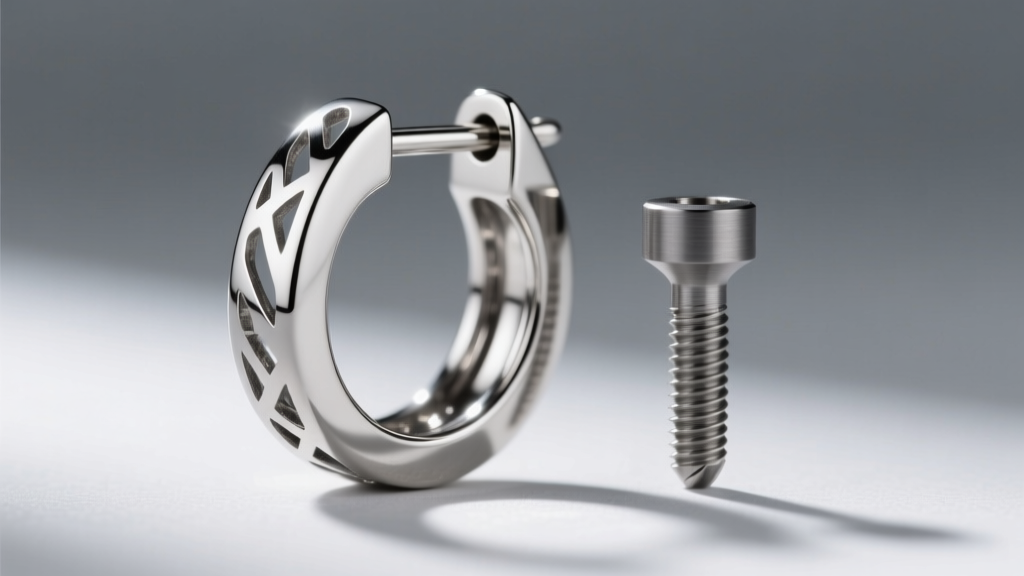
A beautiful laser-cut dangle is useless if the post causes contact dermatitis. The highest value earrings in 2026 utilize 20-gauge titanium or niobium posts, which are entirely nickel-free. Avoid "nickel-silver" or unspecified "hypoallergenic" posts. As noted by the Mayo Clinic, nickel allergy is one of the most common causes of allergic contact dermatitis, and repeated exposure can trigger severe lobe inflammation. Paying a $10 premium for a brand that guarantees titanium hardware is a massive long-term value add.
2026 Laser Cut Earrings: Price vs. Value Matrix
To help you benchmark your purchases, I have compiled a matrix based on current market teardowns and manufacturing cost analyses.
| Market Tier | Price Range | Typical Material | Edge Finishing | Hardware | Value Verdict |
|---|---|---|---|---|---|
| Ultra-Budget | $3 - $15 | Extruded Acrylic, Flash-Plated Brass | None (Raw laser burrs) | Nickel-Silver, Steel | Poor (High failure rate) |
| Indie / Mid-Tier | $25 - $65 | 316L Steel, Cast Acrylic, Gold Vermeil | Tumble-Polished, Hand-Filed | Titanium, Niobium | Excellent (Best cost-to-wear ratio) |
| Designer / Fine | $90 - $250+ | Solid 14k/18k Gold Sheet, Platinum | Hand-Polished, Mirror Finish | Solid Gold Posts | Good (Paying for intrinsic metal value) |
Gauge Sizes and Structural Integrity
The thickness of the sheet metal used in laser cut earrings is measured in gauges. This specification drastically impacts both the comfort and the structural lifespan of the jewelry. According to manufacturing standards outlined by Halstead Jewelry, the ideal gauge balances rigidity with weight.
- 24-Gauge (0.51mm): Often used in ultra-budget earrings to save on material costs. It is highly prone to bending during shipping or if accidentally slept on. Value: Low.
- 20-Gauge (0.81mm): The gold standard for laser cut metal dangles and studs. It provides enough rigidity to hold complex geometric shapes without bending, while remaining light enough for all-day lobe comfort. Value: High.
- 16-Gauge (1.29mm) and Thicker: Sometimes marketed as "heavy duty," but in reality, it is usually too heavy for standard earlobes, causing stretching over time. Furthermore, the thick sheet metal creates immense stress on the solder joint where the post meets the backplate, leading to catastrophic snapping. Value: Situational (Best only for small, compact studs).
"The structural integrity of a laser cut earring relies not just on the sheet metal gauge, but on the surface area of the solder joint connecting the post to the flat back. A 20-gauge sheet with a wide, flush solder pad will outlast a 16-gauge sheet with a pinpoint weld every time."
Red Flags: When Budget Becomes a Waste of Money
When shopping for budget-friendly laser cut earrings, train your eye to spot these critical failure modes that indicate a complete waste of your money:
- Micro-Burrs on Filigree: Intricate, lace-like designs are incredibly difficult to tumble-polish. If a budget brand offers highly complex filigree, inspect the macro photos for tiny metal spikes inside the negative space. These will catch your hair instantly.
- Glued Hardware: Some ultra-cheap manufacturers bypass soldering entirely and use industrial cyanoacrylate (superglue) to attach the earring post to the laser-cut blank. Body heat and natural skin oils will dissolve this adhesive within a month.
- Asymmetrical Heat Warping: Thin metals (24g+) can warp under the intense localized heat of a fiber laser. If the earring looks slightly concave or twisted in product photos, the manufacturer is using inadequate sheet thickness and improper cutting speeds.
Final Verdict: Where to Allocate Your Budget
The value proposition of laser cut earrings in 2026 is incredibly strong, provided you know where to look. The sweet spot for maximum value lies in the $25 to $65 indie maker tier. In this bracket, you are paying for the crucial post-processing steps—tumbling, proper soldering, and high-grade titanium hardware—that fast-fashion brands skip entirely.
Stop paying for complex designs executed in poor materials. Prioritize 20-gauge 316L stainless steel or properly verified gold vermeil over sterling silver. Demand tumble-polished edges and titanium posts. By applying this strict value assessment framework, you can build a rotation of stunning, durable, and comfortable laser cut earrings that will easily outlast their price tags.


