How to Style Earrings Music Notes Designs Step-by-Step
Learn how to style and select earrings music notes designs for any piercing. Discover gauge sizes, metal grades, and face-shape matching tips.

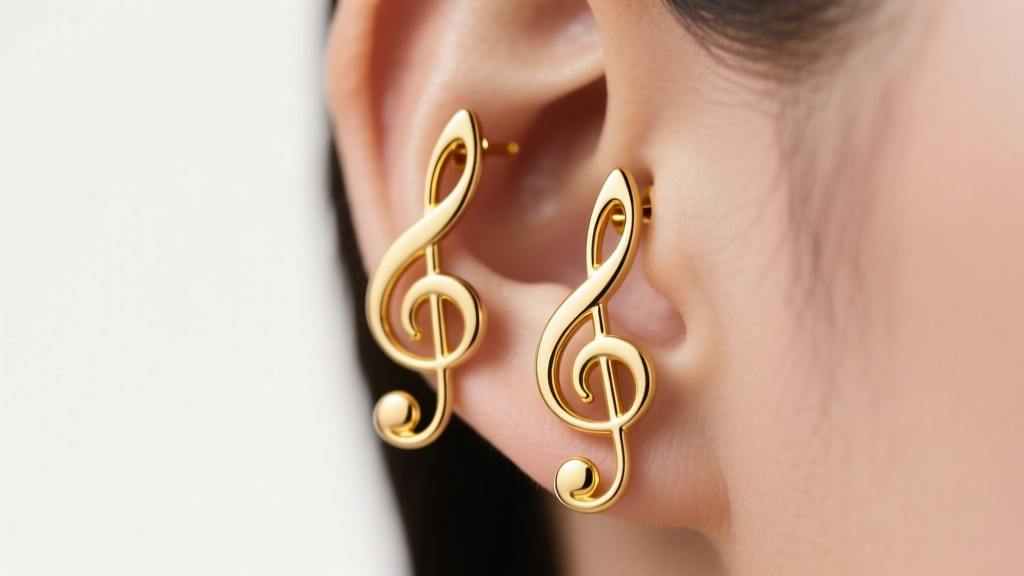
Music has a universal language, and translating that passion into your personal style is a timeless way to express yourself. Whether you are a classically trained violinist, a touring DJ, or simply an audiophile, wearing earrings music notes designs allows you to carry your favorite melodies with you. However, selecting the right musical jewelry goes far beyond simply picking a cute treble clef at the mall. It requires a strategic approach to gauge sizing, metal biocompatibility, and facial harmony.
As of 2026, the jewelry market has seen a massive shift toward hyper-personalized, anatomy-specific jewelry. This step-by-step guide will walk you through exactly how to choose, style, and maintain musical note earrings for every type of ear piercing, ensuring your accessories are as harmonious as your favorite chord progression.
Step 1: Match the Note to Your Piercing and Gauge
The most common mistake buyers make is ignoring the post thickness (gauge) and backing type of their earrings. A beautiful sixteenth note stud is useless if the post is too thick for your lobe or too thin to stay securely in your cartilage. Here is how to match the musical symbol to your specific piercing anatomy:
Lobe Piercings (Standard & Stretched)
- Standard Lobes (20g - 18g / 0.8mm - 1.0mm): Opt for lightweight eighth note or beamed note studs. Butterfly backs are common here, but as of 2026, many jewelers are offering 18g flat-back labrets for lobes to prevent the "poke" behind the ear while sleeping.
- Stretched Lobes (14g - 00g): Look for hollow-carved bass clef tunnels or clicker hoops featuring engraved musical scales. The visual weight of a bass clef perfectly balances the larger surface area of a stretched lobe.
Cartilage Piercings (Helix, Conch, Tragus)
Cartilage requires specialized jewelry to avoid irritation bumps. The standard gauge for most helix and conch piercings is 16g (1.2mm), though some tragus piercings are done at 18g (1.0mm).
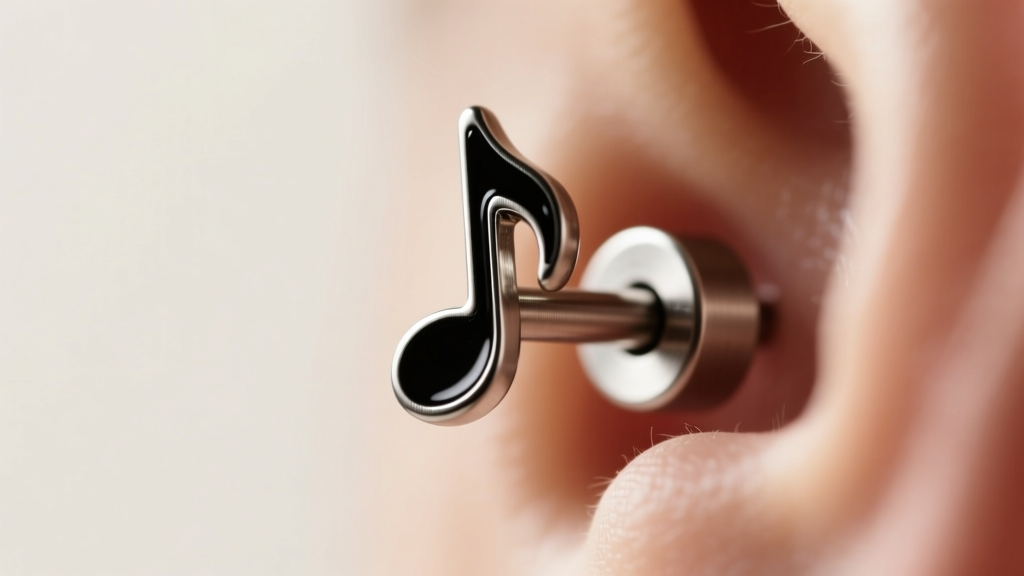
For these piercings, you must avoid butterfly backs entirely. Instead, seek out internally threaded or threadless flat-back labrets featuring a music note top. Threadless (push-pin) designs are currently the gold standard for cartilage because the slight bend in the pin creates tension against the inside of the post, ensuring the musical note stays perfectly upright and secure without unscrewing.
Step 2: Harmonize Symbol and Face Shape
Just as a composer balances high and low frequencies, you must balance the visual weight of your earrings with your natural bone structure. The silhouette of the musical note you choose can dramatically alter how your face is perceived.
Round Faces: Elongate with Treble Clefs
If you have a round face shape with softer angles and equal width-to-length ratios, your goal is to create vertical elongation. Treble clef dangle earrings are your best friend. The sweeping, vertical curves of the G-clef draw the eye downward, creating the illusion of a longer, more sculpted jawline. Avoid wide, chunky bass clef huggies, which will only add horizontal width to your profile.
Square Faces: Soften with Curved Hoops
Square faces feature strong, angular jawlines and a broader forehead. To soften these striking features, choose music note hoop earrings or circular huggies where the notes (like a curved alto clef or a stylized sharp symbol) are integrated into a continuous rounded loop. The circular geometry contrasts beautifully with sharp jawlines.
Heart Faces: Balance with Bottom-Heavy Dangles
Heart-shaped faces are characterized by a wider forehead and a narrow, pointed chin. You want to add visual weight to the lower half of your face. Look for beamed sixteenth note drop earrings where the visual bulk (the note heads) sits at the very bottom of the design, filling the negative space around your jaw.
Step 3: Select the Right Metal Grade (2026 Buyer's Chart)
The material of your earrings music notes designs dictates not only the price but also how your skin reacts. According to the Association of Professional Piercers, nickel allergies affect roughly 10-15% of the population, making metal selection critical. Below is a breakdown of the most common materials used in musical jewelry today.
| Metal Grade | Best For | Price Range (Per Pair) | Pros & Cons |
|---|---|---|---|
| ASTM F136 Titanium | Fresh piercings, sensitive skin, cartilage | $35 - $85 | Pros: 100% nickel-free, lightweight, highly durable. Cons: Limited color options unless anodized. |
| 14k / 18k Solid Gold | Healed lobes, heirloom pieces, luxury gifts | $150 - $600+ | Pros: Tarnish-resistant, holds intricate detail (like tiny note flags). Cons: Expensive; lower karats may contain trace nickel. |
| Sterling Silver (925) | Occasional wear, budget-friendly fashion | $25 - $75 | Pros: Affordable, bright luster. Cons: Tarnishes quickly, contains copper, not safe for unhealed holes. |
| Gold Vermeil | Trendy, short-term seasonal styling | $40 - $120 | Pros: Looks like solid gold initially. Cons: Plating wears off in 6-12 months, exposing base metal. |
For intricate designs like a micro-pave diamond treble clef, the Gemological Institute of America (GIA) notes that 14k gold is often preferred by jewelers over 18k because the higher alloy content provides the structural rigidity needed to hold tiny gemstones securely within the delicate loops of the musical symbol.
Step 4: Proper Cleaning and Tarnish Prevention
Because music note earrings feature tight curves, loops, and microscopic crevices (especially where the flag of an eighth note meets the stem), they are magnets for sebum, dead skin cells, and hair product buildup. Follow this exact weekly maintenance routine to keep your jewelry looking stage-ready.
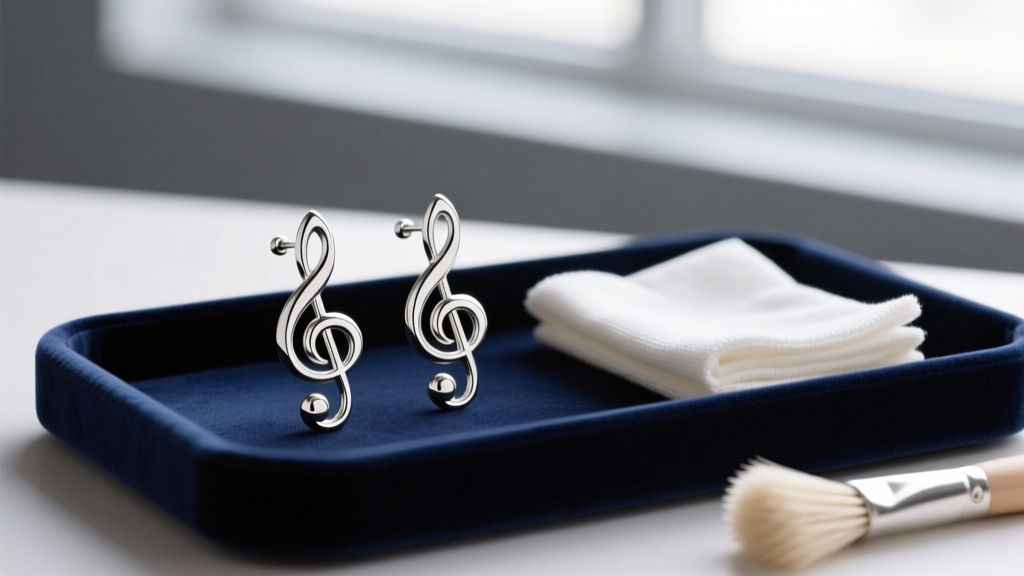
- The Warm Soak: Mix a few drops of mild, fragrance-free dish soap into a bowl of warm distilled water. Let your solid gold or titanium music note earrings soak for exactly 5 minutes. Do not exceed this, as prolonged water exposure can weaken certain adhesive settings if your notes feature inlaid enamel or gemstones.
- The Detail Brush: Use an extra-soft baby toothbrush or a specialized jewelry cleaning brush to gently sweep through the loops of the treble clef or the tight curves of the bass clef. Never use hard-bristled brushes, which will leave micro-scratches on polished metals.
- The Rinse & Dry: Rinse thoroughly under distilled water. Pat dry with a lint-free microfiber cloth. Air-drying leaves water spots, especially on high-polish sterling silver.
What to Avoid at All Costs
Never use ultrasonic cleaners on gold vermeil or enamel-filled music notes. The high-frequency vibrations will strip the gold plating and shatter the delicate black enamel often used to give the musical notes a high-contrast, graphic pop. Furthermore, avoid alcohol-based cleaners on acrylic or resin music note designs, as these will cause the material to cloud and crack over time.
Troubleshooting Common Fit and Comfort Issues
Even with careful planning, you may encounter physical discomfort when wearing thematic jewelry. Here is how to troubleshoot the most common issues associated with music-themed earrings:
- The "Poke" Behind the Lobe: If your treble clef dangles use a traditional post and butterfly back, the sharp metal post often protrudes past the backing, stabbing your neck when you lie down. Solution: Swap the post for a silicone earring back or have a jeweler cut the post down by 1-2mm.
- Cartilage Irritation Bumps: If your helix music note stud is causing a localized bump, it is likely due to the angle of the piercing or a butterfly back trapping moisture. Solution: Visit a professional piercer to downsize the post length and switch to a threadless titanium flat-back. The flat disc will eliminate pressure points and allow the piercing to breathe.
- Heavy Dangle Fatigue: Solid metal bass clef or double-note dangles can stretch older lobe piercings over time. Solution: Invest in "earring lifters" or silicone support discs that distribute the weight of the earring across a wider surface area on the back of your earlobe.
"When styling thematic jewelry like musical notes, the key is subtlety. A single, well-crafted 16g titanium eighth note in the helix paired with a minimalist stud in the lobe creates a curated, modern ear stack that speaks volumes without looking like a costume." — Senior Piercer & Jewelry Curator
Final Thoughts on Musical Ear Styling
Choosing the perfect earrings music notes designs is an intersection of anatomical precision, material science, and aesthetic styling. By respecting your piercing gauge, selecting biocompatible metals like ASTM F136 titanium or solid 14k gold, and matching the silhouette of the musical symbol to your face shape, you ensure your jewelry is both comfortable and visually striking. Whether you are stepping onto a stage or simply heading to the office, your ear stack will perfectly reflect your rhythm and style.


