Big Stud Earrings Men: A Technical Guide to Sizing & Metals
Discover the technical specifics of big stud earrings men. Learn about gauge sizes, hypoallergenic metals, weight distribution, and secure backings.

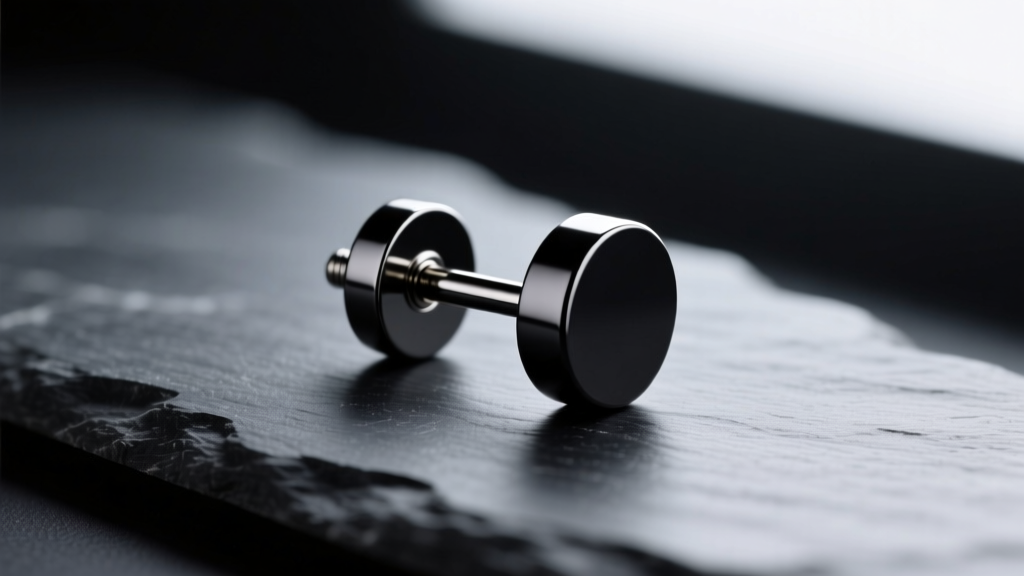
The evolution of men's jewelry has pushed the boundaries of traditional sizing, leading to a surge in demand for bold, oversized earlobe adornments. However, when sourcing big stud earrings men often overlook the critical structural engineering required to support them. An 8mm to 14mm faceplate is not merely a scaled-up version of a standard 4mm diamond stud; it introduces complex physics regarding leverage, tissue tension, and metallurgical compatibility. This expert deep dive dissects the technical specifications, material grades, and mechanical requirements necessary to wear heavy men's studs safely and comfortably.
The Physics of Faceplates and Lobe Tension
The primary challenge with oversized studs is the center of gravity. A standard men's stud sits flush against the earlobe, distributing its minimal weight (usually under 1.5 grams) evenly across the fistula (the piercing channel). When you transition to big stud earrings, men's lobes face a phenomenon known as anterior torque. If a 12mm solid gold faceplate weighs 7 grams, gravity pulls the bottom of the stud forward, tilting the post upward inside the piercing channel.
This anterior torque causes the post to press against the upper interior wall of the fistula, leading to localized pressure necrosis or micro-tears. To counteract this, high-end manufacturers design oversized studs with a slightly concave faceplate or a recessed setting that brings the center of gravity closer to the post. Furthermore, the base of the post must feature a wider solder joint or a machined collar to prevent the post from snapping at the junction point under lateral stress.
Gauge Thickness and Post Structural Integrity
The most common failure mode for heavy earrings is the 'cheese-cutter effect.' This occurs when a thin post slices through the earlobe tissue due to the downward force of the heavy faceplate. Standard commercial earrings are typically 20-gauge (0.81mm) or 18-gauge (1.02mm). For big stud earrings, men must upgrade to thicker posts to distribute the load over a wider surface area of tissue.
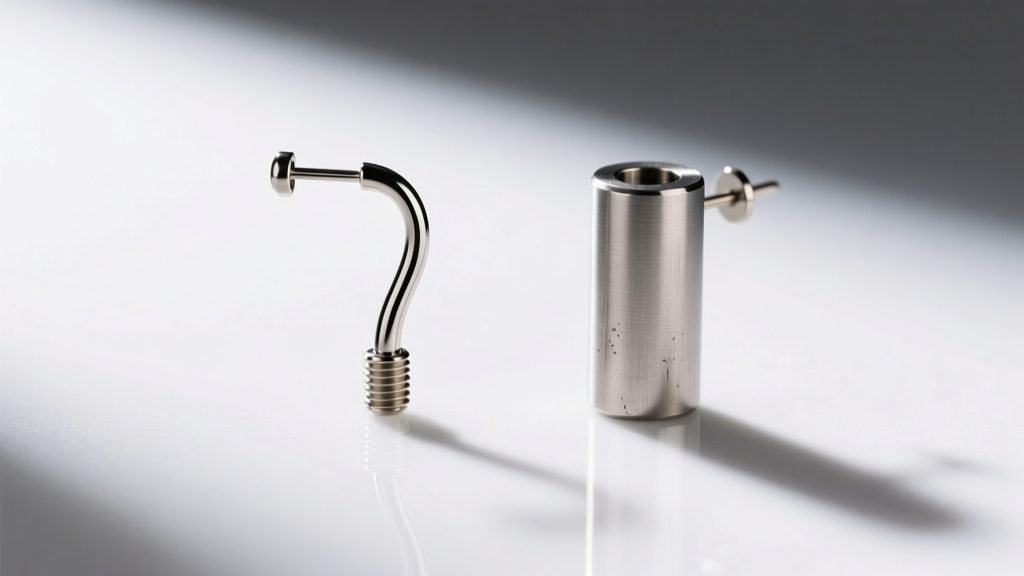
Standard Gauge Dimensions for Heavy Studs
- 16-Gauge (1.29mm): The minimum acceptable thickness for studs with a faceplate diameter between 8mm and 10mm. It provides enough rigidity to resist bending during sleep or accidental impacts.
- 14-Gauge (1.63mm): The gold standard for oversized studs (10mm to 14mm). A 14G post drastically reduces the risk of tissue migration and lobe sagging (ptosis) over time.
- 12-Gauge (2.05mm): Reserved for ultra-heavy, avant-garde pieces or plugs disguised as studs. Requires a professionally stretched piercing and is not suitable for standard lobe piercings.
According to the Association of Professional Piercers (APP), maintaining an appropriate gauge-to-weight ratio is essential for long-term tissue health. Upgrading your lobe piercing from 18G to 14G is a minor, quick-healing procedure that vastly expands your options for heavy men's jewelry.
Metallurgy: Implant-Grade vs. Commercial Alloys
Because big stud earrings men wear daily have prolonged contact with the skin and internal tissue, the metallurgical composition is paramount. Heavy studs trap more moisture and heat against the back of the earlobe, accelerating the release of metal ions and increasing the risk of contact dermatitis.
| Metal Grade | Hardness (Vickers) | Nickel Content | Price Range (USD) | Best Application |
|---|---|---|---|---|
| ASTM F136 Titanium | 330 HV | 0% (Nickel-Free) | $45 - $120 | Everyday wear, fresh piercings, sensitive skin |
| 316L Surgical Steel | 150 HV | 8% - 12% | $20 - $60 | Occasional wear, non-sensitive healed lobes |
| Niobium (Pure) | 60 HV | 0% (Nickel-Free) | $50 - $140 | Hypoallergenic alternative, anodized colors |
| 14k/18k Palladium Gold | 120 - 140 HV | 0% (Nickel-Free) | $180 - $450+ | Luxury heirlooms, formal wear |
The ASTM F136 standard dictates the composition of implant-grade titanium (Ti6Al4V ELI). Unlike commercial 'titanium-colored' steel, ASTM F136 contains zero nickel and forms a passive oxide layer that prevents bacterial adhesion and corrosion. When purchasing solid gold big stud earrings, men must verify that the gold is alloyed with palladium or silver, not nickel, as nickel-white gold is a primary trigger for severe allergic reactions, as noted by the American Academy of Dermatology.
Backing Mechanisms for Heavy Loads
A heavy faceplate is useless if the backing fails. Standard friction backs (butterfly clutches) rely on the tension of folded metal against a notched post. Under the weight of a 10mm stud, the constant pulling causes the friction back to slide down the post, eventually leading to the loss of the earring and potential trauma to the earlobe if it catches on clothing.
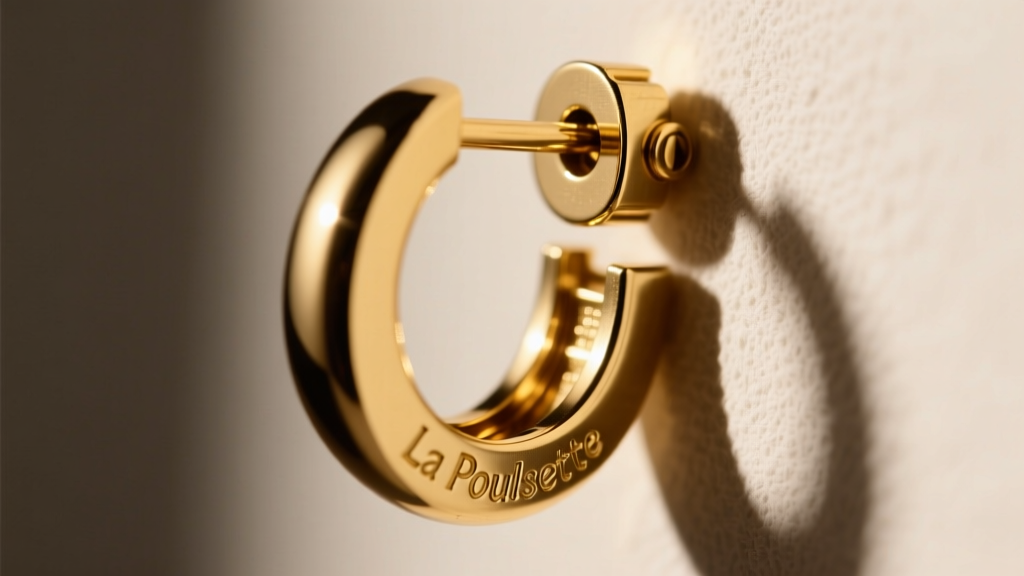
Engineered Backing Solutions
- La Pousette Backs: The pinnacle of earring security. These backs feature an internal spring-loaded mechanism that snaps into a precision-machined groove on the post. They cannot be pulled off accidentally; the user must pinch two tiny tabs to retract the internal pins. They are mandatory for heavy luxury studs.
- Threaded Screw-Backs: Utilizing internal or external threading (preferably internal, where the screw is on the back and the post is tapped), these offer excellent security. However, cross-threading can occur if forced, and sweat can degrade the threads over years of use.
- Silicone O-Ring Discs: A flat silicone disc that slides over a threaded or friction post. While they provide a wide surface area to distribute weight evenly across the back of the earlobe (preventing the backing from digging into the skin), silicone degrades and stretches over time, requiring replacement every 6 to 12 months.
Tissue Health and Long-Term Maintenance
Wearing big stud earrings men must be treated as a commitment to tissue maintenance. The increased surface area of the faceplate and the wider backing disc create a micro-environment prone to sebum buildup and dead skin cell accumulation. This can lead to localized folliculitis or an unpleasant odor commonly referred to as 'ear cheese.'
To maintain optimal fistula health, implement a weekly cleaning protocol. Remove the heavy studs and cleanse the earlobe with a sterile saline solution (0.9% sodium chloride) or a mild, fragrance-free glycerin soap. Avoid rubbing alcohol or hydrogen peroxide, as these desiccate the cellular lining of the piercing channel, leading to micro-fissures. Additionally, massage the earlobe gently with a drop of pure jojoba oil to maintain tissue elasticity and promote healthy circulation, ensuring your lobes can support bold, oversized jewelry for decades to come.


