How to Style, Clean, and Maintain Boma Earrings Daily
Discover expert step-by-step methods to style, clean, and maintain your Boma earrings. Learn material-specific care for sterling silver and vermeil.

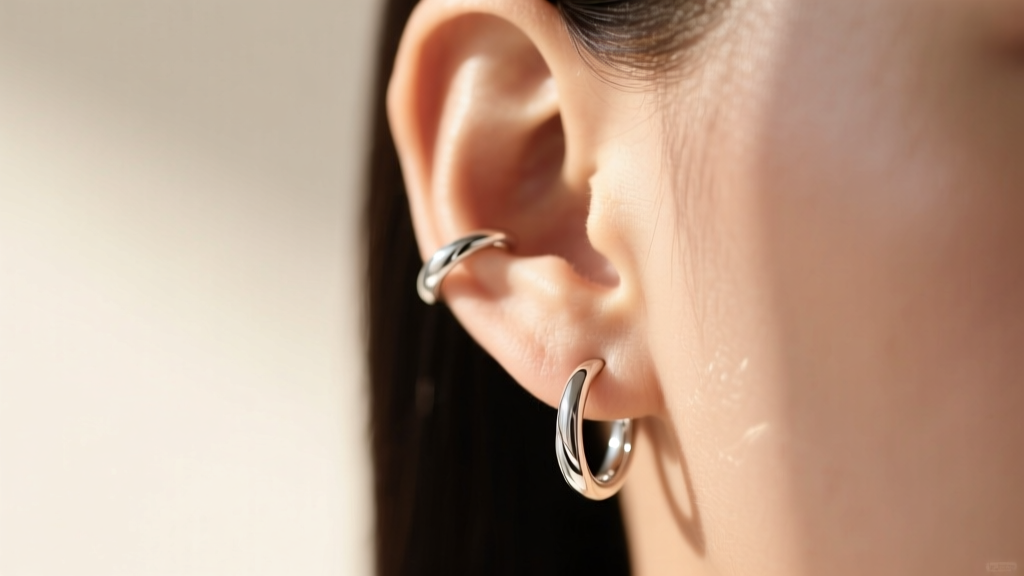
As we navigate the jewelry landscape in 2026, the demand for versatile, high-quality, and accessible fine jewelry continues to surge. Boma earrings remain at the forefront of this movement, offering everything from minimalist sterling silver studs to intricate gold vermeil huggies. However, owning these beautiful pieces is only half the equation. Understanding how to properly style, clean, and maintain your Boma earrings is essential for preserving their structural integrity and brilliant luster over time.
This comprehensive, step-by-step guide will walk you through the metallurgical specifics of Boma's collections, provide actionable styling frameworks based on facial geometry, and outline exact cleaning protocols to prevent tarnish and plating degradation.
Decoding Boma's Material DNA
Before applying any cleaning solution or styling technique, you must understand what your earrings are actually made of. Boma primarily utilizes two core materials, each with distinct chemical properties and vulnerabilities.
Sterling Silver vs. Gold Vermeil
Boma's sterling silver pieces are stamped '925', meaning they consist of 92.5% pure silver and 7.5% copper. According to The Silver Institute, pure silver is too soft for daily wear jewelry, making the copper alloy necessary for tensile strength. However, this copper is also the culprit behind oxidation. When exposed to sulfur compounds in the air, humidity, and even your skin's natural pH, the copper reacts to form silver sulfide—the blackish film we recognize as tarnish.
Boma's gold vermeil pieces feature the same 925 sterling silver base, but they are electroplated with a thick layer of 14k or 18k gold. To be legally classified as vermeil (rather than standard gold-plated jewelry), the gold layer must be at least 2.5 microns thick. This thickness provides excellent durability, but it can still be stripped away by abrasive chemicals or high-frequency ultrasonic vibrations.
Post Gauge and Hypoallergenic Claims
Most Boma earring posts are manufactured in standard 20-gauge (0.81mm) or 18-gauge (1.02mm) thicknesses, making them universally compatible with standard lobe piercings. Furthermore, Boma markets many of their posts as hypoallergenic. The American Academy of Dermatology clarifies that 'hypoallergenic' is largely a marketing term; the clinical standard for sensitive ears is strictly nickel-free. Boma's sterling silver and surgical steel posts are formulated to be nickel-free, making them a safe choice for the majority of wearers with contact dermatitis.
Step-by-Step Guide: Styling Boma Earrings for Your Face Shape

Styling is just as critical as maintenance. Boma offers a vast array of silhouettes, from tight huggies to sweeping dangles. Selecting the right shape can dramatically enhance your natural facial geometry. Here is a practical decision framework for styling Boma earrings based on your face shape.
- Round Faces: The goal is to create vertical elongation. Avoid large, circular hoops or wide cluster studs that emphasize width. Instead, opt for long, geometric Boma gold vermeil drop earrings or linear threaders. The vertical lines draw the eye downward, creating a slimming, lengthening illusion.
- Square Faces: Characterized by a strong, angular jawline. To soften these features, choose Boma earrings with curved lines and movement. Medium-sized sterling silver hoops, teardrop dangles, or organic, asymmetrical ear cuffs work beautifully to offset sharp angles.
- Heart-Shaped Faces: With a broader forehead and a narrow, pointed chin, the objective is to add visual weight to the lower half of the face. Boma's chandelier earrings, wider huggies, or bottom-heavy pear-shaped drops are ideal. Avoid inverted triangles or top-heavy studs.
- Oval Faces: The most balanced facial structure, meaning almost any Boma earring style will work. To highlight your cheekbones, try medium-sized geometric studs or classic, moderately sized sterling silver hoops that sit just below the earlobe.
Pro-Tip for 2026 Styling: The current trend heavily favors the 'curated ear' aesthetic. Mix a Boma sterling silver huggie in your primary lobe piercing with a delicate, minimalist Boma stud in your upper lobe or helix piercing to create a cohesive, multi-dimensional look without overwhelming your features.
The Definitive Cleaning Protocol
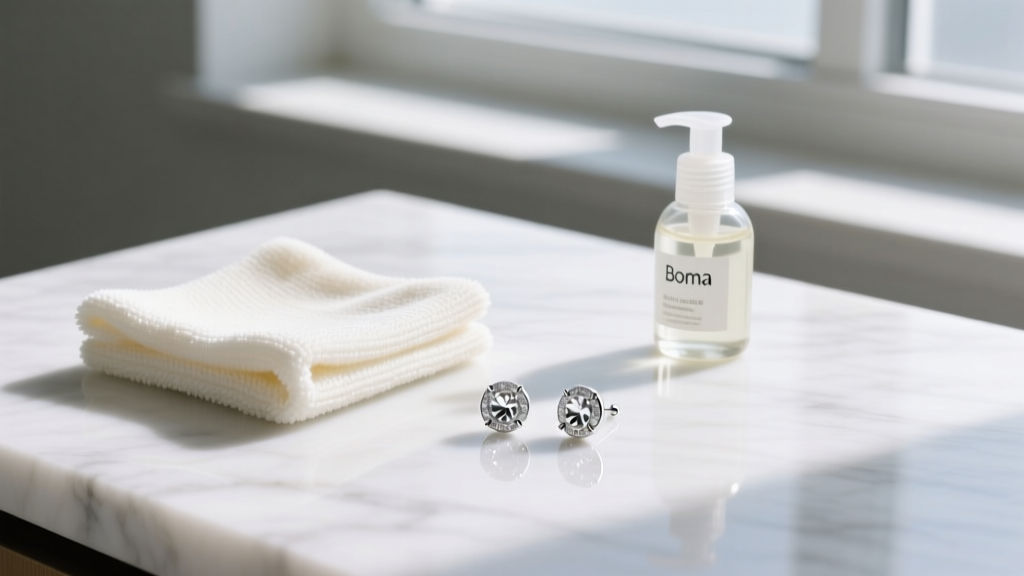
Improper cleaning is the fastest way to ruin gold vermeil and accelerate sterling silver tarnish. Never use toothpaste, baking soda, or commercial silver dips on your Boma earrings, as these contain micro-abrasives and harsh acids that will strip the 2.5-micron gold plating and cause micro-scratches on bare silver.
| Material | Base Metal | Plating/Alloy | Safe Cleaning Agents | Agents to Avoid |
|---|---|---|---|---|
| Sterling Silver | 92.5% Silver | 7.5% Copper | Mild dish soap, silver polish cloth | Baking soda, toothpaste, bleach |
| Gold Vermeil | 92.5% Silver | 2.5+ microns 14k/18k Gold | Warm water, microfiber cloth | Ultrasonic cleaners, chemical dips |
| Gemstone Accents | Varies | Varies | Damp soft cloth | Alcohol, acetone, ultrasonic |
Step-by-Step Cleaning Routine
Follow this exact process every 3 to 4 weeks, or whenever you notice a buildup of skin oils and environmental dust.
- Prepare the Solution: Fill a small glass bowl with lukewarm water and add two drops of phosphate-free, ammonia-free mild dish soap. Swirl gently to create light suds.
- Soak Briefly: Submerge your Boma sterling silver or vermeil earrings for no more than 3 to 5 minutes. This loosens sebum and cosmetic residue without compromising the metal.
- Agitate Gently: Use an ultra-soft, baby-bristle toothbrush to gently sweep the crevices, particularly around the earring post, butterfly back, and any gemstone prongs. Never scrub the flat surfaces of vermeil pieces.
- Rinse and Dry: Rinse thoroughly under lukewarm running water. Immediately pat dry with a lint-free microfiber cloth. Allow the earrings to air-dry completely on a paper towel for 15 minutes before storing to ensure no moisture is trapped in the clasp mechanisms.
For heavily tarnished bare sterling silver (not vermeil), use a specialized dry silver polishing cloth as outlined in Boma's official jewelry care guidelines. Rub in a single direction rather than in circles to minimize micro-abrasions.
Troubleshooting Common Wear Issues
Even with meticulous care, daily wear can introduce mechanical and chemical challenges. Here is how to troubleshoot the most common issues encountered with Boma earrings.
- Stiff Butterfly Backs: Over time, skin oils and soap residue can calcify inside the earring back, making it difficult to slide onto the 20G or 18G post. Soak the backs in a 50/50 mixture of warm water and white vinegar for 10 minutes, then use a wooden toothpick to dislodge the debris. Rinse and dry thoroughly.
- Vermeil Fading on High-Friction Areas: If the gold plating on your Boma huggies begins to show the silver base beneath, this is normal wear caused by friction against the neck or hair. You can continue to wear them for a beautiful mixed-metal look, or take them to a professional jeweler for a re-plating service.
- Post Bending: Sterling silver is inherently softer than 14k gold or platinum. If your Boma earring post bends, do not repeatedly bend it back and forth, as this will cause metal fatigue and eventual snapping. Use a pair of nylon-jaw pliers to gently straighten it in one smooth motion.
Long-Term Storage Best Practices
How you store your Boma earrings when they are not on your ears dictates how much maintenance they will require later. Leaving sterling silver exposed to the ambient air on a bathroom counter guarantees rapid oxidation due to high humidity and aerosolized chemicals.
Store your earrings in an airtight, zip-lock plastic bag with the air squeezed out. For added protection, include a small silica gel desiccant packet or an anti-tarnish tab (such as 3M anti-tarnish strips) inside the bag to absorb ambient moisture and neutralize sulfur gases. Always store pieces individually to prevent the harder gemstones or sharper clasps from scratching the high-polish silver or gold vermeil finishes.
By treating your Boma earrings with this level of material-specific care and strategic styling, you ensure they remain a vibrant, flawless staple in your jewelry rotation for years to come.


