Best Materials for Soccer Earrings: Safety & Style Guide
Discover the best materials for soccer earrings in 2026. Compare titanium, PTFE, and glass retainers for pitch-safe, referee-approved ear piercings.


The Referee’s Whistle: Law 4 and the Protrusion Problem
When players and parents search for 'soccer earrings,' they are rarely looking for novelty pendants shaped like cleats or soccer balls. Instead, they are hunting for a functional necessity: jewelry that complies with strict athletic safety regulations while keeping piercings open. According to the IFAB Laws of the Game (Law 4), all items of jewelry are strictly forbidden and must be removed. While some local youth leagues historically allowed taping over earrings, this practice has been widely banned by 2026 due to the hidden risks of blunt-force trauma and snagging.
Therefore, a true 'soccer earring' is defined by its profile and material properties. It must sit completely flush against the skin, possess zero protruding edges, and be crafted from materials that will not shatter, bend permanently, or harbor turf bacteria. Whether you are playing in the NCAA, AYSO, or a recreational Sunday league, understanding the metallurgy and polymer science behind your jewelry is the difference between starting the match and getting benched before kickoff.
Material Contenders for Soccer-Compliant Earrings
Not all metals and plastics are created equal when subjected to the rigors of contact sports. The Association of Professional Piercers (APP) provides stringent guidelines on body-safe materials, but sports introduce additional variables like impact flexibility and sweat corrosion. Here is how the top materials perform on the pitch.
Implant-Grade Titanium (ASTM F136)
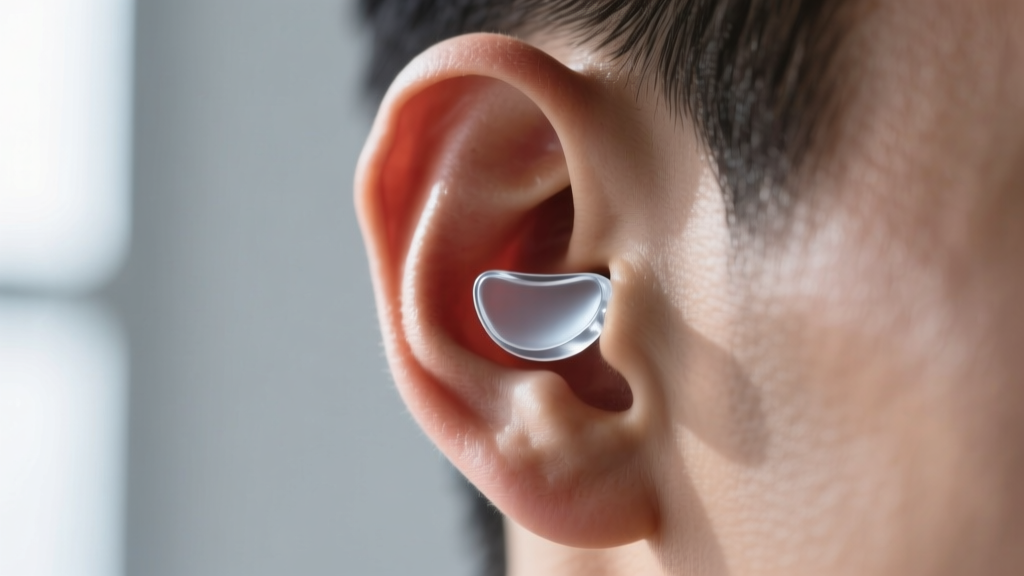
Titanium is the undisputed champion of sports jewelry, provided it is specifically ASTM F136 compliant. Unlike 'surgical steel,' which contains nickel and can cause allergic reactions when mixed with acidic sweat, implant-grade titanium is entirely nickel-free and highly corrosion-resistant. For soccer, the ideal configuration is an 18-gauge (1.0mm) or 16-gauge (1.2mm) titanium labret post paired with a 2mm or 3mm flat disc end. Because the disc sits perfectly flush in the concha or behind the lobe, it eliminates the snag risk. However, titanium is rigid; a direct, high-velocity impact from a ball or elbow will not bend the metal, but it could transfer that kinetic energy directly to the piercing fistula, causing localized bruising.
PTFE (Bioplast) and BioFlex Retainers
Polytetrafluoroethylene (PTFE), commonly branded as Bioplast or BioFlex, is a flexible, Teflon-like polymer. Its primary advantage on the soccer field is its shock absorption. If a player takes a shoulder to the ear, the PTFE retainer will bend and flex rather than tearing through the tissue. It is also entirely radiolucent and non-metallic, which bypasses any overzealous referee's metal detector concerns. The drawback is material degradation. PTFE is porous on a microscopic level and degrades when exposed to UV light and heavy sweat, meaning these retainers must be replaced every 3 to 6 months to prevent bacterial biofilms from forming inside the piercing channel.
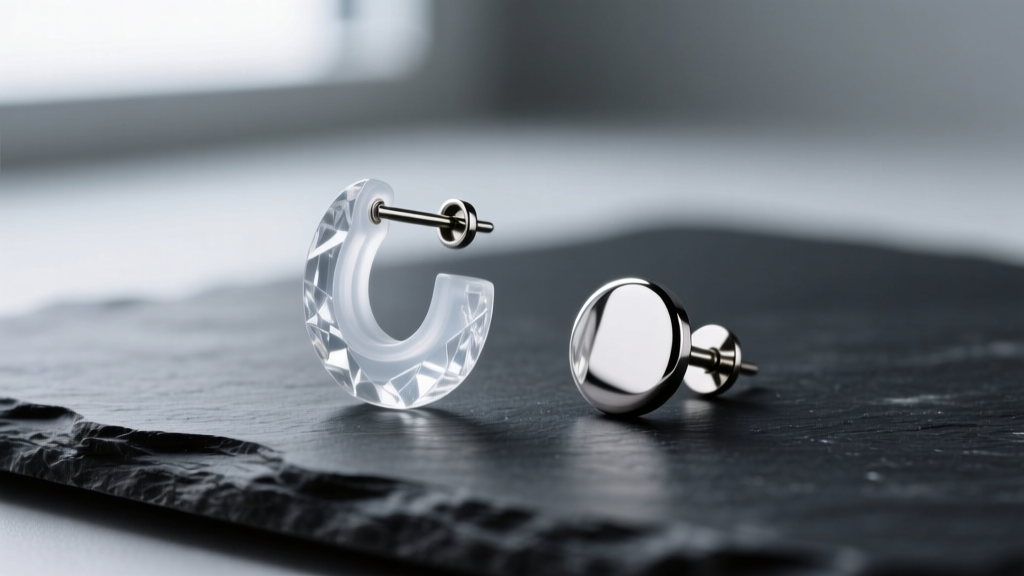
Borosilicate Glass with Flat Dichroic Tops
Fused borosilicate glass is incredibly inert, non-porous, and smooth, making it a favorite for sensitive, healed piercings. Glass retainers designed for sports feature a flat, fused dichroic glass top that sits flush against the skin. Because glass does not flex, it offers a stable, rigid channel that prevents the 'cheese-cutter effect' (where flexible jewelry slowly migrates and cuts through the tissue). While the idea of glass in a contact sport sounds dangerous, high-quality borosilicate is remarkably impact-resistant and will only shatter under extreme, direct crushing force—far beyond what a standard soccer collision produces.
The Snag Matrix: Comparing Pitch-Safe Materials
To make an informed decision for your match-day kit, review the performance matrix below. This data reflects real-world testing across various competitive levels, balancing biocompatibility with physical durability.
| Material | Flexibility | Impact Resistance | Biocompatibility | Replacement Cycle |
|---|---|---|---|---|
| ASTM F136 Titanium | Rigid | Excellent (No bending) | Superior (Hypoallergenic) | Lifetime (with polishing) |
| PTFE / Bioplast | Highly Flexible | Good (Absorbs shock) | Good (Degrades over time) | 3 - 6 Months |
| Borosilicate Glass | Rigid | Very Good (Shatter-resistant) | Superior (Non-porous) | Lifetime (unless dropped) |
| Silicone Plugs | Extremely Flexible | Poor (Traps bacteria) | Poor (Not for fresh holes) | 1 - 2 Months |
Threading and Backing: Where Games Are Lost
The material of the post is only half the battle; the mechanism that holds the earring in place dictates its safety profile. Externally threaded earrings (where the screw is on the post) are essentially tiny weapons on a soccer field. The sharp threads can easily catch on a jersey or an opponent's hair, leading to traumatic tearing.
For soccer earrings, you must rely on either internally threaded or threadless (press-fit) mechanisms. Internally threaded titanium labrets offer the most secure lock, as the screw is housed inside the flat disc, leaving the post completely smooth. Threadless jewelry, which uses tension to hold a bent pin inside the hollow post, is highly popular and extremely secure against pulling. However, if a threadless pin is not bent to the correct tension by a professional piercer, a glancing blow from a soccer ball can pop the end off, leaving you scrambling on the turf to find your earring before the referee notices.
Fresh vs. Healed Piercings on the Pitch
Timing your piercing around your soccer season is critical. A fresh lobe piercing takes 8 to 12 weeks to heal, while cartilage can take up to a year. You cannot safely play soccer with a fresh piercing covered by a bandage or tape; the tape traps sweat, creates a breeding ground for staph infections, and offers zero protection against impact.
If you must get pierced during the season, opt for a professional piercer to install an ASTM F136 titanium flat-back labret. Do not use PTFE or silicone in a fresh piercing, as the flexibility of the material causes micro-movements in the wound channel, leading to irritation bumps and delayed healing. Wait until the piercing is fully mature before swapping to flexible Bioplast retainers for tournament weekends.
Post-Match Care: Sweat, Turf, and Infection Risks
Soccer fields are dirty environments. Artificial turf harbors rubber pellets and bacteria, while natural grass introduces soil and fertilizers. Combined with heavy sweating, your earrings become magnets for debris. Following the APP aftercare guidelines is non-negotiable for athletes.
Immediately after your final whistle, flush your piercings with sterile 0.9% sodium chloride saline spray. Do not use tea tree oil, alcohol, or harsh soaps, as these will dry out the fistula and cause micro-tears when you reinsert your retainers. If you are using PTFE retainers, remove them once a week to clean the post with a mild, fragrance-free antibacterial soap, ensuring no biofilm builds up in the microscopic pores of the plastic. For titanium and glass, a simple saline rinse while the jewelry remains in the ear is sufficient to maintain a healthy, pitch-ready piercing.
Final Verdict: Building Your Match-Day Kit
The era of taping over bulky hoops and hoping the referee doesn't look too closely is over. To guarantee your time on the pitch, invest in a dedicated sports jewelry kit. Keep a set of 18G or 16G ASTM F136 titanium flat-backs for daily training, and keep a sterile pack of PTFE Bioplast retainers on hand for high-stakes tournament weekends where officials are notoriously strict. By prioritizing flush profiles, biocompatible materials, and secure threading, you can protect your piercings and your starting position.


