Solving Common Hoop Diamond Earring Men Fit and Clasp Issues
Troubleshoot common hoop diamond earring men issues. Expert fixes for clasp failures, gauge mismatches, cloudy melee diamonds, and lobe tearing.

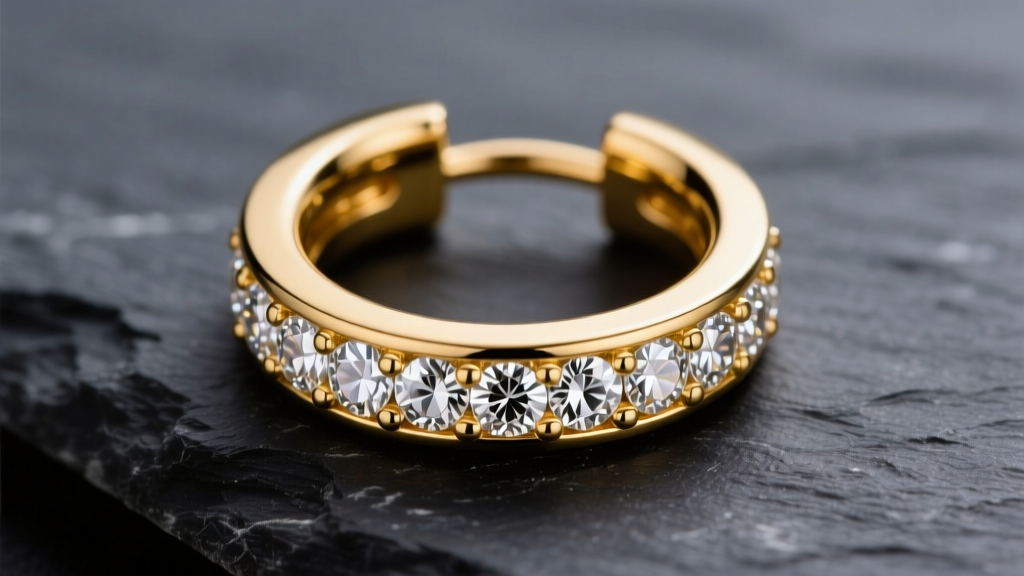
The popularity of the hoop diamond earring men style has surged, moving from niche hip-hop culture into mainstream men's fashion. However, as more men adopt this look, a specific set of mechanical and aesthetic problems has emerged. Unlike women's jewelry, which is often designed with delicate, low-impact wear in mind, men's earrings must withstand active lifestyles, thicker tissue, and larger finger sizes. If you are dealing with lost earrings, torn lobes, or dull-looking stones, the issue usually stems from a mismatch between the jewelry's engineering and the wearer's anatomy.
The Hidden Mechanics of Men's Diamond Hoops
The most frequent complaint regarding a hoop diamond earring men wear daily is excessive weight causing lobe migration or tearing. A standard 25mm diameter hoop set with 1.5 carats of diamonds can easily weigh over 8 grams. When suspended from a standard 20-gauge piercing, this creates a pendulum effect that slowly elongates the fistula (the piercing hole).
The Fix: If you want the look of a larger hoop without the destructive weight, opt for hollow-core tubing or a "huggie" style. Huggies typically measure between 10mm and 14mm in inner diameter and sit flush against the earlobe. This eliminates the pendulum swing, distributing the weight evenly across the base of the lobe rather than pulling downward on the piercing channel. For larger statement hoops (20mm+), ensure the metal is 14k gold rather than 18k or platinum, as the higher alloy content in 14k reduces the overall density and weight of the piece.
Troubleshooting Clasp Failures and Lost Earrings
Losing a diamond earring is an expensive frustration. Men often struggle with traditional latch-back clasps because thicker fingers make manipulating tiny hinges difficult, leading to improper closures. Furthermore, active men frequently snag traditional wire clasps on towels, gym equipment, or clothing, pulling the earring open.
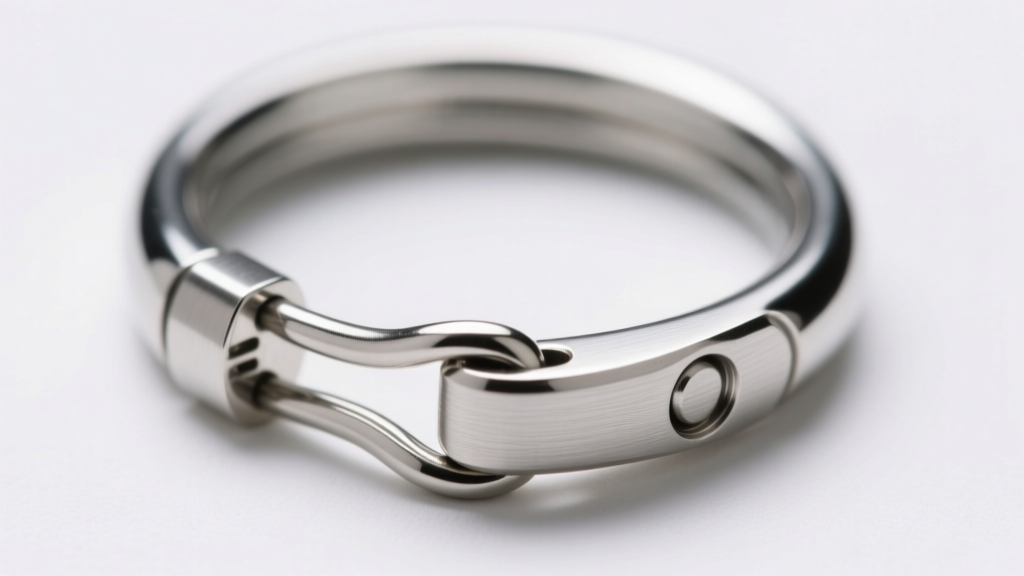
Understanding the three main clasp types is critical for troubleshooting this issue:
- Hinge-Click (Snap) Clasps: These feature a hinged post that snaps into a grooved catch. Problem: Over time, lint and skin oils pack into the catch, preventing a secure "click." Solution: Clean the catch monthly with a soft toothbrush and isopropyl alcohol. If the hinge becomes loose, a jeweler can gently compress the catch with flat-nose pliers to restore tension.
- Saddleback Clasps: The post flips up and locks into a saddle-shaped groove. Problem: They require precise alignment to close. Solution: Ideal for security, but avoid them if you have limited manual dexterity. Ensure the locking tab is fully depressed when closing.
- Endless (Continuous) Hoops: A thin wire slides into a hollow tube. Problem: Highly prone to falling out during sleep or exercise. Solution: Avoid endless hoops for daily wear. If you must use them, bend the wire post slightly upward (by no more than 2 degrees) to increase the friction fit inside the tube.
Solving the "Cloudy Diamond" Problem in Micro-Pave
A major aesthetic issue with the hoop diamond earring men choose is that the stones often look cloudy, gray, or lifeless after just a few months of wear. This is rarely due to the diamonds "fading," but rather a combination of poor initial grading and environmental buildup.
Many mass-market men's hoops utilize I2 or I3 clarity melee diamonds (stones under 0.15 carats) to keep prices under $1,500. According to the Gemological Institute of America (GIA), I-grade diamonds contain inclusions that are obvious under 10x magnification and can affect transparency. When combined with the natural oils from men's skin and hair products, these heavily included stones trap dirt deep within their facets, killing the sparkle.
The Fix: When purchasing, insist on SI1 or VS2 clarity for melee diamonds, even if it requires sacrificing total carat weight. For existing cloudy hoops, avoid harsh chemical dips. Instead, use an ultrasonic jewelry cleaner with a mild ammoniated solution for 3 minutes, followed by a steam blast. If the stones remain cloudy, the issue is likely internal fracturing, and the diamonds cannot be restored.
Fixing Gauge and Sizing Mismatches
Forcing a hoop into the wrong gauge size will cause micro-tears in the piercing, leading to scar tissue (hypertrophy) and irritation bumps. Men's piercings are often done at thicker gauges than women's, or may have been intentionally stretched.
| Piercing Location | Standard Men's Gauge | Wire Thickness (mm) | Recommended Inner Diameter |
|---|---|---|---|
| Standard Earlobe | 20G or 18G | 0.81mm - 1.02mm | 10mm - 15mm (Huggie/Small Hoop) |
| Stretched Lobe | 14G to 8G | 1.60mm - 3.26mm | 15mm - 25mm (Requires custom threading) |
| Helix (Cartilage) | 16G or 18G | 1.02mm - 1.20mm | 8mm - 12mm (Tight Huggie) |
The Fix: Never guess your gauge. Purchase a digital caliper (available for under $15) and measure the thickest part of your current earring post. If you are transitioning from a standard 20G lobe piercing to a heavier diamond hoop, have a professional piercer taper the hole to 18G or 16G using a sterilized steel taper. This provides a wider, more stable channel to support the weight of the diamonds. The Association of Professional Piercers (APP) strongly recommends implant-grade titanium or solid 14k/18k gold for healing or stressed piercings to prevent adverse tissue reactions.
Metal Allergies and Rhodium Plating Wear-Off
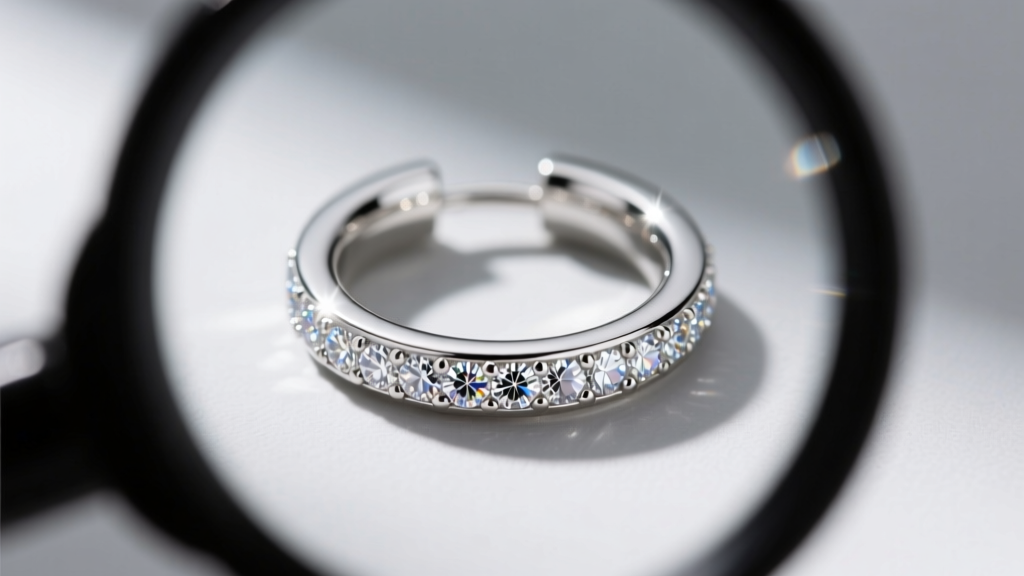
Many men experience sudden itching, redness, or flaking skin around the earlobe after wearing white gold diamond hoops for six to twelve months. This is almost always caused by the rhodium plating wearing off, exposing the underlying nickel-alloyed white gold to the skin.
Men's skin tends to have a lower pH (more acidic) and higher sweat production than women's, which accelerates the degradation of rhodium plating. Once the plating breaches, the nickel salts cause contact dermatitis.
The Fix: Stop wearing the earring immediately to let the tissue heal. You have two long-term solutions:
- Re-plate and Maintain: Have a jeweler re-plate the hoops with rhodium, but commit to removing them before showering, swimming, or heavy sweating. Expect to re-plate every 8 to 12 months.
- Switch Metals (Recommended): Trade the white gold for platinum (which is naturally white and hypoallergenic) or palladium-white gold (which is alloyed with palladium instead of nickel, eliminating the allergy risk entirely without needing plating). Alternatively, 14k or 18k yellow gold requires zero plating and offers a striking contrast against diamonds that has become highly popular in contemporary men's styling.
Quick Reference Troubleshooting Matrix
Use this diagnostic chart to quickly identify and resolve the most frequent issues associated with men's diamond hoops.
| Symptom | Root Cause | Actionable Solution |
|---|---|---|
| Earring constantly falls open | Debris in hinge-click catch or bent wire | Clean catch with isopropyl alcohol; gently squeeze catch with nylon-jaw pliers. |
| Lobe feels sore or stretched | Hoop diameter too large, creating pendulum weight | Downsize to a 12mm huggie style or switch to a hollow-tube construction. |
| Diamonds look gray/cloudy | I-clarity melee diamonds trapping sebum and lotion | Ultrasonic clean with ammoniated solution; upgrade to SI1 clarity next purchase. |
| Itching and redness on lobe | Rhodium plating worn off, exposing nickel alloy | Switch to platinum, palladium-white gold, or solid yellow gold. |
| Cartilage hoop won't close flush | Inner diameter too small for helix swelling/thickness | Increase inner diameter by 2mm; ensure post is 16G for standard cartilage. |
By understanding the mechanical tolerances, material science, and anatomical requirements of men's jewelry, you can transform your hoop diamond earring men collection from a source of frustration into a secure, comfortable, and brilliant staple of your personal style.


