How Much Are Gold Earrings in 2026? Price & Trend Guide
Discover how much gold earrings cost in 2026. We break down pricing by karat, weight, style trends, and brand markups to help you buy smart.

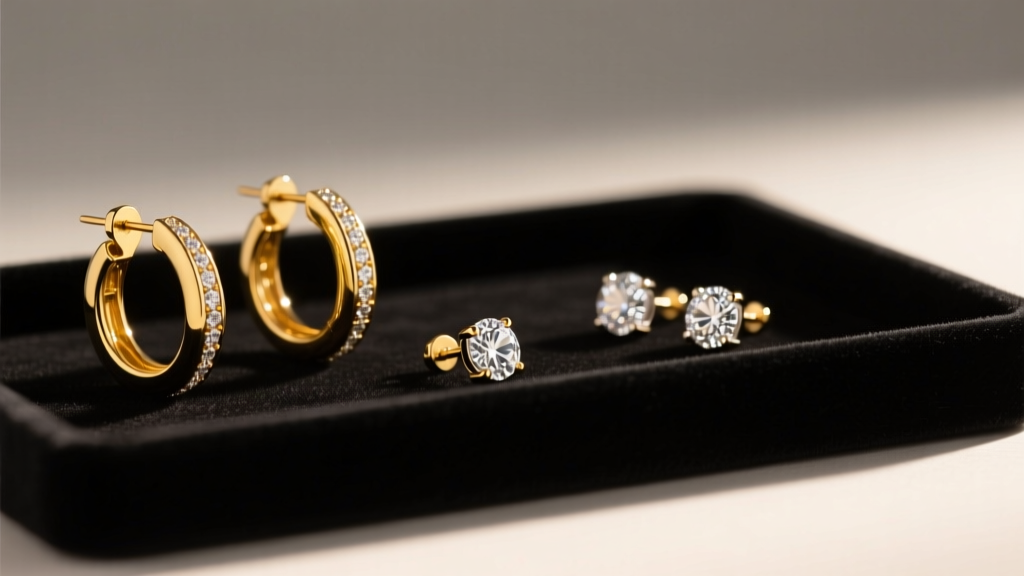
If you have been asking yourself 'how much are gold earrings' while browsing jewelry counters or online boutiques in 2026, you are not alone. The pricing landscape for gold jewelry has shifted dramatically over the past few years, driven by fluctuating spot prices, evolving manufacturing techniques, and a massive resurgence in curated ear styling. The short answer? A pair of minimalist 10K gold studs can cost as little as $45, while heavy, hand-forged 18K artisan hoops can easily exceed $3,500. To truly understand what you are paying for, we must look past the karat stamp and analyze the intersection of raw material costs, structural integrity, and contemporary style premiums.
The 2026 Gold Market: Why Earring Prices Are Shifting
Understanding the baseline cost of gold earrings requires a look at the commodities market. According to live data from Kitco Gold Charts, the spot price of gold has remained at historical highs throughout the mid-2020s, heavily influenced by global inflation hedging and central bank purchasing. When spot gold hovers around $2,200 per troy ounce, the raw material cost for 24K pure gold sits at roughly $70 per gram. However, pure gold is far too soft for functional ear jewelry. It will bend, scratch, and lose its shape under the minimal stress of daily wear. Therefore, jewelers alloy gold with metals like copper, silver, and zinc to create durable 14K and 18K options, which fundamentally alters the price-per-gram calculation and introduces labor and manufacturing variables into the final retail price.
Decoding the Price Tag: Karat, Weight, and Labor
14K vs. 18K vs. 24K: The Purity Premium
The Gemological Institute of America (GIA) notes that the karat system dictates the exact ratio of pure gold to alloy metals. In the US and European markets, 14K (58.3% pure gold) and 18K (75% pure gold) dominate the earring category. The price difference between the two is not just about the raw gold content; 18K gold requires a higher degree of craftsmanship to cast and polish properly, as it is slightly softer and more prone to porosity during the lost-wax casting process. Furthermore, the rich, buttery yellow hue of 18K gold commands a luxury premium in the market, often pushing the price of an 18K earring 40% to 60% higher than its 14K counterpart, even when the gram weight is identical.
Style & Weight Matrix: What You Will Actually Pay in 2026
The physical style of the earring dictates its gram weight, which is the primary driver of cost. Below is a realistic pricing matrix for solid gold earrings in the current market, assuming standard direct-to-consumer or independent jeweler pricing (excluding extreme luxury brand markups).
| Earring Style | Average Weight | Standard Karat | Est. Price Range (2026) |
|---|---|---|---|
| Small Ball / Bezel Studs | 0.5g - 1.5g | 14K | $45 - $130 |
| Clicker Huggies | 2.0g - 4.5g | 14K / 18K | $160 - $480 |
| Medium Tube Hoops (20mm) | 5.0g - 9.0g | 14K | $320 - $750 |
| Chunky Statement Hoops | 15.0g - 28.0g | 18K | $1,400 - $3,200+ |
| Cartilage Ear Cuffs (No piercing) | 1.5g - 3.0g | 14K | $110 - $250 |
Solid vs. Hollow: The Weight Illusion
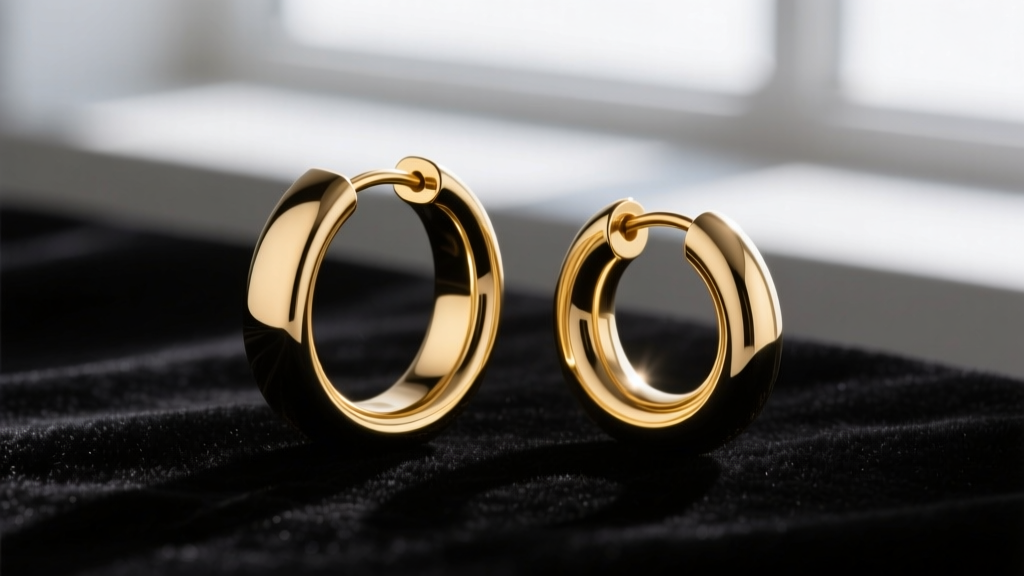
When evaluating large hoop earrings, you will frequently encounter 'hollow' or 'electroformed' gold. This manufacturing technique allows jewelers to create massive, voluminous 30mm or 40mm hoops that weigh only 3 to 5 grams, keeping the price tag under $300. While this makes large gold earrings accessible, it comes with severe structural compromises. Hollow gold earrings are highly susceptible to denting. If you sleep in them, or if they are snagged on a sweater, the thin gold shell can crush inward, and they are virtually impossible for a bench jeweler to repair. Solid cast or stamped gold hoops, while significantly more expensive upfront, offer generational durability and can be polished, reshaped, and soldered indefinitely.
2026 Trend Premiums: Textures and Ear Curation

Style trends in 2026 heavily influence manufacturing costs. The 'curated ear' movement—which involves multiple coordinated lobe and cartilage piercings—has skyrocketed the demand for specialized 16-gauge and 14-gauge gold clickers, flat-back labrets, and ear cuffs. According to market analysis by the World Gold Council, consumer preference has shifted heavily toward textured finishes. Hammered, Florentine, and bark-textured gold surfaces are incredibly popular. However, these finishes cannot be achieved through automated mass-polishing. They require skilled artisans to hand-apply the textures using specialized burins and hammers. Consequently, a 5-gram pair of hammered 14K gold huggies will often cost 20% to 30% more than a perfectly smooth, machine-polished pair of the exact same weight, purely due to the artisanal labor premium.
The Retail Markup Matrix: Where to Buy
Where you purchase your gold earrings drastically alters the final price. The jewelry industry operates on wildly varying markup structures depending on the retail environment:
- Traditional Mall Jewelers: Often operate on a 300% to 500% markup (keystone pricing or higher) to cover massive overhead, mall rent, and commissioned sales staff. A $200 wholesale pair of 14K hoops will retail for $600 to $1,000.
- Direct-to-Consumer (DTC) Online Brands: Typically operate on a 100% to 200% markup. By cutting out the physical storefront and utilizing CAD-cast manufacturing in centralized facilities, they offer highly competitive pricing, though you sacrifice the ability to feel the weight and test the clasp tension before buying.
- Independent Bench Jewelers: Often price based on a transparent formula: (Daily Gold Spot Price x Gram Weight x Karat Ratio) + Labor Fee + 15-30% Margin. This is often the most equitable way to buy heavy, solid gold earrings, as you are paying directly for the material and the craftsman's time.
Actionable Buying Framework for Gold Earrings
To ensure you are getting fair value when shopping for gold earrings in 2026, follow this expert framework:
- Ask for the Gram Weight: Never buy gold earrings priced solely by 'style' or 'size' without knowing the exact gram weight. If a retailer cannot or will not provide the gram weight, walk away.
- Check the Clasp Mechanism: For hoops, the clasp is the most common failure point. Look for 'clicker' hinges or secure saddleback clasps. Avoid thin wire 'fishhook' latches on heavy hoops, as the wire will eventually bend and the earring will be lost.
- Verify the Hallmark: Ensure the earring post or inner hoop is stamped with a quality mark (14K, 18K, 585, or 750) and ideally a maker's mark. In the US, the FTC requires that karat marks be accompanied by a registered trademark or maker's mark to guarantee the purity claim.
- Consider the Gauge: If you are buying for cartilage piercings (helix, conch, tragus), ensure the gold earring post is 16-gauge (1.2mm) or 14-gauge (1.6mm). Standard 18-gauge (1.0mm) lobe studs are often too thin for healing cartilage and can cause the 'cheese-cutter effect,' where the thin metal slowly migrates through the tissue.
Conclusion
Ultimately, figuring out how much gold earrings are requires looking at the piece as a sum of its raw commodities and its artisanal labor. Whether you are investing in a pair of heavy, vintage-inspired 18K yellow gold hoops or building a curated ear stack with 14K white gold flat-backs, understanding the math behind the metal ensures you pay for true quality, structural integrity, and timeless style rather than just a brand name.


