Anatomy and Metallurgy Guide for Guys That Wear Earrings
Explore the anatomical and metallurgical specifics for guys that wear earrings. Learn about tissue density, gauge sizing, and implant-grade alloys.

The cultural landscape of men's jewelry has evolved significantly, moving beyond basic fashion statements into the realm of curated anatomical art. For guys that wear earrings, understanding the intersection of human biology and metallurgical science is no longer optional—it is essential for long-term tissue health, aesthetic longevity, and structural integrity. While mainstream retail often treats men's earrings as an afterthought, a technical deep dive reveals that male ear tissue, occupational hazards, and material sensitivities require a highly specialized approach to jewelry selection.
This guide bypasses generic style advice to explore the biomechanics, alloy compositions, and physics that dictate how jewelry interacts with the male anatomy. Whether you are navigating a fresh cartilage piercing or managing stretched lobes, mastering these technical details will fundamentally change how you approach your jewelry wardrobe.
The Biomechanics of Male Ear Tissue
To understand how jewelry sits and heals, we must first examine the substrate it penetrates. Male skin is structurally distinct from female skin, primarily due to androgenic influence. Testosterone stimulates a higher density of collagen cross-linking and increases the overall thickness of the dermis by approximately 20% to 25%. For guys that wear earrings, this denser connective tissue matrix presents unique biomechanical realities.
Dermal Density and Healing Vectors
The increased collagen density in the male earlobe and auricular cartilage means the tissue can withstand greater mechanical shear stress once fully healed. However, this same density impacts the initial healing cascade. The proliferative phase of wound healing—where fibroblasts synthesize new extracellular matrix—can be slightly prolonged in denser tissue. According to the Association of Professional Piercers (APP), cartilage piercings in dense tissue can take anywhere from 6 to 12 months to fully epithelialize the fistula tract.
Furthermore, the vascularization of the male outer ear is heavily concentrated in the subcutaneous layers rather than the superficial dermis. This means that cartilage piercings (which are avascular) rely entirely on perichondrial diffusion for nutrient delivery. Any jewelry that exerts excessive compressive force on the perichondrium will choke the tissue, leading to necrosis or hypertrophic scarring.
Metallurgical Standards: Beyond Surgical Steel
The most pervasive myth in the jewelry industry is the safety of "surgical steel." For guys that wear earrings, particularly those with active lifestyles or sensitive skin, understanding alloy composition is critical to avoiding contact dermatitis and tissue rejection.

The Failure of 316L Stainless Steel
Standard 316L stainless steel relies on a passive chromium oxide layer to prevent corrosion. However, a healing fistula is a low-oxygen (hypoxic) and high-chloride (saline) environment. In these conditions, the chromium oxide layer breaks down, leading to pitting corrosion and the leaching of nickel and chromium ions into the surrounding tissue. The European Union's Nickel Directive strictly limits nickel release to <0.5 µg/cm²/week, a threshold that many polished 316L alloys exceed when exposed to bodily fluids.
ASTM F-136 Titanium: The Implant-Grade Standard
The gold standard for initial piercings and long-term wear is Ti-6Al-4V ELI (Extra Low Interstitial) titanium, governed by the ASTM F-136 standard. This alloy forms a stable titanium dioxide (TiO2) passivation layer that is entirely biocompatible and impervious to the chloride-rich environment of a healing piercing. Unlike steel, ASTM F-136 contains zero nickel, eliminating the risk of Type IV hypersensitivity reactions. When sourcing jewelry, always look for the specific ASTM F-136 designation, as generic "titanium" claims often refer to commercially pure (CP) grades that lack the tensile strength required for threaded components.
The Physics of Gauge Sizing and the Cheese-Cutter Effect
Gauge sizing is not merely an aesthetic choice; it is a matter of structural physics. The "cheese-cutter effect" occurs when a thin wire exerts excessive focal pressure on the fistula, slowly slicing through the tissue over time. This is governed by the pressure formula: Pressure = Force / Area.
| Gauge Size | Diameter (mm) | Cross-Sectional Area | Recommended Placement | Shear Stress Risk |
|---|---|---|---|---|
| 20g | 0.81mm | 0.51 mm² | Standard Lobe (Inactive) | High (Cheese-cutter risk) |
| 18g | 1.02mm | 0.81 mm² | Standard Lobe / Helix | Moderate |
| 16g | 1.29mm | 1.30 mm² | Cartilage / Active Lobe | Low |
| 14g | 1.62mm | 2.06 mm² | Industrial / Daith / Heavy Lobe | Minimal |
| 12g | 2.05mm | 3.30 mm² | Stretched Lobes / Conch | Negligible |
For guys that wear earrings and engage in physical labor, sports, or frequent helmet use, 18g or 20g jewelry poses a significant migration risk. Upgrading to a 16g or 14g wire increases the surface area bearing the load, distributing mechanical force and preserving the structural integrity of the fistula tract.
Connection Mechanics: Threading vs. Threadless Systems
The mechanism by which the decorative end attaches to the barbell post is a frequent point of failure in mass-market jewelry. Understanding threading architecture is vital for maintaining a healthy epithelial lining.
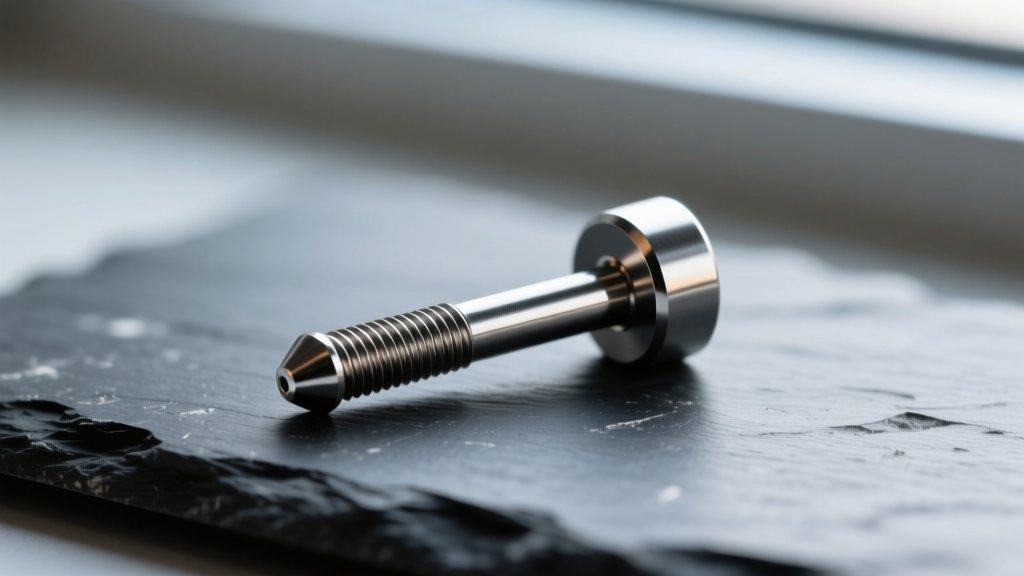
- External Threading: The screw threads are cut into the post that passes through the tissue. These sharp, jagged threads act like a file, tearing the delicate fibrin matrix of the fistula upon every insertion. This should be entirely avoided.
- Internal Threading: The threads are machined into the decorative end, while the post remains perfectly smooth. The post glides through the tissue without causing micro-trauma. This is the standard for high-end body jewelry.
- Threadless (Push-Pin): Utilizing a slight bend in the insertion pin to create tension against the inside of the hollow post. This system offers superior security against snagging and allows for seamless, tool-free insertion, making it ideal for cartilage and hard-to-reach placements.
Occupational and Athletic Considerations
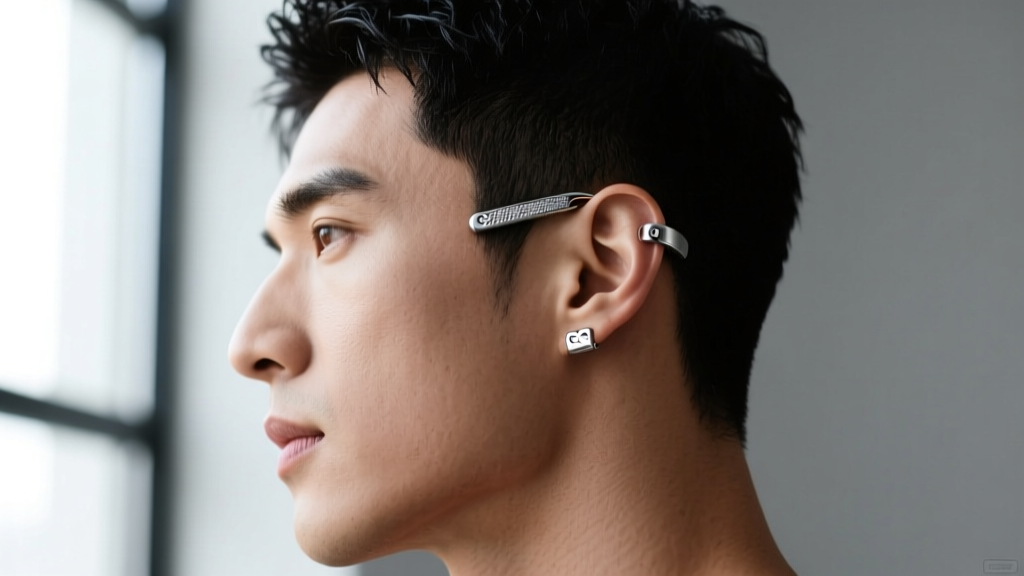
Active men face unique environmental hazards. Snagging a hoop on a shirt collar, gym equipment, or a motorcycle helmet can result in catastrophic tissue tearing. For guys that wear earrings in high-risk environments, jewelry profile and closure mechanisms are paramount.
Minimizing the Snag Profile
Seamless rings and segment rings often feature slight gaps or protruding hinges that catch on fabrics. Instead, opt for clickers with internal hinges or continuous rings that are properly sized to sit flush against the anatomy. For lobe piercings, threadless flat-back labret studs offer the lowest possible profile. The flat titanium disc sits flush against the back of the earlobe, eliminating the "post poke" that disrupts sleep and the decorative front sits low enough to evade catching on headphones or collars.
Aftercare Chemistry and Osmolarity
The final pillar of technical piercing management is the chemical environment of the healing wound. The Mayo Clinic and leading dermatologists universally condemn the use of alcohol, hydrogen peroxide, and tea tree oil on healing piercings. These substances are cytotoxic; they destroy the newly formed fibroblasts and delay epithelialization.
The only chemically appropriate solution for wound irrigation is sterile, isotonic saline (0.9% NaCl). This specific concentration matches the osmolarity of human blood plasma, ensuring that the cells lining the fistula neither swell and burst (in a hypotonic solution) nor shrivel and dehydrate (in a hypertonic solution). Furthermore, the saline must be packaged in a sterile, pressurized canister with a fine mist nozzle to avoid introducing environmental pathogens that occur when mixing sea salt and distilled water at home.
Conclusion: Engineering Your Aesthetic
The modern era of men's jewelry demands a departure from guesswork and an embrace of material science. By prioritizing ASTM F-136 titanium, respecting the physics of gauge sizing, and selecting mechanically sound connection systems, guys that wear earrings can ensure their modifications remain healthy, secure, and structurally sound for decades. Treat your piercings not just as accessories, but as permanent biomechanical integrations that deserve the highest tier of engineering.


