Small Gauge Earrings: The Ultimate Budget & Value Guide
Discover if small gauge earrings offer real value. We analyze pricing, metal grades, and durability to help you budget for delicate 22G and 24G styles.

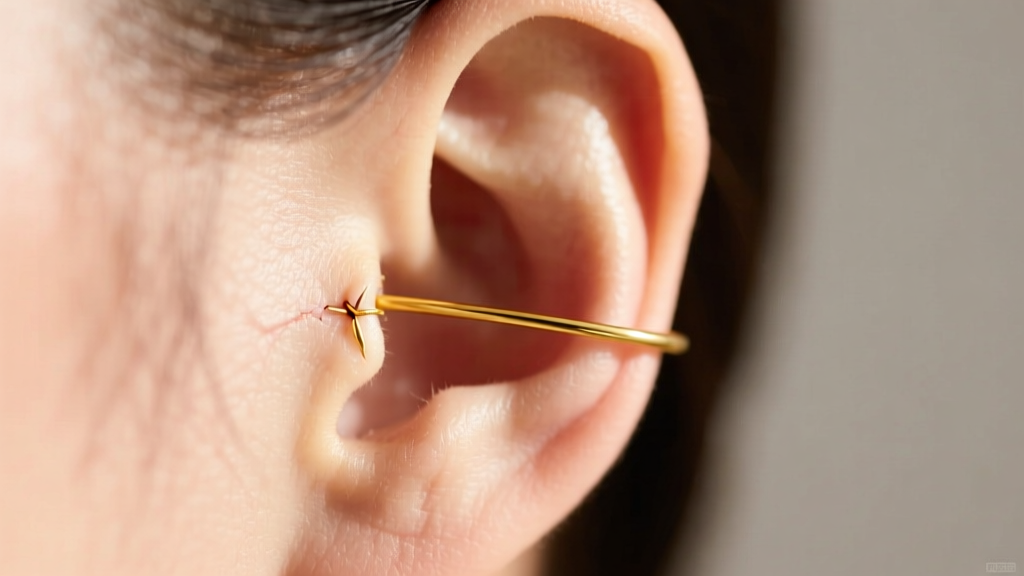
When navigating the fine jewelry market in 2026, consumers are increasingly drawn to the 'quiet luxury' aesthetic, which heavily favors minimalist, barely-there ear adornments. However, this pursuit of delicate elegance often leads to a costly paradox: the daintiest pieces frequently carry the highest risk of structural failure. If you are investing in small gauge earrings, understanding the intersection of metallurgy, physics, and pricing is essential to ensure your budget translates into lasting value rather than a collection of bent posts and lost gemstones.
The Technical Reality: Decoding the AWG System
To accurately assess value, we must first correct a common consumer misconception. In jewelry, 'small gauge' does not mean a small hoop diameter or a tiny gemstone. It refers to the American Wire Gauge (AWG) system, where a higher number indicates a thinner wire. Standard earlobe piercings are typically performed at 20G (0.81mm) or 18G (1.02mm). Therefore, when we discuss small gauge earrings, we are specifically analyzing 22G (0.64mm) and 24G (0.51mm) wires.
These ultra-thin dimensions are highly sought after for secondary lobe piercings, vintage heirloom restorations, and ultra-fine stud designs. Yet, reducing the cross-sectional area of the metal by nearly 40% compared to a standard 18G post drastically alters the jewelry's tensile strength, weight-bearing capacity, and overall longevity. According to the Association of Professional Piercers, wearing jewelry that is too thin for the fistula can lead to tissue migration, making the structural integrity of the wire not just a financial concern, but a physiological one.
Metallurgy and Tensile Strength: Where Your Money Goes
The most critical factor in the budget assessment of thin wire jewelry is the metal alloy. Many buyers mistakenly believe that a higher karat gold automatically equates to better value. In the realm of 22G and 24G earrings, this assumption is fundamentally flawed and can lead to premature ruin.
The 14k vs. 18k Gold Dilemma
Pure 24k gold is exceptionally soft. To make it wearable, it is alloyed with metals like copper, silver, and zinc. 18k gold (75% pure gold) is highly valued for its rich color and hypoallergenic properties, but it remains relatively soft on the Vickers hardness scale. When extruded into a fragile 24G wire, 18k gold lacks the yield strength to withstand the lateral pressure of sleeping, styling hair, or accidental snags. It will bend permanently and eventually snap.
Conversely, 14k gold (58.5% pure gold) features a higher concentration of strengthening alloys. As noted by the Gemological Institute of America (GIA), these alloy mixtures significantly increase the tensile strength and durability of the metal. For small gauge earrings, 14k gold offers vastly superior structural integrity, making it the undisputed champion of long-term value. You are paying for a metal that will actually survive daily wear at a microscopic thickness.
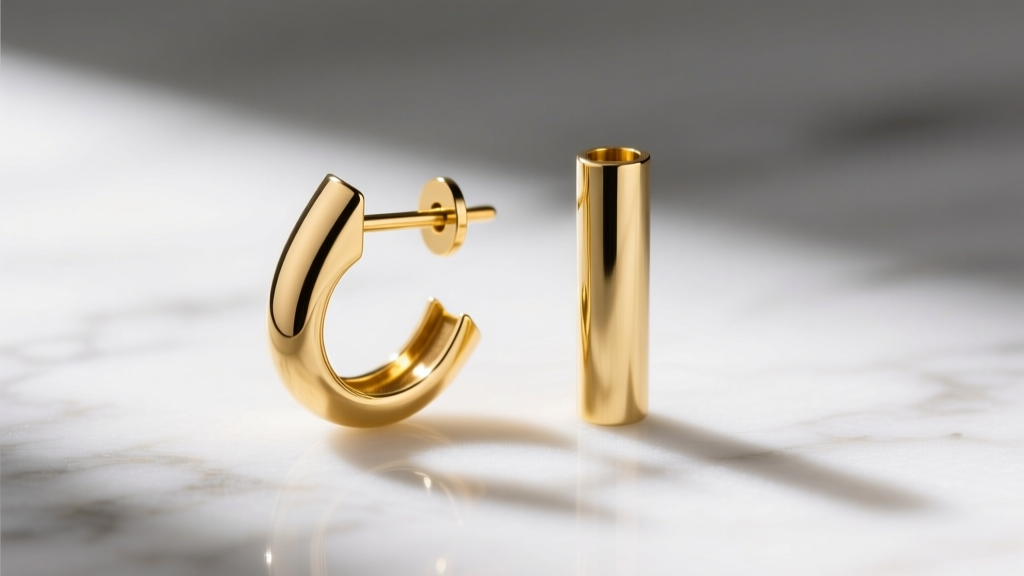
The Physics of Failure: The 'Cheese-Cutter' Effect
When evaluating the budget for drop or dangle styles, you must account for the physics of the 'cheese-cutter effect.' This phenomenon occurs when a heavy earring component is suspended from a wire with a minimal surface area.
Pressure is calculated as Force divided by Area. A 3-gram gemstone drop hanging from a robust 16G (1.29mm) wire distributes its weight safely across the fistula. That exact same 3-gram drop hanging from a 24G (0.51mm) wire concentrates the force into a microscopic edge. Over time, this high-PSI tension will slowly slice through the earlobe tissue, causing the piercing to migrate downward and eventually tear completely. Therefore, true value in small gauge earrings dictates that the jewelry must be exceptionally lightweight. If a jeweler attempts to sell you a heavy, solid-cast pendant on a 24G wire, they are selling you a guaranteed failure, regardless of the gold price.
Budget Breakdown: Pricing Tiers for 22G and 24G Earrings
To help you allocate your budget effectively, we have categorized the market into distinct pricing tiers, evaluating each based on its actual value proposition for thin-wire jewelry.
| Material Tier | Typical Gauge | Avg. Price Range | Value & Durability Score |
|---|---|---|---|
| Base Metal / Gold-Plated Brass | 22G - 24G | $5 - $25 | 1/10 (High allergy & snapping risk) |
| Sterling Silver (925) | 22G | $30 - $75 | 3/10 (Too soft, warps under minimal stress) |
| 14k Solid Gold (Yellow/White) | 20G - 22G | $120 - $350 | 9/10 (Optimal tensile strength & longevity) |
| 18k Solid Gold / Platinum | 18G - 20G | $400 - $850+ | 4/10 (Poor value; metals too heavy/soft for thin wires) |
As the data illustrates, the 'sweet spot' for budget and value lies squarely in the 14k solid gold category. While the initial outlay is higher than sterling silver, the cost-per-wear plummets because the earrings will not require constant straightening, soldering, or replacement.
Hidden Costs: Clasp Mechanics and Security Hardware
A frequently overlooked aspect of the budget assessment is the earring backing. Standard friction-backed 'butterfly' clutches rely on the tension of the metal scroll against the post. On a standard 18G post, this friction is sufficient. On a slick, 0.51mm 24G post, the surface area available for the clutch to grip is drastically reduced.
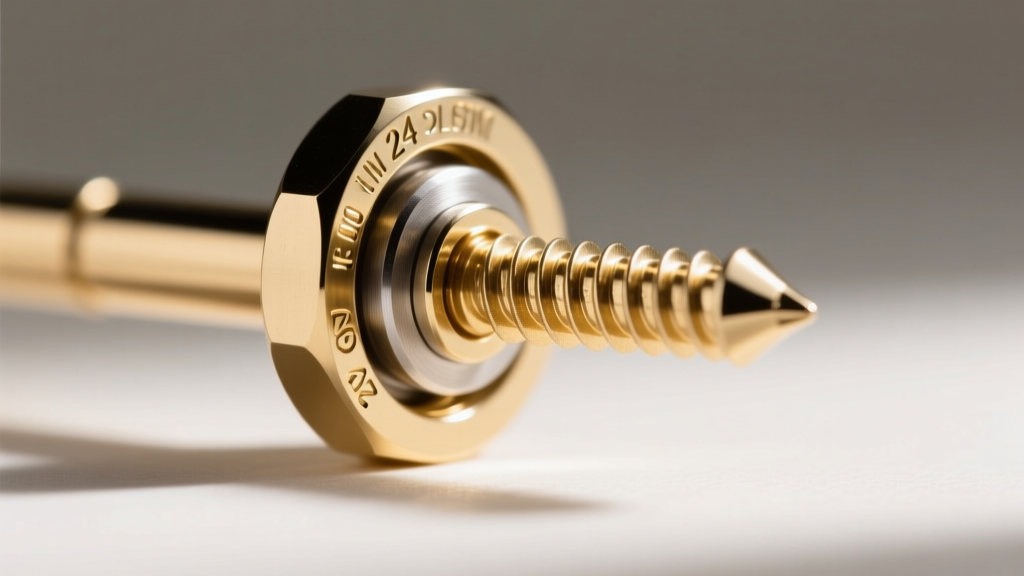
Consumers who buy ultra-thin earrings with standard push-backs experience a significantly higher loss rate. Losing a $250 diamond stud because you refused to invest in secure hardware is a catastrophic failure of value assessment. When budgeting for small gauge earrings, you must factor in the cost of specialized security backs. La Pousette clutches (which use a tiny internal spring mechanism to lock onto the post) or precision-machined screw-back clutches are mandatory for wires thinner than 20G. Expect to pay an additional $25 to $60 per pair for these upgraded security findings, and view it as an essential insurance premium for your investment.
Expert Verdict: Maximizing Your Investment
Ultimately, assessing the value of small gauge earrings requires looking past the initial price tag and evaluating the structural engineering of the piece. To maximize your budget in 2026, adhere to these strict purchasing parameters:
- Demand 14k Gold: Reject 18k gold or pure silver for any wire thinner than 20G. The alloy strength of 14k is non-negotiable for preventing bent posts.
- Audit the Weight Ratio: Ensure the decorative element of the earring weighs less than 1.5 grams to prevent the cheese-cutter effect on the fistula.
- Upgrade the Clutch: Never rely on standard friction backs for 22G or 24G posts. Budget for locking mechanisms or high-density silicone O-rings to prevent catastrophic loss.
- Consider Titanium for Cartilage: If you require small gauge jewelry for upper-ear cartilage piercings, seek out ASTM F136 implant-grade titanium. While difficult to find in 24G due to manufacturing limits, 20G titanium offers unparalleled strength-to-weight ratios at a fraction of the cost of gold.
True jewelry value is not defined merely by the spot price of the metal, but by the intelligent application of that metal to withstand the rigors of human anatomy. Delicate should never mean disposable.
By prioritizing tensile strength, secure hardware, and physiological safety over misleading karat numbers, you can build a collection of exquisite, small gauge earrings that offer genuine, lifelong value.


