Black Sparkly Earrings: Budget & Value Assessment Guide
Discover how to evaluate black sparkly earrings. We compare black spinel, CZ, and diamond, analyze metal platings, and reveal true market value.

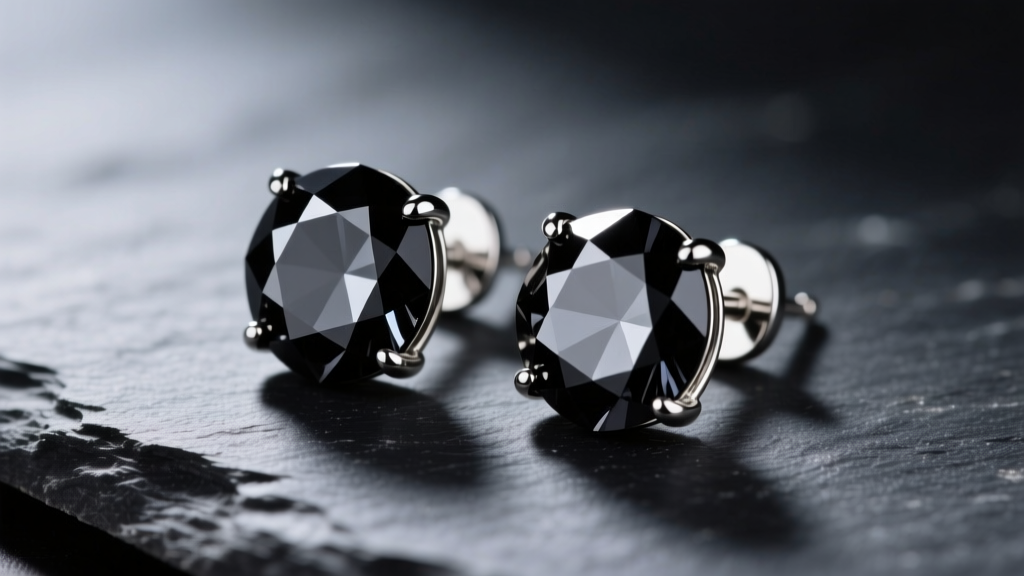
Black sparkly earrings occupy a unique space in jewelry design. They offer the high-contrast elegance of dark gemstones combined with the light-catching brilliance of precision faceting. However, the market is heavily saturated with misleading listings, ranging from $15 fashion pieces to $2,000 luxury investments. As a buyer in 2026, assessing the true value of these earrings requires looking past the initial flash and understanding the gemological and metallurgical realities beneath the surface. This guide breaks down the exact materials, plating techniques, and structural mechanics that determine whether a pair of black sparkly earrings is a genuine bargain or an overpriced liability.
The Material Matrix: What Actually Makes Them Sparkle?
The term "black sparkly" is frequently abused in e-commerce. True sparkle—known in gemology as brilliance and scintillation—requires a high refractive index (RI) and precise facet angles. Not all black stones possess these qualities. According to the Gemological Institute of America (GIA), understanding the optical properties of dark gems is critical for value assessment.
Black Cubic Zirconia (CZ)
Black CZ is the undisputed king of budget sparkle. With an RI of 2.15–2.18, it reflects light aggressively. Because it is lab-created, it is entirely opaque-free, allowing light to bounce through the pavilion and back to the eye. Value Verdict: Excellent for budgets under $50. However, CZ is brittle and can chip along the girdle if struck against hard surfaces.
Black Spinel
Natural black spinel is a gemological treasure often overlooked by mainstream buyers. With a Mohs hardness of 8.0 and an RI of 1.712, it offers a sophisticated, glassy luster rather than the hyper-active flash of CZ. It is highly durable and takes an exceptional polish. Value Verdict: The ultimate mid-tier sweet spot ($80–$250). It offers natural gemstone prestige without the diamond markup.
Black Diamond
Unlike colorless diamonds, black diamonds (carbonado) are heavily included with graphite and pyrite, making them completely opaque. Their "sparkle" does not come from internal light return, but rather from surface reflection off highly polished facets. As noted in the GIA Diamond Quality Factors, their value lies in their rarity and extreme hardness (Mohs 10), not their brilliance. Value Verdict: High luxury tier ($300–$1,500+). Buy for status and durability, not maximum scintillation.
Black Onyx (The Imposter)
Black onyx is a dyed chalcedony with an RI of just 1.53–1.54. It is fundamentally opaque and lacks the optical properties required for sparkle. If a seller markets "sparkly black onyx," they are either using misleading terminology or selling a misidentified stone. The GIA Onyx Guide confirms its primary use is for smooth cabochons, not faceted brilliant cuts.
Plating vs. Solid: The Hidden Cost of Black Metals
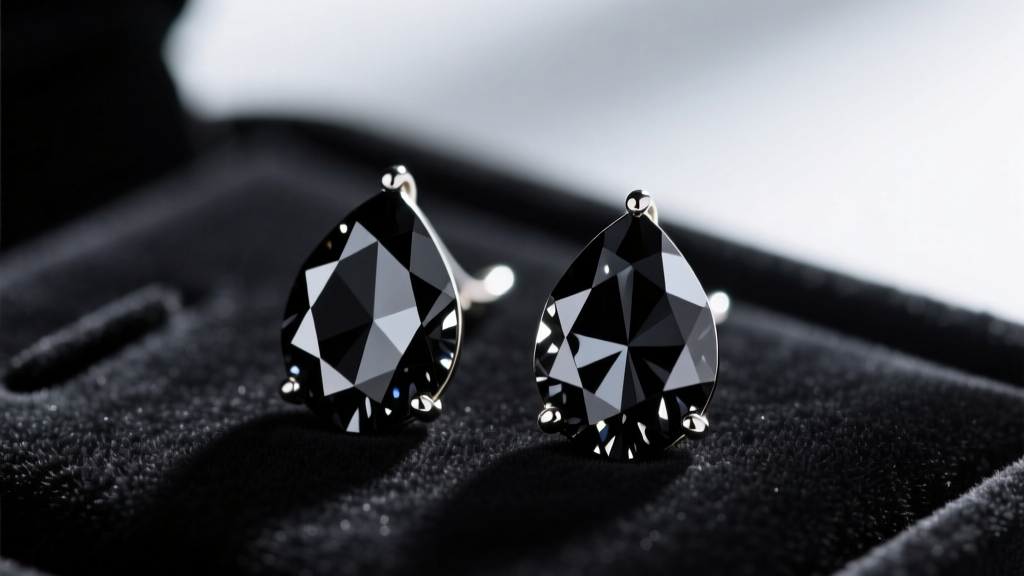
The metal setting is where budget brands cut corners, leading to premature failure. Black metals are rarely solid alloys; they are usually plated. Understanding the plating type is essential for long-term value.
- Black Rhodium: A platinum-group metal that offers a dark, gunmetal-grey finish. It is beautiful but relatively soft. On earrings worn daily, black rhodium will wear off within 12 to 18 months, revealing the white gold or silver beneath.
- Black Ruthenium: Harder, darker, and significantly more wear-resistant than black rhodium. If a brand uses black ruthenium plating, it justifies a 15-20% price premium due to its superior longevity.
- PVD (Physical Vapor Deposition):strong> A modern coating technique that bonds black titanium nitride to the surface. While incredibly scratch-resistant on solid steel or titanium, PVD applied over cheap brass or copper is a red flag. Once the base metal corrodes from skin acidity, the PVD layer will flake and peel, ruining the earring.
Pro Tip: Never pay fine jewelry prices ($200+) for PVD-plated brass or stainless steel. If you are spending over $150, demand solid 14k white gold or platinum with black rhodium/ruthenium accents.
Price Tier Breakdown: Where Does Your Budget Fit?
Use this matrix to benchmark listings and identify inflated pricing or suspicious bargains.
| Tier | Typical Materials | Metal Base | Expected Price Range | Longevity |
|---|---|---|---|---|
| Fashion | Black CZ, Glass | Brass/Copper with PVD or Black Enamel | $15 – $45 | 6–12 Months |
| Bridge | Black Spinel, Black Onyx | Sterling Silver (925) with Black Rhodium | $60 – $180 | 3–5 Years |
| Fine | Black Spinel, Black Sapphire | Solid 14k White Gold with Ruthenium | $250 – $600 | Lifetime (with replating) |
| Luxury | Natural Black Diamond | Solid 18k Gold or Platinum | $800 – $2,500+ | Generational |
Gauge, Settings, and Structural Mechanics
A sparkly stone is useless if the setting fails. The structural integrity of black sparkly earrings depends heavily on the post gauge and the setting style.
Post Thickness Matters
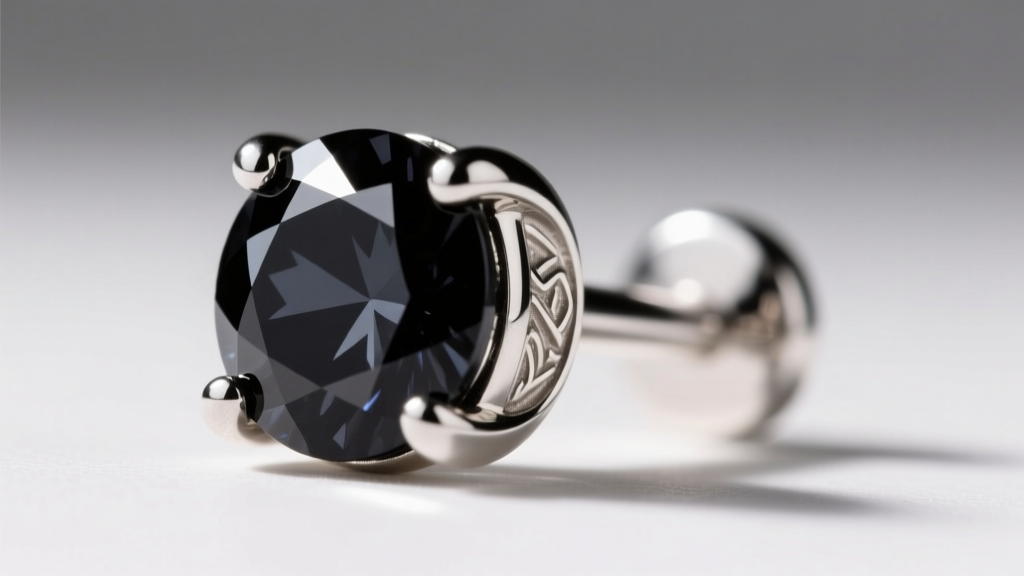
Standard lobe earrings should feature a 20-gauge (0.8mm) post. Many ultra-budget brands use 22-gauge (0.6mm) wire to save on precious metal costs. A 22-gauge post is highly susceptible to bending when you insert the friction back, which can warp the setting and loosen the gemstone prongs. For cartilage piercings, such as black sparkly huggies or helix hoops, look for 18-gauge (1.0mm) or 16-gauge (1.2mm) wire to prevent the "cheese-cutter effect" where thin wire migrates through the tissue.
Prong vs. Bezel Settings
To maximize sparkle, light must enter the stone from multiple angles. Therefore, four-prong or six-prong settings are mandatory for black CZ and black spinel. Bezel settings, which wrap metal entirely around the stone's edge, block peripheral light and will make a black stone look completely flat and dead. Reserve bezel settings for opaque stones like onyx or cabochons.
Cartilage, Lobes, and Face Shape Styling
Because black sparkly earrings absorb light while simultaneously reflecting it via facets, they create a striking visual weight. This makes their placement and shape crucial for facial harmony.
- Round Faces: Opt for black sparkly drop earrings or angular geometric dangles. The vertical lines and dark color draw the eye downward, elongating the face. Avoid large, round black studs which can emphasize facial width.
- Angular/Square Faces: Black sparkly hoops or curved huggies soften strong jawlines. The continuous circle of dark sparkle adds movement without adding harsh angles.
- Cartilage Stacks: Black sparkly ear cuffs and miniature huggies are excellent for helix and flat piercings. The dark metal blends subtly with the shadows of the ear's anatomy, allowing the faceted stones to appear as if they are floating on the skin.
The Final Verdict: Your Pre-Purchase Checklist
Before clicking "Add to Cart" on any pair of black sparkly earrings, run the listing through this strict value-assessment checklist:
- Verify the Stone ID: Does the listing explicitly state "Black Spinel," "Black CZ," or "Black Diamond"? If it just says "Black Crystal" or "Sparkly Black Gemstone," assume it is dyed glass or cheap CZ and adjust your maximum budget to $25.
- Check the Metal Stamp: Look for "925" (Sterling Silver) or "14k"/"18k". If the metal is described merely as "black alloy" or "environmental copper," expect the plating to tarnish or flake within months.
- Confirm the Plating Type: If the metal is black, email the seller to ask if it is PVD, black rhodium, or black ruthenium. Avoid PVD over base metals entirely.
- Inspect the Post Gauge: Zoom in on the product photos. If the post looks needle-thin, it is likely 22-gauge and poses a risk to your setting's longevity.
By demanding transparency in materials and construction, you can confidently navigate the market. Whether you are investing in a pair of natural black diamond studs for a lifetime of wear, or picking up a high-quality black spinel and sterling silver drop for evening events, true value is found in the details that survive long after the initial sparkle catches your eye.


