How to Clean and Care for Your Favorite Music Earrings
Learn expert cleaning and maintenance tips for music earrings. Discover how to safely clean enamel, rhinestones, and moving metal parts.

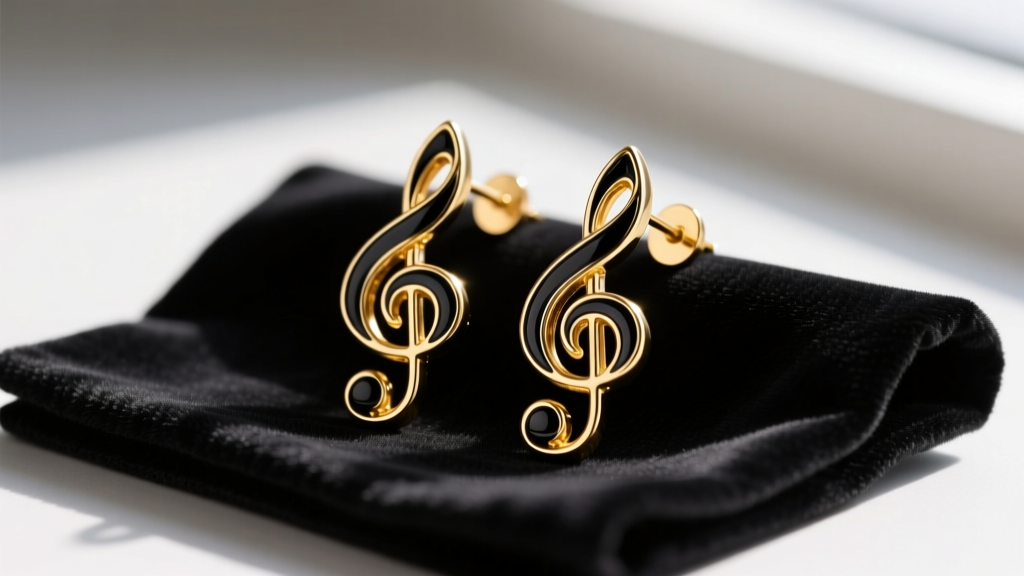
Music earrings—ranging from delicate treble clef studs and tiny acoustic guitar drops to functional miniature cassette tapes—are some of the most expressive pieces in a 2026 jewelry collection. However, their intricate shapes, mixed materials, and occasional moving parts make them notoriously difficult to maintain. Unlike simple metal hoops or solid gemstone studs, music-themed earrings often combine base metals, cold enamel, epoxy resins, and micro-pave rhinestones. This multi-material construction requires a highly specific approach to cleaning and maintenance to prevent irreversible damage.
Whether you are a musician looking to preserve your favorite gig-day accessories or a jewelry enthusiast maintaining a vintage collection, understanding the chemistry and mechanics behind your pieces is critical. Below is a comprehensive, expert-level guide to caring for your music earrings, ensuring they remain as vibrant and resonant as the art they represent.
The Anatomy of Music Earrings: Material Vulnerabilities
Before applying any cleaning solution, you must identify the materials used in your music earrings. The most common failure modes occur when a cleaning agent meant for one component destroys another.
- Cold Enamel (Epoxy Resin): Frequently used in mass-produced music note and guitar-shaped earrings. Cold enamel is essentially a hardened resin. It is highly susceptible to clouding when exposed to alcohol, acetone, or harsh ultrasonic vibrations.
- Vitreous Enamel: Found in high-end or vintage pieces, this is powdered glass fused to metal at extreme temperatures. While highly durable and scratch-resistant, it can shatter if dropped or subjected to sudden thermal shock.
- Micro-Pave Rhinestones: Often used to add 'sparkle' to a musical note or instrument design. These are typically held in place by cyanoacrylate or UV-cured adhesives, which dissolve rapidly upon contact with chemical jewelry dips.
- Base Alloys and Plating: Many novelty music earrings are cast from zinc or brass alloys and plated with thin layers of gold or rhodium. Aggressive polishing will strip this plating, exposing the reactive base metal beneath.
The 2026 Cleaning Matrix: Matching Agent to Material
Using the wrong cleaning method is the fastest way to ruin a novelty earring. Refer to this matrix to determine the safest protocol for your specific pair.
| Material Combination | Recommended Cleaner | Strictly Avoid | Risk Factor |
|---|---|---|---|
| Sterling Silver + Vitreous Enamel | Mild dish soap + warm water | Silver dip solutions | Dip chemicals can etch the glass enamel surface |
| Gold Plated Alloy + Cold Enamel | Dry microfiber cloth only | Liquid cleaners, ultrasonic | Liquids can seep under plating and cause green oxidation |
| Any Metal + Rhinestones/Glue | Damp cotton swab (water only) | Alcohol, ammonia, ultrasonic | Solvents dissolve epoxy; vibrations shake stones loose |
| Raw Brass/Copper (Vintage) | Lemon juice + salt paste | Commercial polishes | Harsh abrasives will remove the desired patina |
Step-by-Step Guide: Cleaning Enamel and Rhinestone Music Notes
For standard music note studs or treble clef drops featuring enamel and rhinestones, follow this meticulous, low-risk cleaning protocol.
1. The Dry Pre-Clean
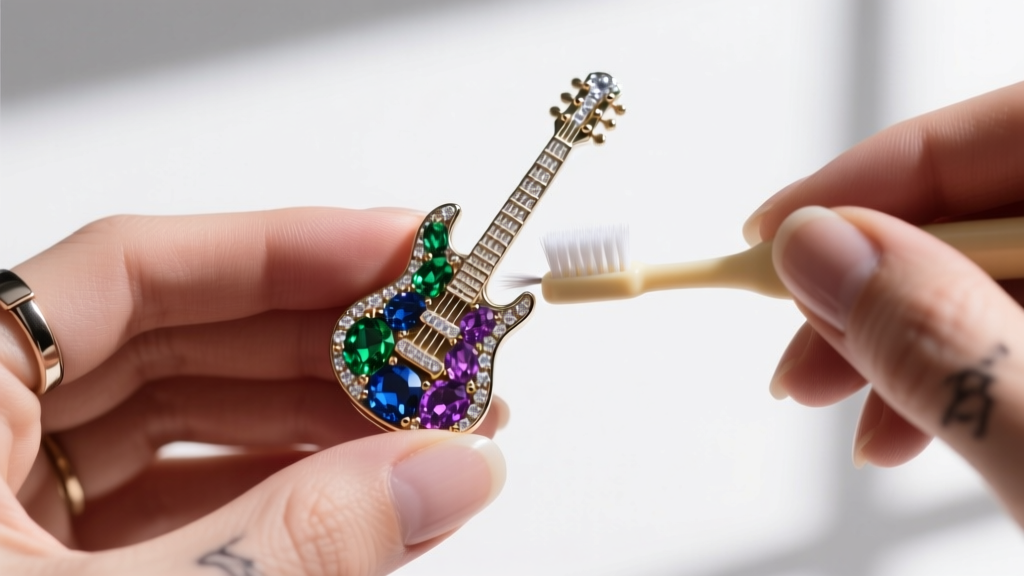
Always begin by removing surface oils and cosmetic dust. Use a clean, dry microfiber cloth to gently wipe the earring. For intricate grooves—like the inner loops of a bass clef or the tuning pegs of a miniature guitar—use a soft-bristled baby toothbrush or a clean, dry makeup brush to dislodge debris without scratching the plating.
2. Targeted Spot Cleaning
If the earring requires deeper cleaning, mix a few drops of phosphate-free, mild dish soap into a bowl of lukewarm (never hot) distilled water. Dip a cotton swab into the solution, dab it on a paper towel to remove excess moisture, and gently roll it over the soiled areas. Never submerge rhinestone-encrusted music earrings. According to the Gemological Institute of America (GIA), submerging glued settings compromises the adhesive bond, leading to immediate stone loss.
3. The Rinse and Dry
Use a separate cotton swab dampened with plain distilled water to 'rinse' the soap residue. Immediately dry the piece with a lint-free cloth. Use a hair dryer on the 'cool' setting to blow moisture out of the crevices and earring post backing.
Caring for Mechanical and Moving-Part Music Earrings
One of the most exciting trends in 2026 is the rise of kinetic music earrings—pieces that feature tiny hinges, spinning vinyl records, or functional miniature music box mechanisms. These require mechanical maintenance rather than just cosmetic cleaning.
Expert Warning: Never apply liquid oils (like WD-40 or sewing machine oil) to the hinges of kinetic earrings. These oils attract dust, turn into a gritty sludge, and will eventually seize the micro-mechanisms. Instead, use a dry PTFE (Teflon) lubricant applied with a needle-tip applicator.
To clean the moving joints of a cassette tape earring or a spinning guitar pick drop, use a can of compressed air to blow out pocket lint and skin cells. If the hinge becomes stiff, apply a microscopic drop of dry graphite powder using a wooden toothpick. Work the hinge back and forth gently to distribute the lubricant.
Troubleshooting Common Music Earring Failures
Because music earrings often feature long, asymmetrical drops or heavy, uneven weight distributions, they are prone to specific physical failures. Here is how to address them:
Bent Earring Posts
The standard gauge for most music-themed lobe earrings is 20G (0.81mm) or 18G (1.0mm). Because the designs are often top-heavy (like a grand piano or a long saxophone silhouette), the posts frequently bend when inserted into the ear. To straighten a sterling silver post, lay it on a flat steel block and gently roll a nylon-jaw jewelry plier over it. Never bend the post back and forth with your fingers, as this will cause metal fatigue and snap the solder joint where the post meets the earring body.
Green Skin and Allergic Reactions
Many novelty music earrings are made from copper-rich alloys that oxidize when exposed to the acids in your skin, leaving a green stain. Furthermore, nickel is often used as a hardening agent in cheap white gold or silver-plated alloys. The U.S. Food and Drug Administration (FDA) notes that nickel is the most common cause of contact dermatitis from jewelry. To prevent this, coat the earring post and backing with a thin layer of clear, flexible nail polish or a specialized jewelry barrier coating before wearing. Reapply every few weeks.
Storage Solutions to Prevent Tarnish and Tangling
Proper storage is the final pillar of earring maintenance. Music earrings, with their protruding notes, strings, and stems, are notorious for tangling in standard jewelry boxes, which can bend delicate metalwork and scratch enamel finishes.
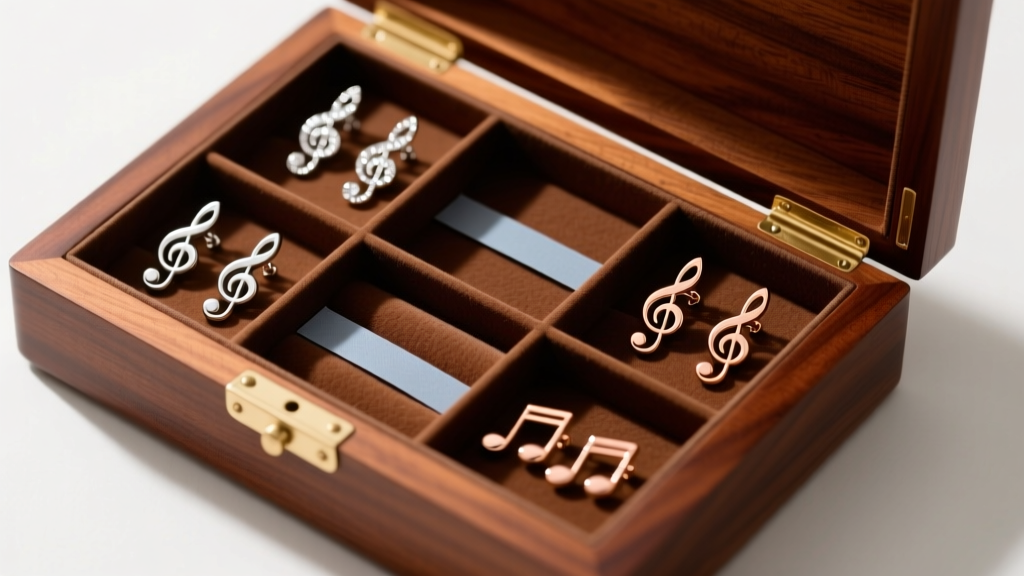
- Individual Compartmentalization: Store each pair of music earrings in its own soft flannel pouch or a dedicated slot in a compartmentalized jewelry box. This prevents the sharp edges of a guitar headstock from scratching the enamel of a neighboring treble clef.
- Tarnish Prevention: Silver and copper alloys react with sulfur and moisture in the air to form silver sulfide (tarnish). Place 3M anti-tarnish strips or silica gel packets inside your storage containers to absorb ambient moisture and neutralize sulfur gases.
- Post Protection: Always secure the earring backings (butterfly clutches or silicone stoppers) onto the posts during storage. This prevents the threaded or grooved posts from catching on fabric pouches and bending under pressure.
By understanding the unique material composition and structural vulnerabilities of your music earrings, you can preserve their intricate details and mechanical functions for years to come. Treat them not just as accessories, but as miniature works of art that require a curator's touch.


