How to Style, Clean, and Restore Black Beads Earrings Step-by-Step
Learn how to style, clean, and restring black beads earrings. Expert tips on pairing onyx, jet, and obsidian with the right metals and face shapes.

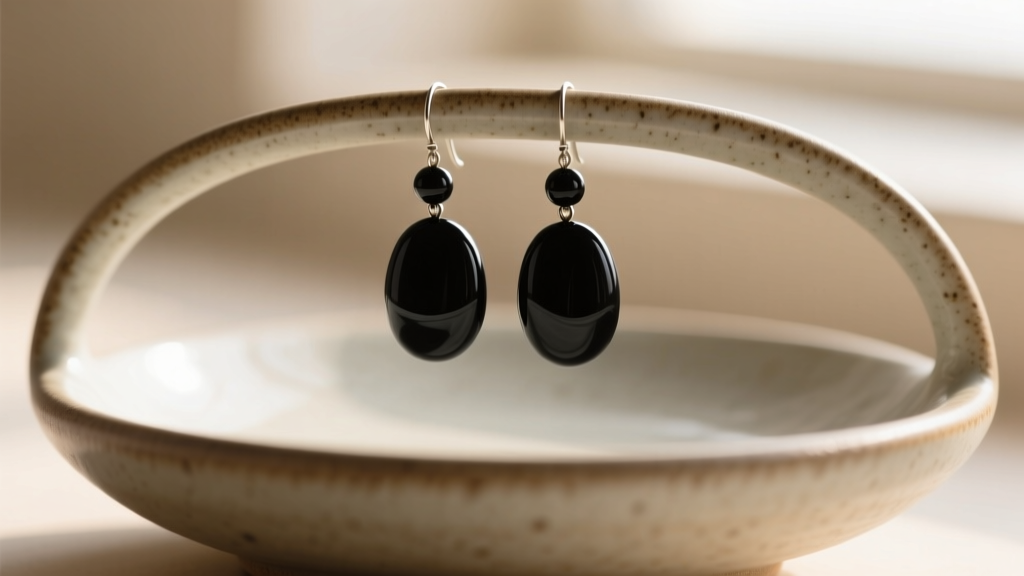
Black beads earrings are a cornerstone of versatile jewelry styling, offering a sleek, grounding contrast that works across seasonal trends and personal aesthetics. However, not all black beads are created equal. The market is saturated with everything from fragile fossilized wood to dyed chalcedony and volcanic glass, each requiring vastly different care, styling, and maintenance protocols. In 2026, as consumers increasingly prioritize material transparency and longevity, understanding the exact composition of your dark gemstones is no longer optional—it is essential for preserving your investment.
This comprehensive, step-by-step guide will walk you through the precise material grades of black beads, how to style them for specific facial structures and piercing gauges, and exactly how to clean or re-wire them when wear and tear inevitably strikes.
The Anatomy of Black Beads Earrings: Materials and Hardness Grades
Before you can properly care for black beads earrings, you must identify the stone. The term 'black bead' is a commercial catch-all that masks significant differences in durability, porosity, and value. According to the Gemological Institute of America (GIA), understanding the Mohs hardness scale is critical for preventing irreversible damage.
- Black Onyx & Dyed Agate (Mohs 6.5 - 7): True black onyx is exceptionally rare. Approximately 95% of the 'onyx' sold today is actually gray chalcedony or agate that has been treated with carbon and sugar solutions to achieve a uniform black color. While hard enough for daily lobe wear, the dye can bleed or fade if exposed to harsh chemicals, ultrasonic cleaners, or prolonged UV exposure.
- Black Spinel (Mohs 7.5 - 8): A natural, untreated gemstone with a high refractive index. It is highly durable, resistant to scratching, and safe for ultrasonic cleaning. It is the premium choice for fine jewelry black beads.
- Obsidian (Mohs 5 - 5.5): Volcanic glass that is relatively soft and prone to conchoidal fracturing (chipping) if dropped on hard surfaces. Often used in bohemian or statement pieces.
- Jet (Mohs 2.5 - 4): As noted by the Mindat.org mineral database, jet is not a stone but a type of fossilized wood (specifically from the Araucaria tree). It is incredibly lightweight, warm to the touch, and very soft. It will scratch easily if stored in a mixed jewelry box and can be permanently damaged by alcohol or solvents.
Step-by-Step: Styling Black Beads for Face Shapes and Piercings
The visual weight of black beads earrings makes them a powerful tool for balancing facial proportions. Furthermore, the physical weight and gauge of the earring must match the specific piercing to avoid lobe tearing or cartilage rejection.
Face Shape Pairing Framework
| Face Shape | Ideal Black Bead Style | Why It Works |
|---|---|---|
| Round | Angular, geometric drops or elongated rectangular onyx beads | Creates vertical lines that lengthen the face and counteracts soft curves. |
| Square | Round black spinel studs or curved obsidian hoops with bead accents | Softens a strong jawline and adds organic movement to angular features. |
| Heart | Teardrop jet beads or chandelier styles with bottom-heavy bead clusters | Adds visual weight to the lower half of the face, balancing a wider forehead. |
| Oval | Any style; matte black agate huggies or bold statement discs | Oval faces are naturally balanced, allowing for experimental proportions. |
Piercing Gauge Considerations
When selecting or modifying black beads earrings, the wire or post gauge is a non-negotiable safety factor. Standard earlobe piercings are typically 20G (0.81mm) or 18G (1.02mm). If you are adapting a heavy, large-diameter black onyx bead for a cartilage piercing (like a helix or conch), you must ensure the post is at least 16G (1.29mm) to prevent the 'cheese-cutter effect,' where thin wire slowly migrates through the tissue under the weight of the stone.
How to Clean Black Stone and Glass Beads Without Damaging Them
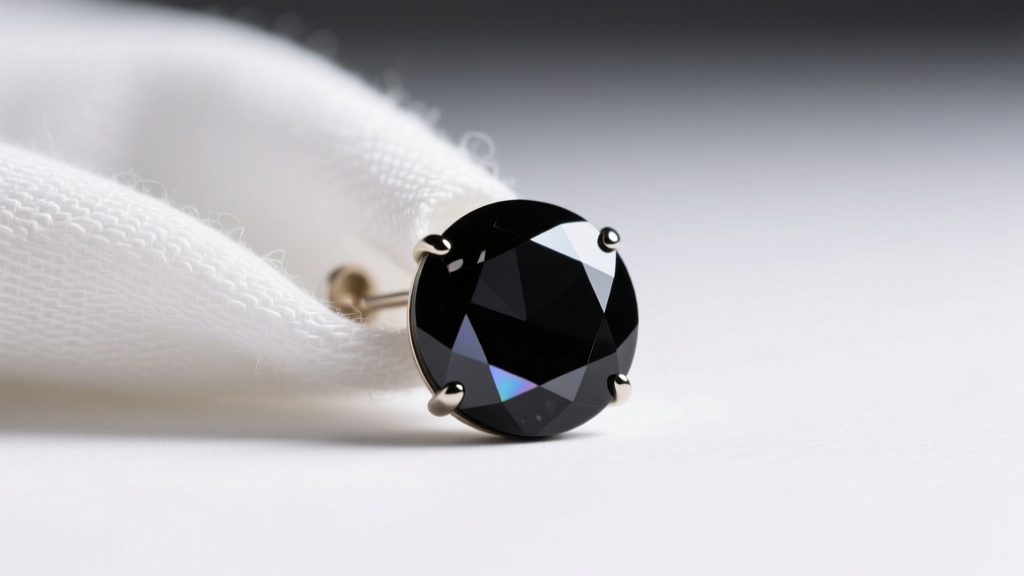
The most common mistake jewelry owners make is treating all black beads identically during cleaning. Using an ultrasonic cleaner on dyed agate will vibrate the dye out of the porous stone, leaving you with patchy, grayish beads. Here is the foolproof, step-by-step cleaning protocol.
Golden Rule: Never use alcohol, ammonia, or ultrasonic waves on jet, turquoise, or dyed chalcedony. Stick to the 'damp cloth' method for anything porous or treated.
The Safe Cleaning Protocol (For Dyed Onyx, Jet, and Obsidian)
- Dry Dusting: Use a clean, dry microfiber cloth to gently wipe away surface oils and cosmetics. This prevents grinding grit into softer stones like jet during the wet wash.
- Lukewarm Suds: Mix a few drops of pH-neutral dish soap (like Dawn) into a bowl of lukewarm water. Avoid hot water, which can expand the metal settings and loosen the adhesive holding the bead.
- Targeted Wiping: Dip a cotton swab or a soft baby toothbrush into the suds. Gently scrub the metal setting and the surface of the bead. Do not submerge the earring, especially if the bead is glued into a cup setting rather than wire-wrapped.
- Rinse and Dry: Wipe the earring with a cloth dampened with plain distilled water (tap water minerals can leave white spots on dark stones). Immediately dry with a lint-free towel.
Note: If your earrings are confirmed natural, untreated black spinel, you may safely use a standard ultrasonic cleaner for 3-5 minutes to remove deep-seated lotion buildup from the facet junctions.
DIY Restoration: How to Wire-Wrap a Loose Black Bead
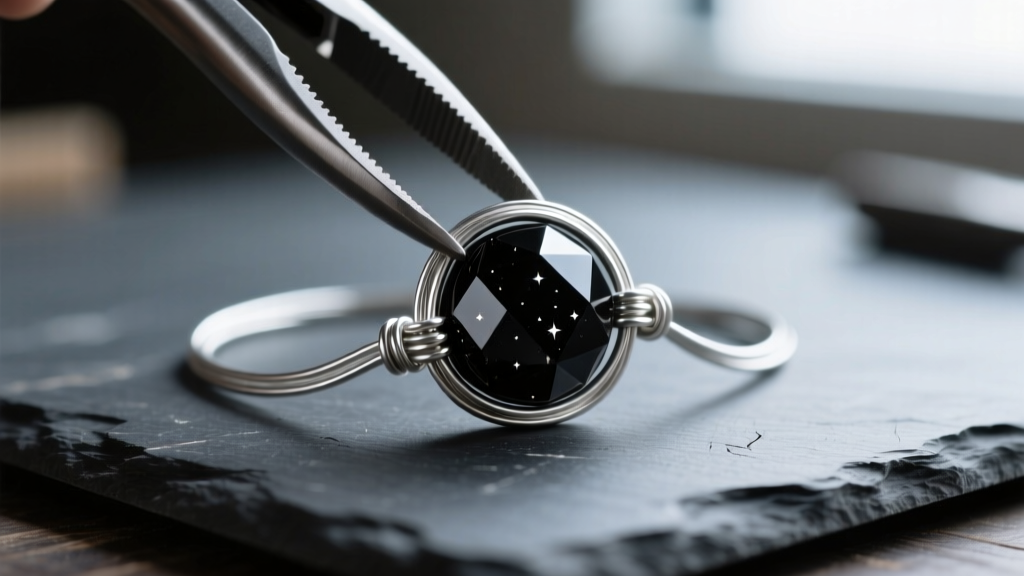
Headpins frequently snap, or factory wire-wraps loosen over time, leaving you with a loose black bead and an unwearable earring. Rather than discarding it, you can restore the earring using basic bench tools. This technique is especially useful for converting standard craft-store black onyx beads into high-quality, secure drops.
Required Tools and Materials
- Wire: 24-gauge dead-soft sterling silver or niobium wire (use 22-gauge for beads larger than 12mm).
- Pliers: Chain-nose (flat) pliers and round-nose pliers.
- Cutters: Flush cutters for a clean, snag-free wire end.
- Mandrel or Pen: For sizing the top loop to fit your ear wire or jump ring.
Step-by-Step Wire Wrapping
- Thread the Bead: Slide your black bead onto the 24G wire. Ensure the hole is flush against the wire. Leave about 1/2 inch of wire extending below the bead.
Create the Bottom Stop: Using your chain-nose pliers, grip the short tail of the wire just below the bead and bend it flat against the bottom of the bead to create a 'stop' so the bead won't slide off. For a cleaner look, you can use a flush cutter to trim the tail and file it smooth, or create a tiny wrapped loop at the bottom if the bead hole is too large. - Bend the Top Wire: Grip the long wire extending from the top of the bead with your chain-nose pliers, right where it exits the stone. Bend the wire at a strict 90-degree angle.
- Form the Loop: Switch to your round-nose pliers. Grip the bent wire and roll the pliers toward the bead to form a perfect, centered circular loop.
- The Wrap: Take the remaining wire tail and wrap it tightly around the 'stem' (the wire between the bead and the loop) 2 to 3 times. This locks the loop in place and adds structural integrity.
- Trim and Tuck: Use flush cutters to snip the excess wire. Use the tips of your chain-nose pliers to gently 'tuck' the sharp wire end flush against the wraps so it won't catch on hair or clothing.
Metal Pairing Guide: Preventing Tarnish and Contrast Clashes
The metal you pair with black beads earrings drastically alters both the aesthetic impact and the long-term maintenance of the piece. Black stones absorb light, meaning the metal must do the heavy lifting for brilliance and contrast.
- High Contrast (White Gold, Platinum, Rhodium-Plated Silver): Creates a striking, modern, and formal look. The bright white metal acts as a halo, making the black bead appear deeper and more saturated. However, silver can tarnish, and the resulting sulfur compounds can sometimes stain porous stones like jet or unpolished obsidian. Store these pieces in anti-tarnish ziplock bags.
- Low Contrast (Oxidized Silver, Black Rhodium, Gunmetal): Ideal for gothic, grunge, or understated minimalist aesthetics. By using darkened metals, the silhouette of the earring becomes a unified shadow, emphasizing the physical shape and texture of the bead rather than its color boundary.
- Warm Contrast (14k/18k Yellow Gold, Brass): Evokes vintage and Art Deco sensibilities. The warmth of yellow gold softens the severity of black onyx. If using brass or copper for DIY wire wrapping, be aware that the natural oxidation (verdigris) can permanently stain light-colored clothing or skin, though it rarely affects the black stone itself.
By understanding the specific geological nature of your black beads earrings and applying these targeted styling, cleaning, and restoration techniques, you ensure that these striking accessories remain a permanent, flawless fixture in your jewelry rotation for decades to come.


