How to Style Purple Butterfly Earrings: A Step-by-Step Guide
Learn how to style, curate, and clean purple butterfly earrings. Our step-by-step guide covers materials, gauge sizes, and ear stack placement.

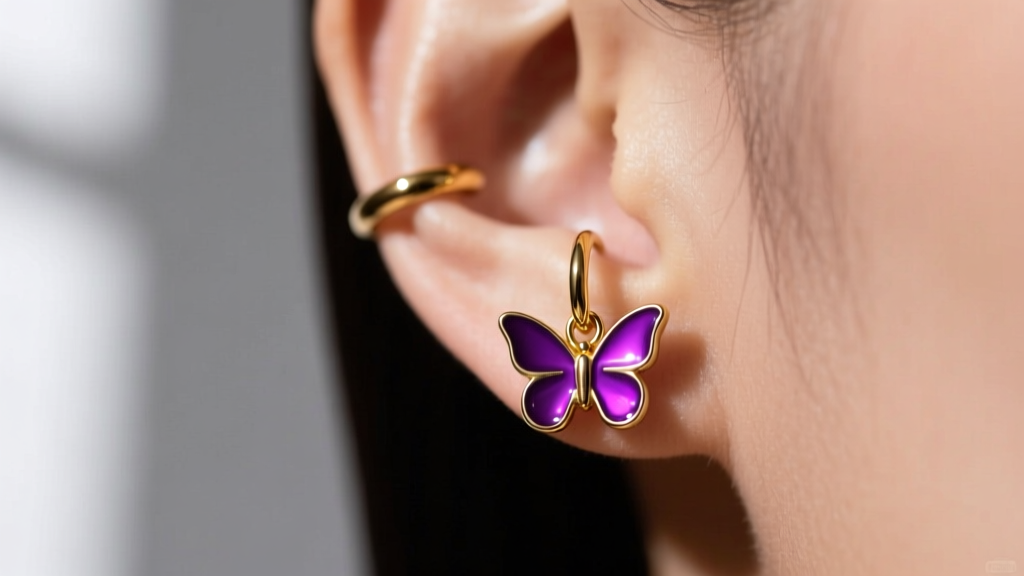
Purple butterfly earrings have transcended their nostalgic Y2K roots to become a sophisticated staple in modern ear curation. Whether crafted from deep violet amethyst, vibrant kiln-fired enamel, or lightweight UV resin, these whimsical pieces offer a unique blend of playful aesthetics and elegant color theory. However, styling them requires more than just slipping them into your nearest lobe piercing. To truly elevate your look and protect your piercings, you need a strategic approach to gauge sizing, material selection, and ear mapping.
In this comprehensive guide, we break down the exact steps to selecting, styling, and maintaining purple butterfly earrings, ensuring your ear stack looks intentional, balanced, and professionally curated.
The Anatomy of the Purple Butterfly Motif
Before building your ear stack, it is essential to understand the visual weight of the butterfly motif. Butterflies are inherently symmetrical and visually "busy" due to their intricate wing patterns. When rendered in purple—a color that naturally draws the eye and conveys both royalty and creativity—the earring becomes a focal point rather than a subtle accent.
Because of this high visual impact, purple butterfly earrings perform best when they are given room to breathe within an ear stack. Crowding a detailed butterfly charm next to a heavy, gemstone-encrusted huggie hoop will result in a cluttered, chaotic aesthetic. The key to mastering this trend lies in deliberate spacing and contrasting textures.
Step 1: Match the Gauge to Your Piercing
The most common mistake consumers make when buying novelty or motif earrings is ignoring wire thickness. According to the Association of Professional Piercers (APP), wearing jewelry that is too thin for your piercing can lead to the "cheese-cutter effect," where the thin wire slowly migrates and slices through the tissue.
- Standard Lobe Piercings (20g - 18g): Most commercial butterfly earrings are made with 20-gauge (0.81mm) or 18-gauge (1.02mm) wires. These are perfectly safe for healed, standard earlobe piercings.
- Cartilage and Helix Piercings (16g - 14g): Cartilage piercings are typically done at 16-gauge (1.29mm) or 14-gauge (1.63mm). If you want a purple butterfly in your helix, you must seek out specialized 16g labret studs with a butterfly top. Forcing a 20g wire into a 16g cartilage hole will cause irritation, migration, and potential rejection.
Always verify the gauge of your target piercing before purchasing. If you are unsure of your size, visit a professional piercer to have your jewelry measured with a digital caliper.
Step 2: Choose Your Purple Medium
Not all purple jewelry is created equal. The material dictates the earring's durability, weight, and care requirements. Below is a breakdown of the most common materials used for purple butterfly earrings.
| Material | Durability & Mohs Scale | Weight | Avg. Price Range | Best Placement |
|---|---|---|---|---|
| Natural Amethyst | 7 (Scratch-resistant, but can fracture if dropped) | Medium-Heavy | $45 - $150+ | Lobe, Lower Helix |
| Kiln-Fired Enamel | High (Glass-like, but chip-prone on impact) | Light | $30 - $90 | Standard Lobe |
| UV-Cured Resin | Low (Prone to scratching and UV yellowing) | Ultra-Light | $15 - $40 | Lobe, Cartilage (if 16g) |
| Anodized Titanium | Implant-Grade (ASTM F136, hypoallergenic) | Ultra-Light | $25 - $65 | Fresh Piercings, Helix |
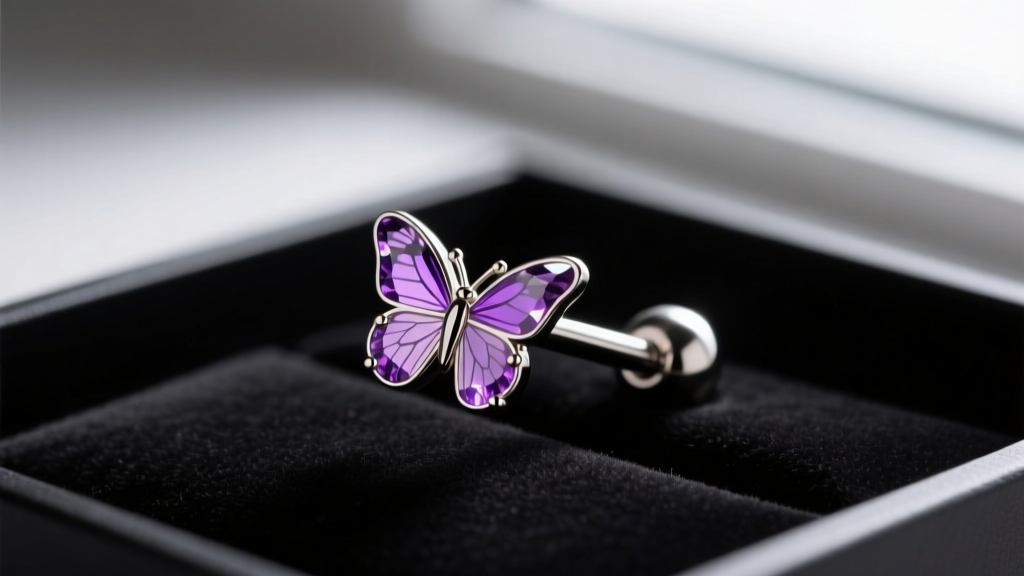
Color Theory: Pairing Purple with Metals
The metal backing your purple butterfly earrings drastically alters the overall vibe of your stack:
- Yellow Gold: Creates a warm, regal contrast. The golden undertones amplify the richness of deep plum or violet hues, making it ideal for vintage-inspired stacks.
- White Gold / Platinum: Offers an icy, high-contrast look. This pairing makes lighter lilac and lavender butterflies pop, lending a modern, ethereal aesthetic.
- Rose Gold: Blends harmoniously with purple due to its pink undertones. This creates a soft, romantic, and cohesive look, perfect for delicate, minimalist ear curation.
Step 3: Map Your Ear Stack Placement
When integrating purple butterfly earrings into a curated ear, follow the "Rule of Visual Anchoring." Because the butterfly is a statement piece, it should serve as an anchor point in your stack.
The Anchor-and-Orbit Method
- The Anchor (Lobe 1): Place your largest purple butterfly earring here. A 12mm drop earring or a detailed enamel stud works best to ground the stack.
- The Orbit (Lobe 2 & 3): Complement the anchor with minimalist, solid-metal hoops or tiny diamond studs. Avoid introducing competing colors or motifs.
- The Apex (Helix/Flat): If you want a second butterfly, place a tiny, 4mm amethyst or titanium butterfly stud in the upper helix. This creates a diagonal line of symmetry across the ear without overcrowding the conch or tragus.
Step 4: The Step-by-Step Cleaning Routine
Maintaining the vibrant hue of your purple earrings requires specific cleaning protocols based on the material. The Gemological Institute of America (GIA) warns that while natural amethyst is generally safe in ultrasonic cleaners, dyed or fracture-filled stones—which are common in mass-market butterfly jewelry—will crack or lose their color. Always default to the safest manual method.
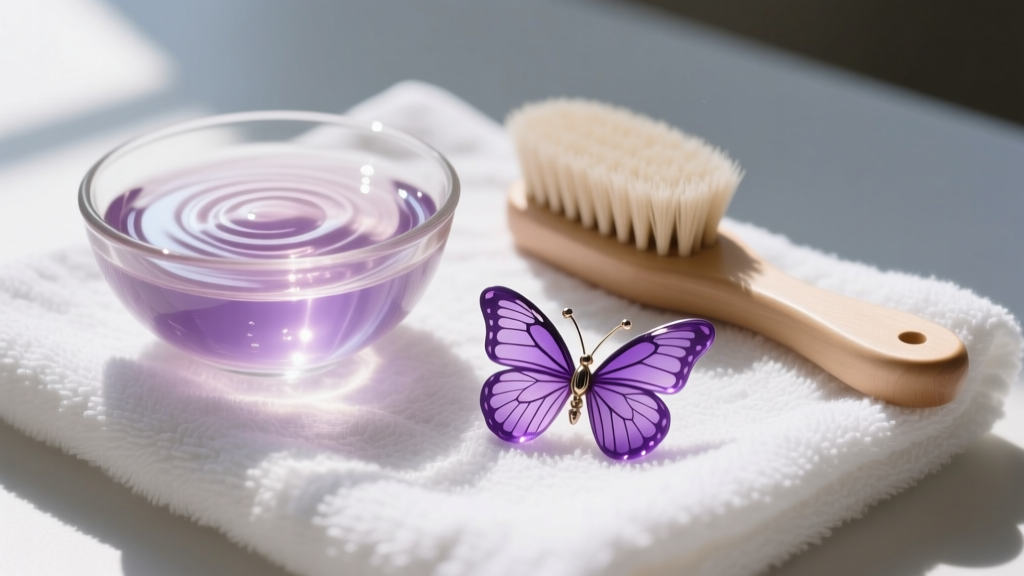
Safe Cleaning Protocol for Enamel and Resin
- Prepare the Solution: Mix a few drops of mild, phosphate-free dish soap into a bowl of lukewarm (never hot) water. Hot water can warp resin and crack cold-applied enamel.
- Soak Briefly: Submerge the earrings for no more than 3 to 5 minutes to loosen sebum and hair product buildup.
- Agitate Gently: Use a soft-bristled baby toothbrush to gently sweep the crevices of the butterfly wings. Do not scrub aggressively, as this will scratch resin and dull high-polish enamel.
- Rinse and Dry: Rinse under distilled water to prevent hard water spots, then pat dry with a lint-free microfiber cloth. Ensure the earring posts are completely dry before storing to prevent metal oxidation.
Troubleshooting Common Issues
Even with careful wear, motif earrings can present unique challenges. Here is how to troubleshoot the most frequent issues:
- Enamel Chipping: If your kiln-fired enamel butterfly chips, do not attempt to fix it with craft glue or clear nail polish, as the chemicals can irritate your skin and damage the metal. Take it to a professional jeweler who specializes in enamel restoration.
- Resin Yellowing: UV-cured purple resin will inevitably yellow over time when exposed to sunlight and skin oils. To delay this, store your resin earrings in a dark, airtight jewelry box when not in use. Once yellowing occurs, the piece cannot be restored and must be replaced.
- Loose Gemstones: If the tiny amethyst stones in your butterfly's wings become loose, remove the earring immediately. Place a small piece of painter's tape over the stone to secure it temporarily, and take it to a jeweler to have the prongs re-tipped or the bezel pushed back into place.
By respecting the anatomy of your piercings, understanding material limitations, and applying intentional styling frameworks, your purple butterfly earrings will transform from a simple accessory into a masterclass of personal expression and ear curation.


