Best Earrings Hello Kitty Fans Can Wear Safely in 2026
Learn how to safely wear and style Hello Kitty earrings. Step-by-step guide on material hacks, gauge sizes, and building an irritation-free ear curation.

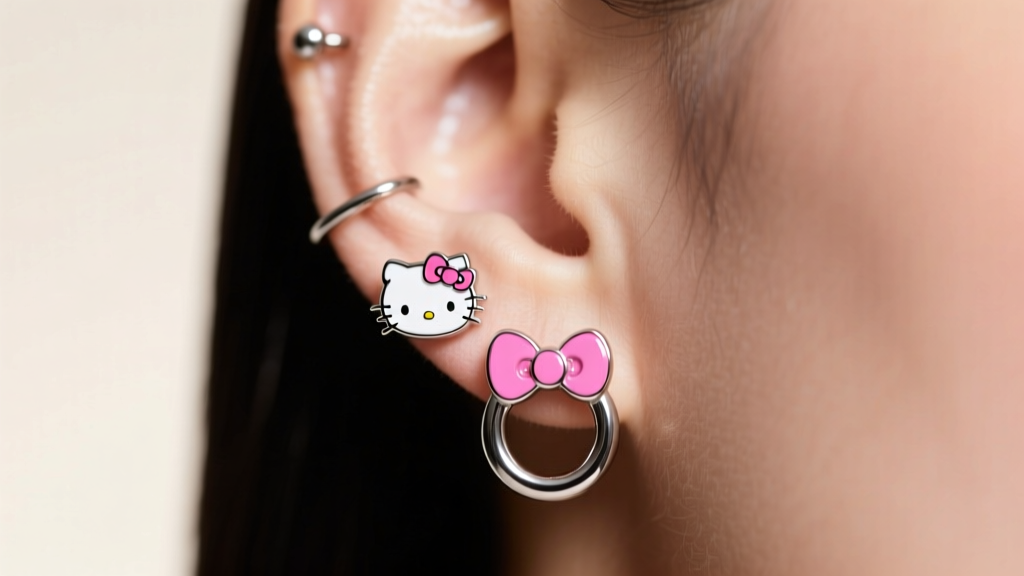
The resurgence of Y2K and Sanrio aesthetics has made kawaii jewelry a staple in modern ear curations. However, the market is flooded with mass-produced, novelty accessories that prioritize cute designs over biological safety. For enthusiasts seeking the best earrings Hello Kitty fans adore, the challenge lies in navigating cheap alloys, unregulated plating, and incorrect gauge sizes that lead to contact dermatitis, piercing blowouts, and cartilage irritation.
As a senior jewelry stylist, I frequently see clients struggling with infected lobes and irritated helixes after wearing novelty character earrings. This comprehensive, step-by-step guide will teach you how to audit your kawaii jewelry, safely hack cheap pieces for sensitive ears, and build a biologically safe, Sanrio-inspired ear curation in 2026.
The Hidden Dangers of Mass-Produced Kawaii Jewelry
Most character-themed earrings sold in mall kiosks, fast-fashion retailers, and online marketplaces are manufactured from zinc alloy or brass, then electroplated with a thin layer of silver or gold. This plating wears off within weeks, exposing the skin to high levels of nickel and lead. The term "hypoallergenic" is entirely unregulated by the FDA or international jewelry boards, meaning a piece labeled as such can still trigger severe allergic contact dermatitis.
According to the Association of Professional Piercers (APP), the only universally safe metals for prolonged wear in piercings are implant-grade titanium (ASTM F-136), niobium, and specific grades of platinum or 14k-18k solid gold. When shopping for character jewelry, understanding these material grades is your first line of defense against infection and rejection.
Step 1: Audit Your Metals (Material Comparison)
Before inserting any novelty earring into your body, check the product listing or packaging for exact material specifications. Use the table below to determine if your Hello Kitty earrings are safe for your specific piercing type.
| Material | Nickel Risk | Best For | Avg. Price Range |
|---|---|---|---|
| Zinc Alloy / Brass | Extremely High | Display only; never wear in piercings | $3 - $10 |
| 316L Surgical Steel | Moderate (Contains 8-10% Nickel) | Healed lobes (if not nickel-sensitive) | $12 - $25 |
| 14k Gold Plated over Brass | High (Plating chips quickly) | Occasional wear in fully healed lobes | $15 - $35 |
| ASTM F-136 Implant-Grade Titanium | Zero (Nickel-Free) | Fresh piercings, cartilage, sensitive ears | $30 - $85+ |
Pro Tip: If a seller cannot explicitly confirm the metal is ASTM F-136 titanium or solid 14k gold, assume it contains nickel.
Step 2: The Post-Swap Hack for Sensitive Lobes
If you have purchased a pair of officially licensed Sanrio Official Jewelry charms but the posts are made of irritating surgical steel, you do not have to throw them away. You can safely swap the charm onto an implant-grade titanium base. Avoid the popular "clear nail polish" hack; it chips inside the fistula, traps bacteria, and causes severe granulomas.
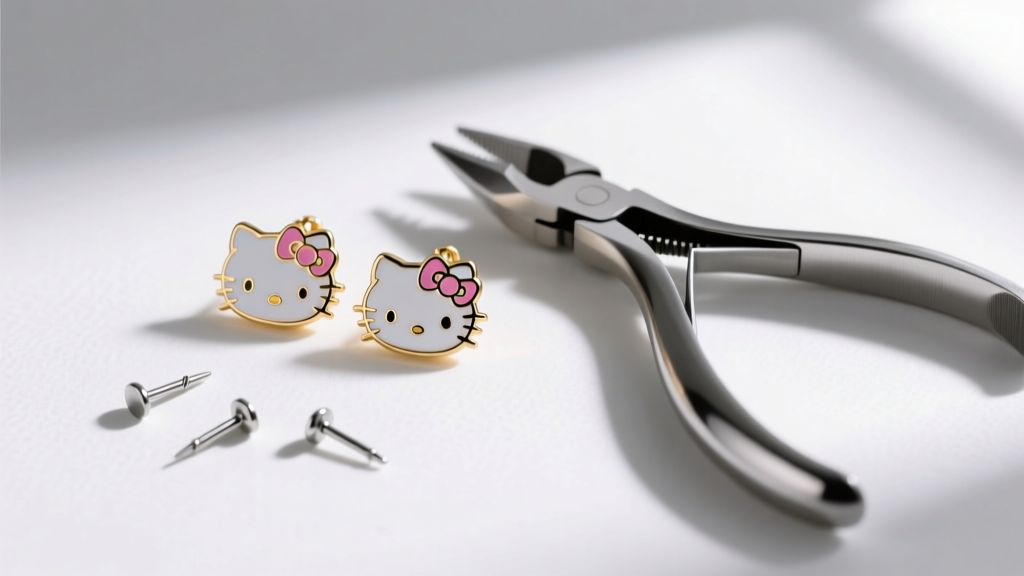
Tools Required:
- Flush cutters or heavy-duty wire snips
- Chain-nose or loop-opening jewelry pliers
- 18-gauge or 20-gauge implant-grade titanium flat-back labret posts
- Small jump rings (optional, for dangly charms)
The Swapping Process:
- Remove the Charm: If the charm is attached via a jump ring, use two pairs of chain-nose pliers to gently twist the ring open laterally. Do not pull it apart, or you will warp the metal.
- Cut the Cheap Post: If the charm is soldered directly to a steel post, use your flush cutters to snip the post as close to the charm's base as possible. File down any sharp edges with a jeweler's file.
- Attach to Titanium: Thread the jump ring through the charm and the loop of a titanium threadless end or internally threaded ball. Close the jump ring securely.
- Insert Safely: Slide the titanium post into your healed lobe, securing it with the backing. You now have a 100% biocompatible, custom Hello Kitty earring.
Step 3: Mapping a Sanrio-Inspired Cartilage Curation
Building a themed ear curation requires an understanding of piercing anatomy and gauge standards. Cartilage piercings (helix, flat, conch) are highly prone to irritation bumps if subjected to heavy, poorly balanced novelty jewelry. When planning a Hello Kitty ear project, weight distribution and post thickness are critical.
Gauge and Placement Guide
- Standard Lobe (20G or 18G): Ideal for lightweight enamel studs and small acrylic dangles. Most commercial kawaii jewelry is manufactured in 20G (0.8mm), which is too thin for fresh cartilage piercings and can cause the "cheese-cutter effect," where the thin metal slowly slices through the tissue.
- Helix / Forward Helix (16G): The industry standard for cartilage. You will need to source custom 16G (1.2mm) titanium threadless ends featuring Sanrio motifs. Threadless (push-pin) jewelry is superior for cartilage because it allows you to swap out the decorative Hello Kitty top without removing the post that keeps the piercing open.
- Conch / Flat (14G or 16G): For larger statement pieces, such as a gemstone-encrusted Hello Kitty shield or cuff, a 14G (1.6mm) post provides the necessary structural support to prevent migration and rejection.
Step 4: Cleaning Enamel and Gemstone Earrings
Kawaii jewelry frequently utilizes vitreous enamel, cold enamel (epoxy resin), and glued-in cubic zirconia. These materials require specific maintenance protocols to prevent degradation and subsequent skin irritation.
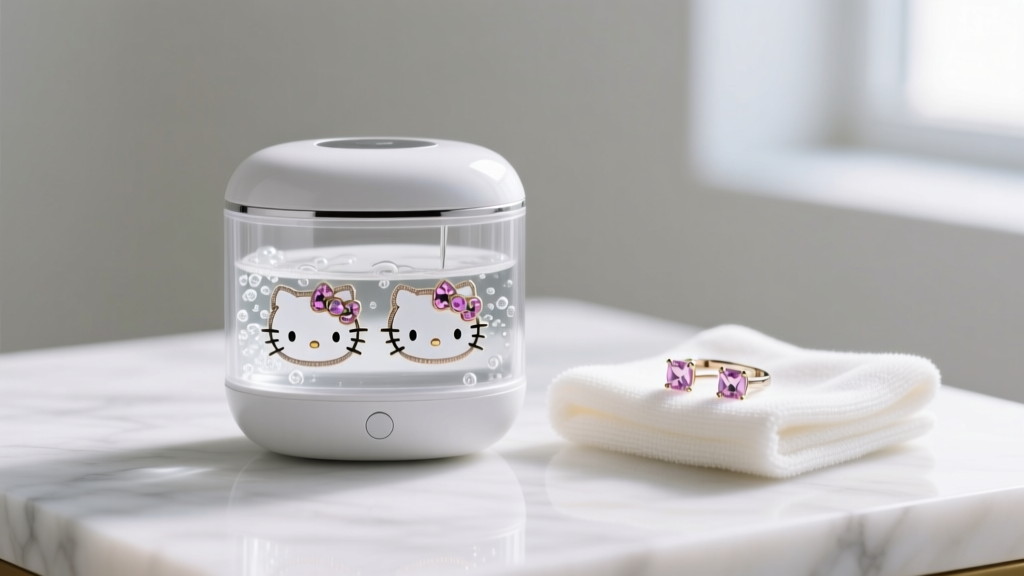
What to Avoid:
- Ultrasonic Cleaners: The high-frequency vibrations will shatter cold enamel and dislodge glued-in rhinestones from your character earrings.
- Rubbing Alcohol & Acetone: These solvents will strip the glossy finish off painted enamel and cloud acrylic components.
- Harsh Soaps: Moisturizing body washes leave a film that traps dead skin cells inside the piercing fistula.
The Correct Cleaning Protocol:
For routine maintenance, remove the jewelry and wash it with a mild, fragrance-free glycerin soap and warm water. Use a soft-bristled baby toothbrush to gently dislodge sebum and dead skin from the crevices of the charm. For the piercing itself, spray the area twice daily with a sterile 0.9% sodium chloride wound wash. Never use homemade sea salt solutions, as improper ratios will dehydrate the tissue and cause hypertrophic scarring (irritation bumps).
Where to Source Authentic, Body-Safe Pieces
Finding high-quality, biocompatible character jewelry requires looking beyond fast-fashion retailers. In 2026, several niche body jewelry brands and licensed fine jewelers have begun collaborating to produce ASTM F-136 titanium ends featuring officially licensed Sanrio designs. When shopping online, always verify that the seller specifies "internally threaded" or "threadless" titanium ends, and look for the APP (Association of Professional Piercers) certification badge on their website. By prioritizing material integrity over impulse buys, you can curate a flawless, irritation-free kawaii ear that remains healthy for a lifetime.