Earring Piercings Names: 2026 Cost & Value Guide
Discover all earring piercings names with our 2026 budget guide. Compare costs, healing times, and jewelry value for lobe, helix, tragus, and more.
The True Cost of Curating Your Ear in 2026
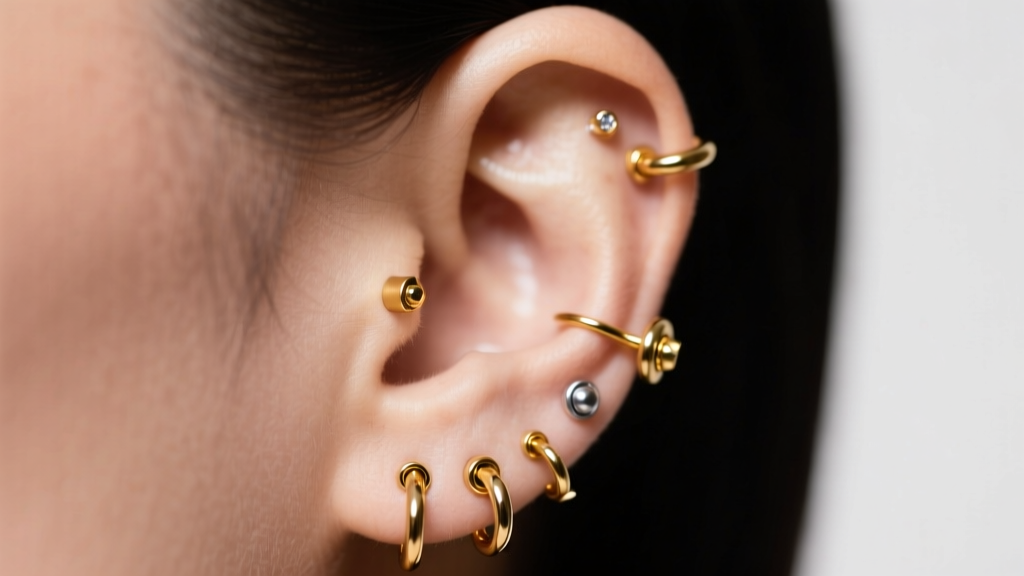
When mapping out earring piercings names for your next studio visit, it is easy to get lost in the aesthetics of a perfectly curated ear. However, building a cohesive ear project is a significant financial and anatomical investment. In 2026, the standard for body jewelry and professional piercing services has elevated, meaning the days of cheap mall-kiosk piercings are firmly in the past for anyone who values their tissue health and long-term jewelry quality. Understanding the complete list of earring piercings names is only half the battle; knowing the true cost of the procedure, the required jewelry grades, and the hidden maintenance expenses is what separates a successful ear curation from a costly, infected mistake.
This comprehensive budget and value assessment breaks down the exact pricing, healing timelines, and material requirements for every major ear piercing. Whether you are planning a simple lobe upgrade or a complex industrial scaffold, this guide will help you allocate your budget effectively without compromising on safety or style.
The Anatomy of Value: Earring Piercings Names & Pricing Matrix
Before booking your appointment, review the baseline costs associated with the most sought-after earring piercings names. Note that the piercing fee typically covers the service, sterilization, and basic aftercare, while the jewelry budget is a separate, highly variable expense based on the material and gemstone quality you select.
| Piercing Name | Avg. Piercing Fee | Quality Jewelry Budget | Healing Timeline | Standard Gauge |
|---|---|---|---|---|
| Standard Lobe | $30 - $50 | $40 - $150 | 6 - 8 Weeks | 16g - 14g |
| High Lobe | $40 - $60 | $50 - $200 | 3 - 6 Months | 16g - 14g |
| Helix / Forward Helix | $50 - $80 | $60 - $250 | 6 - 12 Months | 16g |
| Tragus / Anti-Tragus | $60 - $90 | $50 - $200 | 6 - 9 Months | 16g |
| Daith | $70 - $100 | $60 - $250 | 9 - 12 Months | 16g |
| Rook | $70 - $100 | $60 - $250 | 10 - 12 Months | 16g |
| Conch | $60 - $90 | $70 - $300 | 6 - 12 Months | 16g - 14g |
| Industrial | $80 - $120 | $100 - $400 | 9 - 12+ Months | 14g |
Data sourced from 2026 industry averages at Association of Professional Piercers (APP) member studios. Prices exclude premium gemstone upgrades.
Lobe Piercings: Standard vs. High Lobe Value
Standard Lobe: The Foundation Investment
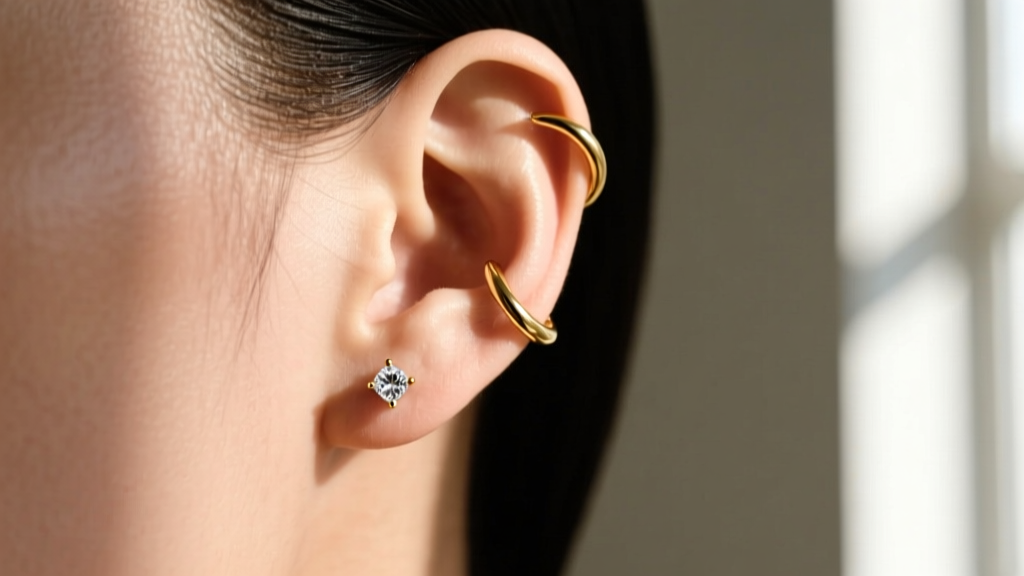
The standard lobe is the most common entry point, but its value proposition changes drastically depending on where you get it done. While mall kiosks offer $20 piercings using piercing guns and 20-gauge butterfly-back studs, this is a false economy. Piercing guns cause blunt force trauma, and 20g jewelry is too thin, leading to the 'cheese-cutter effect' where heavy earrings slowly slice through the tissue. A professional studio will use a hollow needle and implant-grade titanium at 16g or 14g, providing a stable foundation that can support heavy gold and gemstone pieces later in life.
High Lobe & Transverse Lobe: The Statement Pieces
High lobes sit just above the standard lobe placement, often requiring a slightly longer healing period due to the proximity to the cartilage transition zone. Transverse lobes, which pass horizontally through the lobe tissue, are highly specialized. The value of a transverse lobe relies entirely on the piercer's understanding of your specific lobe anatomy; if your lobes are too small or thin, a transverse barbell will migrate and reject, wasting your entire budget.
Cartilage Piercings: Where Budget Meets Precision
Cartilage piercings represent the bulk of modern ear curation. Because cartilage is avascular (lacking direct blood supply), healing is notoriously slow, and the risk of hypertrophic scarring is high if the jewelry angle is incorrect. When researching these earring piercings names, prioritize piercers who specialize in flat-back labrets and threadless ends to minimize snagging and irritation.
Helix & Forward Helix
The helix runs along the upper outer rim of the ear, while the forward helix sits on the inner rim near the face. A single helix is a moderate budget investment, but stacking three forward helixes requires precise spacing. If the piercer places them too close together, swelling will cause the jewelry to overlap, leading to chronic irritation bumps. Budget for high-quality threadless ends from brands like BVLA or Anatometal, which allow you to swap the visible gemstone tops without removing the healing post.
Tragus & Anti-Tragus
The tragus is the small flap of cartilage covering the ear canal. It is an excellent value piercing because it accommodates both studs and small hoops once healed. However, if you frequently use in-ear headphones or earplugs, the tragus may not be a practical investment for your lifestyle. The anti-tragus, located on the opposite fold, is thicker and requires a very specific angle to ensure the jewelry sits flush against the anatomy rather than digging into the conch bowl.
Daith, Rook, & Conch: The Inner Ear Complex
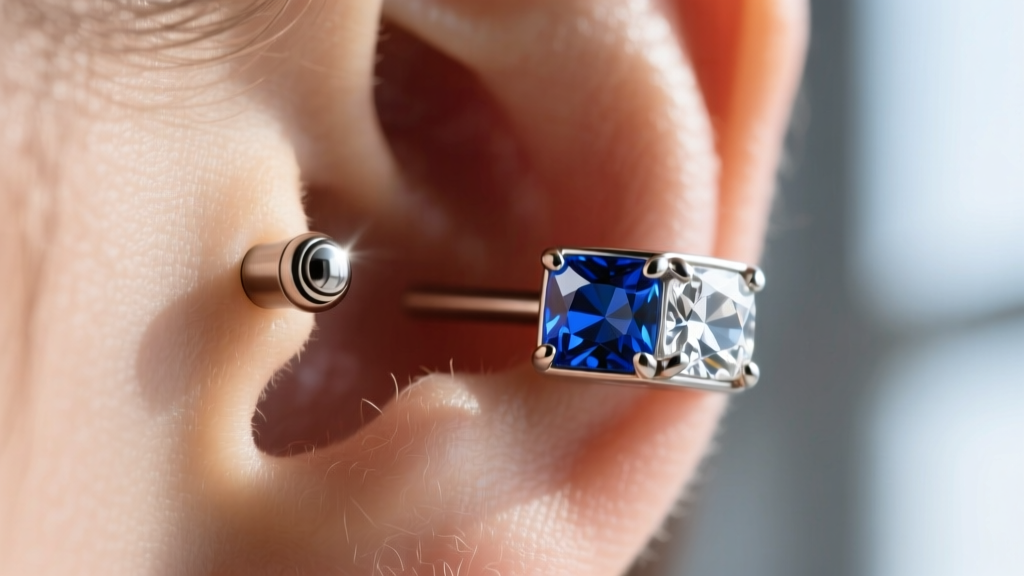
These three earring piercings names dominate the inner ear real estate. The daith passes through the innermost crus of the helix, the rook sits in the anti-helix fold above the daith, and the conch occupies the large cup-shaped center of the ear. The rook is widely considered one of the most painful and temperamental cartilage piercings due to the thickness of the tissue fold. From a budget perspective, the conch offers the highest visual impact; a single 14g conch stud with a large cluster gemstone can serve as the focal point of your entire ear, potentially saving you from needing three or four smaller helix piercings to achieve a 'full' look.
Advanced Placements: Industrial & Orbital Investments
The industrial piercing consists of two separate holes (usually an outer helix and a forward helix) connected by a single straight barbell. This is a premium investment. Not only are you paying for two punctures, but the alignment must be mathematically perfect. If the angles are off by even a few degrees, the rigid bar will put constant tension on the fistulas, leading to severe irritation, migration, and eventual rejection. Always allocate your highest budget tier for an industrial, seeking out a master piercer with a proven portfolio of healed industrials.
Orbital piercings, where a single hoop passes through two adjacent holes (commonly in the helix or lobe), offer a similar aesthetic but with slightly more forgiveness regarding swelling, as the ring can rotate and flex. However, you must wait until both holes are 100% healed before inserting the connecting hoop, which can take up to a year.
Material Grades & Jewelry Budgeting: Don't Compromise Here
The most critical aspect of your budget assessment is the material of the initial jewelry. According to the Association of Professional Piercers, fresh piercings require biocompatible materials to prevent allergic contact dermatitis and delayed healing. Never compromise your jewelry budget to afford an extra piercing.
- Implant-Grade Titanium (ASTM F136): The gold standard for fresh piercings. It is completely nickel-free, lightweight, and can be anodized to various colors. Budget $40-$80 for a basic titanium post with a synthetic or small natural gem.
- Niobium: Another highly biocompatible, nickel-free reactive metal. It is softer than titanium and often used for seamless rings in cartilage piercings. Budget $30-$60.
- 14k or 18k Solid Gold (Nickel-Free): Only recommended for well-healed piercings or if the specific alloy is verified nickel-free by the manufacturer. White gold should generally be avoided for fresh piercings as it is often alloyed with nickel. Budget $150-$400+ per piece.
- The 'Surgical Steel' Trap: Avoid anything labeled merely as 'surgical steel' or 'stainless steel' for fresh piercings. These alloys contain nickel, which can cause severe reactions and compromise the healing tissue, turning a $50 piercing into a costly medical issue.
For comprehensive aftercare and healing protocols, reputable medical resources like Healthline's Piercing Aftercare Guide emphasize the importance of sterile saline and avoiding harsh chemicals, which protects your financial investment in the jewelry.
Final Verdict: Maximizing Your Ear Curation Budget
Mastering the various earring piercings names is the first step toward a beautifully curated ear, but true value lies in strategic planning. Instead of rushing to get four piercings done in one session with cheap jewelry, space your appointments out over two to three years. Invest heavily in the piercer's expertise and the initial titanium jewelry. Once the tissue is fully healed and stabilized, you can gradually upgrade to solid gold and premium gemstones. By treating your ear curation as a long-term portfolio rather than a quick impulse buy, you ensure that your piercings remain healthy, vibrant, and structurally sound for decades to come.


