What Does One Earring Mean? Symbolism & Material Guide
Discover what one earring means culturally and how to choose the right metal. Compare titanium, gold, and steel properties for single-ear styling.

The Cultural History: What Does One Earring Mean?
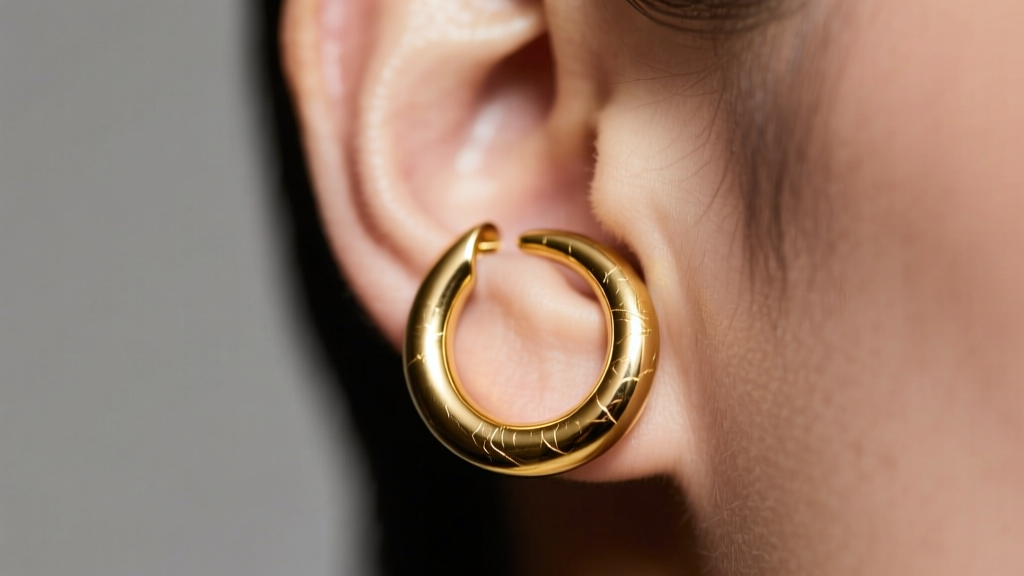
For decades, the question of what does one earring mean was heavily burdened by cultural coding and outdated societal myths. In the 1980s and 1990s, Western pop culture propagated a rigid, often homophobic 'hanky-code' for ear piercings: the left ear was deemed the 'straight' ear, while a single right-ear piercing was widely interpreted as a covert signal of homosexuality. However, as we navigate the fashion landscape of 2026, this binary coding has been entirely dismantled.
Today, wearing a single earring is a deliberate exercise in asymmetrical styling, avant-garde expression, and gender-fluid fashion. It draws the eye to one side of the face, creating a striking visual imbalance that feels intentional and curated. But beyond modern aesthetics, the single earring has deep historical roots. According to the Victoria and Albert Museum's historical archives, sailors and pirates in the 18th and 19th centuries frequently wore a single gold hoop. This was not merely decorative; it was a pragmatic investment. The gold was meant to pay for a proper Christian burial if the sailor's body washed ashore, while others believed the metal's reflective properties could improve eyesight at sea.
'The modern single earring is less about coded identity and more about architectural asymmetry. It forces the observer to engage with the negative space on the unpierced side.'
Material Science: Why Metal Choice Dictates the Statement
When you wear only one earring, that piece becomes the undisputed focal point of your profile. Because it carries the entire visual weight of your ear curation, the material properties—density, hardness, and biocompatibility—are paramount. A single heavy steel dangle will interact with your earlobe very differently than a lightweight titanium cuff. Let us break down the metallurgical realities of the top three metals used for single-ear statements.
Implant-Grade Titanium (ASTM F136)
For those who want to wear a single, elaborate cartilage cuff or a heavy dangle without risking lobe stretching or contact dermatitis, titanium is the undisputed champion. Specifically, you must look for ASTM F136 (or F67) compliant titanium, which is the exact grade used in medical joint replacements.
- Density: 4.43 g/cm³ (nearly half the weight of steel).
- Biocompatibility: 100% nickel-free, making it the gold standard for fresh piercings and sensitive skin.
- Best Single-Ear Application: Elaborate ear cuffs that clamp to the helix without piercing, or oversized 14g (1.6mm) statement hoops that would cause fatigue in heavier metals.
According to the Association of Professional Piercers (APP), implant-grade titanium's mirror finish also resists bacterial adhesion better than porous or poorly polished alternatives, making it ideal for a single piece you might wear 24/7.
Solid Gold: 14k vs. 18k Alloys
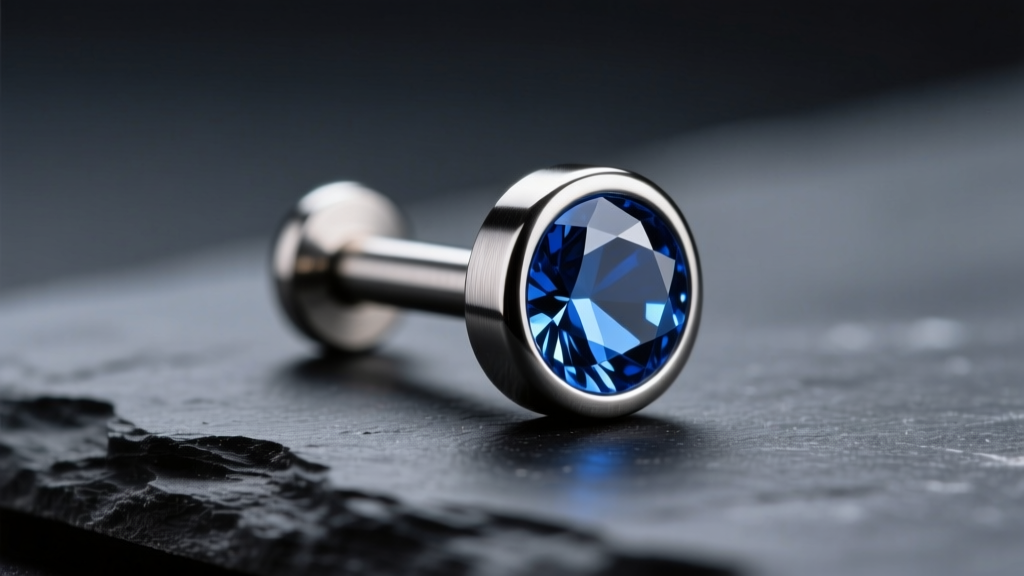
Gold remains the ultimate symbol of luxury, but pure 24k gold is far too soft (Vickers hardness of ~25 HV) for daily wear. Therefore, jewelers alloy it with copper, silver, and zinc. When choosing a single gold statement piece, understanding the difference between 14k and 18k is critical.
14k Gold (58.5% pure gold): With a Vickers hardness of around 120-140 HV, 14k gold is highly resistant to scratching and deformation. If your single earring is a huggie hoop that clicks into a cartilage piercing and experiences high friction from hair and clothing, 14k is the superior choice. It typically ranges from $150 to $400 for high-quality, solid cast pieces.
18k Gold (75% pure gold): Softer (around 90-110 HV) and boasting a richer, deeper yellow hue due to the higher gold content. 18k is best reserved for single, low-friction pieces like a simple lobe stud or a delicate threader earring. As noted by the Gemological Institute of America (GIA), the higher copper content in some 18k rose gold alloys can occasionally cause localized skin discoloration in highly acidic sweat environments, a factor to consider if you wear your single piece during workouts.
Surgical Stainless Steel (316L) & The Nickel Factor
316L stainless steel is the workhorse of affordable jewelry, often priced between $20 and $60. Its composition includes 16-18% chromium, 2-3% molybdenum, and crucially, 10-14% nickel. The chromium creates a passive oxide layer that prevents rust, giving it a brilliant, silvery shine.
However, the density of 316L steel is approximately 8.0 g/cm³—almost double that of titanium. If your single-ear style involves a long, heavy chain dangle worn in a standard 20g (0.81mm) lobe piercing, the gravitational pull of steel can cause 'cheese-cutter' migration over time, slowly stretching the fistula. Furthermore, the nickel content means it is unsuitable for the 10-15% of the population with nickel hypersensitivity.
Comparative Data Table: Single Earring Materials
| Material | Grade / Standard | Density (g/cm³) | Nickel Content | Avg. Price Range |
|---|---|---|---|---|
| Titanium | ASTM F136 (ELI) | 4.43 | 0% | $40 - $120 |
| Yellow Gold | 14k (58.5%) | 12.90 | 0% (usually) | $150 - $450 |
| Yellow Gold | 18k (75%) | 15.50 | 0% (usually) | $250 - $800+ |
| Steel | 316L Surgical | 8.00 | 10-14% | $20 - $60 |
| Niobium | Reactor Grade | 8.57 | 0% | $30 - $90 |
Gauge, Weight, and Asymmetrical Anatomy
When styling a single earring, the anatomy of the piercing dictates the acceptable gauge (thickness) and weight. Standard lobe piercings are typically done at 20g (0.81mm) or 18g (1.0mm). If you are wearing a single, heavy brass or steel geometric dangle, you must ensure the post is at least 18g to prevent the metal from slicing through the tissue under its own weight.
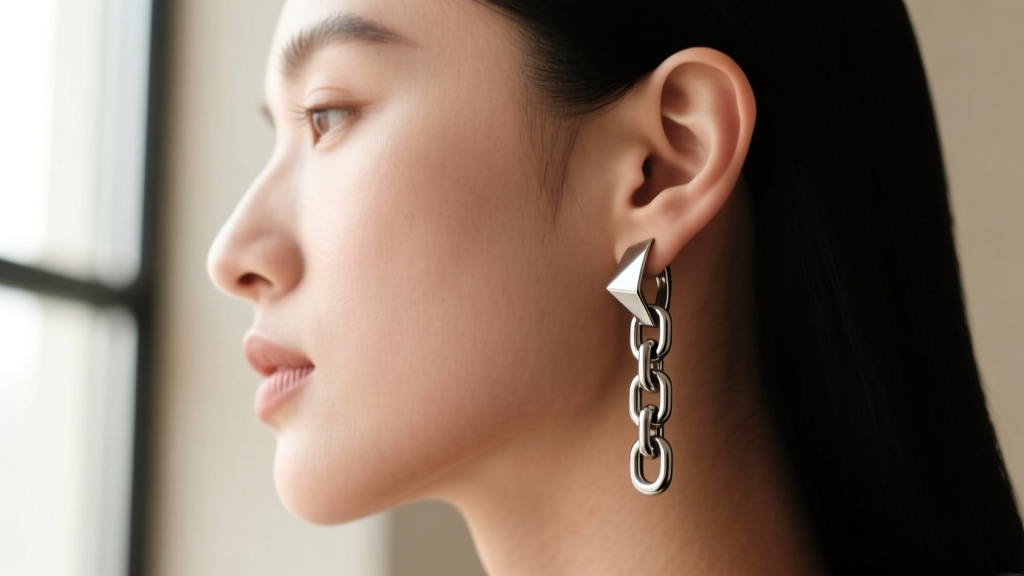
For cartilage placements—such as a single helix or conch piece—the standard gauge is usually 16g (1.2mm) or 14g (1.6mm). Cartilage lacks the elasticity of the earlobe, meaning it cannot stretch to accommodate heavy jewelry. A single 18k gold conch hoop will sit beautifully due to gold's high density and premium finish, but it must be precisely fitted to the curvature of the ear to avoid pressure necrosis (tissue death caused by prolonged pressure).
The Rise of the Single Ear Cuff
If you want the asymmetrical look of a single earring without committing to a needle, the non-pierced ear cuff is the ultimate 2026 workaround. Because cuffs rely on tension rather than a post, material memory is vital. Niobium and annealed silver are excellent for cuffs because they can be gently squeezed to fit the exact millimeter-width of your helix ridge, whereas hardened steel or platinum will snap back to their original shape and slide off.
Maintenance for High-Focus Pieces
A single earring commands attention, meaning tarnish, scratches, and soap scum are immediately noticeable. Your maintenance routine must match the metallurgy of your chosen piece:
- For Titanium and Steel: Clean with a simple solution of warm water and mild, fragrance-free antibacterial soap. Avoid ultrasonic cleaners if the piece features opal or turquoise inlays, as the high-frequency vibrations can fracture porous stones.
- For 14k and 18k Gold: Use a specialized jewelry polishing cloth infused with micro-abrasives to remove the microscopic layer of oxidized skin oils and environmental sulfur that dulls the alloy metals mixed with the gold.
- For Silver Cuffs: Store in an anti-tarnish bag with a silica gel packet. Silver sulfide (tarnish) forms rapidly when silver is exposed to ambient humidity and sulfur compounds in the air.
Ultimately, answering what does one earring mean is no longer about decoding a secret societal message. It is about embracing asymmetrical artistry. By understanding the density, gauge requirements, and alloy compositions of your jewelry, you ensure that your single statement piece is not only culturally resonant but structurally sound for years of wear.


